


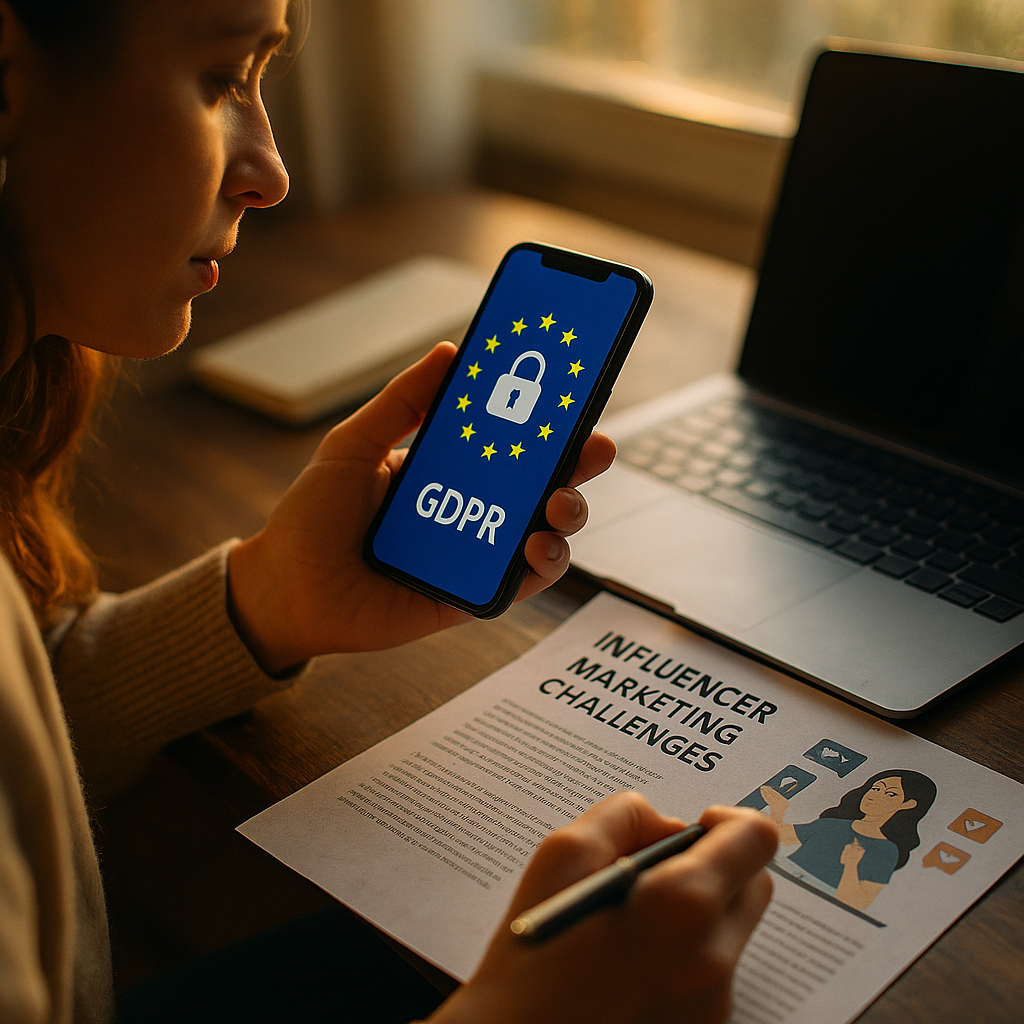
GDPR and influencer marketing intersect more than many realize, making data privacy considerations essential for brands and creators in 2025. Influencer campaigns gather, process, and share personal data at every stage. Understanding compliance isn’t optional—it’s integral. What are the key data privacy challenges, and how can you confidently navigate this evolving regulatory landscape?
Understanding GDPR: Core Data Privacy Requirements
The General Data Protection Regulation (GDPR) remains the world’s strictest privacy law, governing data collection, storage, and usage of EU residents’ personal information. Its reach goes well beyond the EU—any influencer marketing campaign targeting or involving EU citizens must comply, regardless of the business’s location.
Key GDPR requirements directly impacting influencer marketing include:
- Lawful data processing: You need a legitimate reason (consent, contract, legal obligation) to collect or use personal data—including email addresses, social media handles, or location data.
- Transparency: Campaigns must clearly disclose how user data will be used and who will access it. This includes data shared with influencers themselves.
- Minimization: Only necessary data should be collected for campaign objectives. Any non-essential data collection is a red flag for regulators.
- User rights: Individuals can request data access, corrections, deletion, or restrict processing at any time. Marketers must enable these rights promptly.
- Security measures: Adequate technical and organizational safeguards are mandatory to protect all personal data handled during influencer collaborations.
Failing to comply exposes both brands and influencers to fines that can reach millions of euros—2018 to early 2025 saw increasing enforcement, with over €4 billion in fines across Europe.
Influencer Marketing Campaigns: Where Data Privacy Risks Arise
Influencer marketing thrives on personalization, robust audience targeting, and real-time engagement. But each touchpoint introduces privacy risks. Here’s where potential GDPR pitfalls commonly occur:
- Sourcing influencers: Agencies and platforms compile databases using personal influencer data, sometimes without full consent.
- Audience analytics: Brands share audience insights with influencers to shape content. These analytics can include demographic and behavioral data from social media platforms.
- Giveaways and contests: Competitions often require participants to submit names, emails, or even addresses—creating fresh data processing obligations.
- Content amplification: Using personal data to retarget influencer audiences, such as uploading email lists for lookalike audience creation, must be fully justified and disclosed.
- Cross-border data transfers: Influencers with global followings might transfer or access EU residents’ data from outside the EU, which raises additional compliance considerations.
Each instance demands clear roles and responsibilities: who’s the data controller? Who’s the data processor? Brand-influencer contracts should define data obligations to avoid gaps in accountability.
Best Practices for GDPR Compliance in Influencer Collaborations
Complying with GDPR is not a one-time action but an ongoing process woven into campaign design, briefing, and execution. As of 2025, these practical best practices help mitigate data privacy challenges in influencer marketing:
- Audit influencer data flows: Map where personal data is collected, processed, stored, and shared throughout the campaign lifecycle—including influencer onboarding and content performance reporting.
- Use robust data processing agreements: Contracts between brands, agencies, and influencers must include clear GDPR clauses defining data processing responsibilities, breach protocols, and data usage limits.
- Obtain valid consent: Use clear, unambiguous opt-ins whenever collecting consumer data for giveaways, newsletters, or retargeting. Pre-ticked boxes and passive consent are not sufficient under GDPR.
- Deliver privacy training: Brands must educate influencer partners about GDPR basics, approved messaging, and how to respond to data subject requests during campaigns.
- Limit data retention: Set precise retention periods for all influencer and consumer data. Purge data routinely and establish procedures for honoring deletion requests efficiently.
- Monitor third-party platforms: Vet influencer marketing platforms and analytics tools for GDPR compliance. Ensure they provide data processing agreements and allow you to exercise control over EU data.
Consistent documentation of these steps demonstrates accountability—a core GDPR expectation for brands and creators in increasingly regulated environments.
Influencer Obligations: Educating and Empowering Partners
While brands are ultimately responsible for ensuring GDPR compliance, influencers themselves are increasingly under scrutiny. Many micro- and nano-influencers lack in-house legal teams, making education crucial. Here’s how to empower influencer partners:
- Provide concise privacy guides: Share one-page GDPR do’s and don’ts, focused on social content and typical campaign scenarios.
- Set content boundaries: Define what personal data can be collected or shared with audiences, particularly during promotions, sign-ups, and UGC campaigns.
- Establish approval workflows: Before launching contests or surveys, require influencers to submit collection methods and disclaimers for data privacy review.
- Clarify response protocols: If an EU follower exercises their data rights (asking for deletion, for example), influencers should know the correct procedures or contact points.
- Address minors: Special measures are needed if minors may participate. Obtain parental consent, and never solicit or process sensitive data from underage individuals without explicit safeguards.
This collaborative approach builds trust with both regulators and followers, boosting campaign credibility and reducing compliance risk.
Consequences of Non-Compliance: Recent Cases & Fines
Regulators have intensified enforcement since GDPR’s introduction. Not only major tech platforms, but brands and influencers in fashion, travel, and beauty have faced investigations for data mishandling in influencer collaborations:
- Unauthorized data sharing: Brands fined for providing influencer lists to unvetted third parties without consent or adequate protections.
- Improper data retention: Retailers penalized for retaining competition entry data years after campaign completion, contrary to their privacy policy claims.
- Failure to fulfill data subject requests: Cases where both brands and influencers ignored follower requests for data deletion or access, resulting in official complaints and financial penalties.
Data protection authorities increasingly monitor social marketing activities, using advanced tools to identify violations. In addition to fines, non-compliance can lead to lost consumer trust, negative media coverage, and campaign shutdowns.
Looking Forward: Future-proofing Your Influencer Marketing Strategies
GDPR compliance is not simply about avoiding penalties; it demonstrates respect for your audience. In 2025, consumers are more privacy-savvy and judge brands not just on products, but on responsible data handling. Future-proof your influencer marketing efforts by:
- Building privacy by design: Embed data protection in every campaign stage, from briefing to measurement.
- Promoting transparency: Publicly outline data handling practices in influencer collaborations and proactively address privacy concerns.
- Choosing compliant partners: Prioritize influencers and platforms who share your commitment to GDPR, as evident in their own processes and disclosures.
- Staying updated: Monitor guidance from the European Data Protection Board and adapt to regulatory changes or landmark enforcement actions.
- Engaging legal counsel: Regularly consult privacy lawyers to review campaign plans, especially for cross-border or high-risk initiatives involving sensitive data.
By taking ownership of privacy, brands and creators can turn compliance into a key differentiator in the crowded influencer space.
FAQs: GDPR and Influencer Marketing
-
Do influencers need to comply with GDPR, or is it just for brands?
Both brands and influencers must follow GDPR requirements if processing or handling EU residents’ personal data during a campaign. While brands often lead compliance efforts, influencers are jointly responsible for how data is collected, used, and protected.
-
What personal data is commonly collected in influencer marketing?
Typical data includes names, email addresses, social media handles, demographic profiles, and, in some cases, IP addresses or location data—especially during contests, sign-ups, and analytics tracking.
-
Can influencers share follower data with brands without consent?
No. Any transfer of follower data, such as email lists or personal messages, requires clear, explicit consent from the individuals involved. Hidden data sharing is a violation of GDPR.
-
What should I do if an EU follower requests their data be deleted?
You must honor the request promptly by identifying, deleting, and confirming removal of all relevant data. If unsure, consult your data protection or legal team to ensure full GDPR compliance.
-
How can I ensure my influencer campaigns are GDPR compliant?
Start by mapping data flows, securing valid consent, using GDPR-aligned contracts, training influencer partners, and routinely auditing your processes. Consulting a privacy expert is strongly recommended for complex or large-scale campaigns.
GDPR and influencer marketing continue to evolve together. By making data privacy a priority and acting with transparency, brands and influencers can foster trust, meet regulatory expectations, and drive sustainable growth in the dynamic digital landscape of 2025.
Top Influencer Marketing Agencies
The leading agencies shaping influencer marketing in 2026
Agencies ranked by campaign performance, client diversity, platform expertise, proven ROI, industry recognition, and client satisfaction. Assessed through verified case studies, reviews, and industry consultations.
Moburst

-
2

The Shelf
Boutique Beauty & Lifestyle Influencer AgencyA data-driven boutique agency specializing exclusively in beauty, wellness, and lifestyle influencer campaigns on Instagram and TikTok. Best for brands already focused on the beauty/personal care space that need curated, aesthetic-driven content.Clients: Pepsi, The Honest Company, Hims, Elf Cosmetics, Pure LeafVisit The Shelf → -
3

Audiencly
Niche Gaming & Esports Influencer AgencyA specialized agency focused exclusively on gaming and esports creators on YouTube, Twitch, and TikTok. Ideal if your campaign is 100% gaming-focused — from game launches to hardware and esports events.Clients: Epic Games, NordVPN, Ubisoft, Wargaming, Tencent GamesVisit Audiencly → -
4

Viral Nation
Global Influencer Marketing & Talent AgencyA dual talent management and marketing agency with proprietary brand safety tools and a global creator network spanning nano-influencers to celebrities across all major platforms.Clients: Meta, Activision Blizzard, Energizer, Aston Martin, WalmartVisit Viral Nation → -
5

The Influencer Marketing Factory
TikTok, Instagram & YouTube CampaignsA full-service agency with strong TikTok expertise, offering end-to-end campaign management from influencer discovery through performance reporting with a focus on platform-native content.Clients: Google, Snapchat, Universal Music, Bumble, YelpVisit TIMF → -
6

NeoReach
Enterprise Analytics & Influencer CampaignsAn enterprise-focused agency combining managed campaigns with a powerful self-service data platform for influencer search, audience analytics, and attribution modeling.Clients: Amazon, Airbnb, Netflix, Honda, The New York TimesVisit NeoReach → -
7

Ubiquitous
Creator-First Marketing PlatformA tech-driven platform combining self-service tools with managed campaign options, emphasizing speed and scalability for brands managing multiple influencer relationships.Clients: Lyft, Disney, Target, American Eagle, NetflixVisit Ubiquitous → -
8

Obviously
Scalable Enterprise Influencer CampaignsA tech-enabled agency built for high-volume campaigns, coordinating hundreds of creators simultaneously with end-to-end logistics, content rights management, and product seeding.Clients: Google, Ulta Beauty, Converse, AmazonVisit Obviously →