


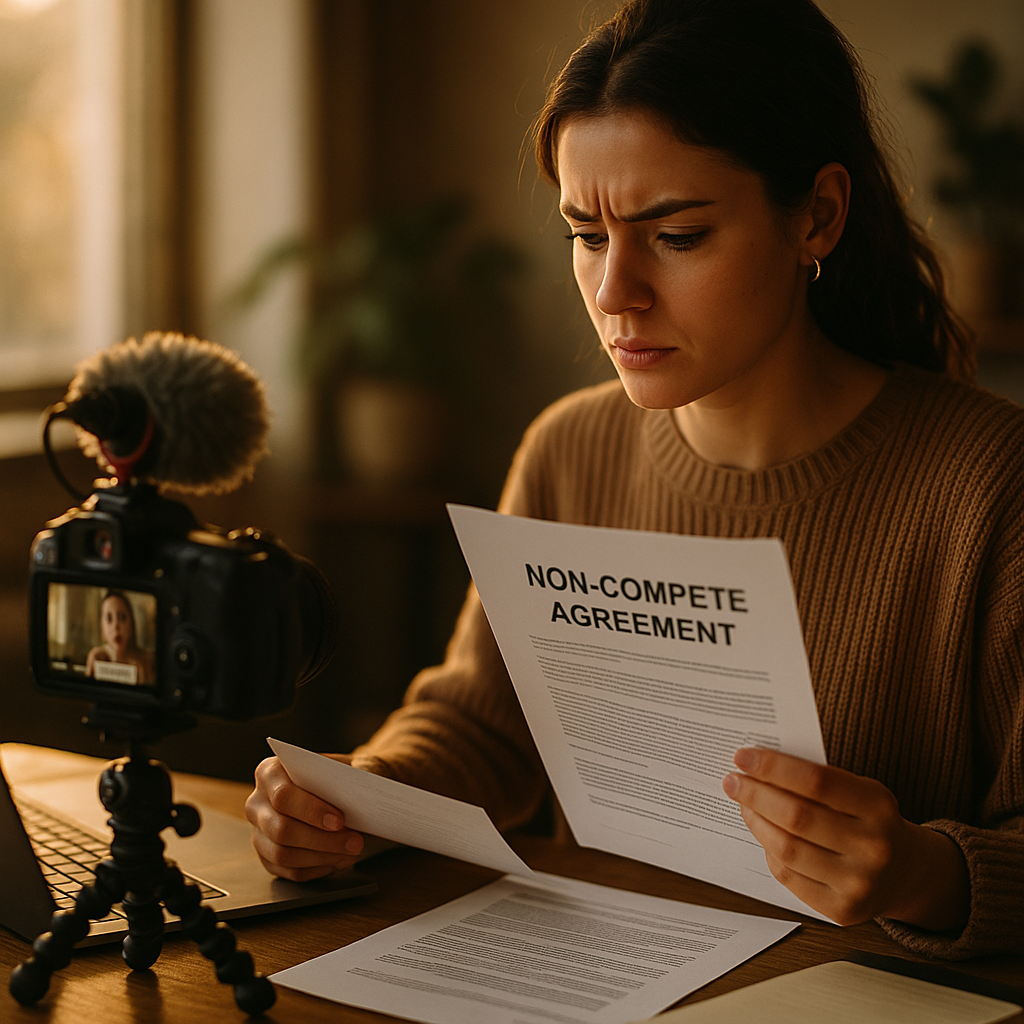
The creator economy has redefined how individuals monetize skills and audience reach, but it has also complicated traditional employment rules. Non-compete clauses, once standard in many industries, now face new scrutiny for their enforceability in these evolving work relationships. But how are these agreements holding up as creators claim more independence? Let’s break down the legal landscape in 2025.
Understanding Non-Compete Clauses in the Creator Economy
Non-compete clauses are contractual agreements that restrict individuals from engaging in similar professions or competitions within a specified timeframe and geography after leaving an employer. Traditionally, these clauses helped protect business interests and trade secrets. In the context of the creator economy, where creators often straddle multiple brands, platforms, and projects, the reach and effect of non-competes become significantly murkier.
Increasingly, creators are not typical employees; they might be freelancers, contractors, or collaborators. The very nature of their work—building a personal brand and leveraging their own audience—makes blanket non-compete restrictions both impractical and, in many cases, unenforceable. This new dynamic is fueling legal debates on what constitutes fair competition versus unreasonable restriction of trade.
Legal Trends: Enforceability of Non-Compete Agreements in 2025
In recent years, courts and legislatures globally have become more skeptical of broad non-compete agreements. A 2025 review by the International Association of Employment Lawyers found that many jurisdictions now require non-competes to be narrowly tailored and supported by legitimate business interests. Blanket prohibitions, especially those that stifle a creator’s right to earn a living, are increasingly struck down.
Some countries, such as the US, have introduced stricter requirements or outright bans on non-competes for non-traditional workers, including influencers and digital creators. European regulators favor short durations and narrow scopes, emphasizing fairness and creator mobility. The message is clear: enforceability depends on reasonableness, evidence of actual business harm, and consideration of public interest in innovation.
Key Factors That Determine Enforceability with Content Creators
Courts weigh several factors when judging whether a non-compete is enforceable against a creator:
- Specificity: Does the clause clearly outline prohibited activities, timelines, and locations, or is it overly broad?
- Role and Relationship: Was the creator an employee, contractor, or collaborator? Non-competes rarely apply to true freelancers.
- Legitimate Business Interest: Does the agreement protect something tangible, like proprietary information, rather than simple market competition?
- Consideration: Did the creator receive adequate value or compensation for agreeing to the clause?
- Public Policy: Does enforcement unduly restrict creativity, audience engagement, or the right to work?
Experienced legal counsel in the creator economy highlights that valid non-competes are usually highly specific—such as temporarily restricting the use of proprietary brand materials or confidential launch plans—rather than preventing creators from operating in their entire field.
Best Practices for Drafting Creator Economy Non-Compete Clauses
With new precedents and regulations, businesses and agencies working with creators should take extra care in drafting any restrictive covenants. To maximize enforceability while maintaining fairness, consider the following practices:
- Be Precise: Specify only what is necessary for protection. Avoid “blanket” restrictions that cover broad types of content or platforms.
- Limit Duration and Scope: The shorter and more focused, the better—often six months or less, and only in direct competition.
- Offer Valuable Consideration: Provide tangible benefits: higher compensation, access to proprietary resources, or other value exchanges.
- Review Jurisdictional Laws: Research local laws or employ multi-jurisdictional language if the creator’s audience or operations cross borders.
- Include Severability Clauses: Ensure unenforceable parts can be removed without voiding the whole contract.
By balancing business protection with creator autonomy, these best practices help maintain partnerships and avoid legal pitfalls.
Alternatives to Non-Compete Clauses for Creator Partnerships
Given the risks and legal uncertainty surrounding non-competes for creators, many brands and agencies now prefer alternative strategies:
- Non-Solicitation Clauses: Prevents poaching of key personnel or business contacts, rather than blanket competition.
- Non-Disclosure Agreements (NDAs): Protects confidential information without restricting future creative work.
- Exclusivity Agreements: Focused, time-limited restrictions on certain partnerships or campaigns.
These targeted approaches protect sensitive business interests without stifling a creator’s ability to grow their brand and income. In 2025, courts view these tailored agreements as more reasonable and supportive of both innovation and business needs than strict non-competes.
The Future: What Creators and Brands Should Expect
The creator economy continues to evolve rapidly, and legal structures are racing to catch up. Expect more transparency in contract terms and growing pressure for regulatory clarity as creators increasingly unionize and advocate for fair treatment. Both creators and brands benefit from clear, reasonable agreements that foster long-term collaboration rather than conflict.
If you’re a creator, always review contracts with an attorney familiar with digital media and employment law. For brands, the key is to move away from one-size-fits-all non-competes and toward individualized agreements that address real risks. This approach not only ensures legal compliance but also builds trust and creative freedom.
FAQs About Non-Compete Clauses in the Creator Economy
- Are non-compete clauses enforceable for YouTubers or influencers in 2025?
Generally, only if narrowly tailored and protecting specific business interests. Broad restrictions on content creation are rarely upheld.
- Can a creator be sued for breaking a non-compete?
Yes, but enforcement is difficult and often unsuccessful unless the clause is reasonable and the creator had access to confidential information.
- What is a more enforceable alternative to a non-compete for creators?
Very often, non-disclosure and non-solicitation agreements offer stronger legal standing and are fairer for both sides.
- Do non-competes apply if a creator is a contractor rather than an employee?
Usually not, though some contracts try to include them. Courts closely examine the nature of the working relationship.
- How can a creator negotiate a non-compete out of their contract?
By demonstrating the restriction’s negative impact on their livelihood or by offering to sign alternative protections like NDAs.
In summary, non-compete clauses are more difficult to enforce than ever in the creator economy of 2025. Both creators and brands should favor clarity and fairness over sweeping restrictions—protecting genuine interests and enabling ongoing innovation.
Top Influencer Marketing Agencies
The leading agencies shaping influencer marketing in 2026
Agencies ranked by campaign performance, client diversity, platform expertise, proven ROI, industry recognition, and client satisfaction. Assessed through verified case studies, reviews, and industry consultations.
Moburst

-
2

The Shelf
Boutique Beauty & Lifestyle Influencer AgencyA data-driven boutique agency specializing exclusively in beauty, wellness, and lifestyle influencer campaigns on Instagram and TikTok. Best for brands already focused on the beauty/personal care space that need curated, aesthetic-driven content.Clients: Pepsi, The Honest Company, Hims, Elf Cosmetics, Pure LeafVisit The Shelf → -
3

Audiencly
Niche Gaming & Esports Influencer AgencyA specialized agency focused exclusively on gaming and esports creators on YouTube, Twitch, and TikTok. Ideal if your campaign is 100% gaming-focused — from game launches to hardware and esports events.Clients: Epic Games, NordVPN, Ubisoft, Wargaming, Tencent GamesVisit Audiencly → -
4

Viral Nation
Global Influencer Marketing & Talent AgencyA dual talent management and marketing agency with proprietary brand safety tools and a global creator network spanning nano-influencers to celebrities across all major platforms.Clients: Meta, Activision Blizzard, Energizer, Aston Martin, WalmartVisit Viral Nation → -
5

The Influencer Marketing Factory
TikTok, Instagram & YouTube CampaignsA full-service agency with strong TikTok expertise, offering end-to-end campaign management from influencer discovery through performance reporting with a focus on platform-native content.Clients: Google, Snapchat, Universal Music, Bumble, YelpVisit TIMF → -
6

NeoReach
Enterprise Analytics & Influencer CampaignsAn enterprise-focused agency combining managed campaigns with a powerful self-service data platform for influencer search, audience analytics, and attribution modeling.Clients: Amazon, Airbnb, Netflix, Honda, The New York TimesVisit NeoReach → -
7

Ubiquitous
Creator-First Marketing PlatformA tech-driven platform combining self-service tools with managed campaign options, emphasizing speed and scalability for brands managing multiple influencer relationships.Clients: Lyft, Disney, Target, American Eagle, NetflixVisit Ubiquitous → -
8

Obviously
Scalable Enterprise Influencer CampaignsA tech-enabled agency built for high-volume campaigns, coordinating hundreds of creators simultaneously with end-to-end logistics, content rights management, and product seeding.Clients: Google, Ulta Beauty, Converse, AmazonVisit Obviously →