


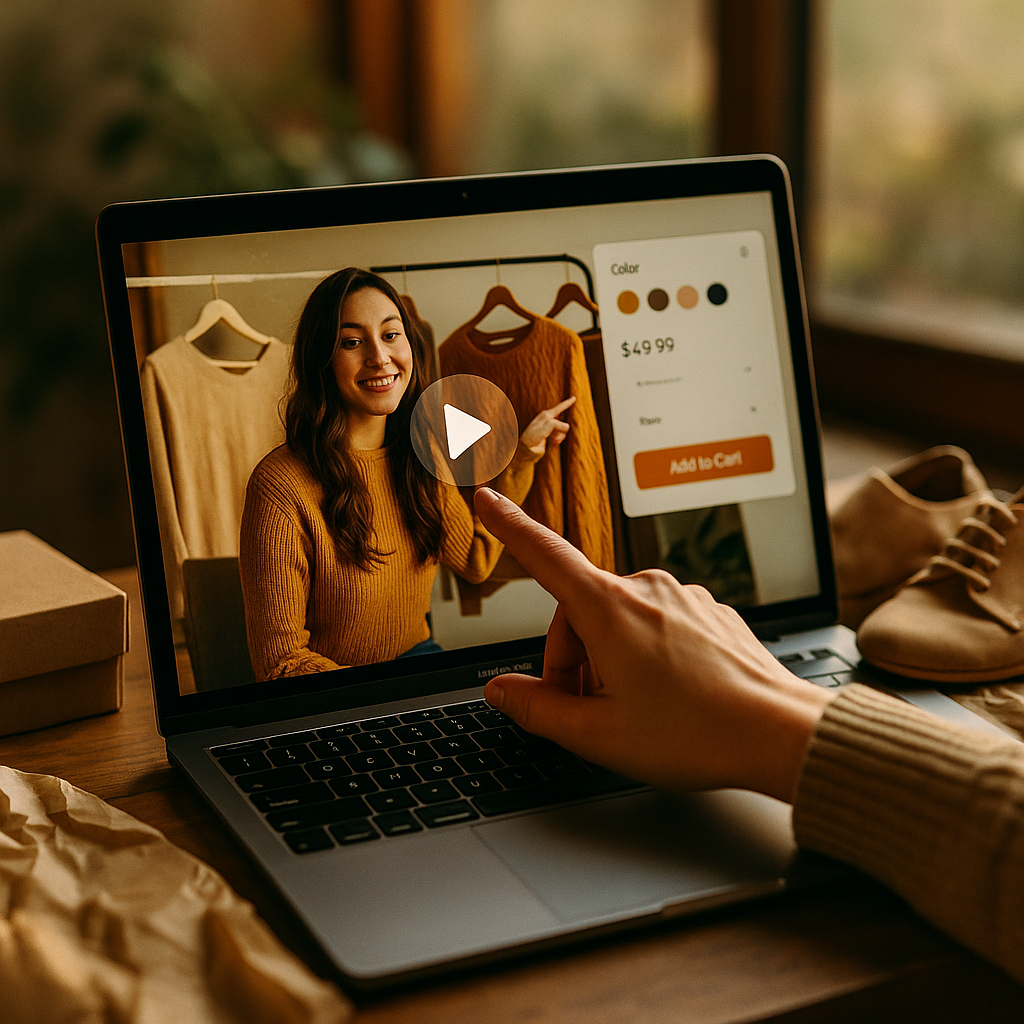
Reviewing interactive video platforms for e-commerce conversion lift matters more in 2025 because shoppers expect to learn, compare, and buy without friction. Interactive video can turn passive viewing into measurable actions: add-to-cart, email capture, product comparison, and checkout. But not every platform fits every stack, team, or catalog. Which features truly move revenue, and which just look impressive?
Interactive video for ecommerce: what “conversion lift” really means
For most stores, “conversion lift” is not a single number. It’s a sequence of improvements across the funnel that you can attribute to interactive video experiences.
Conversion lift typically shows up in:
- Engagement quality: higher watch completion, more clicks on product hotspots, more time on product pages.
- Commerce intent: increased add-to-cart rate, higher “view product” actions from video, more wishlists or save-for-later events.
- Checkout outcomes: improved checkout conversion rate, reduced returns (when video clarifies fit/use), higher average order value (AOV) via bundles.
How to measure it cleanly: Run an A/B test where a portion of traffic sees the same page with and without interactive video, and keep everything else stable (pricing, shipping, page layout). If you can’t A/B test, use a time-based holdout and control for major campaigns.
Answering the common follow-up: interactive video works best when it replaces confusion with clarity. Product education (how it fits, how it works, what’s included) and guided shopping (choose-your-path, comparison, quizzes) tend to create the most reliable lift, especially for considered purchases and multi-variant SKUs.
Shoppable video platforms: features that directly drive sales
When you review shoppable video platforms, focus on capabilities that connect viewing behavior to purchase behavior. A platform can have gorgeous players and still fail if it can’t attribute outcomes or integrate into your store.
Prioritize these conversion-driving features:
- Product hotspots and cards: clickable elements that open product detail, variant selection, or a quick-add modal without forcing a new tab.
- In-video CTAs tied to intent: “Shop the look,” “Compare sizes,” “Build your bundle,” and “Find your shade” outperform generic “Buy now” when the product needs guidance.
- Branching and chapters: let shoppers self-select paths like “gift,” “beginner,” or “pro,” reducing time-to-relevance.
- First-party data capture: email/SMS capture inside the experience (with clear consent) can recover value even when the first session doesn’t convert.
- Personalization rules: serve different overlays based on referrer (ads vs. email), geography, cart contents, or returning visitor status.
- Accessibility and performance: captions, keyboard navigation, and fast loading matter for both compliance and conversions.
What to treat as “nice-to-have” unless you truly need it: advanced 3D/AR layers, heavily gamified interactions, or complex mini-sites inside the player. These can work for brand campaigns, but for conversion lift, simplicity often wins.
Ask vendors for proof: request anonymized case studies from stores with similar AOV and traffic sources, plus a walkthrough of how they calculated lift. If they can’t explain attribution without hand-waving, move on.
Ecommerce video analytics: proving incremental lift with trustworthy data
Strong ecommerce video analytics separate real conversion lift from correlation. In 2025, you also need analytics that respect privacy changes while still enabling decisions.
Minimum analytics you should demand:
- Event taxonomy: play, pause, quartiles, completion, hotspot clicks, CTA clicks, add-to-cart from video, product views from video.
- Attribution options: last-touch and assist reporting, plus configurable windows (for example, 1-day view-through vs. 7-day).
- Exportability: raw event export to your data warehouse or analytics tool so your team can validate vendor dashboards.
- Segmentation: by device, traffic source, new vs. returning, product category, and creative variant.
How to avoid inflated results: Many dashboards highlight “revenue influenced” (any order from a viewer) rather than “revenue incremental” (orders that happened because of the video). Influenced revenue can be useful, but only if you label it clearly and pair it with controlled tests.
Practical testing plan you can run:
- Pick one high-traffic category page and one hero product page.
- Run a 2–4 week A/B test with a consistent offer and stable media spend.
- Track primary KPI (checkout conversion rate) and secondary KPIs (add-to-cart rate, AOV, return rate if available).
- Review by device: interactive layers that work on desktop may be too dense on mobile.
EEAT checkpoint: Ensure the platform can document how it defines each metric, how it de-duplicates sessions, and how it handles cross-domain tracking and consent. Transparent methodology is part of trust.
Shopify interactive video integration: implementation and team workflow
For many merchants, Shopify interactive video integration is the deciding factor because it determines speed to launch, maintenance load, and data quality.
Integration questions to ask before you sign:
- Theme compatibility: Does it support Online Store 2.0 sections? Will it affect Core Web Vitals?
- Variant-aware shopping: Can hotspots open the correct variant (size/color) and respect inventory availability?
- Cart behavior: Does “add-to-cart” work with your cart drawer, subscriptions, bundles, and upsell apps?
- Checkout constraints: If you use accelerated checkouts, will the handoff preserve attribution and UTM parameters?
- Tag manager support: Can you trigger dataLayer events cleanly for GTM and server-side tagging setups?
- Permissions and roles: Can merchandisers publish updates without engineering every time?
Workflow matters as much as features: A platform that lets your team reuse videos across PDPs, collections, and landing pages with consistent product mapping will scale. Look for bulk product linking, templates for overlays, and approval workflows so marketing can move fast without breaking reporting.
Follow-up you’re likely asking: “Do we need a developer?” Often, you can launch a basic shoppable player with no-code widgets. But expect at least light development if you want best-in-class measurement (server-side events), custom styling, or deeper compatibility with bundles, subscriptions, and headless builds.
Live shopping video tools: when real-time interaction boosts conversion
Live shopping video tools can create sharp conversion spikes because they combine urgency, community proof, and real-time Q&A. They are not automatically better than on-demand interactive video; they simply win in different scenarios.
Live shopping tends to work best for:
- Product drops and limited inventory: urgency is real, not manufactured.
- High-consideration categories: beauty routines, apparel fit, home goods demos, specialty food tastings.
- Founder-led brands: authenticity and expertise reduce hesitation.
Platform capabilities that matter for lift:
- Low-latency streaming and stable mobile playback so shoppers don’t abandon mid-demo.
- Moderation and Q&A tooling (filters, pinned answers, product linking inside chat).
- In-stream purchasing with minimal steps and clear confirmation.
- Replay-to-shoppable so the event continues to convert after it ends.
Operational reality check: live requires hosts, run-of-show planning, and customer support coverage. If your team can’t commit to cadence, choose an on-demand interactive platform that supports scheduled “premieres” or limited-time overlays to capture some urgency without full live production.
Best interactive video software: a practical evaluation checklist
The best interactive video software is the one that increases profit, not just conversion rate. Use a shortlist process that ties platform choice to your catalog, margins, and traffic mix.
Step-by-step evaluation (use this as your scorecard):
- Define your use case: PDP education, category discovery, bundles, UGC galleries, post-purchase onboarding, or live events.
- Map KPIs to each use case: for PDPs, prioritize add-to-cart and returns; for discovery, prioritize product views and email capture.
- Audit your content supply: do you have creators, UGC rights, or product experts? A platform won’t fix a content drought.
- Demand integration clarity: Shopify, headless storefront, subscriptions, reviews, search, and your analytics stack.
- Validate measurement: insist on an A/B testing approach and raw event access.
- Model unit economics: compare platform cost to expected lift using conservative assumptions, and include production and moderation costs.
Vendor questions that reveal the truth fast:
- “Show me a demo on a store with 500+ SKUs and variants. How do you manage product mapping at scale?”
- “What is your default definition of ‘conversion lift’ in reporting?”
- “Can I export event-level data and join it to orders in my warehouse?”
- “How do you handle consent, and what breaks if a user declines tracking?”
- “What are the top three reasons merchants fail to see lift on your platform?”
EEAT in action: Favor platforms that provide documentation, clear implementation guides, and named support resources (solutions engineering, customer success). Expertise is visible in how they troubleshoot performance, not in marketing language.
FAQs
Do interactive videos slow down my store?
They can if implemented poorly. Choose a platform with lazy-loading, adaptive streaming, and performance controls (image placeholders, compressed assets). Ask for Core Web Vitals impact data and test on real devices before rolling out sitewide.
What pages benefit most from interactive video?
Start with high-traffic product detail pages, best-selling collections, and paid-traffic landing pages. These locations provide enough volume to measure lift and usually have clear friction points that interactive guidance can reduce.
How much content do I need to see results?
You can start with a small set: 5–10 videos covering hero products and top objections. Results depend more on relevance and clear CTAs than on having a massive library.
Is on-demand interactive video or live shopping better for conversion?
On-demand is more consistent and scalable for evergreen conversion lift. Live shopping can create spikes during launches and community moments, especially when the host can answer fit, routine, or compatibility questions in real time.
Can interactive video reduce returns?
Yes, when it clarifies expectations: sizing, materials, included accessories, setup steps, and real-life use. Track return reasons and compare cohorts exposed to video vs. those not exposed to quantify impact.
How do I attribute sales to interactive video in a privacy-first environment?
Use first-party events, server-side tracking where appropriate, and controlled experiments. Accept that “influenced revenue” is not the same as incremental lift, and design reporting that distinguishes both.
Choosing a platform is less about flashy interactivity and more about measurable behavior change. In 2025, the strongest teams link interactive video to clear funnel KPIs, validate results with controlled tests, and demand exportable analytics. Prioritize fast performance, Shopify-friendly implementation, and variant-aware shopping flows. The takeaway: pick the tool that proves incremental lift—and is sustainable for your team.
Top Influencer Marketing Agencies
The leading agencies shaping influencer marketing in 2026
Agencies ranked by campaign performance, client diversity, platform expertise, proven ROI, industry recognition, and client satisfaction. Assessed through verified case studies, reviews, and industry consultations.
Moburst

-
2

The Shelf
Boutique Beauty & Lifestyle Influencer AgencyA data-driven boutique agency specializing exclusively in beauty, wellness, and lifestyle influencer campaigns on Instagram and TikTok. Best for brands already focused on the beauty/personal care space that need curated, aesthetic-driven content.Clients: Pepsi, The Honest Company, Hims, Elf Cosmetics, Pure LeafVisit The Shelf → -
3

Audiencly
Niche Gaming & Esports Influencer AgencyA specialized agency focused exclusively on gaming and esports creators on YouTube, Twitch, and TikTok. Ideal if your campaign is 100% gaming-focused — from game launches to hardware and esports events.Clients: Epic Games, NordVPN, Ubisoft, Wargaming, Tencent GamesVisit Audiencly → -
4

Viral Nation
Global Influencer Marketing & Talent AgencyA dual talent management and marketing agency with proprietary brand safety tools and a global creator network spanning nano-influencers to celebrities across all major platforms.Clients: Meta, Activision Blizzard, Energizer, Aston Martin, WalmartVisit Viral Nation → -
5

The Influencer Marketing Factory
TikTok, Instagram & YouTube CampaignsA full-service agency with strong TikTok expertise, offering end-to-end campaign management from influencer discovery through performance reporting with a focus on platform-native content.Clients: Google, Snapchat, Universal Music, Bumble, YelpVisit TIMF → -
6

NeoReach
Enterprise Analytics & Influencer CampaignsAn enterprise-focused agency combining managed campaigns with a powerful self-service data platform for influencer search, audience analytics, and attribution modeling.Clients: Amazon, Airbnb, Netflix, Honda, The New York TimesVisit NeoReach → -
7

Ubiquitous
Creator-First Marketing PlatformA tech-driven platform combining self-service tools with managed campaign options, emphasizing speed and scalability for brands managing multiple influencer relationships.Clients: Lyft, Disney, Target, American Eagle, NetflixVisit Ubiquitous → -
8

Obviously
Scalable Enterprise Influencer CampaignsA tech-enabled agency built for high-volume campaigns, coordinating hundreds of creators simultaneously with end-to-end logistics, content rights management, and product seeding.Clients: Google, Ulta Beauty, Converse, AmazonVisit Obviously →