


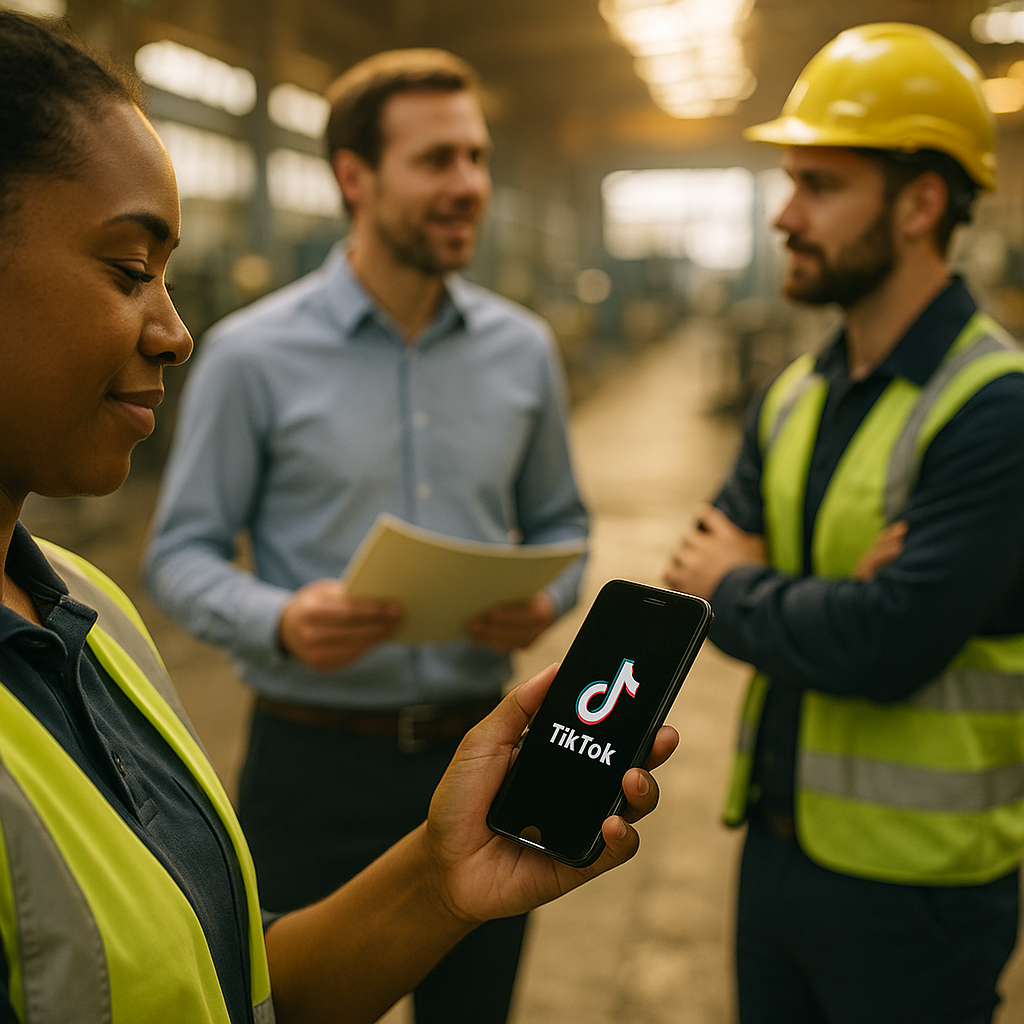
Case study: how a manufacturing firm used TikTok for specialized recruiting has become a timely playbook in 2025 as plants compete for niche talent like CNC programmers, industrial electricians, and automation techs. This article breaks down one firm’s strategy, execution, and results, with practical steps you can adapt without a huge budget or agency. Ready to see what actually worked and why?
TikTok recruiting strategy for manufacturing talent
The firm in this case study is a mid-sized U.S. manufacturer with multiple shifts, a modernizing facility, and a persistent hiring challenge: roles were highly skilled, locally constrained, and often misunderstood by candidates who assumed manufacturing meant dirty, repetitive work. Traditional job boards produced volume but not fit. Referrals helped, but the pipeline was inconsistent.
Leadership set a clear goal: increase qualified applicants for hard-to-fill technical roles while improving perception of the facility as a safe, tech-forward workplace. TikTok was chosen not as a “viral” channel but as a discovery engine for people who already watch hands-on content. The team treated it like a recruiting product:
- Audience: early-career tradespeople, military-to-civilian transitions, community college students, and experienced technicians open to switching employers.
- Roles in scope: CNC machinists, maintenance techs, industrial electricians, quality technicians, automation/controls, and tool & die.
- Value proposition: modern equipment, paid training, predictable schedules, career ladders, and visible safety culture.
- Constraints: no proprietary processes on camera, strict PPE compliance, and union/HR review of claims.
They built a content thesis: “Show the work honestly, show the people respectfully, and make the path to apply frictionless.” That meant avoiding exaggerated promises and focusing on proof. Every video had one job: clarify what the role is, what good looks like, and what the next step is to explore it.
To align internal stakeholders, the recruiting lead and an operations supervisor created a one-page governance guide: filming zones, approval workflow, and do-not-share topics. This reduced risk and made managers comfortable letting employees participate.
Employer branding on TikTok for skilled trades
The firm’s employer brand work began with an uncomfortable truth: candidates didn’t trust polished recruiting language. So the team shifted from slogans to evidence. They used TikTok to document three things candidates typically want but rarely see in job ads: environment, leadership behavior, and skill development.
Content pillars kept the channel consistent and scalable:
- “Day-in-the-life” role snapshots: 20–40 seconds showing the sequence of tasks, tools used, and who the role collaborates with.
- Skill proof and learning moments: short explanations like “what a VFD does,” “how we diagnose a sensor fault,” or “how CMM checks prevent scrap.”
- Safety and quality standards: lockout/tagout reminders, PPE checks, and “why we do it this way” quality gates.
- Pay transparency context: instead of vague claims, they explained pay bands, shift differentials, and how progression works after training milestones.
- Human stories: technicians talking about why they chose manufacturing, how they moved from entry-level to specialized work, and what they wish they knew earlier.
They also answered the follow-up questions candidates ask in DMs and comments, then turned those answers into videos. Examples included:
- “Do I need a degree?” They clarified which roles required licenses or credentials and which accepted equivalent experience, apprenticeships, or military training.
- “Is it all overtime?” They explained peak seasons, voluntary overtime rules, and how shift bids work.
- “How clean is the facility?” They showed housekeeping routines, ventilation, and designated areas.
This approach supported Google’s helpful-content expectations: clear specifics, first-hand experience from employees, and consistent alignment between what’s shown on video and what’s promised in the job description. It also improved quality of applicants by setting realistic expectations upfront.
Short-form video content plan for technical roles
The firm built a repeatable production system that didn’t depend on one charismatic creator. A recruiter owned the editorial calendar, while “shop-floor ambassadors” (volunteers across shifts) contributed footage. A supervisor served as the compliance checkpoint to ensure no sensitive details appeared.
Posting cadence: 4–6 videos per week, with at least two role-specific videos and one “career path” explainer. They kept most videos between 15 and 45 seconds, with occasional 60–90 second deep dives for complex roles like controls.
Video structure was intentionally formulaic to reduce effort and increase clarity:
- Hook (first 2 seconds): “This is what a maintenance tech actually does on 2nd shift.”
- Proof (next 10–30 seconds): show a task step-by-step with captions, keeping hands and tools in frame.
- Context (next 5–10 seconds): required skills, training provided, schedule basics.
- Call to action: “Comment ‘MAINT’ and we’ll send the job link” or “Apply through the link in bio.”
They optimized for search within TikTok by using plain-language keywords in on-screen text and captions: “CNC setup,” “industrial electrician,” “PLC troubleshooting,” “welding certification,” and the city/region. Hashtags were limited and specific; the team avoided generic tags that attracted irrelevant audiences.
Sound and style choices were practical, not performative. In loud areas they used text overlays and voiceover recorded in a quiet room. They used consistent templates for captions and a fixed end card showing: location, shift availability, and the simplest next step.
To prevent the channel from becoming repetitive, they rotated angles:
- “Tool of the week” (e.g., torque wrench, multimeter, bore gauge) tied directly to job requirements.
- “Common mistakes we train you out of” to signal mentorship without shaming.
- “What success looks like in 90 days” for each role, aligning expectations with onboarding.
One key decision improved trust: they avoided filming only the newest equipment. They showed older machines too, then explained what modernization looked like and how technicians contribute to upgrades. Candidates said this honesty helped them believe the rest of the story.
Hiring funnel optimization from TikTok to applications
TikTok attention does not automatically turn into qualified applicants. The firm treated conversion as a design problem and built a simple, measurable funnel from video to interview.
Step 1: A landing page per role family. Instead of sending viewers to a generic careers page, they created mobile-first pages for “Maintenance,” “CNC,” and “Quality.” Each page included:
- 3–5 bullet responsibilities written in plain language
- Required vs. preferred qualifications separated clearly
- Shift options, pay bands, differentials, and benefits highlights
- A short “what to expect in interviews” section
- A 60-second embedded video that matched the TikTok content
Step 2: Frictionless application. They reduced the application to under 10 minutes on mobile, removed redundant fields, and offered two paths: full application or “express interest” that triggered a recruiter call. This captured candidates who were curious but not ready to commit.
Step 3: Fast response time. The recruiting team set an internal standard: respond to qualified leads within one business day. Speed mattered because TikTok creates impulse interest. When response lagged, candidates disappeared.
Step 4: Screening built for specialized roles. They replaced generic screens with role-specific questions that respected candidates’ time:
- Maintenance: “Which of these have you done hands-on: motors, VFDs, pneumatics, hydraulics, PLC I/O?”
- CNC: “Do you set up? Edit offsets? Read G-code? What controls?”
- Quality: “CMM experience? GD&T comfort level? Calibration exposure?”
To address a common follow-up question—“Will I get rejected by an ATS?”—the recruiter explained in multiple videos exactly how applications were reviewed and what minimum requirements triggered a call. This transparency reduced anxiety and increased completion rates.
They also used comment-to-DM workflows carefully. When someone commented “MAINT,” the recruiter replied publicly with a neutral prompt (“Sent details”) and then DM’d the role landing page. They avoided collecting sensitive information in DMs and pointed candidates to the formal application for privacy and compliance.
TikTok recruiting metrics and results for a manufacturing company
The team measured success in hiring outcomes, not vanity metrics. Views and followers were monitored only as leading indicators. The core scorecard reflected recruiting reality:
- Qualified applicant rate: percentage of applicants meeting minimum role criteria
- Interview show rate: interviews attended vs. scheduled
- Time-to-first-contact: how fast recruiters responded to inbound interest
- Offer acceptance rate: a proxy for expectation-setting quality
- 90-day retention: early signal of role fit and onboarding alignment
- Cost per qualified applicant: compared against job boards and staffing agencies
Results (case-study summary): After launching the channel and funnel improvements, the firm reported a sustained increase in qualified applicants for maintenance and CNC roles and a reduction in reliance on agency placements. The most effective videos were not the most entertaining; they were the clearest. “What success looks like in 90 days” and “a real troubleshooting walk-through” consistently drove higher-quality inquiries than generic facility tours.
They also learned what did not work:
- Overly broad content attracted irrelevant audiences and diluted applicant quality.
- Trend-first videos performed inconsistently and were harder to approve internally.
- One-size-fits-all CTAs reduced conversion; role-specific CTAs improved it.
Operational impacts: The channel created unexpected internal benefits. Supervisors reported better alignment during onboarding because candidates arrived with a clearer picture of expectations. The safety team appreciated that videos reinforced correct behaviors. Employee ambassadors felt recognized, which supported morale.
EEAT considerations: The firm strengthened trust by documenting processes: who approves pay claims, how safety is verified in footage, and how candidate data is handled. They avoided medical, legal, or wage-compliance advice and instead linked to official company policies on the landing pages. This made the content not only engaging but reliable.
If you are wondering whether TikTok can work in a smaller labor market, this case suggests it can—if you focus on specificity, fast follow-up, and honest previews that reduce mismatch.
FAQs about TikTok recruiting for specialized manufacturing roles
-
Is TikTok effective for hiring experienced tradespeople, not just entry-level candidates?
Yes, when content shows advanced work and credible standards. Videos that demonstrate troubleshooting, setup practices, or quality controls attract experienced viewers because they can evaluate whether your shop is well-run.
-
How do we protect proprietary processes while filming on the shop floor?
Create filming zones, ban close-ups of sensitive parts, blur or avoid screens showing programs, and require supervisor approval before posting. Build a checklist: no customer identifiers, no drawings, no control-code details, and PPE compliance in every shot.
-
What should the call to action be on TikTok for recruiting?
Use one clear next step: a role-specific landing page or a keyword comment that triggers a DM with the link. Avoid sending traffic to a generic careers page; it increases drop-off on mobile.
-
Do we need paid ads, or can organic TikTok work?
Organic can work if you post consistently and answer candidate questions with role-specific videos. Paid promotion helps when you need predictable reach in a limited geography, but it should amplify proven organic formats, not replace them.
-
How many videos should we post per week to see recruiting impact?
In this case study, 4–6 posts per week supported steady learning and enough volume to test formats. If resources are limited, start with 3 high-clarity posts weekly and commit for at least eight weeks while you refine the funnel.
-
What metrics matter most for specialized recruiting on TikTok?
Track qualified applicants, time-to-first-contact, interview show rate, offer acceptance, and early retention. Views help you diagnose reach, but hiring metrics tell you whether the channel is attracting the right people and setting accurate expectations.
Conclusion: This case shows how TikTok can solve specialized recruiting problems in manufacturing when you treat it as a talent funnel, not a trend. Clear role previews, employee-led proof, and mobile-first applications turned curiosity into qualified conversations. The takeaway for 2025 is simple: be specific, respond fast, and let real work speak louder than polished slogans.
Top Influencer Marketing Agencies
The leading agencies shaping influencer marketing in 2026
Agencies ranked by campaign performance, client diversity, platform expertise, proven ROI, industry recognition, and client satisfaction. Assessed through verified case studies, reviews, and industry consultations.
Moburst

-
2

The Shelf
Boutique Beauty & Lifestyle Influencer AgencyA data-driven boutique agency specializing exclusively in beauty, wellness, and lifestyle influencer campaigns on Instagram and TikTok. Best for brands already focused on the beauty/personal care space that need curated, aesthetic-driven content.Clients: Pepsi, The Honest Company, Hims, Elf Cosmetics, Pure LeafVisit The Shelf → -
3

Audiencly
Niche Gaming & Esports Influencer AgencyA specialized agency focused exclusively on gaming and esports creators on YouTube, Twitch, and TikTok. Ideal if your campaign is 100% gaming-focused — from game launches to hardware and esports events.Clients: Epic Games, NordVPN, Ubisoft, Wargaming, Tencent GamesVisit Audiencly → -
4

Viral Nation
Global Influencer Marketing & Talent AgencyA dual talent management and marketing agency with proprietary brand safety tools and a global creator network spanning nano-influencers to celebrities across all major platforms.Clients: Meta, Activision Blizzard, Energizer, Aston Martin, WalmartVisit Viral Nation → -
5

The Influencer Marketing Factory
TikTok, Instagram & YouTube CampaignsA full-service agency with strong TikTok expertise, offering end-to-end campaign management from influencer discovery through performance reporting with a focus on platform-native content.Clients: Google, Snapchat, Universal Music, Bumble, YelpVisit TIMF → -
6

NeoReach
Enterprise Analytics & Influencer CampaignsAn enterprise-focused agency combining managed campaigns with a powerful self-service data platform for influencer search, audience analytics, and attribution modeling.Clients: Amazon, Airbnb, Netflix, Honda, The New York TimesVisit NeoReach → -
7

Ubiquitous
Creator-First Marketing PlatformA tech-driven platform combining self-service tools with managed campaign options, emphasizing speed and scalability for brands managing multiple influencer relationships.Clients: Lyft, Disney, Target, American Eagle, NetflixVisit Ubiquitous → -
8

Obviously
Scalable Enterprise Influencer CampaignsA tech-enabled agency built for high-volume campaigns, coordinating hundreds of creators simultaneously with end-to-end logistics, content rights management, and product seeding.Clients: Google, Ulta Beauty, Converse, AmazonVisit Obviously →