


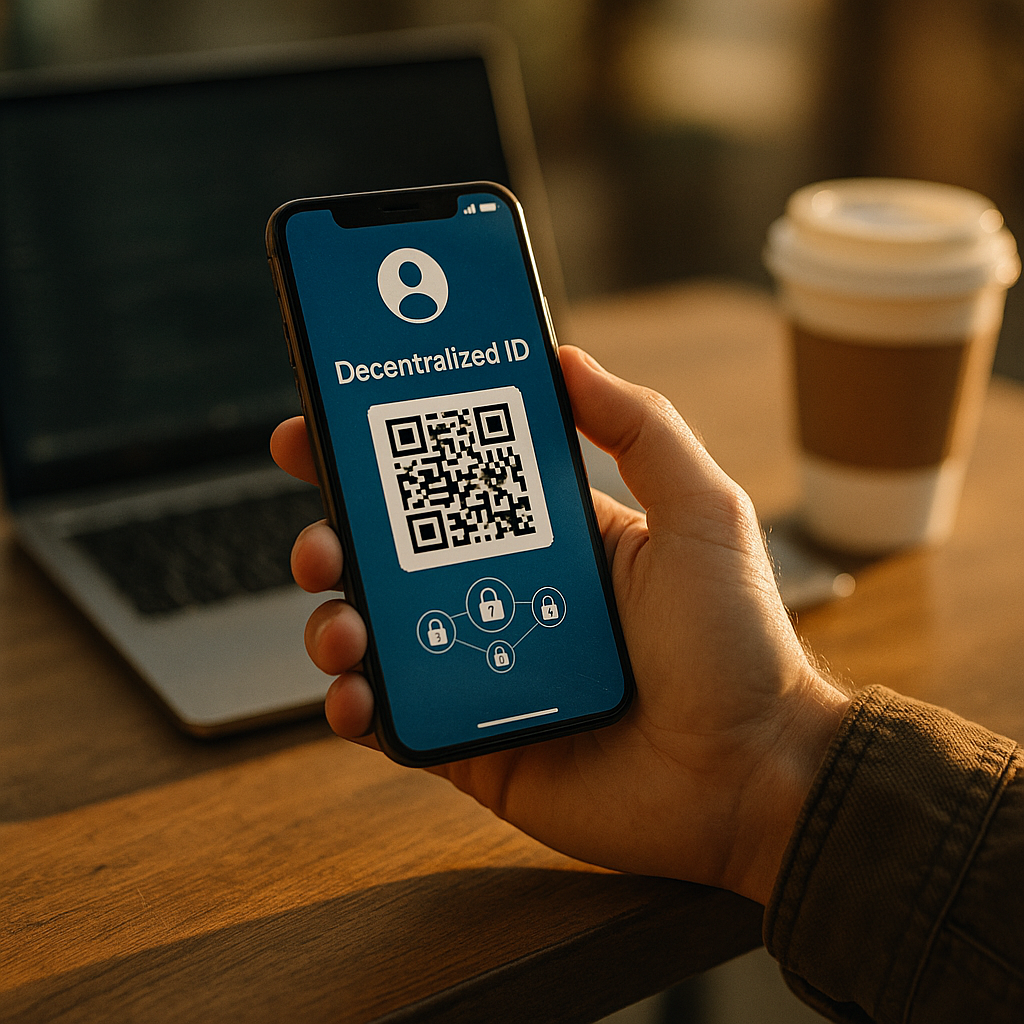
In 2026, decentralized identity solutions are shifting from niche innovation to a core brand priority. As fraud costs rise, privacy rules tighten, and consumers demand more control over personal data, companies are rethinking how identity works across digital touchpoints. The move is not only technical. It is strategic, operational, and increasingly competitive. What is driving this change now?
Consumer data privacy is accelerating decentralized identity adoption
Brands are moving toward decentralized identity because the old model is under pressure from every direction. Centralized identity systems store large volumes of customer information in company-controlled databases. That approach creates a clear target for attackers, increases compliance risk, and often frustrates users with repeated logins, password resets, and inconsistent consent experiences.
Decentralized identity changes the structure. Instead of relying on one central authority to hold and verify identity data, users keep verifiable credentials in digital wallets and share only the information required for a given interaction. A brand may need to know that a user is over a certain age, lives in a valid service region, or has an active membership. It does not always need the full identity record.
This matters because privacy expectations are much higher in 2026. Consumers now recognize the value of their personal data, and they are more willing to abandon brands that ask for too much information or fail to explain why they need it. Decentralized identity helps reduce data collection to the minimum necessary, which supports privacy-by-design practices and lowers the burden of storing sensitive information.
From an EEAT perspective, this shift is also grounded in practical expertise. Security teams, compliance leaders, and product owners increasingly prefer architectures that reduce unnecessary data retention. The less data a brand stores, the less it has to protect, govern, and justify. That is one reason decentralized identity is moving from pilot projects into broader deployment across retail, financial services, travel, healthcare, gaming, and enterprise software.
Identity fraud prevention is now a board-level priority
Another major driver is fraud. Account takeover, synthetic identity fraud, credential stuffing, loyalty fraud, and fake account creation continue to affect revenue, customer trust, and support costs. Traditional username-and-password systems are easy to attack at scale, especially when consumers reuse credentials across services.
Decentralized identity offers a stronger model because verification depends on cryptographic proofs and trusted credentials rather than static passwords or excessive personal data sharing. In practice, this can improve fraud resistance in several ways:
- Fewer centralized honeypots: Attackers cannot exploit one large customer identity database as easily when sensitive identity elements are not stored centrally.
- Stronger proof of legitimacy: Verifiable credentials can confirm specific facts without exposing full records.
- Reduced account recovery abuse: Passwordless and wallet-based verification can limit social engineering and reset fraud.
- Better signal quality: Brands can combine decentralized credentials with behavioral and device-based risk signals for smarter authentication.
Executives care because fraud is no longer just a security issue. It affects acquisition costs, checkout conversion, loyalty economics, and brand reputation. If customers do not trust a platform to protect their identity, they hesitate to sign up, transact, or store payment details. A decentralized approach can strengthen that trust while reducing operational friction.
Importantly, decentralized identity is not a magic shield. Brands still need strong governance, secure wallet integration, fraud monitoring, and user education. But compared with legacy identity stacks, it gives teams a more resilient foundation. That is why security and risk leaders are pushing it higher on the roadmap.
Digital identity wallets are improving customer experience across channels
Consumer adoption improves when security feels easier, not harder. That is one of the strongest reasons brands are investing in decentralized identity in 2026. Modern digital identity wallets can streamline onboarding, sign-in, age or eligibility verification, loyalty redemption, and cross-device authentication.
Instead of forcing users to create yet another account and enter the same details repeatedly, brands can request a limited credential from the customer’s wallet. The experience is faster, cleaner, and often more transparent. Users can see what they are sharing and approve only what is necessary.
For brands, this has measurable implications:
- Higher conversion: Simplified onboarding reduces abandonment during registration and checkout.
- Lower support volume: Password resets and account verification disputes decline with passwordless flows.
- Improved omnichannel consistency: Identity can move more smoothly between app, web, in-store, and partner environments.
- More accurate consent: Customers can manage permissions with greater clarity.
Many readers ask a practical question here: if decentralized identity is user-controlled, does it weaken the brand relationship? In most cases, no. It changes the basis of that relationship. Instead of relying on data lock-in, brands compete through trust, product quality, and experience. That can create a stronger relationship because it is built on explicit permission rather than silent accumulation of personal information.
The most effective implementations also avoid overengineering. Brands that succeed typically start with one or two high-friction use cases, such as sign-up, age verification, or loyalty access. They prove customer value first, then expand. This pragmatic rollout pattern is a key reason momentum is building now.
Zero-party data strategy works better with decentralized identity
Marketing teams are also paying close attention. As signal loss, consent requirements, and changing platform policies reshape digital measurement, brands need more trustworthy and permission-based ways to understand customers. Decentralized identity supports this by making data sharing more intentional.
There is a common misconception that decentralized identity limits personalization. In reality, it can improve it when used correctly. Users are often more willing to share accurate information when they know they remain in control and can revoke access. That creates a better foundation for zero-party and first-party data strategies.
For example, a customer might share verified preferences, membership status, location eligibility, or purchase entitlements without exposing unrelated personal details. This leads to cleaner data, better segmentation, and more relevant experiences. It also reduces the risk of basing marketing decisions on stale or inferred profiles.
Brands benefit in several ways:
- Better consent quality: Permission is more transparent and easier to document.
- Higher data accuracy: Verified credentials can reduce false inputs and duplicate accounts.
- Lower compliance complexity: Teams can operate with less unnecessary personal data.
- Stronger loyalty mechanics: Rewards and access can be linked to portable, user-controlled credentials.
This is especially valuable for sectors where trust and eligibility matter. Think financial products, travel services, digital subscriptions, regulated commerce, healthcare interactions, and premium membership programs. In these environments, confidence in the validity of user claims matters as much as campaign performance.
That said, marketing leaders should work closely with legal, security, and product teams. Decentralized identity is not just another martech layer. It changes how data is requested, verified, stored, and activated. Brands that treat it as a standalone marketing experiment usually struggle. The companies seeing results are the ones integrating identity decisions across the business.
Compliance and cybersecurity resilience are pushing enterprise identity transformation
Regulatory pressure continues to influence brand decisions in 2026, but the bigger story is operational resilience. Centralized identity systems require constant oversight: access controls, retention policies, breach response planning, vendor reviews, and user rights management. All of that becomes more complex as organizations expand globally and connect more systems, partners, and devices.
Decentralized identity can reduce some of this complexity by limiting how much personal data a company must retain and by introducing verifiable, portable trust frameworks. This does not remove compliance obligations, but it can reduce the blast radius of failure and simplify certain workflows.
Enterprise leaders evaluating identity transformation usually focus on five questions:
- Will this reduce breach exposure? Often yes, because fewer sensitive records are stored centrally.
- Can it work with existing systems? Increasingly yes, through standards-based integrations and phased deployment.
- Will customers understand it? They can, if the user experience is simple and the value is clear.
- Does it support auditability? It can, provided governance, credential issuance, and verification logs are designed well.
- Is it worth the investment? For many brands, yes, when identity friction, fraud, and compliance costs are already high.
One reason adoption is growing is that the supporting ecosystem has matured. Wallet experiences are improving. Standards are more stable. More vendors support interoperable credential issuance and verification. Enterprise identity teams also have clearer implementation playbooks than they did when decentralized identity first emerged.
Still, success depends on governance. Brands need defined trust frameworks, clear revocation processes, role-based access policies, and strong vendor due diligence. Helpful content on this topic should say the quiet part plainly: decentralized identity is powerful, but only when operational discipline matches the technology.
Web3 identity solutions are becoming mainstream brand infrastructure
Although decentralized identity is often associated with blockchain or Web3 conversations, the brand shift in 2026 is broader than hype cycles. Companies are not adopting these systems to sound innovative. They are doing it because identity now sits at the center of growth, trust, security, and customer experience.
Mainstream adoption is being driven by practical use cases:
- Retail and loyalty: Portable membership credentials, fraud-resistant rewards, and seamless repeat purchases.
- Financial services: Stronger onboarding, reusable verification, and reduced document handling.
- Travel and hospitality: Faster check-in, eligibility verification, and more consistent identity across partners.
- Healthcare and wellness: Controlled sharing of sensitive attributes with tighter privacy boundaries.
- Gaming and digital platforms: Account portability, age checks, and anti-bot defenses.
- Enterprise ecosystems: Workforce credentials, partner access, and reduced identity administration costs.
Brands also recognize a strategic advantage: decentralized identity can reduce dependency on external platforms that mediate trust, data access, and user authentication. That does not mean brands will abandon major identity providers altogether. It means they want more flexibility and direct trust relationships with customers.
If you are assessing whether this trend is relevant to your brand, ask a simple question: where is identity friction costing us money or trust? If the answer includes onboarding drop-off, repeated verification, high fraud loss, password support costs, customer privacy concerns, or fragmented channel experiences, decentralized identity deserves serious attention.
The move is happening now because the business case is stronger than before. Better customer experience, reduced risk, cleaner consent, and lower data exposure create a compelling package. For many brands, waiting is starting to look more expensive than acting.
FAQs about decentralized identity for brands
What is decentralized identity in simple terms?
Decentralized identity is a way for people or organizations to control and share verified identity information without relying on one central company to store everything. Users hold credentials in digital wallets and share only what is needed.
Why are brands adopting decentralized identity in 2026?
Brands are adopting it because it helps address fraud, privacy expectations, compliance pressure, and poor customer experience caused by legacy login and verification systems. The technology and standards are also mature enough to support real deployments.
Does decentralized identity replace passwords?
It often supports passwordless experiences, but replacement depends on the implementation. Many brands use it first for high-friction or high-risk flows such as onboarding, account recovery, or age verification, then expand from there.
Is decentralized identity only relevant for crypto or blockchain brands?
No. It is increasingly relevant for mainstream sectors such as retail, finance, healthcare, travel, SaaS, gaming, and enterprise services. The strongest use cases are usually operational, not speculative.
How does decentralized identity improve privacy?
It allows users to share specific verified attributes instead of full identity records. That supports data minimization, reduces unnecessary storage of personal information, and gives users clearer control over consent.
Can decentralized identity reduce fraud?
Yes, especially when combined with risk analytics and strong governance. It can reduce reliance on weak passwords, lower exposure from centralized data stores, and improve the integrity of identity verification.
What are the main challenges brands should expect?
Common challenges include integration with legacy systems, wallet adoption, user education, governance design, partner interoperability, and selecting trusted standards and vendors. Most brands succeed by starting with one focused use case.
Will customers actually use decentralized identity wallets?
Adoption improves when the value is obvious. Customers are more likely to use wallets when they save time, reduce password frustration, and offer visible privacy benefits. Poor UX will slow adoption, so simplicity matters.
Brands are moving toward decentralized identity solutions because the model aligns with today’s business reality: less data risk, stronger trust, and smoother customer journeys. In 2026, the question is no longer whether decentralized identity is viable. It is whether your organization can afford the inefficiency and exposure of legacy identity systems. Start with one clear use case, prove value, and scale deliberately.
Top Influencer Marketing Agencies
The leading agencies shaping influencer marketing in 2026
Agencies ranked by campaign performance, client diversity, platform expertise, proven ROI, industry recognition, and client satisfaction. Assessed through verified case studies, reviews, and industry consultations.
Moburst

-
2

The Shelf
Boutique Beauty & Lifestyle Influencer AgencyA data-driven boutique agency specializing exclusively in beauty, wellness, and lifestyle influencer campaigns on Instagram and TikTok. Best for brands already focused on the beauty/personal care space that need curated, aesthetic-driven content.Clients: Pepsi, The Honest Company, Hims, Elf Cosmetics, Pure LeafVisit The Shelf → -
3

Audiencly
Niche Gaming & Esports Influencer AgencyA specialized agency focused exclusively on gaming and esports creators on YouTube, Twitch, and TikTok. Ideal if your campaign is 100% gaming-focused — from game launches to hardware and esports events.Clients: Epic Games, NordVPN, Ubisoft, Wargaming, Tencent GamesVisit Audiencly → -
4

Viral Nation
Global Influencer Marketing & Talent AgencyA dual talent management and marketing agency with proprietary brand safety tools and a global creator network spanning nano-influencers to celebrities across all major platforms.Clients: Meta, Activision Blizzard, Energizer, Aston Martin, WalmartVisit Viral Nation → -
5

The Influencer Marketing Factory
TikTok, Instagram & YouTube CampaignsA full-service agency with strong TikTok expertise, offering end-to-end campaign management from influencer discovery through performance reporting with a focus on platform-native content.Clients: Google, Snapchat, Universal Music, Bumble, YelpVisit TIMF → -
6

NeoReach
Enterprise Analytics & Influencer CampaignsAn enterprise-focused agency combining managed campaigns with a powerful self-service data platform for influencer search, audience analytics, and attribution modeling.Clients: Amazon, Airbnb, Netflix, Honda, The New York TimesVisit NeoReach → -
7

Ubiquitous
Creator-First Marketing PlatformA tech-driven platform combining self-service tools with managed campaign options, emphasizing speed and scalability for brands managing multiple influencer relationships.Clients: Lyft, Disney, Target, American Eagle, NetflixVisit Ubiquitous → -
8

Obviously
Scalable Enterprise Influencer CampaignsA tech-enabled agency built for high-volume campaigns, coordinating hundreds of creators simultaneously with end-to-end logistics, content rights management, and product seeding.Clients: Google, Ulta Beauty, Converse, AmazonVisit Obviously →