


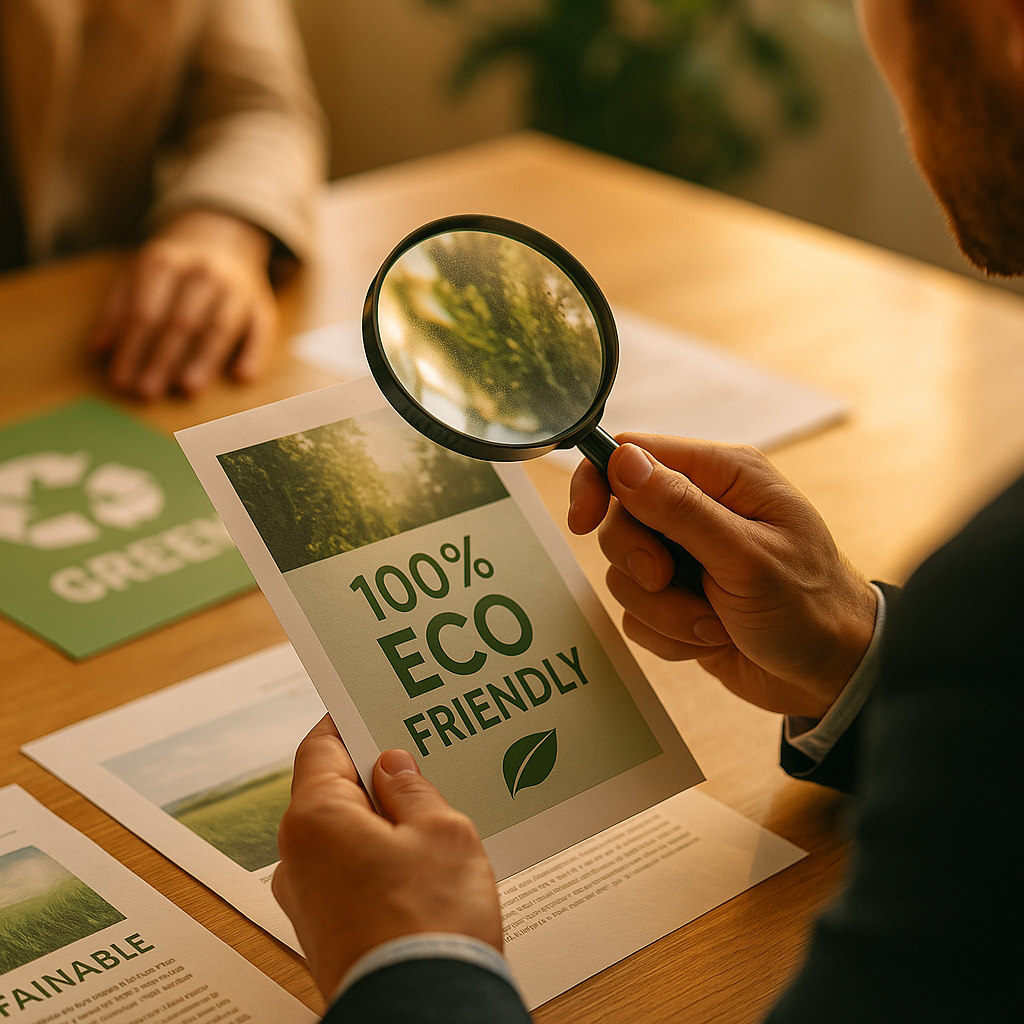
Environmental and ESG marketing claims can build trust, win customers, and attract investors, but they also create legal exposure when disclosures are vague, incomplete, or unsupported. In 2026, regulators, consumers, and competitors scrutinize sustainability messaging more closely than ever. Companies need accurate substantiation, clear disclosures, and cross-functional review before publishing claims. Here is how to reduce risk without weakening impact.
Understanding environmental marketing claims in 2026
Environmental marketing claims include statements about climate impact, recyclability, carbon neutrality, renewable energy use, ethical sourcing, biodiversity protection, and broader ESG performance. These claims appear on product packaging, websites, investor presentations, app store pages, paid ads, social posts, sustainability reports, and sales collateral. Because they influence purchasing and investment decisions, they now attract close attention from regulators and private plaintiffs alike.
The legal challenge is straightforward: if a claim gives a misleading net impression, a disclaimer may not save it. That is true even when each individual sentence appears technically accurate. Authorities increasingly assess the full context, including headline language, design, imagery, placement, fine print, and omitted facts. A leaf icon, green color palette, or “planet friendly” banner can contribute to a deceptive impression if the substantiation behind it is weak.
Today’s enforcement landscape also extends beyond traditional consumer protection law. Companies may face:
- Advertising law scrutiny for deceptive or unsubstantiated claims
- Securities and investor disclosure risk when ESG statements affect valuation or capital raising
- Competition claims from rivals challenging comparative environmental statements
- Contract and procurement risk where B2B buyers rely on sustainability representations
- Class action exposure for alleged greenwashing or omission of material environmental impacts
The practical takeaway is that ESG messaging is no longer just a brand issue. It sits at the intersection of legal, compliance, sustainability, finance, and marketing. Businesses that treat disclosures as an afterthought often create avoidable risk. Businesses that build a disciplined review process can still communicate real progress with confidence.
Key ESG disclosure laws every marketer should know
ESG disclosure laws vary by jurisdiction, but several themes are now consistent across major markets. First, claims must be substantiated before publication. Second, disclosures must be clear, prominent, and understandable to the intended audience. Third, broad claims require robust evidence because they imply more than narrow, qualified statements. Fourth, omission of limitations can be just as misleading as an outright false statement.
Marketers should pay particular attention to these legal categories in 2026:
- Consumer protection and unfair competition rules: These govern advertising to the public and generally prohibit misleading environmental benefit claims, hidden qualifications, and unsupported comparisons.
- Sector-specific labeling rules: Products such as food, cosmetics, textiles, packaging, electronics, and financial products may face additional rules on composition, disposal, or sustainability labeling.
- Corporate and securities disclosure frameworks: Public companies and regulated entities may need consistency between marketing claims, annual reporting, climate disclosures, and governance statements.
- Local language and digital disclosure standards: Claims in apps, paid search, influencer content, and social media must still meet disclosure obligations despite limited character space or mobile layouts.
A common mistake is assuming legal risk exists only when making explicit promises such as “zero emissions” or “100% sustainable.” In reality, softer statements like “eco-conscious,” “responsibly made,” or “supports a greener future” can trigger review if consumers would reasonably interpret them as objective environmental benefits. The broader the wording, the stronger the evidence required.
Another mistake is importing investor-facing ESG statements into consumer marketing. Materiality standards differ, and language that works in a governance or risk report may become misleading when condensed into a product claim. If your sustainability report explains significant exceptions, dependencies, or future targets, those limits should not disappear in marketing creative.
Greenwashing compliance: how to substantiate claims properly
Greenwashing compliance begins with evidence, not copywriting. Before any claim goes live, ask a simple question: what proof would a skeptical regulator or competitor expect to see? If the answer is unclear, the claim is not ready.
Strong substantiation usually includes a mix of internal data, supplier certifications, testing protocols, lifecycle analysis, and documented methodologies. The required evidence depends on the claim type. For example, a “recyclable” claim may require proof that the item can be collected, sorted, and processed in practice for a substantial share of the relevant market. A “carbon neutral” claim may require transparent accounting boundaries, offset details, reduction strategy, and timing assumptions. A “made with renewable energy” claim may require facility-level sourcing evidence rather than broad corporate purchasing statements.
Use this review framework before publishing:
- Define the exact claim: Identify what the words, visuals, and context together communicate.
- Map the claim scope: Does it apply to a product, a packaging component, one facility, a region, or the entire company?
- Collect substantiation: Gather test results, supplier declarations, audit reports, accounting methods, and internal approvals.
- Identify qualifications: Note any conditions, exclusions, trade-offs, or future assumptions.
- Check prominence: Ensure disclosures appear close to the claim and are easy to read on mobile and desktop.
- Stress-test the net impression: Ask whether an average reader could still take away an overstated message.
- Archive the record: Keep dated evidence and approval logs in case a regulator or plaintiff challenges the claim later.
Comparative claims deserve special care. Statements such as “greener than leading competitors” or “30% lower footprint” require a fair basis of comparison, aligned methodologies, and current underlying data. If the comparison relies on selective metrics, limited geographies, or a narrow product configuration, those limitations must be disclosed clearly.
Forward-looking ESG claims also need discipline. If you say your company “will be net zero by a stated date,” readers should be able to understand whether that target depends on operational reductions, product redesign, supply chain engagement, renewable procurement, carbon removals, or offsets. Targets without a credible pathway can create both legal and reputational risk.
Sustainability advertising regulations and disclosure best practices
Sustainability advertising regulations increasingly focus on disclosure quality. A disclosure is useful only when people actually see it and understand it. In practice, that means legal teams and marketers must think about design, placement, device behavior, and audience expectations, not just wording.
Follow these best practices:
- Keep disclosures close: Place qualifications immediately next to the claim or through an obvious, unavoidable mechanism. Do not hide material limits in a footer or distant landing page.
- Use plain language: Replace technical jargon with words that ordinary consumers can understand. If technical terms are necessary, define them.
- Match the emphasis: A bold environmental claim paired with tiny gray qualifying text often fails the prominence test.
- Make mobile a priority: If most traffic is mobile, disclosures must remain visible and readable on small screens without awkward taps or scrolling.
- Avoid absolute terms unless truly accurate: Words like “always,” “clean,” “green,” “non-toxic,” or “sustainable” can overstate reality.
- Explain conditions of use: If a benefit depends on specific disposal methods, local facilities, subscription choices, or regional energy mixes, say so.
Visual claims matter too. Imagery of forests, oceans, recycling loops, or emissions-free operations can reinforce an environmental message even without text. Review creative assets for implied claims. The same applies to badges and seals. If your business creates its own sustainability icon, consumers may interpret it as an independent certification. That is risky unless the basis and issuer are clearly explained.
Influencer and affiliate campaigns add another layer. If creators promote environmental benefits, your company remains exposed if those statements are misleading or inadequately disclosed. Provide approved claim language, train creators on required qualifiers, monitor content after posting, and correct noncompliant messaging quickly. The fastest-moving channels often create the biggest disclosure gaps.
Climate claim substantiation for high-risk statements
Climate claim substantiation deserves a separate process because climate statements often carry broad implications and attract heightened scrutiny. Terms like “net zero,” “carbon neutral,” “climate positive,” and “decarbonized” can mean very different things depending on boundaries, measurement periods, and the role of offsets or removals.
If your company uses climate claims, answer these questions internally before external publication:
- What is covered? Scope of operations, products, business units, or supply chain categories
- What is the baseline? Measurement year, methodology, and material assumptions
- What reductions have already occurred? Actual operational or supply chain changes, not just future plans
- What role do offsets play? Whether offsets are used, what type, for how long, and under what quality criteria
- Are claims time-bound? Whether the statement refers to current status, an annual accounting period, or a future target
- What are the main limitations? Data gaps, estimation methods, excluded emissions, and dependencies on third parties
For many brands, the safest route is precision. A narrowly framed statement such as “packaging emissions reduced by 18% per unit across our EU operations based on internally verified logistics and material data” is often more defensible than a broad statement like “low-carbon product.” Precision may feel less dramatic, but it builds credibility and usually performs better over time with informed buyers, procurement teams, and regulators.
Businesses should also align climate marketing with public sustainability reports and financial disclosures. If one team describes offsets as a temporary bridge while another markets them as a permanent climate solution, that inconsistency can become evidence of weak governance. Consistency is an EEAT signal as well as a legal safeguard: expertise and trustworthiness show up in how well your company speaks with one voice.
ESG legal risk management through internal governance
ESG legal risk management works best when it is operationalized. The goal is not to slow marketing down. It is to create a repeatable system that catches weak claims before they go public and helps strong claims launch faster.
An effective internal governance model usually includes:
- Claim taxonomy: A list of approved, restricted, and prohibited claim types with examples
- Review workflows: Clear routing between marketing, legal, sustainability, procurement, and investor relations when needed
- Evidence standards: Minimum substantiation requirements for each claim category
- Disclosure templates: Pre-approved language for common qualifications, adapted to channel and geography
- Training: Regular education for creative teams, product marketers, sales, and executives
- Monitoring and updates: Ongoing review of live claims as rules, products, and supply chains change
Assign ownership. Someone should be accountable for maintaining substantiation files and verifying that evidence stays current. Environmental claims often outlive the data behind them. A webpage may remain live after a supplier changes materials, a recycling pathway disappears, or a facility loses renewable sourcing. Periodic audits help prevent stale claims from becoming false claims.
It is also smart to establish an escalation pathway for high-risk statements. Broad climate claims, product-wide sustainability promises, and investor-sensitive ESG language should receive enhanced review. If the claim touches multiple jurisdictions, local legal input may be necessary because disclosure expectations are not identical across markets.
Finally, document your process. If your company is challenged, a well-maintained record showing reasonable review, expert involvement, and supporting evidence can materially improve your position. Good governance will not cure a bad claim, but it can reduce mistakes and demonstrate that your company takes accuracy seriously.
FAQs on ESG compliance and environmental claims
What is the biggest legal risk with environmental marketing claims?
The biggest risk is creating a misleading overall impression. Even if a statement is partially true, it may still be deceptive if important limitations are omitted or hidden in weak disclosures.
Can a company use broad terms like “eco-friendly” or “sustainable”?
These terms are high risk because consumers often interpret them broadly. Use them only if you can support the full implied meaning, or replace them with specific, qualified claims tied to measurable attributes.
Are disclaimers enough to fix a risky ESG claim?
Not always. If the main claim is too broad or prominent, a small disclaimer may not cure the problem. The disclosure must be clear, close, and strong enough to shape the net impression.
What evidence is needed to support a carbon neutral claim?
You typically need transparent accounting boundaries, a recognized methodology, current emissions data, details on reductions achieved, and full information about any offsets or removals used to support the claim.
Do ESG claims on social media need the same level of compliance as website claims?
Yes. Limited space does not remove disclosure obligations. If a platform cannot accommodate a clear and compliant claim, revise the claim or direct users through a disclosure mechanism that is obvious and effective.
Who should review sustainability marketing before it goes live?
At minimum, marketing and legal should review it. For higher-risk claims, involve sustainability, procurement, product teams, compliance, and investor relations to confirm consistency and substantiation.
How often should environmental claims be revalidated?
Review them on a regular schedule and whenever there is a product change, supplier change, methodology update, new regulation, or campaign refresh. Annual review is a common baseline, but higher-risk claims may need more frequent checks.
What is the safest way to communicate ESG progress?
Use precise, measurable statements with clear boundaries and visible qualifications. Avoid aspirational language unless you can explain the roadmap, assumptions, and current status behind the target.
Environmental and ESG marketing claims require more than good intentions. In 2026, companies need substantiation, prominent disclosures, consistent cross-channel messaging, and internal governance that keeps claims accurate as products and regulations evolve. The clearest path is also the strongest one: make specific claims, explain limits, document proof, and treat compliance as part of credible brand building.
Top Influencer Marketing Agencies
The leading agencies shaping influencer marketing in 2026
Agencies ranked by campaign performance, client diversity, platform expertise, proven ROI, industry recognition, and client satisfaction. Assessed through verified case studies, reviews, and industry consultations.
Moburst

-
2

The Shelf
Boutique Beauty & Lifestyle Influencer AgencyA data-driven boutique agency specializing exclusively in beauty, wellness, and lifestyle influencer campaigns on Instagram and TikTok. Best for brands already focused on the beauty/personal care space that need curated, aesthetic-driven content.Clients: Pepsi, The Honest Company, Hims, Elf Cosmetics, Pure LeafVisit The Shelf → -
3

Audiencly
Niche Gaming & Esports Influencer AgencyA specialized agency focused exclusively on gaming and esports creators on YouTube, Twitch, and TikTok. Ideal if your campaign is 100% gaming-focused — from game launches to hardware and esports events.Clients: Epic Games, NordVPN, Ubisoft, Wargaming, Tencent GamesVisit Audiencly → -
4

Viral Nation
Global Influencer Marketing & Talent AgencyA dual talent management and marketing agency with proprietary brand safety tools and a global creator network spanning nano-influencers to celebrities across all major platforms.Clients: Meta, Activision Blizzard, Energizer, Aston Martin, WalmartVisit Viral Nation → -
5

The Influencer Marketing Factory
TikTok, Instagram & YouTube CampaignsA full-service agency with strong TikTok expertise, offering end-to-end campaign management from influencer discovery through performance reporting with a focus on platform-native content.Clients: Google, Snapchat, Universal Music, Bumble, YelpVisit TIMF → -
6

NeoReach
Enterprise Analytics & Influencer CampaignsAn enterprise-focused agency combining managed campaigns with a powerful self-service data platform for influencer search, audience analytics, and attribution modeling.Clients: Amazon, Airbnb, Netflix, Honda, The New York TimesVisit NeoReach → -
7

Ubiquitous
Creator-First Marketing PlatformA tech-driven platform combining self-service tools with managed campaign options, emphasizing speed and scalability for brands managing multiple influencer relationships.Clients: Lyft, Disney, Target, American Eagle, NetflixVisit Ubiquitous → -
8

Obviously
Scalable Enterprise Influencer CampaignsA tech-enabled agency built for high-volume campaigns, coordinating hundreds of creators simultaneously with end-to-end logistics, content rights management, and product seeding.Clients: Google, Ulta Beauty, Converse, AmazonVisit Obviously →