


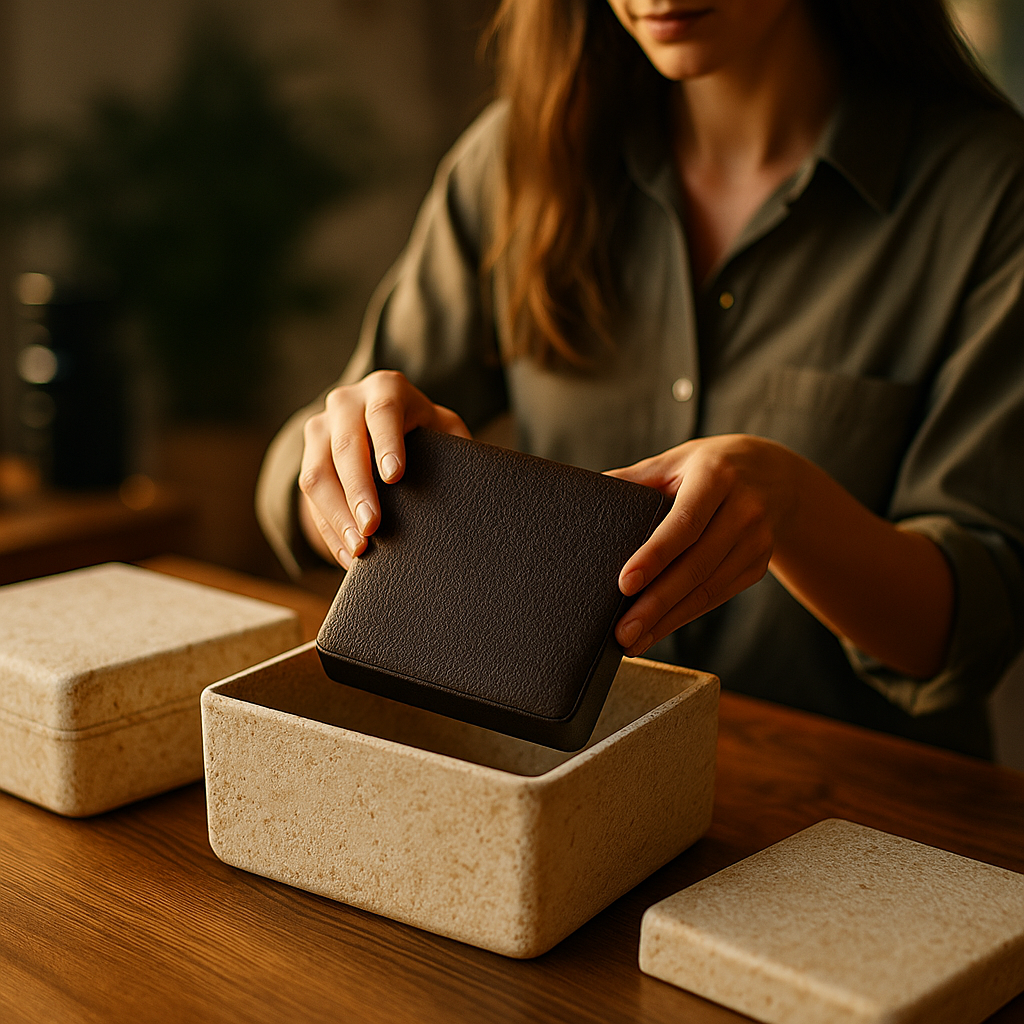
Luxury brands now face a sharper challenge: deliver unforgettable unboxing without adding waste. This case study on mycelium packaging shows how Ecovative turned a biomaterial innovation into a premium B2B win. By aligning sustainability, performance, and brand storytelling, the company earned trust from design-conscious clients. The bigger lesson is not just what Ecovative made, but how it sold the future.
What Made sustainable luxury packaging a Real Market Opportunity
Luxury buyers expect packaging to do several jobs at once. It must protect fragile products, feel exclusive, support a premium brand story, and increasingly, satisfy environmental standards. In 2026, that combination is no longer optional. High-end fashion, cosmetics, wine, fragrance, and electronics brands are under pressure from retailers, investors, and consumers to replace plastics and foam with lower-impact alternatives that still look and perform like luxury.
Ecovative recognized that tension early. Traditional protective packaging materials such as expanded polystyrene offered strong cushioning, but they also carried obvious reputational baggage. They are difficult to position as premium in an era when sustainability claims are inspected closely. Ecovative’s core insight was simple but powerful: if a natural material could match the functional requirements of protective packaging while elevating a brand’s environmental credibility, luxury clients would pay attention.
The company’s mycelium-based packaging did exactly that. Mycelium, the root-like structure of fungi, can be grown into molded forms using agricultural waste as feedstock. That gave Ecovative a compelling value proposition:
- Protection: custom molded forms for product stability and shock absorption
- Appearance: a distinct natural texture that signals innovation rather than compromise
- Sustainability: compostable material with a clear end-of-life story
- Brand differentiation: packaging that becomes part of the brand narrative
Luxury brands are selective because a packaging failure can damage both product and reputation. Ecovative did not win by selling “green” in the abstract. It won by showing that environmental performance could strengthen premium positioning instead of weakening it.
How Ecovative packaging case study Became a Premium Sales Story
Ecovative’s success with luxury clients was not based on material science alone. The company translated technical innovation into a business case that premium brands could understand quickly. That is a critical EEAT lesson: expertise matters, but expertise must be communicated in a way that reduces buyer risk.
Rather than present mycelium as a niche eco experiment, Ecovative framed it as a packaging platform. That positioning made a difference. Luxury procurement teams, packaging engineers, sustainability leads, and creative directors all needed reasons to say yes. Ecovative’s sales approach addressed each stakeholder:
- For procurement: a differentiated alternative to petroleum-based protective packaging
- For engineers: molded forms designed around product dimensions and transit needs
- For sustainability teams: a measurable shift toward renewable, compostable materials
- For brand teams: a high-impact story customers could see and touch
This multi-stakeholder strategy matters because luxury packaging decisions are rarely made by one person. Premium brands often involve operations, legal, retail, and brand leadership before approving a material change. Ecovative reduced friction by treating packaging as both a performance product and a communication asset.
The company also benefited from a visible founder-led innovation story. Buyers in luxury categories often prefer partners with authentic technical depth, clear manufacturing controls, and a credible long-term vision. Ecovative’s public profile as a biomaterials innovator helped establish authority. In EEAT terms, it strengthened experience, expertise, authoritativeness, and trustworthiness at the company level.
That trust was essential because luxury clients do not want vague sustainability promises. They want to know: Can this material scale? Will it maintain consistency across production runs? Is it safe for product contact where relevant? What happens in shipping, storage, and disposal? Ecovative’s go-to-market approach succeeded because it anticipated those questions and answered them before they became objections.
Why compostable packaging for luxury brands Solved More Than a Sustainability Problem
Ecovative’s mycelium packaging appealed to luxury brands because it solved three high-value problems at once: waste reduction, premium differentiation, and customer perception. Many sustainable materials enter the market as substitutes. Ecovative’s material worked more like a strategic upgrade.
First, it gave brands a more credible environmental narrative. Consumers have become more aware of greenwashing, especially in premium categories where packaging can feel excessive. A compostable protective insert made from grown material is easier to explain than complex mixed-material formats with unclear disposal instructions. That clarity matters in customer experience.
Second, the packaging changed the unboxing moment. Luxury packaging is not just about shelf presence. It is part of the product ritual. Mycelium has an organic, tactile quality that feels intentional. Used well, it can communicate craftsmanship, rarity, and design confidence. For brands trying to signal modern luxury, that texture can be an advantage rather than a limitation.
Third, the material helped brands stand apart in a crowded market. Many premium players now claim sustainability. Fewer can demonstrate it in a highly visible way. Protective packaging is often one of the first physical brand touchpoints a customer encounters. Replacing foam with mycelium turns a hidden operational choice into a visible proof point.
That said, Ecovative’s strength was not pretending mycelium fit every use case. Compostable packaging works best when brands are realistic about moisture exposure, storage conditions, volume planning, and design constraints. By setting proper expectations, Ecovative protected client trust. This is a core helpful-content principle: practical accuracy outperforms broad claims.
Luxury buyers likely asked a fair question: if the material looks natural, will it seem less refined? Ecovative answered through design and context. In luxury, refinement does not always mean glossy or synthetic. Increasingly, it means thoughtful, low-waste, and materially honest. That shift created room for mycelium to feel premium.
How biodegradable packaging innovation Helped Ecovative Win Trust
Innovation alone rarely closes enterprise deals. Buyers want proof. Ecovative’s path to luxury clients depended on building trust through testing, customization, and operational reliability.
For protective packaging, performance evidence is central. Brands need confidence that inserts can withstand shipping conditions and protect products consistently. Ecovative’s custom-growth approach gave it an advantage here. Instead of forcing brands into standard shapes, the company could create forms tailored to product geometry. That improved fit and reduced movement during transit.
Trust also depends on process discipline. Luxury brands are highly sensitive to inconsistency. If one shipment looks slightly off, customer perception suffers. Ecovative therefore had to show not just that mycelium could be grown, but that it could be produced with repeatable quality standards. That includes feedstock management, growth conditions, mold precision, drying, and final inspection.
Another reason the company gained traction was its ability to support a broader strategic shift. Premium brands do not usually replace packaging material in isolation. They use such changes to support environmental targets, investor communications, and retail positioning. Ecovative gave them an innovation story with substance behind it.
From an EEAT perspective, several trust signals likely mattered in client evaluation:
- Material transparency: clear explanation of inputs, production, and disposal
- Use-case clarity: guidance on where mycelium packaging works best
- Testing and validation: evidence that protective performance meets commercial needs
- Manufacturing credibility: confidence in consistency and supply planning
- Brand fit: ability to align packaging design with a luxury experience
This is one of the clearest reasons Ecovative won premium business. It sold a new material without asking clients to accept unnecessary uncertainty. It turned a novel biomaterial into a dependable packaging category.
Lessons in eco-friendly packaging strategy for Premium Brands
The Ecovative case offers practical lessons for any company trying to sell sustainable materials into high-end markets.
1. Sell business outcomes, not just material properties. Luxury clients were not buying fungi. They were buying product protection, customer experience, and sustainability credibility. Ecovative’s commercial success came from linking material science to brand and operational outcomes.
2. Treat packaging as media. For premium brands, every touchpoint communicates value. Ecovative’s mycelium packaging worked because it was visible, memorable, and aligned with modern brand storytelling. Sustainable packaging becomes more powerful when customers can immediately understand what makes it different.
3. Reduce perceived risk early. New materials create hesitation. Ecovative appears to have won by answering operational questions up front: scalability, consistency, fit, shipping protection, and disposal. If your product is novel, your sales process must feel familiar and reliable.
4. Align innovation with changing definitions of luxury. In 2026, premium no longer means excess by default. It often means discernment. Brands that remove waste while preserving beauty can strengthen their positioning. Ecovative matched that cultural shift at the right time.
5. Make sustainability specific. General claims rarely persuade sophisticated buyers. Clear material logic, transparent end-of-life information, and fit-for-purpose design do. Ecovative’s product was easy to explain because the sustainability story was tangible.
These lessons also reveal why some sustainable packaging startups fail to land large accounts. They focus heavily on invention and too little on adoption. Enterprise buyers need implementation confidence as much as environmental benefit.
What the mycelium packaging market Means for the Future of Luxury Packaging
Ecovative’s success with luxury clients signals a broader market direction. Premium brands increasingly want packaging materials that support circularity goals without flattening the customer experience. That opens the door for biomaterials that can combine function, story, and visual differentiation.
Mycelium packaging is especially well positioned where brands need molded protection and want to move away from foam. It is not a universal answer for every packaging requirement, and sophisticated buyers know that. But that limitation does not weaken the case. In enterprise adoption, credibility often grows when suppliers are clear about fit rather than claiming everything.
For luxury brands considering alternatives, the key questions are practical:
- Does the packaging protect the product through real shipping conditions?
- Can the supplier support customization at the required scale?
- Will the material strengthen the brand story instead of confusing it?
- Can customers understand how to dispose of it responsibly?
- Does the switch create measurable environmental value worth communicating?
Ecovative’s case suggests that when the answers are yes, sustainable packaging can become a growth asset rather than a compliance exercise. That is why the company’s mycelium packaging resonated with luxury clients. It helped them signal leadership, not sacrifice.
For manufacturers and brand teams alike, the takeaway is clear: the next wave of premium packaging will reward materials that perform technically, communicate clearly, and fit evolving consumer expectations. Ecovative showed that a biological material could do all three.
FAQs About mycelium packaging and Luxury Clients
What is mycelium packaging?
Mycelium packaging is protective packaging grown from mycelium, the root-like structure of fungi, typically combined with agricultural byproducts. It can be molded into custom shapes, then dried to create a lightweight, compostable packaging material.
Why did luxury brands choose Ecovative’s packaging?
Luxury brands were attracted to the combination of premium storytelling, protective performance, and stronger sustainability credentials. Ecovative offered a material that helped brands reduce reliance on foam while supporting a high-end customer experience.
Is mycelium packaging actually compostable?
Yes, in appropriate composting conditions, mycelium packaging is generally compostable. Brands still need to provide clear disposal guidance based on the specific product format and local composting access, but the end-of-life story is typically much simpler than traditional foam.
Does mycelium packaging protect fragile products well enough for shipping?
It can, especially when custom-designed for the product’s size and shape. As with any protective packaging, performance depends on testing, transit conditions, and use-case fit. Luxury brands usually validate protection through packaging trials before wider rollout.
Is mycelium packaging more expensive than conventional protective packaging?
It can be, especially compared with low-cost commodity foam. However, premium brands often evaluate total value rather than unit cost alone. If the packaging improves brand perception, supports sustainability goals, and differentiates the customer experience, the higher cost may be justified.
What is the biggest lesson from Ecovative’s case study?
The biggest lesson is that sustainable materials win premium clients when they combine credibility, performance, and story. Ecovative succeeded because it did not position mycelium packaging as a compromise. It positioned it as a better answer to what modern luxury now demands.
This case study shows why Ecovative succeeded with luxury brands: it matched a credible biomaterial to a real premium-market need. Mycelium packaging offered protection, visible sustainability, and brand distinction in one solution. For companies exploring greener packaging, the takeaway is practical: innovation wins when it reduces buyer risk, improves customer experience, and makes the sustainability story easy to trust.
Top Influencer Marketing Agencies
The leading agencies shaping influencer marketing in 2026
Agencies ranked by campaign performance, client diversity, platform expertise, proven ROI, industry recognition, and client satisfaction. Assessed through verified case studies, reviews, and industry consultations.
Moburst

-
2

The Shelf
Boutique Beauty & Lifestyle Influencer AgencyA data-driven boutique agency specializing exclusively in beauty, wellness, and lifestyle influencer campaigns on Instagram and TikTok. Best for brands already focused on the beauty/personal care space that need curated, aesthetic-driven content.Clients: Pepsi, The Honest Company, Hims, Elf Cosmetics, Pure LeafVisit The Shelf → -
3

Audiencly
Niche Gaming & Esports Influencer AgencyA specialized agency focused exclusively on gaming and esports creators on YouTube, Twitch, and TikTok. Ideal if your campaign is 100% gaming-focused — from game launches to hardware and esports events.Clients: Epic Games, NordVPN, Ubisoft, Wargaming, Tencent GamesVisit Audiencly → -
4

Viral Nation
Global Influencer Marketing & Talent AgencyA dual talent management and marketing agency with proprietary brand safety tools and a global creator network spanning nano-influencers to celebrities across all major platforms.Clients: Meta, Activision Blizzard, Energizer, Aston Martin, WalmartVisit Viral Nation → -
5

The Influencer Marketing Factory
TikTok, Instagram & YouTube CampaignsA full-service agency with strong TikTok expertise, offering end-to-end campaign management from influencer discovery through performance reporting with a focus on platform-native content.Clients: Google, Snapchat, Universal Music, Bumble, YelpVisit TIMF → -
6

NeoReach
Enterprise Analytics & Influencer CampaignsAn enterprise-focused agency combining managed campaigns with a powerful self-service data platform for influencer search, audience analytics, and attribution modeling.Clients: Amazon, Airbnb, Netflix, Honda, The New York TimesVisit NeoReach → -
7

Ubiquitous
Creator-First Marketing PlatformA tech-driven platform combining self-service tools with managed campaign options, emphasizing speed and scalability for brands managing multiple influencer relationships.Clients: Lyft, Disney, Target, American Eagle, NetflixVisit Ubiquitous → -
8

Obviously
Scalable Enterprise Influencer CampaignsA tech-enabled agency built for high-volume campaigns, coordinating hundreds of creators simultaneously with end-to-end logistics, content rights management, and product seeding.Clients: Google, Ulta Beauty, Converse, AmazonVisit Obviously →