


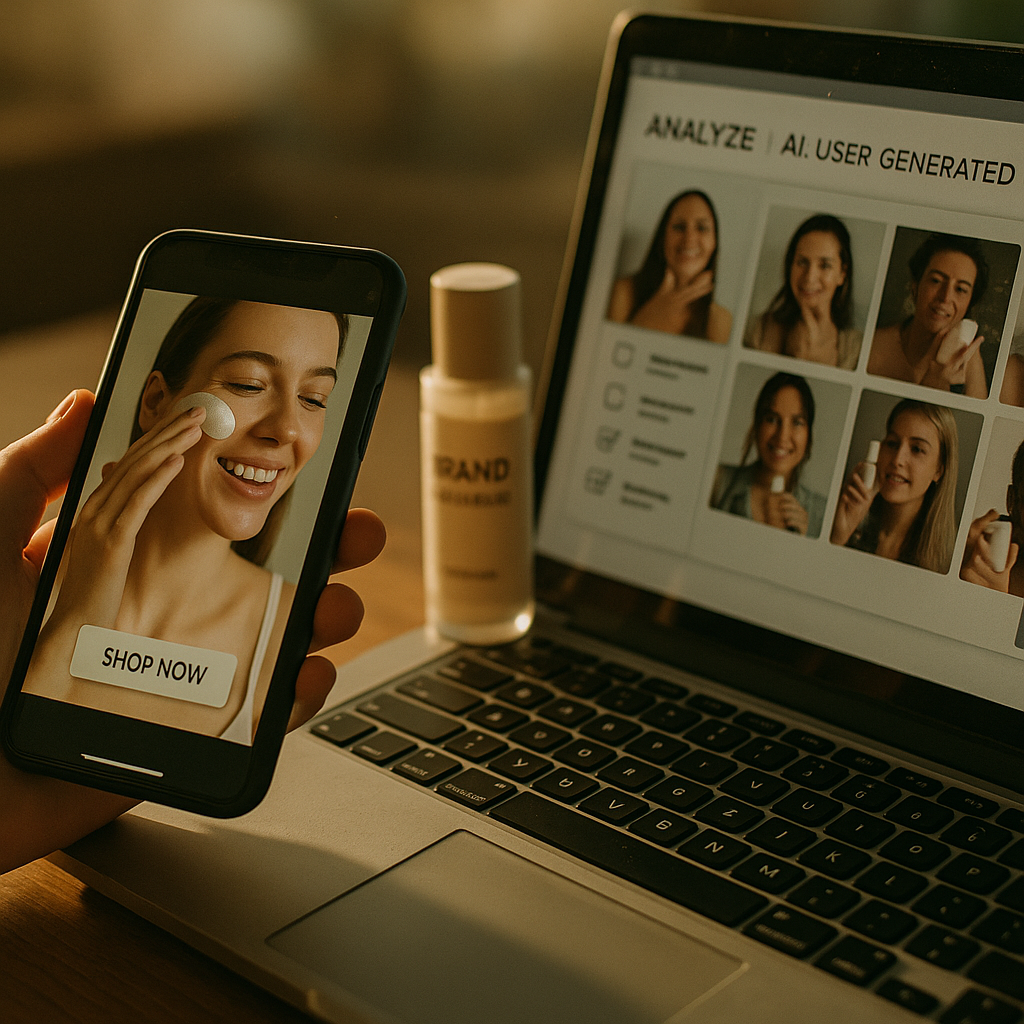
Paid acquisition costs for skincare brands on Meta have climbed past $1.20 per click in competitive categories, according to eMarketer benchmarks. One mid-size skincare brand refused to accept that math. Instead of pouring more budget into ads, it rebuilt its funnel around Tagshop’s shoppable UGC integration, layering AI-driven targeting on top of real creator content. The result: a 34% drop in blended CPA within two quarters. Here’s exactly how they did it.
The Problem: Rising CPAs and Creative Fatigue
The brand — a direct-to-consumer skincare line selling barrier-repair moisturizers and vitamin C serums — had a familiar problem. Its ad creative was performing well for the first two weeks of any campaign, then decaying fast. Studio-shot product photography wasn’t converting cold audiences anymore. Meanwhile, its organic UGC library sat scattered across TikTok comments, Instagram tags, and unboxing videos, unused and unindexed.
Their performance marketing lead put it bluntly in an internal review: “We were paying premium CPMs to show people the same white-background bottle shot we’d been running since launch.” Sound familiar? It’s the story of nearly every skincare brand that scaled fast on paid social, then hit a wall when auction costs caught up with flat creative.
Brands that rotate authentic creator content into paid funnels see meaningfully lower cost-per-click than those relying solely on branded creative, a pattern consistent with broader industry data on UGC performance.
Why Shoppable UGC, Not Just UGC
Plenty of brands already knew UGC outperformed polished ads. The harder problem was operational: how do you turn hundreds of scattered creator posts into a shoppable, on-brand, checkout-ready experience without a six-person content ops team?
That’s the gap Tagshop was built to close. Rather than manually screenshotting Instagram Reels and re-uploading them to a product page, the brand used Tagshop to:
- Aggregate UGC and creator posts automatically via hashtag and mention tracking
- Tag products directly inside video and image content
- Publish shoppable galleries on PDPs, homepage, and post-purchase flows
- Sync approved UGC into paid social campaigns as native-feeling ad creative
The shift wasn’t just cosmetic. It changed the unit economics of acquisition. Shoppable content converted at nearly double the rate of static product images on landing pages, based on the brand’s internal A/B testing across a 90-day window.
Layering AI Targeting on Top of Creator Content
Here’s where the case study gets interesting for anyone running paid media. Shoppable UGC alone wasn’t the full story. The brand paired Tagshop’s content pipeline with AI-driven audience targeting inside Meta’s Advantage+ shopping campaigns, letting algorithmic bidding decide which UGC assets to serve to which segments.
In practice, that meant:
- Dynamic creative testing — dozens of UGC clips rotated automatically, with the algorithm allocating spend toward top performers within 48 hours instead of waiting for a manual weekly review.
- Lookalike refinement — purchaser data from shoppable UGC clicks fed back into audience models, tightening lookalike seeds around actual buyers rather than broad engagement audiences.
- Creator-to-segment matching — content from creators in their 20s performed better with prospecting audiences, while founder and dermatologist-style UGC performed better in retargeting, a pattern the AI system surfaced within the first month.
This is the piece a lot of brands miss. AI targeting is only as good as the creative feeding it. Feed an algorithm ten variations of the same ad, and it optimizes toward mediocrity. Feed it fifty authentic creator clips tagged with real product data, and it finds pockets of performance a human media buyer would never spot manually.
The Numbers That Matter
Over a two-quarter period, the brand reported:
- 34% reduction in blended customer acquisition cost
- 2.1x increase in click-through rate on UGC-sourced ad creative versus branded creative
- 19% lift in average order value on product pages featuring shoppable UGC galleries
- 27% of new customers attributed their purchase decision to seeing “real people” use the product, per post-purchase survey data
None of this happened overnight. The first six weeks were spent building the UGC pipeline: setting rights-management workflows, getting creator permissions squared away, and training the internal team to treat UGC curation as an always-on function rather than a quarterly project.
The 34% CPA reduction didn’t come from a single tactic. It came from compounding two systems — content aggregation and algorithmic targeting — that most brands run separately, if at all.
What Marketing Leaders Should Take From This
If you’re a brand strategist evaluating whether shoppable UGC tools are worth the investment, a few operational lessons stand out.
Rights management is not optional. Every piece of UGC pulled into paid campaigns needs documented creator consent. The FTC has made clear that misrepresenting endorsements or using content without disclosure creates real legal exposure — brands should review FTC endorsement guidance before scaling any UGC-to-ads pipeline. Tagshop and similar platforms typically build consent capture into the content request flow, but that’s a compliance checkbox, not a substitute for legal review.
Second: volume and variety beat perfection. The brand’s best-performing ad wasn’t a polished creator collab. It was a slightly shaky 12-second phone video of a customer applying serum before bed. Algorithms reward signal, not production value.
Third: don’t treat this as a one-off campaign. It’s infrastructure. The brands winning right now, from Rhode’s launch strategy to Poppi’s trust-rebuilding creator seeding, treat creator content as an always-on system feeding both organic and paid channels, not a campaign that ends when the budget does.
Where This Fits in the Broader Creator Economy Shift
This case isn’t isolated. Across categories, brands are quietly moving budget from pure reach media toward hybrid systems that blend creator authenticity with platform-native commerce tools. TikTok Shop’s affiliate infrastructure, Meta’s Advantage+ suite, and tools like Tagshop are converging on the same insight: the content and the targeting can’t be optimized separately anymore.
Similar patterns show up in Olipop’s creator whitelisting model and in L’Oréal’s tiered creator roster approach, where structured creator programs feed directly into paid amplification rather than sitting as a separate organic workstream.
For skincare specifically, where trust and visible results drive conversion more than almost any other vertical, shoppable UGC solves a problem paid media alone never could: proof. According to Sprout Social’s consumer research, a majority of consumers say they trust content from other customers more than brand-produced content. Skincare buyers, burned by inflated before-and-afters for years, are especially skeptical of polished claims.
A Word on Platform Selection
Tagshop isn’t the only shoppable UGC platform on the market, and it won’t be the right fit for every brand. Teams evaluating options should weigh integration depth with their existing commerce stack (Shopify, WooCommerce, or a headless setup), the rights-management workflow, and whether the platform supports direct sync into ad accounts on Meta and TikTok. A tool that only handles on-site galleries but can’t push content into paid campaigns leaves half the CPA benefit on the table. For teams running TikTok-first strategies, it’s worth comparing against native tools inside TikTok Ads Manager, which now offers its own creator content library for Spark Ads.
The brand in this case study ultimately chose Tagshop because of its Shopify-native integration and its ability to push approved UGC directly into Meta’s Advantage+ creative pool without manual re-uploading. That single workflow saved their content team roughly eight hours per week, time reinvested into creator outreach instead of asset management.
FAQs
What is shoppable UGC, and how does it differ from regular UGC?
Shoppable UGC is customer or creator-generated content, like videos and photos, with product tags embedded directly in the media, allowing viewers to click through to a product page or checkout without leaving the content. Regular UGC is just displayed content with no direct commerce link.
How does Tagshop’s platform integrate with paid advertising?
Tagshop aggregates UGC from social platforms, manages creator rights and permissions, and allows brands to sync approved content directly into ad platforms like Meta’s Advantage+ campaigns, removing the manual step of re-uploading creative for paid use.
Can shoppable UGC actually lower customer acquisition costs?
Yes, when paired with algorithmic targeting. Authentic creator content typically drives higher click-through and conversion rates than branded creative, and platforms’ AI systems allocate spend more efficiently when fed a wider variety of high-signal content, compounding the CPA reduction over time.
Is using customer content in ads legally risky?
It can be if consent isn’t properly documented. Brands should establish clear rights-management workflows and review FTC endorsement guidelines before using creator or customer content in paid campaigns, particularly around disclosure requirements.
How long does it take to see results from a shoppable UGC strategy?
In this case study, meaningful CPA reduction took about two quarters, with the first six weeks dedicated to building the content pipeline and rights-management process before performance gains became measurable.
The takeaway for brand and performance teams isn’t “add UGC to your ads.” It’s this: build the content and targeting systems together, or keep losing margin to rising CPMs.
FAQs
What is shoppable UGC, and how does it differ from regular UGC?
Shoppable UGC is customer or creator-generated content, like videos and photos, with product tags embedded directly in the media, allowing viewers to click through to a product page or checkout without leaving the content. Regular UGC is just displayed content with no direct commerce link.
How does Tagshop’s platform integrate with paid advertising?
Tagshop aggregates UGC from social platforms, manages creator rights and permissions, and allows brands to sync approved content directly into ad platforms like Meta’s Advantage+ campaigns, removing the manual step of re-uploading creative for paid use.
Can shoppable UGC actually lower customer acquisition costs?
Yes, when paired with algorithmic targeting. Authentic creator content typically drives higher click-through and conversion rates than branded creative, and platforms’ AI systems allocate spend more efficiently when fed a wider variety of high-signal content, compounding the CPA reduction over time.
Is using customer content in ads legally risky?
It can be if consent isn’t properly documented. Brands should establish clear rights-management workflows and review FTC endorsement guidelines before using creator or customer content in paid campaigns, particularly around disclosure requirements.
How long does it take to see results from a shoppable UGC strategy?
In this case study, meaningful CPA reduction took about two quarters, with the first six weeks dedicated to building the content pipeline and rights-management process before performance gains became measurable.
Top Influencer Marketing Agencies
The leading agencies shaping influencer marketing in 2026
Agencies ranked by campaign performance, client diversity, platform expertise, proven ROI, industry recognition, and client satisfaction. Assessed through verified case studies, reviews, and industry consultations.
Moburst

-
2

The Shelf
Boutique Beauty & Lifestyle Influencer AgencyA data-driven boutique agency specializing exclusively in beauty, wellness, and lifestyle influencer campaigns on Instagram and TikTok. Best for brands already focused on the beauty/personal care space that need curated, aesthetic-driven content.Clients: Pepsi, The Honest Company, Hims, Elf Cosmetics, Pure LeafVisit The Shelf → -
3

Audiencly
Niche Gaming & Esports Influencer AgencyA specialized agency focused exclusively on gaming and esports creators on YouTube, Twitch, and TikTok. Ideal if your campaign is 100% gaming-focused — from game launches to hardware and esports events.Clients: Epic Games, NordVPN, Ubisoft, Wargaming, Tencent GamesVisit Audiencly → -
4

Viral Nation
Global Influencer Marketing & Talent AgencyA dual talent management and marketing agency with proprietary brand safety tools and a global creator network spanning nano-influencers to celebrities across all major platforms.Clients: Meta, Activision Blizzard, Energizer, Aston Martin, WalmartVisit Viral Nation → -
5

The Influencer Marketing Factory
TikTok, Instagram & YouTube CampaignsA full-service agency with strong TikTok expertise, offering end-to-end campaign management from influencer discovery through performance reporting with a focus on platform-native content.Clients: Google, Snapchat, Universal Music, Bumble, YelpVisit TIMF → -
6

NeoReach
Enterprise Analytics & Influencer CampaignsAn enterprise-focused agency combining managed campaigns with a powerful self-service data platform for influencer search, audience analytics, and attribution modeling.Clients: Amazon, Airbnb, Netflix, Honda, The New York TimesVisit NeoReach → -
7

Ubiquitous
Creator-First Marketing PlatformA tech-driven platform combining self-service tools with managed campaign options, emphasizing speed and scalability for brands managing multiple influencer relationships.Clients: Lyft, Disney, Target, American Eagle, NetflixVisit Ubiquitous → -
8

Obviously
Scalable Enterprise Influencer CampaignsA tech-enabled agency built for high-volume campaigns, coordinating hundreds of creators simultaneously with end-to-end logistics, content rights management, and product seeding.Clients: Google, Ulta Beauty, Converse, AmazonVisit Obviously →