


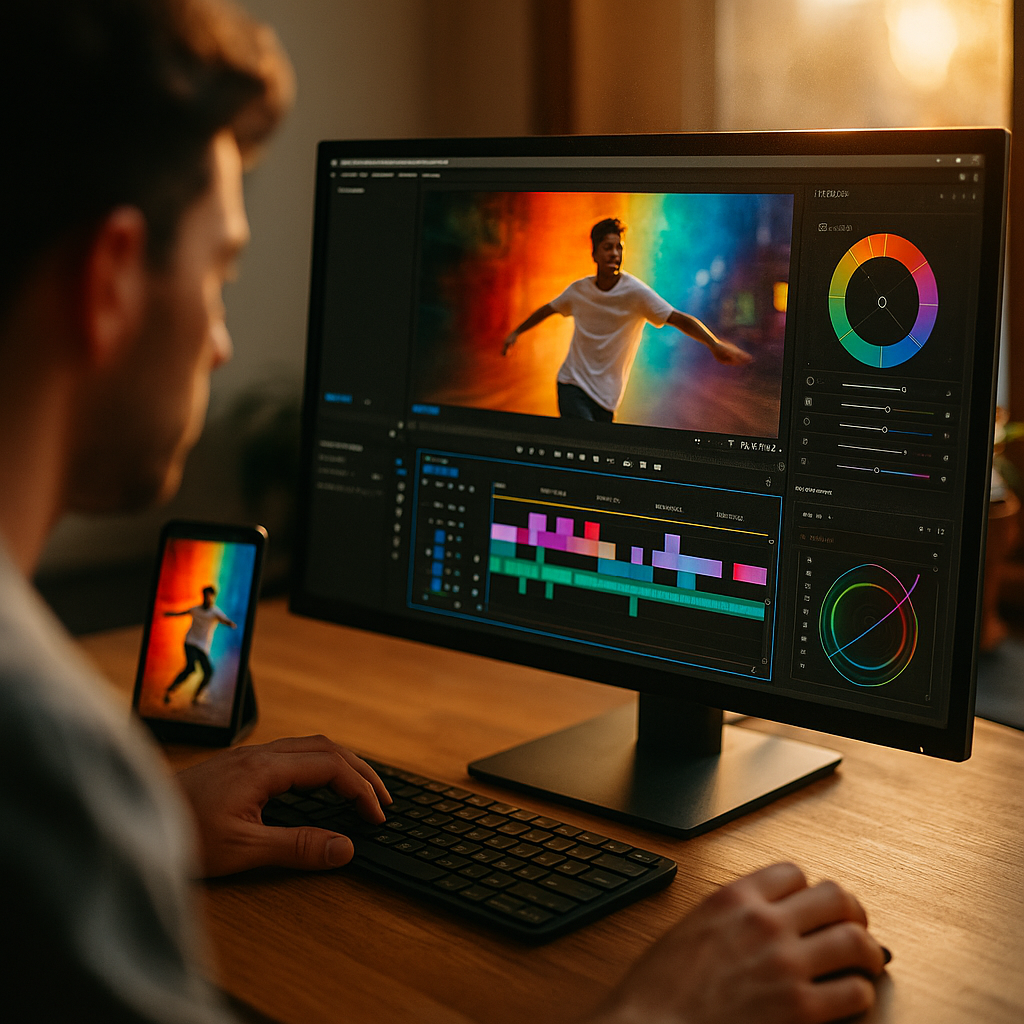
In 2026, creators compete for attention in milliseconds, which makes color pacing in short video editing more than a visual choice. It shapes emotion, guides the eye, and affects whether viewers keep watching or swipe away. When color changes match narrative rhythm, retention improves, brand recall rises, and every frame feels intentional. So what actually makes it work?
Why color psychology in video matters for retention
Color is processed fast. Before a viewer consciously evaluates a hook, script, or offer, the brain has already formed emotional impressions from hue, contrast, brightness, and saturation. In short-form video, where decisions happen almost instantly, those impressions can determine whether a person stays through the next cut.
Color psychology in video works because different palettes trigger different expectations. Warm tones often signal energy, urgency, intimacy, or excitement. Cooler tones can suggest trust, calm, distance, or reflection. Highly saturated frames feel louder and more stimulating. Muted palettes often feel premium, serious, or documentary-like. None of these meanings are fixed across every culture or niche, but the patterns are strong enough to guide editing decisions.
Retention improves when color supports the intent of the scene rather than fighting it. A creator delivering a high-intensity fitness tip may benefit from punchy contrast and lively warm accents. A finance explainer may hold attention better with controlled blues, neutral backgrounds, and selective bright highlights to direct focus. The point is not to use “pretty” colors. The point is to remove friction between what the viewer sees and what the viewer is supposed to feel.
Experienced editors often notice the same issue: a video can have strong scripting yet still underperform because the visual rhythm feels emotionally flat. If every shot carries the same temperature, the same saturation level, and the same contrast profile, the viewer receives no sense of progression. Short videos need movement, and color is one of the fastest ways to create it without adding extra words.
Helpful content should also acknowledge limits. Color alone will not rescue weak storytelling, poor audio, or a confusing opening. But when the hook, pacing, and message are already solid, color becomes a multiplier. It sharpens intent, clarifies hierarchy, and creates micro-rewards that encourage viewers to keep watching.
How visual pacing in short videos keeps viewers engaged
Visual pacing in short videos is the speed and pattern at which visual information changes. Most creators think of pacing in terms of cuts, captions, zooms, and transitions. Color belongs in that same system. A shift from neutral to vivid, dark to bright, cool to warm, or flat to contrast-rich tells the brain that something has changed. That change resets attention.
High-retention editors rarely let color remain static for too long unless the message itself demands consistency. Instead, they build controlled variation across the timeline. This does not mean random filters on every clip. It means shaping an intentional arc.
Consider a typical short video structure:
- Hook: Strong contrast, immediate subject separation, and a palette that matches the emotional promise of the first line.
- Setup: Stable, readable colors that help the viewer orient quickly.
- Escalation: Increased saturation, stronger highlights, or warmer tones to signal rising importance.
- Payoff: The brightest, cleanest, or most emotionally resonant look at the key insight or reveal.
- CTA: A slight simplification of the palette so the action stands out.
This is color pacing in practice. You are not only changing scenes. You are managing cognitive freshness. When viewers sense progression, they are less likely to feel that the content is repeating itself.
There is also a practical retention benefit: color can improve comprehension. If each segment of a video has a slightly distinct color identity, the viewer can track the structure more easily. Educational creators use this effectively. For example, a myth might appear in cooler, desaturated framing, while the correction shifts to a clearer, brighter, more confident palette. The audience instantly feels the transition even before consciously labeling it.
The best approach is selective intensity. Too many aggressive color shifts create fatigue, especially on mobile screens. Strong pacing is not constant stimulation. It is a pattern of tension and release. Editors who understand this tend to produce shorts that feel fast without becoming messy.
Using color grading for engagement without overwhelming the audience
Color grading for engagement starts with one principle: readability comes first. On mobile devices, viewers watch in varied lighting conditions, often with brightness reduced and attention divided. If skin tones look unnatural, shadows crush important details, or overlays blend into the background, viewers work harder to decode the content. That extra effort hurts retention.
A practical grading workflow for short-form editing in 2026 usually follows this order:
- Correct exposure and white balance first. Get the image believable before making it stylized.
- Protect skin tones. Faces anchor attention. If faces look unhealthy or inconsistent across cuts, trust drops.
- Create subject-background separation. Use contrast, luminance, or selective color to make the focal point obvious.
- Build a palette system. Decide which hues represent energy, authority, urgency, humor, or calm in your content.
- Use contrast curves intentionally. Sharper contrast can create urgency; softer curves can feel more intimate or reflective.
- Test on an actual phone. Desktop grading can mislead. Retention lives on small screens.
Editors often ask how much grading is enough. The answer depends on niche, brand, and audience expectations. Beauty, fashion, sports, and entertainment usually tolerate bolder stylization. Legal, medical, and B2B education generally perform better with cleaner, more credible grades. This is where EEAT matters. Helpful content in expert-led niches should look polished, not manipulative. If the grade feels sensationalized, viewers may question the authority of the message.
Another underused tactic is grading around the message beat. If a key sentence begins at second seven, the visual energy should not peak at second five and flatten before the point lands. Align visual emphasis with informational emphasis. That may mean increasing warmth slightly as the speaker reaches the core takeaway, then cooling or simplifying once the idea is delivered.
Consistency also matters at the account level. A recognizable color language can improve brand memory across multiple shorts. That does not require a single fixed LUT. It requires repeatable visual logic. When viewers can sense your style without feeling trapped in sameness, you create both familiarity and momentum.
Building audience attention with color transitions and scene rhythm
Audience attention with color transitions depends on timing. A transition becomes powerful when it coincides with a thought shift, emotional pivot, or pattern interrupt. If color changes happen randomly, they feel decorative. If they happen at meaning-rich moments, they feel persuasive.
There are several effective ways to use color transitions in short videos:
- Temperature shifts: Move from cool to warm to signal discovery, confidence, or emotional closeness.
- Saturation ramps: Start restrained and intensify as stakes increase.
- Accent-color reveals: Introduce one recurring bright color only when presenting proof, offers, or conclusions.
- Background isolation: Keep the subject consistent while changing environmental color to mark chapter breaks.
- Monochrome interruption: Briefly reduce color to emphasize a mistake, myth, or negative outcome before returning to full color for the solution.
These choices work because they shape expectation. The brain learns that a certain visual shift means something important is happening. Over time, this creates a retention habit. Viewers stay because your editing trains them to anticipate rewards.
Scene rhythm matters too. A short video with ten cuts in ten seconds can still feel slow if each frame carries identical visual weight. Conversely, a video with fewer cuts can feel dynamic when each scene introduces a purposeful color contrast. This is especially useful for talking-head formats, where the physical setup may remain constant. Instead of forcing excessive motion graphics, editors can use subtle background hue changes, punch-ins paired with tonal shifts, or on-screen examples with contrasting palettes.
One caution: avoid using color transitions that obscure information. Fast flashes, extreme strobing, and constant hue cycling can reduce comprehension and create accessibility issues. High retention should not come at the expense of comfort. Short-form video performs best when stimulation is controlled and useful.
Short-form video editing tips for emotional sequencing and brand trust
Short-form video editing tips become more effective when tied to emotional sequencing. Viewers do not simply watch clips. They move through emotional states. Color pacing helps map those states in a way that feels almost invisible.
Here is a practical framework editors can use:
- Identify the desired emotional journey. Should the viewer feel curiosity, tension, relief, excitement, then confidence? Map that before touching the timeline.
- Assign a color role to each phase. Curiosity might use cooler neutrals with one bright accent. Tension might lower brightness. Relief might restore warmth and clarity.
- Match captions and graphics to the grade. Text color, highlight bars, emojis, and charts should reinforce the palette rather than compete with it.
- Use B-roll strategically. B-roll is a chance to refresh color energy without breaking the narrative flow.
- Calibrate for the platform. A style that works on one feed may feel too polished, too aggressive, or too branded on another.
Trust is central here. In expert categories, viewers look for subtle cues of competence. Balanced color, consistent skin tones, and coherent visual hierarchy suggest professionalism. Over-processed looks can signal inauthenticity. That does not mean your edits must be bland. It means every choice should feel earned by the message.
For teams managing brands, document your color pacing standards. Define preferred contrast ranges, accent colors, treatment for educational moments, and rules for transitions. This turns individual editing taste into a repeatable system. It also helps when testing retention across campaigns because you can isolate what changed.
Testing is essential. Review audience retention graphs alongside the timeline. Did drop-offs occur after a visually flat section? Did a warm reveal coincide with improved watch-through? Did viewers replay a segment that had a strong color payoff? Pair these observations with qualitative review. The goal is not to chase a trend but to understand how your audience responds to visual rhythm.
Creators often ask whether they need advanced software to do this well. Not necessarily. What matters more is editorial judgment: knowing when to hold, when to shift, and when to simplify. The most effective color pacing is usually felt more than noticed.
Video retention strategy: measuring whether color pacing is actually working
A strong video retention strategy treats color pacing as a testable variable, not a vague aesthetic preference. If you want better results, measure beyond likes and views. Retention is the clearest signal because it shows whether your visual decisions helped sustain attention through the message.
Focus on these metrics and observations:
- First three-second hold: Did the opening palette create immediate clarity and emotional fit?
- Midpoint retention: Did visual energy sustain interest after the initial hook?
- Completion rate: Did the payoff section receive enough visual emphasis to carry viewers through?
- Rewatch behavior: Did high-contrast reveals or strong palette shifts encourage repeats?
- CTA conversion: Did the final visual simplification help the action stand out?
Run controlled tests where possible. Compare two versions of the same short with identical structure, copy, and audio, but different color pacing patterns. For example, test a static grade against one with a gradual warmth build toward the payoff. Or compare a neutral opener with a higher-contrast hook. Keep the variable narrow enough that the learning is usable.
Use audience context when interpreting results. A younger entertainment audience may respond well to stronger saturation jumps. A professional audience may prefer subtler modulation. Device conditions matter too. A grade that looks cinematic on a calibrated monitor may lose information on a commuter’s phone in daylight.
From an EEAT perspective, it is important to stay grounded in evidence. Avoid making universal claims like “red always increases retention” or “blue always builds trust.” Better guidance is practical and conditional: certain color patterns often support specific emotional outcomes, but performance depends on audience, message, category, and execution quality.
In 2026, the editors and brands winning short-form attention are not just editing faster. They are designing perception. They understand that color pacing is part of narrative structure, cognitive load management, and emotional framing. That makes it a creative tool, a strategic tool, and a measurable one.
FAQs about color pacing in high retention short video editing
What is color pacing in short video editing?
Color pacing is the intentional change of hue, temperature, saturation, brightness, and contrast across a video to support narrative rhythm and viewer attention. It helps each section feel distinct and emotionally aligned.
Does color pacing really affect retention?
Yes, when used well. Color changes can reset attention, highlight key moments, improve readability, and strengthen emotional flow. It works best when paired with a strong hook, clear scripting, and clean audio.
How often should colors change in a short video?
Only when the message or emotional beat changes. Frequent random shifts can feel distracting. Effective color pacing creates progression without making the edit feel chaotic.
Which colors are best for high-retention videos?
There is no universal best color. Warm tones often increase energy, while cooler tones can signal calm or authority. The right palette depends on your niche, audience, brand, and the purpose of the scene.
Is color pacing different from color grading?
Yes. Color grading is the overall visual treatment of footage. Color pacing is how that treatment changes over time to create rhythm, emphasis, and emotional movement.
Can beginners use color pacing without advanced tools?
Absolutely. Even simple adjustments to brightness, contrast, warmth, and accent colors can improve pacing. Strong judgment matters more than expensive software.
How do I test whether my color edits are helping?
Compare retention metrics across similar videos or run A/B tests with one color variable changed. Watch for differences in first-second hold, midpoint retention, completion rate, and CTA performance.
What is the biggest mistake editors make with color in short-form content?
Overstyling. If color draws attention to itself instead of supporting the message, it can hurt trust and comprehension. The best color pacing feels intentional, not flashy.
Color pacing turns short-form editing from a sequence of cuts into a guided emotional experience. When hue, contrast, and saturation shift with the message, viewers feel momentum and clarity instead of fatigue. Start with readability, align color changes to story beats, and test retention data relentlessly. The takeaway is simple: edit color as rhythm, not decoration, and attention lasts longer.
Top Influencer Marketing Agencies
The leading agencies shaping influencer marketing in 2026
Agencies ranked by campaign performance, client diversity, platform expertise, proven ROI, industry recognition, and client satisfaction. Assessed through verified case studies, reviews, and industry consultations.
Moburst

-
2

The Shelf
Boutique Beauty & Lifestyle Influencer AgencyA data-driven boutique agency specializing exclusively in beauty, wellness, and lifestyle influencer campaigns on Instagram and TikTok. Best for brands already focused on the beauty/personal care space that need curated, aesthetic-driven content.Clients: Pepsi, The Honest Company, Hims, Elf Cosmetics, Pure LeafVisit The Shelf → -
3

Audiencly
Niche Gaming & Esports Influencer AgencyA specialized agency focused exclusively on gaming and esports creators on YouTube, Twitch, and TikTok. Ideal if your campaign is 100% gaming-focused — from game launches to hardware and esports events.Clients: Epic Games, NordVPN, Ubisoft, Wargaming, Tencent GamesVisit Audiencly → -
4

Viral Nation
Global Influencer Marketing & Talent AgencyA dual talent management and marketing agency with proprietary brand safety tools and a global creator network spanning nano-influencers to celebrities across all major platforms.Clients: Meta, Activision Blizzard, Energizer, Aston Martin, WalmartVisit Viral Nation → -
5

The Influencer Marketing Factory
TikTok, Instagram & YouTube CampaignsA full-service agency with strong TikTok expertise, offering end-to-end campaign management from influencer discovery through performance reporting with a focus on platform-native content.Clients: Google, Snapchat, Universal Music, Bumble, YelpVisit TIMF → -
6

NeoReach
Enterprise Analytics & Influencer CampaignsAn enterprise-focused agency combining managed campaigns with a powerful self-service data platform for influencer search, audience analytics, and attribution modeling.Clients: Amazon, Airbnb, Netflix, Honda, The New York TimesVisit NeoReach → -
7

Ubiquitous
Creator-First Marketing PlatformA tech-driven platform combining self-service tools with managed campaign options, emphasizing speed and scalability for brands managing multiple influencer relationships.Clients: Lyft, Disney, Target, American Eagle, NetflixVisit Ubiquitous → -
8

Obviously
Scalable Enterprise Influencer CampaignsA tech-enabled agency built for high-volume campaigns, coordinating hundreds of creators simultaneously with end-to-end logistics, content rights management, and product seeding.Clients: Google, Ulta Beauty, Converse, AmazonVisit Obviously →