


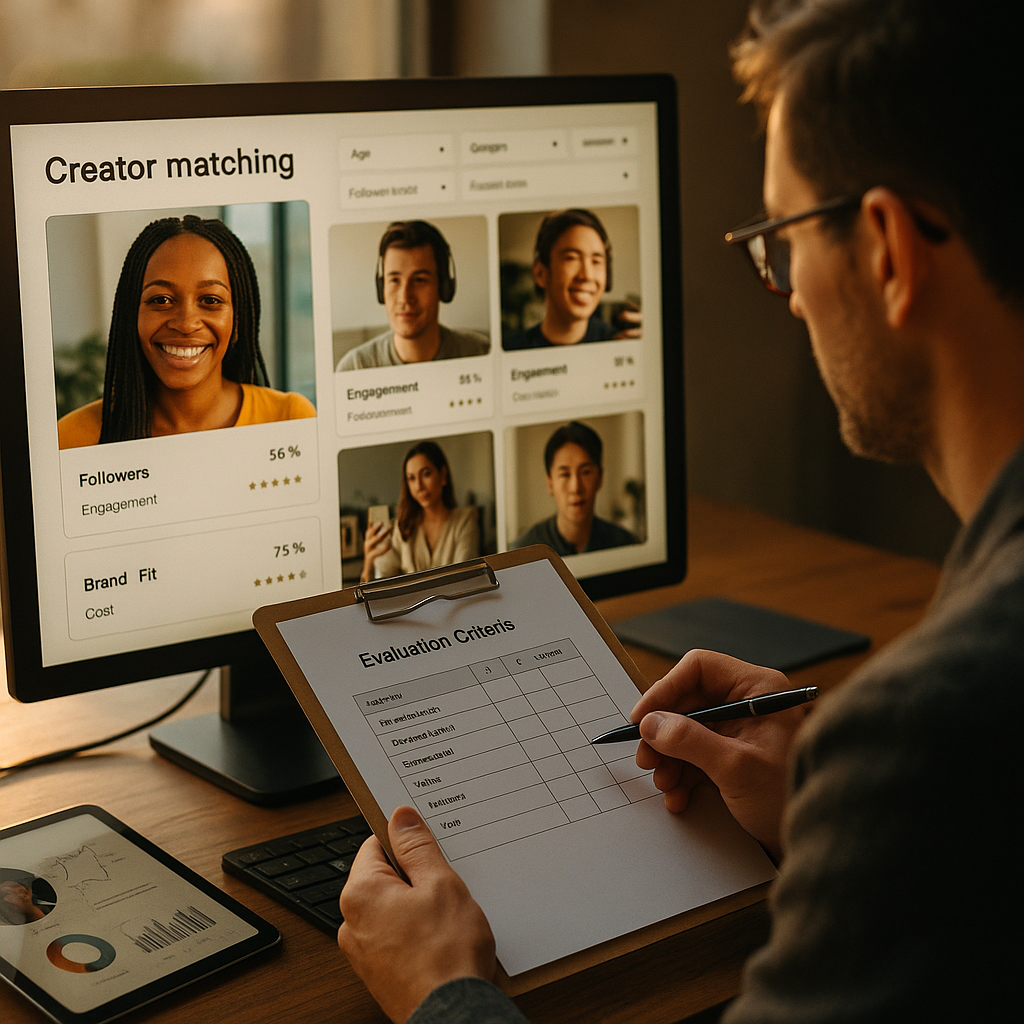
Most Creator Matches Are Wrong — Here’s How to Fix Your Vendor Selection
According to EMARKETER research, 62% of brand marketers report that algorithmically matched creator partnerships underperform manually sourced ones. That’s a damning number for an industry spending billions on automated creator matching platforms. The problem isn’t automation itself — it’s that most MarTech teams lack a rigorous framework for evaluating the vendors promising to solve creator-brand fit at scale.
Why Affinity Scoring Accuracy Is the First Filter That Matters
Every automated creator matching platform leads with some version of “affinity scoring.” CreatorIQ, Grin, Aspire, Traackr, Captiv8 — they all claim proprietary algorithms that predict brand-creator alignment. But the inputs, weighting, and validation methodologies behind those scores vary enormously.
Here’s what to interrogate during vendor evaluation:
- Data freshness: Does the platform ingest creator content and engagement signals in near-real-time, or does it rely on weekly or monthly snapshots? Stale data means stale matches.
- Signal diversity: Are affinity scores based solely on topical keyword overlap, or do they incorporate audience psychographics, purchase-intent signals, sentiment analysis, and cross-platform behavioral patterns?
- Validation loops: Can the vendor show you backtested accuracy rates? Ask for case studies where predicted affinity was compared against actual campaign performance — conversion rates, not just engagement.
- Audience overlap analysis: A creator might look like a perfect topical fit, but if 70% of their audience already follows your brand, you’re paying for reach you already have.
The best platforms — and there are only a handful doing this well — combine natural language processing on creator content with audience panel data and first-party brand CRM signals. If your vendor can’t explain how all three layers interact, you’re buying a black box.
The single most predictive indicator of creator matching accuracy isn’t the algorithm’s sophistication — it’s whether the platform can ingest your first-party customer data to calibrate its model against your actual buyer profile.
This is where the conversation connects directly to identity resolution for CRM. If the matching platform can’t resolve creator audience members against your existing customer graph, the affinity score is operating in a vacuum.
Transparency of Matching Logic: The Non-Negotiable You’re Probably Skipping
Let’s be blunt. Most brand teams never ask vendors how the matching algorithm works. They see a ranked list of creators, maybe a score from 0 to 100, and they trust it. That trust is expensive.
Transparency matters for three reasons:
- Auditability: When a matched creator underperforms or causes a brand safety incident, your CMO will ask why that match was made. “The algorithm said so” isn’t an answer that survives a board meeting.
- Bias detection: Algorithmic matching systems can systematically under-index certain creator demographics, content styles, or platforms. Without visibility into weighting factors, you can’t identify — let alone correct — these blind spots.
- Regulatory exposure: The FTC’s evolving guidance on AI-driven marketing decisions means brands need to demonstrate they understand the automated systems making placement choices on their behalf.
During your RFP process, demand a technical whitepaper or architecture overview. Not marketing collateral — actual documentation on feature weighting, model training data sources, and update cadences. Vendors who refuse this request are telling you something important about their product.
If you’re moving beyond manual vendor evaluations entirely, our guide on AI vendor matchmaking vs. manual RFPs breaks down where automation helps and where human judgment remains essential.
Does It Actually Plug Into Your Attribution Stack?
This is where most evaluations fall apart.
A creator matching platform can have world-class affinity scoring and fully transparent logic, and still be worthless to your organization if it doesn’t connect to the infrastructure that proves ROI. Integration with existing attribution systems isn’t a “nice to have” checkbox — it’s the entire point.
Consider the typical brand’s attribution reality: a mix of Google Analytics 4, a multi-touch attribution tool (maybe Rockerbox, Northbeam, or Triple Whale), a CDP like Segment or mParticle, and CRM data flowing through Salesforce or HubSpot. Your creator matching platform needs to do more than generate UTM links.
Specifically, evaluate:
- API-native data export: Can match data, creator metadata, and predicted performance scores flow directly into your BI tools via API, or are you stuck with CSV exports and manual uploads?
- Post-click and post-view tracking: Does the platform support impression-level tracking that feeds into your MTA model, or does it only capture last-click?
- Coupon and promo code mapping: For direct-response campaigns, can the platform dynamically generate and attribute unique codes per creator per campaign flight?
- Offline conversion support: If you sell through retail or have a long sales cycle, does the matching platform support data clean rooms or conversion API integrations with Meta and TikTok?
Our deep dive into TikTok Shop attribution stacks illustrates just how fragmented this gets on a single platform — now multiply that complexity across every channel your creators operate on.
If your automated creator matching platform can’t pass structured data into your multi-touch attribution model, you’re optimizing placement in one silo and measuring results in another. That disconnect is where budget gets wasted.
The Evaluation Matrix: Scoring Vendors Across What Actually Matters
After evaluating dozens of these platforms with enterprise brand teams, here’s the framework I recommend. Weight each dimension based on your organization’s maturity and priorities.
Tier 1 — Must-Have Capabilities (weighted 3x):
- First-party data ingestion for affinity calibration
- Documented matching logic with feature-level explainability
- API integration with at least two major attribution/MTA platforms
- Real-time or near-real-time audience data refresh
Tier 2 — Differentiators (weighted 2x):
- Cross-platform creator identity resolution
- Brand safety pre-screening embedded in match scoring
- Predictive performance modeling with historical validation data
- Audience overlap and incrementality analysis
Tier 3 — Operational Efficiency (weighted 1x):
- Campaign workflow automation (outreach, contracting, briefing)
- Bulk creator management and roster segmentation
- White-label or agency collaboration features
- Custom reporting dashboards
Score each vendor 1-5 per line item, apply the tier weights, and you’ll have a defensible comparison that goes far beyond feature-list bingo. For additional context on evaluating analytics capabilities across these platforms, see our campaign analytics dashboard guide.
What the Vendor Won’t Tell You During the Demo
Three things to probe that demos are designed to obscure:
Match volume vs. match quality tradeoff. Some platforms optimize their default view for volume — showing you hundreds of “matches” — because scarcity makes buyers nervous. Ask the vendor to filter to only the top 5% of matches by affinity score and explain why those five creators are better than the next fifty. If they can’t articulate a clear difference, the scoring model lacks granularity.
Training data provenance. Where did the model learn what a “good match” looks like? If it’s trained primarily on engagement rate outcomes, it will systematically favor entertainment-style creators over niche experts who drive purchase intent. Training data shapes the entire output. Ask.
Decay curves on affinity signals. A creator who was a strong match six months ago may have shifted content focus, audience demographics, or brand partnerships. How quickly does the platform detect and adjust for creator evolution? The answer separates real-time intelligence from a glorified database.
Your Next Move
Build your internal scoring matrix before you take a single vendor demo. Define your Tier 1 non-negotiables, confirm your attribution stack’s integration requirements with your data engineering team, and insist on backtested accuracy data from every vendor on your shortlist. The brands winning at automated creator matching aren’t the ones with the fanciest platform — they’re the ones who evaluated vendors with the same rigor they’d apply to any media buying decision.
Frequently Asked Questions
What is an automated creator matching platform?
An automated creator matching platform uses algorithmic scoring — typically combining audience data, content analysis, and engagement signals — to recommend influencers or creators who are most likely to align with a brand’s target audience, values, and campaign objectives. These platforms aim to replace or augment manual creator discovery and vetting.
How do I evaluate the accuracy of a platform’s affinity scoring?
Request backtested performance data where predicted affinity scores are compared against actual campaign outcomes such as conversion rates, not just engagement metrics. Also assess whether the platform can ingest your first-party CRM data to calibrate its model against your real buyer profile, which significantly improves match accuracy.
Why does matching logic transparency matter for brand safety?
Without visibility into how an algorithm weights and selects creators, brands cannot audit matches that lead to poor outcomes or brand safety incidents. Transparency also helps detect demographic or content-style biases in the algorithm and supports compliance with evolving FTC guidance on AI-driven marketing decisions.
What attribution integrations should I require from a creator matching vendor?
At minimum, require API-native data export to your BI tools, post-click and post-view tracking that feeds multi-touch attribution models, dynamic coupon or promo code generation, and support for conversion APIs or data clean rooms used by major platforms like Meta and TikTok.
How often should creator affinity scores be refreshed?
Near-real-time or daily refresh is ideal. Creators frequently shift content focus, audience composition, and brand partnerships. Platforms relying on weekly or monthly data snapshots risk producing stale matches that no longer reflect a creator’s current relevance to your brand.
Top Influencer Marketing Agencies
The leading agencies shaping influencer marketing in 2026
Agencies ranked by campaign performance, client diversity, platform expertise, proven ROI, industry recognition, and client satisfaction. Assessed through verified case studies, reviews, and industry consultations.
Moburst

-
2

The Shelf
Boutique Beauty & Lifestyle Influencer AgencyA data-driven boutique agency specializing exclusively in beauty, wellness, and lifestyle influencer campaigns on Instagram and TikTok. Best for brands already focused on the beauty/personal care space that need curated, aesthetic-driven content.Clients: Pepsi, The Honest Company, Hims, Elf Cosmetics, Pure LeafVisit The Shelf → -
3

Audiencly
Niche Gaming & Esports Influencer AgencyA specialized agency focused exclusively on gaming and esports creators on YouTube, Twitch, and TikTok. Ideal if your campaign is 100% gaming-focused — from game launches to hardware and esports events.Clients: Epic Games, NordVPN, Ubisoft, Wargaming, Tencent GamesVisit Audiencly → -
4

Viral Nation
Global Influencer Marketing & Talent AgencyA dual talent management and marketing agency with proprietary brand safety tools and a global creator network spanning nano-influencers to celebrities across all major platforms.Clients: Meta, Activision Blizzard, Energizer, Aston Martin, WalmartVisit Viral Nation → -
5

The Influencer Marketing Factory
TikTok, Instagram & YouTube CampaignsA full-service agency with strong TikTok expertise, offering end-to-end campaign management from influencer discovery through performance reporting with a focus on platform-native content.Clients: Google, Snapchat, Universal Music, Bumble, YelpVisit TIMF → -
6

NeoReach
Enterprise Analytics & Influencer CampaignsAn enterprise-focused agency combining managed campaigns with a powerful self-service data platform for influencer search, audience analytics, and attribution modeling.Clients: Amazon, Airbnb, Netflix, Honda, The New York TimesVisit NeoReach → -
7

Ubiquitous
Creator-First Marketing PlatformA tech-driven platform combining self-service tools with managed campaign options, emphasizing speed and scalability for brands managing multiple influencer relationships.Clients: Lyft, Disney, Target, American Eagle, NetflixVisit Ubiquitous → -
8

Obviously
Scalable Enterprise Influencer CampaignsA tech-enabled agency built for high-volume campaigns, coordinating hundreds of creators simultaneously with end-to-end logistics, content rights management, and product seeding.Clients: Google, Ulta Beauty, Converse, AmazonVisit Obviously →