


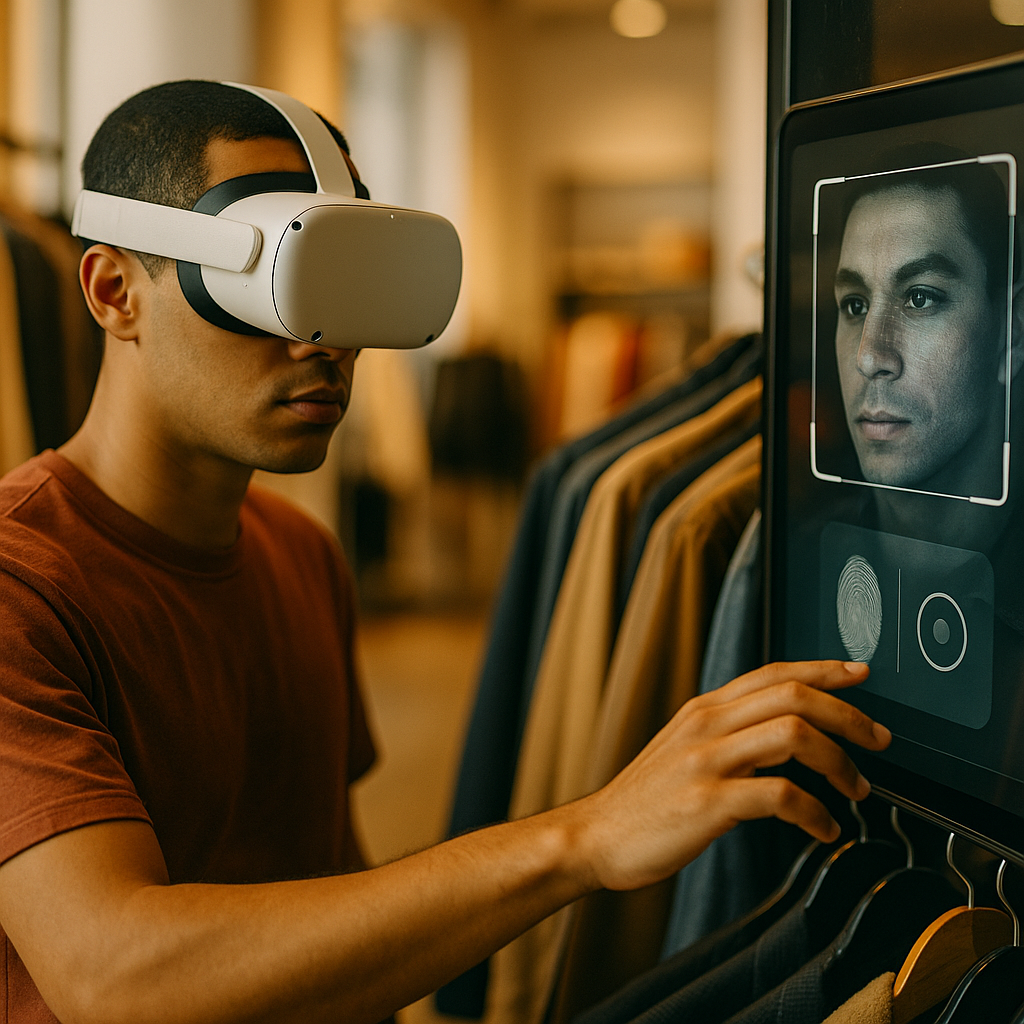
Biometric data privacy in virtual reality shopping hubs is becoming a defining consumer issue in 2026. As retailers build immersive stores that track gaze, gestures, voice, and even emotional cues, shoppers gain convenience but surrender sensitive personal signals. Understanding what is collected, how it is used, and what rights apply is essential before virtual commerce becomes your default marketplace.
What biometric data privacy means in VR commerce
Virtual reality shopping hubs are digital retail environments where users browse products, compare items, talk to avatars, and complete purchases inside immersive spaces. Unlike standard e-commerce, these platforms can collect a much deeper layer of information. That is where biometric data privacy becomes critical.
In a VR shopping session, a platform may capture eye movements, facial expressions, hand geometry, gait patterns, voiceprints, spatial mapping data, body position, reaction timing, and inferred emotional responses. Some of this data is required for the technology to function. For example, hand tracking helps you pick up a virtual product. Eye tracking can improve rendering performance and make the experience smoother. But the same data can also reveal highly personal insights about attention, stress, health conditions, or buying intent.
The privacy risk grows because biometric data is not like a password. You can reset a password. You cannot easily reset your face, voice, or movement patterns. If a VR platform stores that information insecurely or shares it too broadly, the consequences may extend far beyond one shopping session.
Helpful content on this topic starts with one practical distinction: not all biometric data collection is equally risky. Data processed locally on a headset for immediate interaction creates a different privacy profile than data stored in the cloud, linked to an account, analyzed for ad targeting, and retained indefinitely. Consumers, brands, and developers should evaluate these differences rather than treating all tracking as the same.
Key VR shopping privacy risks consumers should know
Consumers often ask a simple question: what is the real harm? In VR retail, the answer is broader than identity theft. The most significant VR shopping privacy risks include profiling, manipulation, discrimination, and weak consent practices.
- Behavioral profiling: Eye tracking can show what holds attention, what creates hesitation, and what triggers desire. Combined with purchase history, this can create unusually detailed consumer profiles.
- Emotional inference: Some systems infer mood or engagement from movement, facial patterns, or voice. In retail, this may be used to time offers or adjust pricing pressure.
- Persistent identification: Even when names are removed, biometric patterns can enable re-identification, especially when linked with device IDs, payment data, or account histories.
- Security exposure: If biometric templates or raw sensor data are breached, the damage may be long term because those traits are difficult to change.
- Function creep: Data collected for navigation or accessibility may later be repurposed for ads, analytics, or third-party partnerships without meaningful user awareness.
- Inadequate consent: Long policies and bundled permissions often hide the fact that a headset or virtual storefront is collecting more than users expect.
Another likely follow-up question is whether anonymization solves the issue. Not always. In immersive systems, combinations of movement patterns, voice, and interaction timing can make users distinguishable even without traditional identifiers. That is why privacy professionals increasingly focus on data minimization, purpose limitation, and retention controls, not just de-identification claims.
Parents should be especially cautious. VR systems used by teens and children may capture developmental, behavioral, and emotional signals that deserve stronger safeguards. Retail brands entering immersive commerce should avoid collecting any biometric information from younger audiences unless it is clearly necessary, transparently explained, and legally compliant.
Consumer consent and data governance in immersive retail
Strong consumer consent in immersive retail should be specific, informed, and revocable. In practice, many VR shopping experiences still fall short. Users may click through permissions during device setup, then enter branded spaces where additional tracking occurs without a separate, meaningful choice.
A better governance model includes several layers:
- Just-in-time notices: Tell users exactly when eye tracking, voice analysis, or emotion inference is active.
- Granular controls: Let users approve hand tracking for navigation while declining use for personalized advertising.
- Short retention periods: Keep only what is needed for security, accessibility, or technical operation, then delete it.
- Purpose limitation: Do not reuse biometric signals collected for device performance to optimize sales messaging unless users explicitly agree.
- Independent oversight: Conduct privacy impact assessments and involve legal, security, accessibility, and ethics teams before launch.
From an EEAT perspective, trustworthy brands show their work. They publish clear privacy summaries, explain what data powers which features, and provide contact paths for consumer questions. They also document vendor relationships, especially when third parties process avatar analytics, voice interactions, payment authentication, or ad measurement.
Shoppers should look for platforms that make privacy settings easy to find and easy to use. If turning off tracking requires navigating multiple menus or losing core store access, that is a sign the system prioritizes data extraction over informed choice.
A practical rule helps here: if a company cannot explain biometric collection in plain language, it probably has not built a user-first privacy model. The best immersive retailers treat consent as an ongoing conversation, not a one-time checkbox.
Biometric data compliance standards shaping VR marketplaces
By 2026, biometric data compliance has become a strategic issue for retailers, platform operators, headset makers, and app developers. Even where no single VR-specific law exists, immersive commerce sits at the intersection of privacy, consumer protection, cybersecurity, accessibility, and child safety rules.
Organizations should expect scrutiny in several areas:
- Lawful basis and notice: Companies must identify why they are collecting biometric or inferred data and communicate that clearly.
- Necessity and proportionality: Regulators increasingly ask whether a data practice is essential to service delivery or merely convenient for monetization.
- Sensitive data handling: Biometric and health-adjacent inferences often demand stronger safeguards, access controls, and risk assessments.
- Cross-border transfers: Global VR commerce can route data across jurisdictions, making vendor contracts and transfer mechanisms especially important.
- User rights: Access, correction, deletion, portability, and objection rights must work in practice, not just on paper.
Retailers should also remember that compliance is not the same as trust. A platform can technically satisfy disclosure requirements and still create a poor consumer experience if notices are confusing or default settings are overly invasive. The most resilient strategy is to combine legal compliance with privacy-by-design.
That means limiting collection at the engineering stage, separating identity data from biometric streams where possible, encrypting information in transit and at rest, and preferring on-device processing over centralized storage when the feature allows it. It also means documenting model training inputs if AI systems use interaction data to personalize storefronts or sales agents.
For executives, one overlooked issue is procurement. If a retailer licenses a third-party VR commerce platform, it should demand detailed answers about sensor access, retention, subcontractors, and model governance. A privacy failure by a vendor can quickly become a brand crisis for the retailer that invited consumers into the experience.
Privacy-by-design strategies for secure metaverse retail
The phrase secure metaverse retail can sound abstract, but implementation is concrete. A privacy-by-design approach reduces risk without eliminating innovation. In fact, it often improves user trust and long-term adoption.
Here are the most effective strategies for VR shopping hubs:
- Collect less by default: If gaze data is only needed for rendering, process it locally and avoid storing it.
- Use edge processing: Keep sensitive computations on the device whenever possible instead of sending raw biometric streams to the cloud.
- Separate systems: Isolate payment data, identity records, and biometric telemetry so one breach does not expose everything.
- Tokenize and encrypt: Protect any stored templates or authentication factors with modern cryptographic controls.
- Limit employee access: Internal access should follow least-privilege rules, strong logging, and frequent review.
- Set deletion schedules: Retain raw sensor data for the shortest operational period, then purge it automatically.
- Audit AI outputs: If recommendation engines infer mood or urgency, test for bias, manipulation, and unexplained personalization.
Consumers also have a role. Before using a VR shopping hub, review headset settings, disable nonessential permissions, and read the store’s privacy summary. Use separate payment methods when possible, avoid linking unnecessary accounts, and check whether voice recordings or interaction histories can be deleted.
Businesses often ask whether privacy controls hurt conversion. The evidence from digital trust practices suggests the opposite over time. Clear controls reduce hesitation, improve brand credibility, and lower the risk of backlash. In immersive retail, where adoption still depends on confidence, privacy is a growth factor.
Accessibility should be part of this conversation too. Some biometric inputs support users with disabilities. Privacy-by-design does not mean removing helpful tools. It means giving users informed choices, minimizing storage, and ensuring assistive features are not exploited for unrelated profiling.
The future of trust and transparency in virtual shopping security
The next phase of virtual shopping security will be shaped by trust signals that users can understand quickly. In 2026, privacy policies alone are not enough. Shoppers want visible indicators: what sensors are active, what data is leaving the device, who can access it, and how long it will remain stored.
Expect leading platforms to adopt clearer transparency tools such as layered privacy dashboards, live sensor indicators, downloadable activity logs, and one-click deletion requests. Independent certifications and external audits may also become more common, especially for enterprise retail environments and marketplaces handling high-value transactions.
Another emerging issue is synthetic identity and avatar fraud. As avatars become more realistic and voice cloning improves, platforms will need stronger authentication without defaulting to excessive biometric collection. This creates a design challenge: how to confirm identity and prevent fraud while still preserving privacy. The strongest solutions will likely combine device trust, behavioral anomaly detection, and optional high-assurance authentication rather than universal biometric retention.
Retail brands should prepare now by mapping all immersive data flows, updating vendor contracts, and building internal review processes for new VR features. Waiting until after a product launch is expensive and risky. Consumers, meanwhile, should reward platforms that explain their practices clearly and avoid those that bury aggressive tracking behind vague language.
The central point is simple: immersive shopping can be personalized without becoming intrusive. The companies that succeed will not be those that collect the most data. They will be the ones that prove they deserve access to it.
FAQs about biometric privacy in VR shopping
What counts as biometric data in a VR shopping hub?
Biometric data can include eye movements, facial geometry, voiceprints, hand and body tracking, gait patterns, and other physical or behavioral traits used to identify or analyze a person.
Is all biometric tracking in VR harmful?
No. Some tracking is necessary for core functionality, such as hand presence or headset calibration. The main concern is whether the data is stored, shared, combined with other identifiers, or reused for advertising and profiling.
Can VR shopping platforms identify me even if they remove my name?
Sometimes, yes. Unique combinations of movement, voice, device data, and behavioral patterns may still allow re-identification, especially when linked to account or payment information.
How can I protect my privacy while shopping in VR?
Review device permissions, disable nonessential sensors, avoid linking unnecessary accounts, read privacy summaries, use trusted payment methods, and delete saved histories or recordings when the platform allows it.
Should retailers store raw biometric data?
Only when absolutely necessary. Best practice is to process sensitive data locally or convert it into protected, limited-use formats, then delete raw data quickly according to a documented retention policy.
Are emotion detection tools appropriate in VR retail?
They are high risk. Inferring emotional state from biometric or behavioral signals can be invasive, error-prone, and open to manipulation. Retailers should use extreme caution and obtain explicit, informed consent if such tools are considered.
What should businesses ask VR technology vendors?
Ask what sensors are accessed, what data is stored, where it is processed, who receives it, how long it is retained, whether AI models are trained on it, and how deletion, encryption, and incident response are handled.
Will stronger privacy rules slow VR commerce growth?
Not necessarily. Clear protections can increase user confidence, reduce legal exposure, and support long-term adoption. In emerging channels like immersive retail, trust is a competitive advantage.
Biometric privacy in VR shopping hubs demands informed choices from consumers and disciplined design from businesses. The safest path is clear: collect only necessary data, explain every use in plain language, protect it rigorously, and delete it quickly. Immersive retail can thrive in 2026, but only if convenience never outruns transparency, security, and genuine user control over sensitive personal signals.
Top Influencer Marketing Agencies
The leading agencies shaping influencer marketing in 2026
Agencies ranked by campaign performance, client diversity, platform expertise, proven ROI, industry recognition, and client satisfaction. Assessed through verified case studies, reviews, and industry consultations.
Moburst

-
2

The Shelf
Boutique Beauty & Lifestyle Influencer AgencyA data-driven boutique agency specializing exclusively in beauty, wellness, and lifestyle influencer campaigns on Instagram and TikTok. Best for brands already focused on the beauty/personal care space that need curated, aesthetic-driven content.Clients: Pepsi, The Honest Company, Hims, Elf Cosmetics, Pure LeafVisit The Shelf → -
3

Audiencly
Niche Gaming & Esports Influencer AgencyA specialized agency focused exclusively on gaming and esports creators on YouTube, Twitch, and TikTok. Ideal if your campaign is 100% gaming-focused — from game launches to hardware and esports events.Clients: Epic Games, NordVPN, Ubisoft, Wargaming, Tencent GamesVisit Audiencly → -
4

Viral Nation
Global Influencer Marketing & Talent AgencyA dual talent management and marketing agency with proprietary brand safety tools and a global creator network spanning nano-influencers to celebrities across all major platforms.Clients: Meta, Activision Blizzard, Energizer, Aston Martin, WalmartVisit Viral Nation → -
5

The Influencer Marketing Factory
TikTok, Instagram & YouTube CampaignsA full-service agency with strong TikTok expertise, offering end-to-end campaign management from influencer discovery through performance reporting with a focus on platform-native content.Clients: Google, Snapchat, Universal Music, Bumble, YelpVisit TIMF → -
6

NeoReach
Enterprise Analytics & Influencer CampaignsAn enterprise-focused agency combining managed campaigns with a powerful self-service data platform for influencer search, audience analytics, and attribution modeling.Clients: Amazon, Airbnb, Netflix, Honda, The New York TimesVisit NeoReach → -
7

Ubiquitous
Creator-First Marketing PlatformA tech-driven platform combining self-service tools with managed campaign options, emphasizing speed and scalability for brands managing multiple influencer relationships.Clients: Lyft, Disney, Target, American Eagle, NetflixVisit Ubiquitous → -
8

Obviously
Scalable Enterprise Influencer CampaignsA tech-enabled agency built for high-volume campaigns, coordinating hundreds of creators simultaneously with end-to-end logistics, content rights management, and product seeding.Clients: Google, Ulta Beauty, Converse, AmazonVisit Obviously →