


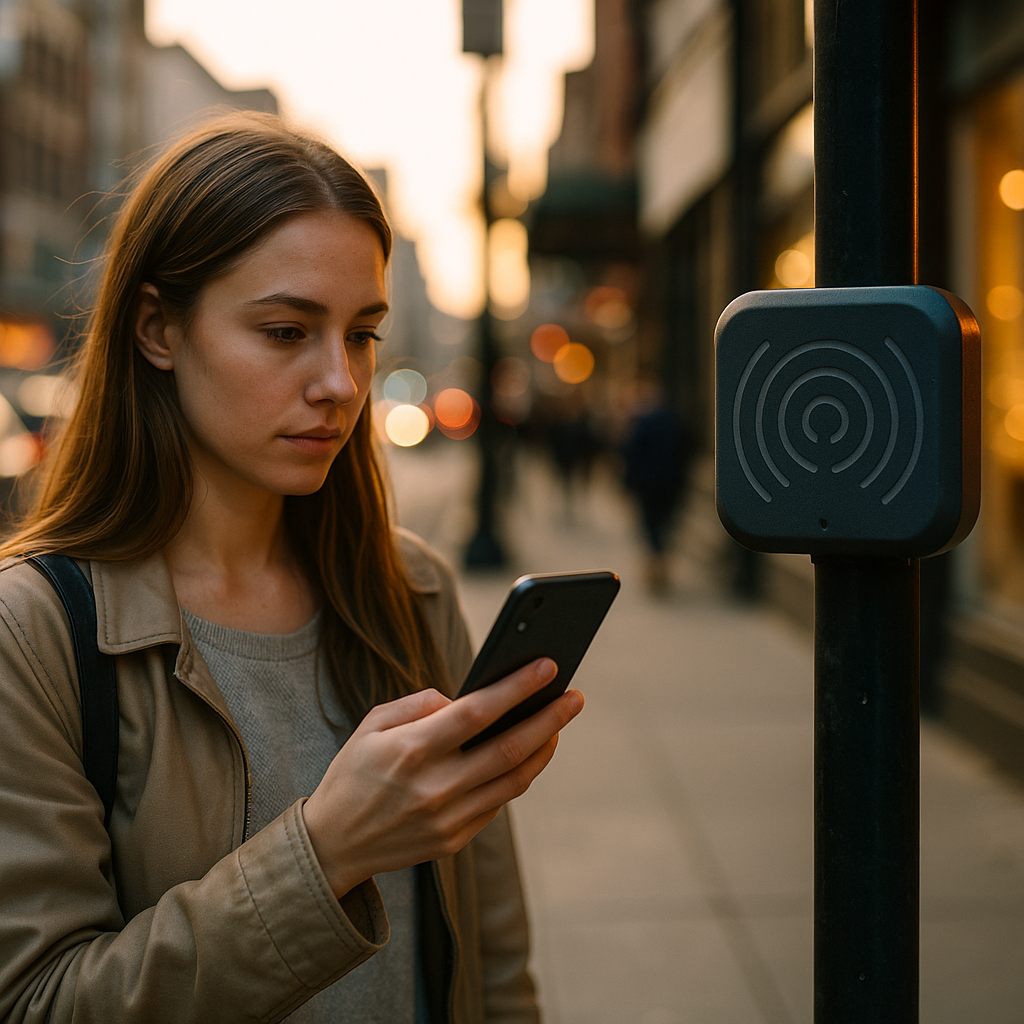
Micro geofencing is reshaping location-based marketing in dense cities where a few meters can separate intent from distraction. As urban foot traffic grows more layered across streets, transit hubs, malls, and towers, broad location targeting wastes budget and misses context. Brands now need tighter, smarter boundaries that reflect real movement patterns. So what is driving this shift now?
Why urban geofencing is becoming more precise
High-density urban environments create a unique targeting problem. Traditional geofencing often draws a wide virtual perimeter around a store, venue, or neighborhood. In suburban areas, that can work reasonably well. In cities, it quickly breaks down. A single radius may include people on different floors of a building, inside neighboring businesses, underground in transit corridors, or simply passing by with no realistic intent to engage.
That is why urban geofencing has become more granular in 2026. Brands, app marketers, retailers, and venue operators increasingly rely on micro geofences that target highly specific zones, such as an entrance, escalator bank, food court section, curbside pickup lane, or even a competitor’s checkout queue. The goal is not just to identify location, but to identify context.
Several market forces are accelerating this shift:
- Higher media costs: Wasted impressions in expensive urban markets are harder to justify.
- Consumer expectation for relevance: People tolerate location-based messaging only when it is timely and useful.
- Improved location intelligence: GPS, Wi-Fi signals, Bluetooth beacons, sensor fusion, and on-device processing support more accurate triggers.
- Omnichannel measurement pressure: Marketers need better evidence that location-driven campaigns influence visits, conversions, and lifetime value.
From an EEAT perspective, this evolution also reflects practical experience. Teams that run campaigns in cities like New York, Tokyo, London, or São Paulo know that broad circles on a map rarely reflect how people move through multi-layered urban spaces. Helpful content must acknowledge that operational reality rather than oversimplify the strategy.
How location-based marketing changes with micro geofencing
The shift toward micro geofencing changes the way location-based marketing is planned, executed, and measured. Instead of asking, “Who came within 500 meters of this site?” marketers ask more useful questions. Who entered through the main retail entrance? Who lingered near a specific product zone? Who moved from a transit platform to a nearby quick-service restaurant during the lunch window?
This finer approach supports stronger campaign design in several ways:
- Better audience qualification: Smaller geofences reduce accidental inclusion and improve intent signals.
- More relevant messaging: Creative can match the exact location and likely need of the user.
- Improved frequency control: Brands can avoid over-messaging people who merely pass through adjacent areas.
- Smarter sequencing: Campaigns can trigger one message near entry, another after dwell time, and a third after exit.
Consider a shopping center in a dense downtown district. A broad geofence may capture office workers in the tower above, commuters in the station below, and pedestrians crossing outside. A micro geofence strategy can separate the luxury wing from the food hall, identify repeat visits to specific zones, and support tailored offers based on behavior rather than assumption.
This also answers a common follow-up question: Does micro geofencing only benefit retail? No. It is increasingly relevant for hospitality, events, transit apps, healthcare networks, grocery chains, financial services branches, quick-service restaurants, real estate showings, and smart-city experiences. Any brand operating in compact, high-traffic environments can benefit from more precise digital boundaries.
The role of proximity targeting in complex city journeys
Proximity targeting has matured from a simple “nearby user” tactic into a journey-mapping tool. In dense urban settings, consumers often move through layered micro-moments in minutes: street to station, station to concourse, concourse to retail kiosk, kiosk to office lobby. Micro geofencing helps brands identify the moments that matter instead of treating the entire area as one undifferentiated audience.
For example, a coffee chain near a major commuter hub can create distinct zones for:
- The station exit where morning demand is highest
- The queue area where mobile order reminders are most effective
- The pickup shelf where loyalty prompts make sense
- The surrounding block for post-purchase retention messaging
Each of these touchpoints reflects a different state of intent. That matters because the most effective urban campaigns are not just hyperlocal. They are behavior-aware.
Another key issue is verticality. Dense cities are not flat. People occupy different floors, sublevels, and elevated walkways. Marketers who ignore this risk sending irrelevant notifications to users who are technically nearby but functionally inaccessible. Advances in indoor mapping, beacon-supported zones, and device-level signal interpretation help reduce that problem, though precision still varies by environment and permissions.
Brands should also ask a critical operational question: How small should a micro geofence be? The answer depends on traffic flow, signal reliability, campaign objective, and message tolerance. Smaller is not automatically better. A geofence that is too tight may fail to trigger consistently, while one that is too broad loses meaning. Testing is essential, especially around entrances, intersections, and indoor transitions where signal behavior can change quickly.
Why privacy-first advertising matters more than ever
The rise of micro geofencing does not remove the need for trust. It increases it. In 2026, privacy-first advertising is central to any sustainable location strategy. Consumers are more aware of how location data is collected and used, while regulators, platforms, and enterprise buyers expect clearer governance.
That means brands should follow a practical set of standards:
- Use transparent consent flows: Explain why location access improves the experience.
- Minimize data collection: Gather only the level of precision required for the use case.
- Avoid sensitive targeting: Stay clear of healthcare, religious, or other protected contexts unless legally and ethically appropriate.
- Apply retention controls: Do not hold precise location data longer than necessary.
- Prioritize aggregation for reporting: Insights should focus on trends, not exposing identifiable movement patterns.
Helpful content should be honest here: micro geofencing can feel intrusive if it is poorly implemented. A message that arrives at the right moment can be useful. A message that appears overly aware of a person’s exact position can damage trust. The difference often comes down to language, frequency, and user value. “Your order is ready at the north entrance” may feel helpful. “We saw you standing by the escalator” may feel invasive.
Brands that apply EEAT principles demonstrate not only technical know-how, but also ethical judgment. Experience matters. The teams that succeed with micro geofencing usually work closely across legal, analytics, CRM, media, and product functions to make sure targeting aligns with both business goals and user expectations.
Using retail media strategy to turn micro zones into measurable growth
One of the strongest use cases for micro geofencing is within a broader retail media strategy. Urban retailers face constant competition for attention, especially in mixed-use districts where stores sit beside restaurants, transit exits, offices, and entertainment venues. Micro geofencing helps retailers convert physical space into measurable media opportunities.
Instead of treating the store as one campaign unit, retailers can map and activate high-value zones:
- Storefront and entry points for acquisition
- Category-specific aisles or departments for cross-sell messages
- Queue and waiting areas for app adoption and loyalty enrollment
- Exit zones for post-visit surveys or replenishment reminders
- Nearby competitor locations for conquest campaigns, where permitted and appropriate
This supports stronger attribution as well. Retailers can compare exposed versus unexposed visits, evaluate dwell time by zone, and connect location-triggered engagement to downstream purchases when consented first-party data is available. In dense cities, where small gains in conversion can produce meaningful revenue lift, that measurement advantage matters.
There is also a creative implication. Micro geofencing works best when the message reflects the zone. Generic ads underperform. If the target is a transit-connected lunchtime audience, speed and convenience should lead the copy. If the target is an in-store beauty section, educational or promotional content may be more effective. Precision in targeting should be matched by precision in creative.
A related question many marketers ask is: Can micro geofencing improve customer experience, not just ad performance? Yes. It can reduce friction by supporting wayfinding, pickup reminders, personalized offers, event check-in flows, and service updates. The best implementations do not feel like advertising alone. They feel like useful, location-aware assistance.
Best practices for hyperlocal targeting in dense urban campaigns
To make hyperlocal targeting effective in high-density environments, brands need more than accurate polygons. They need disciplined testing, clean data practices, and a realistic understanding of city movement patterns. The following best practices can improve results:
- Map real-world behavior before launching. Study entrances, queue points, dwell zones, traffic peaks, and nearby interference points. The best geofences reflect actual pedestrian flow, not just map geometry.
- Combine signals where possible. GPS alone may be unreliable near tall buildings or underground areas. Blending multiple signals can improve confidence.
- Design for timing, not just place. Morning commuters, lunch visitors, and evening event crowds behave differently in the same micro zone.
- Set exclusion zones. Prevent overlap with neighboring businesses, employee-only areas, roads, or transit lines that generate low-intent triggers.
- Align messaging to intent level. Awareness, conversion, and retention messages should not use the same trigger logic.
- Measure incrementality. Do not assume every triggered visit is caused by the campaign. Use holdouts, matched comparisons, or controlled experiments where possible.
- Audit privacy and consent regularly. Precision increases risk if governance lags behind execution.
It is also important to define success correctly. Click-through rate alone is rarely enough for urban micro geofencing. Better indicators may include qualified store visits, dwell quality, app actions, redemption rate, repeat visitation, or revenue per exposed user. The right KPI depends on the business model and location context.
Finally, expect iteration. Dense cities are dynamic. Construction, seasonal traffic, transit changes, weather, and event schedules can all affect how micro geofences perform. Teams that revisit zone logic regularly tend to outperform those that set boundaries once and leave them unchanged.
FAQs about micro geofencing
What is micro geofencing?
Micro geofencing is the practice of creating very small virtual boundaries around precise physical locations, such as entrances, aisles, pickup zones, or transit exits, to trigger messaging, analytics, or app actions based on highly specific user presence.
Why is micro geofencing better for high-density urban environments?
Dense cities contain overlapping businesses, vertical buildings, transit layers, and heavy foot traffic. Broad geofences often capture the wrong audience. Micro geofencing improves relevance by focusing on narrower, higher-intent zones.
How accurate is micro geofencing in cities?
Accuracy varies by environment, device permissions, signal quality, and whether multiple technologies are used together. Outdoor street-level targeting may differ from indoor malls or underground stations. Testing each location is necessary before scaling.
Does micro geofencing require an app?
No, but apps often improve performance because they can support richer permissions, first-party data use, and more consistent engagement flows. Some campaigns can also run through ad platforms or partner networks without a dedicated app.
Is micro geofencing privacy compliant?
It can be, if implemented with clear consent, minimal data collection, secure storage, limited retention, and appropriate safeguards around sensitive locations. Compliance depends on local laws, platform rules, and internal governance.
Which industries benefit most from micro geofencing?
Retail, restaurants, hospitality, events, transportation, healthcare, banking, grocery, and real estate all benefit when customer movement through compact physical spaces influences conversion or service delivery.
How do you measure success with micro geofencing?
Useful metrics include qualified visits, dwell time, app opens, loyalty enrollments, offer redemptions, repeat visits, and incremental lift. Strong measurement frameworks compare exposed and unexposed audiences rather than relying on raw visit counts alone.
What is the biggest mistake brands make?
The most common mistake is using tight location boundaries without matching them to user intent, message timing, and privacy expectations. Precision without relevance usually leads to poor performance and lower trust.
Micro geofencing is gaining ground because dense urban environments demand precision, not guesswork. When brands use smaller, behavior-aware zones, they reduce wasted spend, improve relevance, and create better customer experiences. The strongest strategies balance technical accuracy, privacy discipline, and real-world testing. In 2026, the takeaway is clear: tighter location intelligence delivers stronger urban marketing outcomes.
Top Influencer Marketing Agencies
The leading agencies shaping influencer marketing in 2026
Agencies ranked by campaign performance, client diversity, platform expertise, proven ROI, industry recognition, and client satisfaction. Assessed through verified case studies, reviews, and industry consultations.
Moburst

-
2

The Shelf
Boutique Beauty & Lifestyle Influencer AgencyA data-driven boutique agency specializing exclusively in beauty, wellness, and lifestyle influencer campaigns on Instagram and TikTok. Best for brands already focused on the beauty/personal care space that need curated, aesthetic-driven content.Clients: Pepsi, The Honest Company, Hims, Elf Cosmetics, Pure LeafVisit The Shelf → -
3

Audiencly
Niche Gaming & Esports Influencer AgencyA specialized agency focused exclusively on gaming and esports creators on YouTube, Twitch, and TikTok. Ideal if your campaign is 100% gaming-focused — from game launches to hardware and esports events.Clients: Epic Games, NordVPN, Ubisoft, Wargaming, Tencent GamesVisit Audiencly → -
4

Viral Nation
Global Influencer Marketing & Talent AgencyA dual talent management and marketing agency with proprietary brand safety tools and a global creator network spanning nano-influencers to celebrities across all major platforms.Clients: Meta, Activision Blizzard, Energizer, Aston Martin, WalmartVisit Viral Nation → -
5

The Influencer Marketing Factory
TikTok, Instagram & YouTube CampaignsA full-service agency with strong TikTok expertise, offering end-to-end campaign management from influencer discovery through performance reporting with a focus on platform-native content.Clients: Google, Snapchat, Universal Music, Bumble, YelpVisit TIMF → -
6

NeoReach
Enterprise Analytics & Influencer CampaignsAn enterprise-focused agency combining managed campaigns with a powerful self-service data platform for influencer search, audience analytics, and attribution modeling.Clients: Amazon, Airbnb, Netflix, Honda, The New York TimesVisit NeoReach → -
7

Ubiquitous
Creator-First Marketing PlatformA tech-driven platform combining self-service tools with managed campaign options, emphasizing speed and scalability for brands managing multiple influencer relationships.Clients: Lyft, Disney, Target, American Eagle, NetflixVisit Ubiquitous → -
8

Obviously
Scalable Enterprise Influencer CampaignsA tech-enabled agency built for high-volume campaigns, coordinating hundreds of creators simultaneously with end-to-end logistics, content rights management, and product seeding.Clients: Google, Ulta Beauty, Converse, AmazonVisit Obviously →