


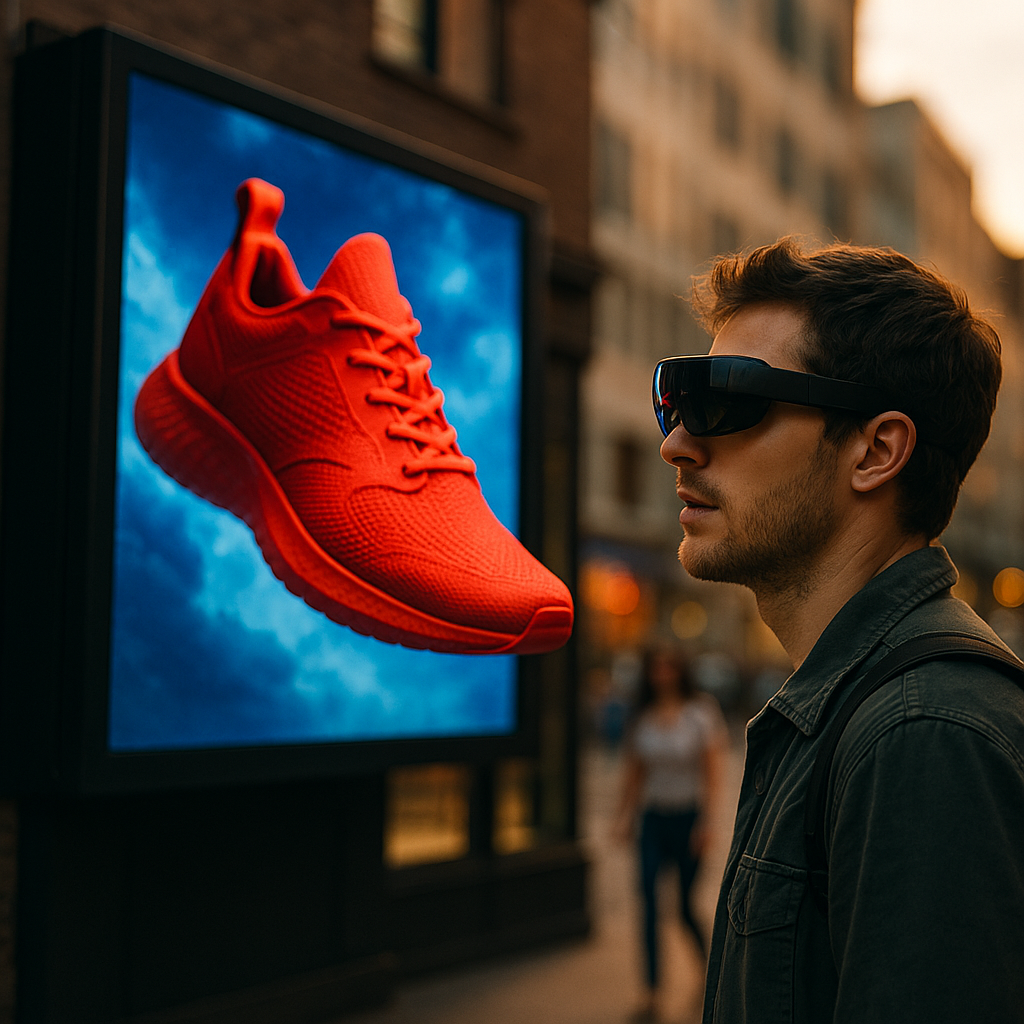
In 2026, visual anchoring in 3D immersive brand advertisements has become a core principle for capturing attention, guiding memory, and improving ad recall across spatial media. As brands compete inside AR, VR, gaming, and mixed-reality environments, knowing how viewers lock onto visual cues matters more than ever. What makes one object unforgettable while another disappears almost instantly?
How visual attention works in immersive advertising
Visual anchoring is the process of using specific visual elements to direct attention and stabilize perception around a focal point. In 3D immersive advertising, that focal point may be a product, logo, character, interface prompt, or branded environment feature. Unlike traditional flat ads, immersive formats ask the brain to process depth, motion, spatial audio, and user agency all at once. That creates both opportunity and risk.
From a cognitive science perspective, people do not absorb every object in a scene equally. The brain prioritizes what appears most relevant, novel, emotionally meaningful, or behaviorally useful. In immersive experiences, this filtering becomes even more important because the field of view is richer and often less predictable. A brand message fails when users do not know where to look, when to act, or what to remember.
Strong visual anchors reduce that confusion. They help viewers build a mental map of the ad experience. This supports three outcomes that matter to marketers:
- Faster orientation so users understand the environment quickly
- Higher message retention because key elements stand out in memory
- Better action rates when calls to action are visually connected to attention flow
Research in attention and perception consistently shows that salience alone is not enough. Brightness, contrast, and movement can attract the eye, but meaningful placement determines whether the user actually encodes the brand. In other words, a floating logo may be seen, but a logo tied to a useful object or spatial event is more likely to be remembered.
For advertisers, the practical lesson is simple: immersive ads should not just look impressive. They should be designed around how people perceive space, assign meaning, and form memory under cognitive load.
The role of spatial memory in 3D brand engagement
Spatial memory is one of the most powerful mechanisms behind visual anchoring in immersive media. People remember information better when it is linked to a location, movement path, or interactive object. This is why well-designed 3D ads often feel more memorable than static campaigns. They tap into the brain’s ability to store experiences as navigable scenes rather than isolated images.
When a brand places a product inside a stable, meaningful position in the environment, users are more likely to recall it later. If a branded object is always near a doorway, central platform, or interactive checkpoint, it becomes part of the user’s internal map. That location acts as a retrieval cue. The result is stronger unaided recall and higher recognition after the experience ends.
This principle works especially well in the following immersive contexts:
- AR retail previews where products are anchored to real-world surfaces
- VR branded worlds where users explore guided environments
- In-game advertising where branded assets live within player routes
- Mixed-reality product demos that tie interaction to physical movement
However, spatial memory can also work against a campaign if the environment is cluttered or inconsistent. If branded items move without reason, shift scale unpredictably, or appear in disconnected places, the brain treats them as noise. This weakens memory encoding and lowers trust. Consistency matters. A visual anchor should feel native to the scene and stable enough to support orientation.
Marketers often ask whether central placement is always best. The answer is no. What matters more is contextual relevance. A product placed slightly off-center but integrated with the user’s likely path can outperform a centered object that feels forced. Effective anchoring follows how attention flows through the experience, not just where designers want the eye to land.
Why depth cues improve consumer perception
Depth cues are essential in 3D advertising because they tell the brain what is near, far, important, reachable, or interactive. These cues include relative size, occlusion, lighting, shadow, motion parallax, and perspective. When brands use them well, they create hierarchy without overwhelming the viewer.
Depth gives advertisers a unique advantage over 2D formats. A product can feel physically present. A user can judge distance, anticipate interaction, and emotionally respond to realism. This matters because perceived presence often increases personal relevance. When an object appears to exist in the viewer’s space, the message can feel less like interruption and more like experience.
Yet realism alone does not guarantee effectiveness. The science of anchoring shows that the most successful immersive ads use depth strategically, not decoratively. For example:
- A hero product appears in the foreground with clear separation from background elements
- Supporting brand cues remain visible at mid-depth without competing for focus
- Calls to action are placed at comfortable viewing distance for comprehension and response
This structure reduces visual strain and helps users know what to process first. It also improves accessibility. In immersive environments, poor depth composition can create fatigue, disorientation, or missed information. If users have to search too hard, brand impact drops.
There is also a trust factor. Clean depth hierarchy signals production quality and intent. Consumers may not describe it in technical terms, but they notice when an ad feels coherent and easy to navigate. That perception can influence brand credibility, especially for high-consideration products such as vehicles, consumer electronics, travel, and luxury goods.
Brands should test depth composition across devices because headset field of view, mobile AR rendering, and platform constraints can change how anchors perform. What looks balanced in one environment may feel cramped or weak in another. Experience-based optimization is part of good immersive strategy and aligns with EEAT: build from expert practice, validate with user behavior, and refine with evidence.
Using eye-tracking insights for stronger brand recall
Eye-tracking insights have become one of the most valuable tools in immersive ad design. They reveal where users look first, how long they fixate, when attention drops, and whether branded elements are actually seen in the intended sequence. In 3D environments, this level of feedback is critical because user freedom makes visual behavior harder to predict than in standard video ads.
Eye-tracking data often exposes a gap between creative intention and real attention. Designers may assume that a large branded object dominates the scene, yet users may spend more time following motion, faces, light sources, or interactive prompts nearby. Without testing, brands risk optimizing for aesthetics instead of cognition.
Several patterns tend to improve recall in immersive campaigns:
- Entry-point anchoring: Give users an obvious first fixation target within the opening seconds
- Sequential guidance: Use movement, lighting, or gesture cues to lead attention from one branded element to the next
- Dwell reinforcement: Keep core brand assets visible long enough for memory encoding
- Interaction-linked visibility: Place key information near moments of user action
Eye-tracking also helps answer practical performance questions. Did users notice the logo before the call to action? Did they scan the package design? Did they spend too long on scenic details and ignore product benefits? These are not minor details. They directly affect recall, consideration, and conversion.
For teams without access to full biometric labs, platform analytics, usability testing, and recorded session review can still provide directional evidence. The goal is to observe real behavior rather than rely on assumptions. That approach strengthens content quality and trustworthiness because recommendations come from measurable interaction patterns.
An expert-led workflow usually combines creative strategy, behavioral testing, and iteration. That is the standard brands should expect in 2026. Immersive advertising is no longer experimental enough to justify guesswork. If attention can be measured, it should inform the design.
How sensory branding shapes emotional immersion
Sensory branding in 3D environments extends visual anchoring beyond sight alone. While the visual system initiates orientation, emotional immersion deepens when multiple senses align around the same brand signal. Spatial audio, haptic feedback, object motion, and environmental response can all reinforce a visual anchor and make it more memorable.
Consider what happens when a user sees a product glow softly on a pedestal, hears a directional sound drawing attention toward it, and triggers a subtle haptic response during interaction. The anchor becomes multisensory. This increases salience, but more importantly, it creates coherence. The brain interprets the object as important because several cues point to the same conclusion.
This can strengthen emotional encoding in ways flat creative often cannot. Emotion plays a major role in memory formation. If the anchored object is linked to surprise, delight, confidence, or curiosity, users are more likely to remember both the moment and the brand behind it.
Still, sensory branding must be disciplined. Too many cues create overload. Too much vibration, audio competition, or dramatic animation can feel manipulative and distracting. The best immersive ads use one dominant anchor supported by secondary signals that clarify meaning rather than compete with it.
Brands should also respect user comfort and context. A gaming environment may tolerate bold sensory layering, while an AR experience in a home setting may call for subtlety. The right anchoring strategy depends on platform norms, user intent, and session length. Helpful content and responsible design go together. Ads should guide, not trap, attention.
When sensory branding is executed well, it supports more than awareness. It can increase perceived product quality, emotional connection, and post-experience brand association. That is why immersive campaigns should be reviewed not only by creative teams but also by UX specialists, behavioral researchers, and media strategists who understand the full user journey.
Best practices for immersive ad design and measurement
Immersive ad design succeeds when science and execution work together. Visual anchoring is not a decorative trick. It is a practical framework for making 3D brand experiences understandable, memorable, and effective. To apply it well, brands need clear design principles and measurement standards.
Here are the most reliable best practices:
- Define the primary anchor early. Identify the one element users must notice and remember. Do not split attention across too many priorities.
- Match anchors to user intent. A discovery experience needs different cues than a direct-response activation.
- Use hierarchy across depth, motion, scale, and sound. Every cue should support the same attention path.
- Build around realistic behavior. Assume users will look around, pause, ignore prompts, and take unexpected paths.
- Test for recall, not just exposure. Visibility metrics matter, but memory and action matter more.
- Optimize for comfort and accessibility. Clear spacing, readable text distance, and low-friction interaction improve both experience and outcomes.
Measurement should cover both behavioral and brand outcomes. Useful metrics include fixation time, interaction rate, completion rate, brand recall, aided recognition, and post-experience intent. Teams should also track where confusion occurs. If users repeatedly miss the anchor or misread the environment, the problem is likely structural, not cosmetic.
To satisfy EEAT expectations, brands should document methodology, test with representative users, and avoid exaggerated claims. If a campaign improved recall, explain how that was measured. If a design change improved engagement, describe the context. This transparency builds trust with stakeholders and supports better long-term decision-making.
The larger lesson is that 3D advertising performs best when it respects human perception. Brands that understand attention, spatial memory, and sensory integration create immersive experiences that feel intuitive rather than overwhelming. That difference is what turns novelty into measurable brand impact.
FAQs about visual anchoring in 3D immersive brand advertisements
What is visual anchoring in immersive advertising?
Visual anchoring is the use of specific visual cues to guide attention toward important branded elements in a 3D or spatial environment. It helps users know where to look, what to remember, and when to act.
Why is visual anchoring important for brand recall?
It improves recall by making key objects or messages easier to notice and encode in memory. In immersive environments, users face more sensory input, so strong anchors reduce cognitive overload and support retention.
What makes a good visual anchor in 3D ads?
A good anchor is noticeable, contextually relevant, stable within the scene, and connected to user goals. It often uses contrast, depth, motion, or audio support without becoming distracting.
How does visual anchoring differ in AR, VR, and gaming?
In AR, anchors often relate to real-world surfaces and surroundings. In VR, they help users navigate fully virtual spaces. In gaming, they need to fit naturally within gameplay flow so they support immersion rather than interrupt it.
Can too many anchors reduce ad effectiveness?
Yes. Multiple competing focal points can confuse users and weaken memory. Most successful immersive ads emphasize one primary anchor and a limited number of supporting cues.
How do brands measure whether visual anchoring works?
They can use eye-tracking, session recordings, interaction analytics, recall studies, and user testing. The goal is to confirm that people noticed the right elements in the right sequence and remembered them afterward.
Does visual anchoring increase conversions or only awareness?
It can support both. Better attention guidance improves awareness and recall, while clearer visual hierarchy can also increase interaction rates and reduce friction around calls to action.
What industries benefit most from 3D immersive brand advertising?
Retail, automotive, beauty, travel, entertainment, consumer electronics, and home design often benefit because their products gain value when users can explore them spatially and interactively.
Visual anchoring gives 3D immersive ads their persuasive structure. When brands align attention, spatial memory, depth, and sensory cues, audiences understand the experience faster and remember it longer. The clearest takeaway for 2026 is practical: design immersive campaigns around human perception, then test them rigorously. In spatial advertising, what users notice first often determines what they believe, remember, and do next.
Top Influencer Marketing Agencies
The leading agencies shaping influencer marketing in 2026
Agencies ranked by campaign performance, client diversity, platform expertise, proven ROI, industry recognition, and client satisfaction. Assessed through verified case studies, reviews, and industry consultations.
Moburst

-
2

The Shelf
Boutique Beauty & Lifestyle Influencer AgencyA data-driven boutique agency specializing exclusively in beauty, wellness, and lifestyle influencer campaigns on Instagram and TikTok. Best for brands already focused on the beauty/personal care space that need curated, aesthetic-driven content.Clients: Pepsi, The Honest Company, Hims, Elf Cosmetics, Pure LeafVisit The Shelf → -
3

Audiencly
Niche Gaming & Esports Influencer AgencyA specialized agency focused exclusively on gaming and esports creators on YouTube, Twitch, and TikTok. Ideal if your campaign is 100% gaming-focused — from game launches to hardware and esports events.Clients: Epic Games, NordVPN, Ubisoft, Wargaming, Tencent GamesVisit Audiencly → -
4

Viral Nation
Global Influencer Marketing & Talent AgencyA dual talent management and marketing agency with proprietary brand safety tools and a global creator network spanning nano-influencers to celebrities across all major platforms.Clients: Meta, Activision Blizzard, Energizer, Aston Martin, WalmartVisit Viral Nation → -
5

The Influencer Marketing Factory
TikTok, Instagram & YouTube CampaignsA full-service agency with strong TikTok expertise, offering end-to-end campaign management from influencer discovery through performance reporting with a focus on platform-native content.Clients: Google, Snapchat, Universal Music, Bumble, YelpVisit TIMF → -
6

NeoReach
Enterprise Analytics & Influencer CampaignsAn enterprise-focused agency combining managed campaigns with a powerful self-service data platform for influencer search, audience analytics, and attribution modeling.Clients: Amazon, Airbnb, Netflix, Honda, The New York TimesVisit NeoReach → -
7

Ubiquitous
Creator-First Marketing PlatformA tech-driven platform combining self-service tools with managed campaign options, emphasizing speed and scalability for brands managing multiple influencer relationships.Clients: Lyft, Disney, Target, American Eagle, NetflixVisit Ubiquitous → -
8

Obviously
Scalable Enterprise Influencer CampaignsA tech-enabled agency built for high-volume campaigns, coordinating hundreds of creators simultaneously with end-to-end logistics, content rights management, and product seeding.Clients: Google, Ulta Beauty, Converse, AmazonVisit Obviously →