


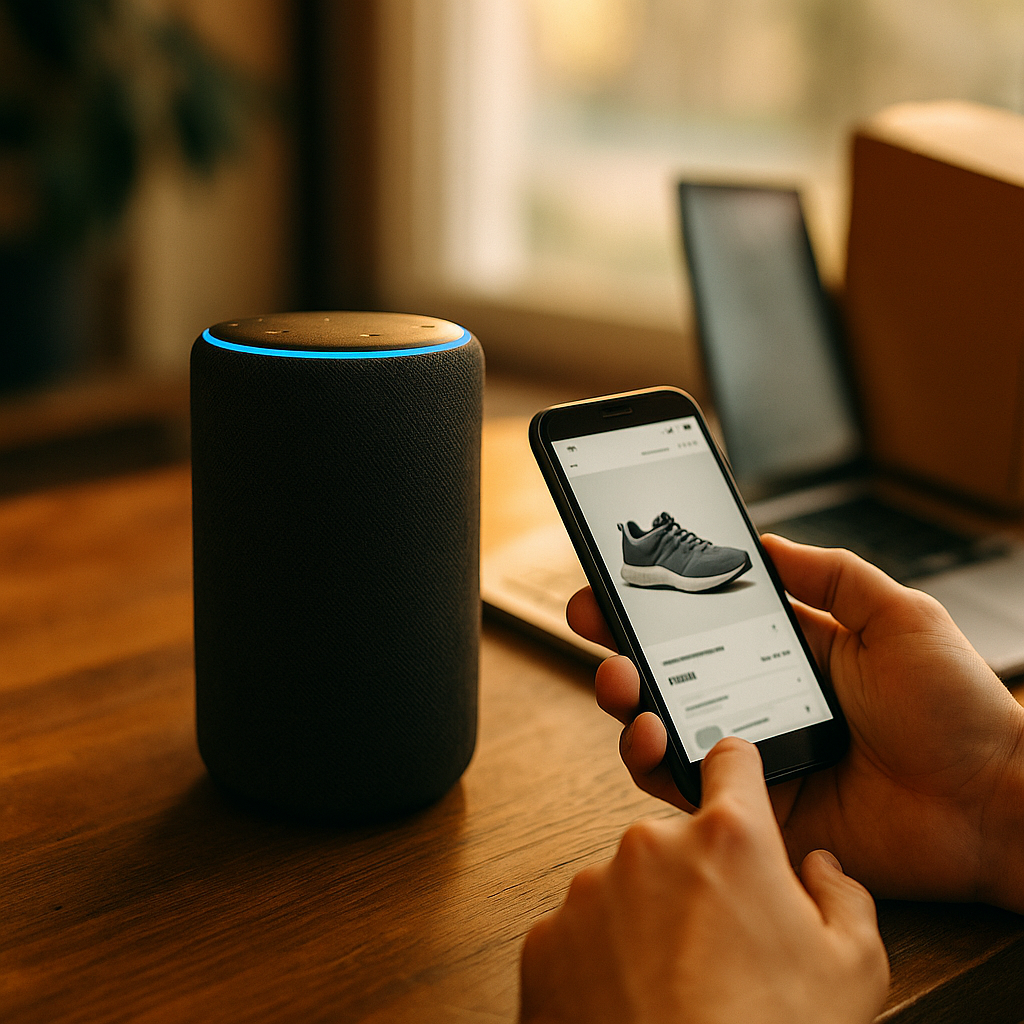
Headless ecommerce for voice first conversational shopping is moving from experiment to practical revenue channel in 2026. As shoppers ask assistants to compare products, reorder essentials, and complete purchases in natural language, commerce teams need flexible architectures that can respond instantly across devices. The real question is not whether voice matters, but whether your stack can support it effectively.
What headless ecommerce means for conversational commerce
Headless ecommerce separates the front end experience from the back end commerce engine. Instead of forcing every customer interaction through a fixed storefront, brands expose product, pricing, inventory, promotion, account, and checkout capabilities through APIs. That matters for conversational commerce because voice interfaces do not behave like traditional websites.
When a shopper says, “Find running shoes under $120 with extra cushioning and next-day delivery”, a voice assistant must interpret intent, query product data, rank relevant items, apply business rules, and return concise answers. A monolithic storefront can support some of this, but headless architecture is usually better suited to the task because it gives teams more control over how data is structured and delivered to voice surfaces.
In practical terms, headless ecommerce allows brands to:
- Serve multiple interfaces such as smart speakers, in-car systems, mobile assistants, wearables, and chat-based shopping tools from one commerce core.
- Customize conversation flows without rebuilding the entire commerce platform.
- Connect AI layers for natural language understanding, recommendations, search, and agentic assistance.
- Adapt faster as new voice ecosystems and devices emerge.
This flexibility is valuable, but it does not automatically create a strong voice shopping experience. The architecture provides the foundation. The business still needs clean data, clear intents, trustworthy fulfillment logic, and frictionless payment options.
Key benefits of voice commerce architecture in a headless model
A well-designed voice commerce architecture built on headless principles can improve both customer experience and operational agility. For brands evaluating whether the model is worth the effort, the benefits usually cluster into six areas.
1. Better cross-channel consistency
Voice shoppers expect the same prices, stock levels, loyalty perks, and delivery promises they see in apps or on the web. With APIs connecting the same commerce services to every touchpoint, brands reduce the risk of fragmented information.
2. Faster experimentation
Voice experiences still require testing. You may need to compare short answers versus guided dialogues, single-product recommendations versus curated lists, or one-step reorder flows versus confirmation-based checkout. Headless systems make these experiments easier because teams can modify the conversational layer without replacing the back end.
3. More precise personalization
Voice shopping is context-rich. It can include previous purchases, location, time of day, household preferences, and urgency. A headless approach lets brands plug recommendation engines, customer data platforms, and AI decisioning tools into commerce workflows more cleanly.
4. Improved performance
Conversational interfaces depend on speed. Delayed responses erode trust quickly. Headless deployments can reduce unnecessary presentation-layer overhead and return lightweight, task-specific responses to the assistant.
5. Easier integration with AI assistants
Many brands now support both branded voice interfaces and third-party assistants. Headless commerce APIs help expose the same product catalog and transaction logic to multiple AI-driven endpoints.
6. Future-readiness
Voice is no longer only about smart speakers. It is embedded in phones, cars, TVs, operating systems, and multimodal assistants. A modular architecture gives brands room to support shopping interactions wherever they happen next.
These advantages are strongest when brands build for real customer tasks, not novelty. Reorders, replenishment, product comparison, order tracking, and local availability checks often create more value than broad, open-ended shopping conversations.
How AI shopping assistants depend on structured product and intent data
The success of AI shopping assistants in a voice-first environment depends less on flashy dialogue and more on disciplined data foundations. If your product information is inconsistent, your assistant will sound inconsistent. If your inventory or promotions are delayed, your assistant will give unreliable answers. Customers notice both immediately.
To support voice shopping well, brands need a data model optimized for spoken interactions. That typically includes:
- Attribute-rich product data with clear descriptors such as size, color, material, compatibility, dietary preference, use case, price range, and shipping speed.
- Synonym mapping so the system understands that shoppers may say “trainers,” “sneakers,” or “running shoes” and mean similar things.
- Intent classification for actions like compare, reorder, buy now, ask availability, track package, or redeem points.
- Ranking logic that balances relevance, margin, stock, fulfillment feasibility, and customer preference.
- Conversational metadata for short spoken descriptions, disambiguation prompts, and confirmation language.
For example, on a visual storefront a user can scan ten products at once. In voice, the system may only present two or three options before the interaction becomes tiring. That means product ranking quality matters even more. A headless stack helps here because it lets teams feed voice-specific data services and response logic from the same commerce engine.
Brands should also define escalation paths. If the assistant cannot confidently answer, it should narrow the request, hand off to chat, or surface a screen-based continuation. Voice-first does not mean voice-only. The most effective experiences are often multimodal, letting users start with speech and finish with a tap when precision matters.
Customer experience challenges in voice search ecommerce
Voice search ecommerce creates unique UX and trust challenges that standard ecommerce teams sometimes underestimate. Reviewing headless ecommerce properly means looking beyond architecture diagrams and asking whether it can support clear, low-friction conversation design.
Discovery is harder without visuals.
Browsing large catalogs by voice alone is inefficient. Customers do not want long product lists read aloud. Brands need strong narrowing prompts such as budget, brand, flavor, compatibility, or delivery window. Headless systems can help by powering guided discovery flows, but the interaction design still requires careful scripting.
Disambiguation must be graceful.
Spoken requests are often vague. If someone asks for “a charger for my tablet”, the system must determine device model, connector type, wattage, and urgency. The assistant should ask the fewest possible follow-up questions while staying accurate.
Trust must be explicit.
Customers need confidence in what they are buying. A voice assistant should confirm key details before purchase: item name, quantity, total price, delivery timing, and return eligibility where relevant. This is especially important for regulated categories, subscriptions, or high-consideration products.
Accessibility and inclusivity matter.
Voice can improve access for some users, but only if speech recognition handles accents, pacing, and language variation well. Brands should test with diverse speakers and offer alternative interaction modes when recognition confidence is low.
Privacy concerns remain central.
People are more cautious about spoken transactions in shared spaces. Strong authentication, transparent consent, and optional voice PIN or device-based confirmation are essential. Headless architecture can support these controls by connecting identity, fraud, and payment services through APIs.
Returns and support cannot be afterthoughts.
A voice purchase journey is only complete if customers can also ask, “Where is my order?” or “Start a return” and receive useful answers. The best implementations connect pre-purchase and post-purchase service within one conversational framework.
Implementation best practices for composable ecommerce platforms
For teams considering composable ecommerce platforms as the base for voice shopping, execution matters more than labels. A composable stack can be powerful, but only if governance, ownership, and integration quality are strong. The following practices reflect what experienced commerce and product teams prioritize in 2026.
- Start with high-intent use cases. Reordering, order status, refill reminders, local stock checks, and simple product comparison usually outperform ambitious open-domain shopping assistants in early phases.
- Audit API readiness. Your commerce, search, pricing, promotion, identity, and payment APIs must return reliable responses quickly. Voice experiences expose latency and inconsistency fast.
- Create voice-ready product content. Standard product feeds are rarely enough. Add concise spoken summaries, pronunciation guidance for brand names, and attributes designed for conversational filtering.
- Design fallback paths. Let users shift to app, web, SMS, or chat when the conversation becomes complex. This preserves continuity instead of forcing abandonment.
- Build measurable intents. Track completion rates for tasks such as reorder, compare, add to cart, and track order. This makes optimization practical.
- Secure the payment layer. Voice checkout needs clear authentication and confirmation. For some categories, cart reservation followed by device confirmation may be safer than pure voice payment.
- Use human review loops. Analyze failed utterances, low-confidence intents, and abandoned sessions regularly. Conversational commerce improves through ongoing training, not one-time launch work.
It is also wise to assign cross-functional ownership. Voice commerce touches product, engineering, UX writing, search, merchandising, legal, privacy, customer care, and analytics. Without shared governance, the experience often becomes technically possible but commercially weak.
How to evaluate ROI and the future of conversational retail technology
Any review of conversational retail technology should end with economics. Headless ecommerce can unlock strong voice capabilities, but leaders still need a clear business case. The strongest ROI often comes from operational efficiency and conversion gains in specific tasks rather than from broad top-line disruption claims.
Useful metrics include:
- Task completion rate for reorder, search, add to cart, checkout, and support requests.
- Average response time across core intents.
- Conversion rate for voice-assisted versus non-assisted journeys.
- Average order value when the assistant recommends complementary products.
- Customer retention for replenishment-heavy categories.
- Support cost reduction when order tracking and simple service flows move to automation.
- Error and fallback rate to identify where conversation design or data quality needs work.
In 2026, the most realistic outlook is that voice shopping will grow as part of a broader AI-assisted commerce ecosystem. It will not replace screens for every category. Instead, it will dominate certain moments: quick replenishment, hands-free tasks, routine purchases, connected-car shopping, household list building, and support interactions.
This is where headless ecommerce earns its value. It gives brands the modularity to serve those moments without rebuilding commerce from scratch for every new interface. If your business depends on agility, omnichannel consistency, and AI-driven interaction design, headless is often the better long-term fit. If your catalog is small, your use cases are narrow, and your current platform already supports sufficient APIs, a full migration may not be urgent. The right choice depends on customer behavior, not architecture fashion.
FAQs about headless ecommerce and voice first shopping
What is the main advantage of headless ecommerce for voice shopping?
The main advantage is flexibility. Headless ecommerce lets brands deliver the same commerce capabilities through voice assistants, apps, websites, and other interfaces using APIs, which makes conversational shopping easier to build and improve.
Is headless ecommerce necessary for conversational commerce?
No, but it often helps. Some traditional platforms can support basic voice experiences. Headless becomes more valuable when you need advanced personalization, multiple voice endpoints, fast experimentation, or deep AI integration.
Which products work best for voice first shopping?
Routine and high-intent purchases tend to perform best. Examples include groceries, household essentials, personal care items, pet supplies, office products, and replenishment-based categories. Complex, visual, or style-driven purchases often work better in multimodal journeys.
How does voice first shopping affect SEO?
It increases the importance of natural-language product data, structured information, and concise answers to customer questions. Brands should optimize for conversational queries, entity clarity, and strong product attributes that AI systems can interpret accurately.
What are the biggest risks in voice commerce?
The biggest risks are poor recognition accuracy, weak product data, unclear confirmations, privacy concerns, and slow responses. These can damage trust quickly, especially during checkout or order support interactions.
How should brands measure success in conversational shopping?
Brands should track task completion, conversion, response speed, fallback rates, average order value, repeat purchase behavior, and customer satisfaction. Measuring by intent is usually more useful than looking only at overall voice traffic.
Can voice commerce work without a screen?
Yes, for simple tasks such as reordering, checking delivery status, or adding items to a list. For more detailed comparison or high-consideration purchases, combining voice with a screen usually produces better results.
What should a brand do first before launching voice shopping?
Start by auditing product data, API performance, and the top customer intents that could be simplified by voice. Then pilot one or two narrow use cases, measure outcomes, and expand based on real behavior.
Headless ecommerce is a strong fit for voice first conversational shopping when brands need speed, flexibility, and reliable omnichannel data. It is not a shortcut to great experiences, but it does provide the architecture needed to support them. The clear takeaway is simple: build around real customer tasks, structure your data well, and let voice solve practical shopping moments first.
Top Influencer Marketing Agencies
The leading agencies shaping influencer marketing in 2026
Agencies ranked by campaign performance, client diversity, platform expertise, proven ROI, industry recognition, and client satisfaction. Assessed through verified case studies, reviews, and industry consultations.
Moburst

-
2

The Shelf
Boutique Beauty & Lifestyle Influencer AgencyA data-driven boutique agency specializing exclusively in beauty, wellness, and lifestyle influencer campaigns on Instagram and TikTok. Best for brands already focused on the beauty/personal care space that need curated, aesthetic-driven content.Clients: Pepsi, The Honest Company, Hims, Elf Cosmetics, Pure LeafVisit The Shelf → -
3

Audiencly
Niche Gaming & Esports Influencer AgencyA specialized agency focused exclusively on gaming and esports creators on YouTube, Twitch, and TikTok. Ideal if your campaign is 100% gaming-focused — from game launches to hardware and esports events.Clients: Epic Games, NordVPN, Ubisoft, Wargaming, Tencent GamesVisit Audiencly → -
4

Viral Nation
Global Influencer Marketing & Talent AgencyA dual talent management and marketing agency with proprietary brand safety tools and a global creator network spanning nano-influencers to celebrities across all major platforms.Clients: Meta, Activision Blizzard, Energizer, Aston Martin, WalmartVisit Viral Nation → -
5

The Influencer Marketing Factory
TikTok, Instagram & YouTube CampaignsA full-service agency with strong TikTok expertise, offering end-to-end campaign management from influencer discovery through performance reporting with a focus on platform-native content.Clients: Google, Snapchat, Universal Music, Bumble, YelpVisit TIMF → -
6

NeoReach
Enterprise Analytics & Influencer CampaignsAn enterprise-focused agency combining managed campaigns with a powerful self-service data platform for influencer search, audience analytics, and attribution modeling.Clients: Amazon, Airbnb, Netflix, Honda, The New York TimesVisit NeoReach → -
7

Ubiquitous
Creator-First Marketing PlatformA tech-driven platform combining self-service tools with managed campaign options, emphasizing speed and scalability for brands managing multiple influencer relationships.Clients: Lyft, Disney, Target, American Eagle, NetflixVisit Ubiquitous → -
8

Obviously
Scalable Enterprise Influencer CampaignsA tech-enabled agency built for high-volume campaigns, coordinating hundreds of creators simultaneously with end-to-end logistics, content rights management, and product seeding.Clients: Google, Ulta Beauty, Converse, AmazonVisit Obviously →