


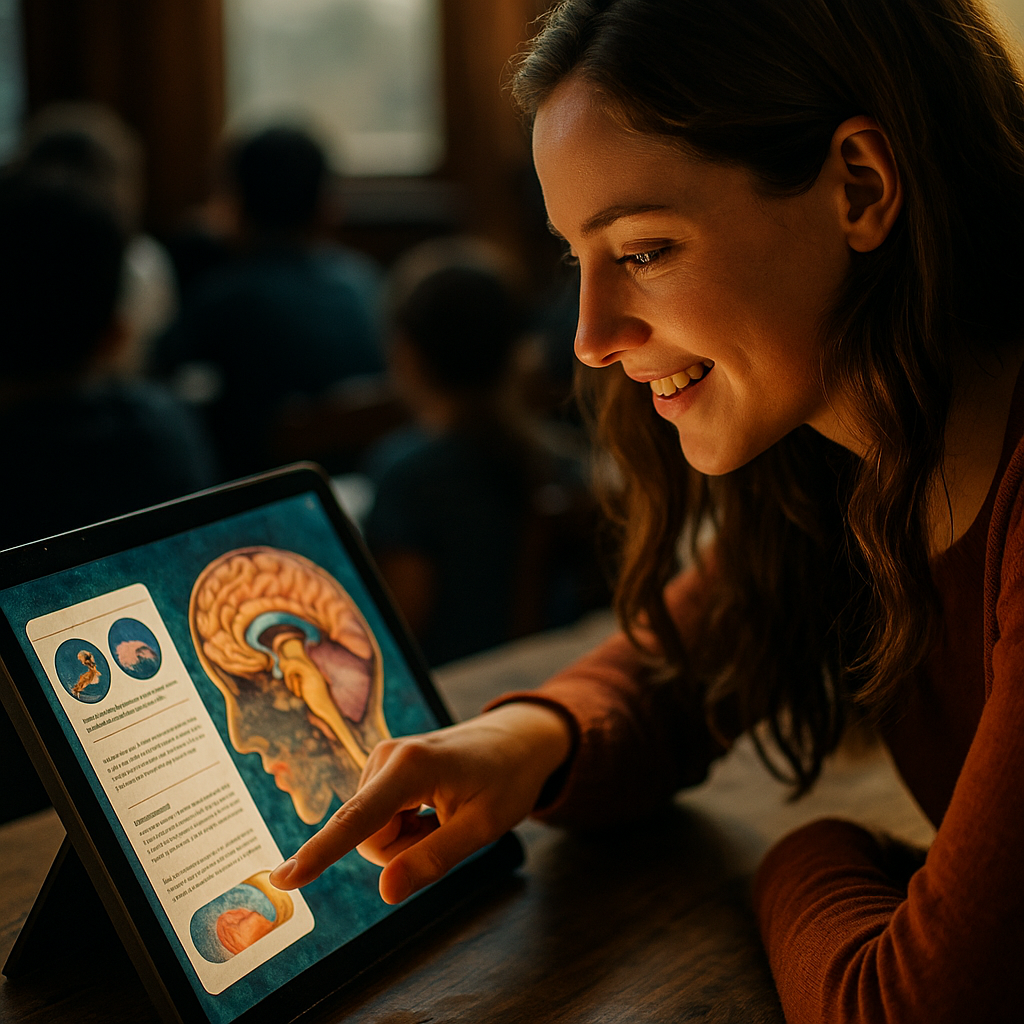
Crafting educational content that sparks attention instead of tuning readers out is no longer optional in 2026. Audiences expect relevance, clarity, and real value within seconds. The challenge is not simply to inform, but to create momentum that keeps learners exploring. When done well, curiosity becomes the engine of retention, trust, and action. So what makes people lean in?
Why curiosity-driven learning outperforms passive instruction
Educational content succeeds when it respects how people actually learn. Most audiences do not arrive with unlimited focus. They scan, test relevance quickly, and decide whether the material deserves their time. That means content creators must build for attention first, then deepen engagement with useful substance.
Curiosity-driven learning works because it activates an internal question: “What happens next?” or “Why is this true?” Instead of pushing facts at a passive reader, it pulls them forward through discovery. This is especially important in digital environments where distractions compete constantly for attention.
Content that inspires curiosity usually includes a few consistent traits:
- A meaningful question that frames the topic
- A clear payoff for continuing to read or watch
- Useful tension between what the learner assumes and what the content reveals
- Progressive clarity that answers one question while opening another
Boredom often appears when material is overly predictable, too abstract, or disconnected from real needs. A long explanation with no practical stakes feels heavy. By contrast, a well-structured lesson that starts with a challenge, misconception, or surprising example invites immediate mental participation.
To meet Google’s helpful content expectations and stronger EEAT signals in 2026, educational articles should also demonstrate firsthand understanding. If you have taught the topic, tested different formats, analyzed learner behavior, or refined lessons based on feedback, that experience should shape the content. Readers trust advice grounded in practice, not recycled summaries.
How engaging educational content begins with audience intent
The fastest way to create boring educational material is to start with what you want to say instead of what the audience needs to understand. Strong content begins by identifying learner intent. Ask: why is this person here, what do they already know, and what problem are they trying to solve right now?
Audience intent usually falls into a few categories:
- Foundational learning: they need a simple introduction
- Skill building: they want a step-by-step method
- Decision support: they are comparing options or evaluating next steps
- Troubleshooting: they need a solution to a specific obstacle
Once intent is clear, your structure becomes sharper. A beginner does not need jargon-heavy theory upfront. An experienced professional does not need a slow, generic overview. Matching depth to intent increases relevance, and relevance is one of the strongest antidotes to boredom.
This is also where EEAT matters in practical terms. Experience shows up when examples reflect real learner pain points. Expertise appears in the accuracy and nuance of your explanations. Authoritativeness grows when your content demonstrates command of the topic and aligns with trusted sources or accepted best practices. Trustworthiness depends on clarity, honesty, and helpfulness.
Before drafting, create a learner profile that includes:
- Current knowledge level
- Primary question they want answered
- Common misconceptions
- Practical outcome they expect
- Likely follow-up questions after the first answer
This process makes your content feel guided rather than generic. It also helps you naturally answer related questions inside the article, which improves usefulness for both readers and search visibility.
Using interactive learning strategies to sustain attention
Many writers assume educational content becomes engaging through personality alone. In reality, structure and interaction do more of the heavy lifting. Even in text-based content, you can create an interactive experience by prompting reflection, comparison, prediction, and application.
Here are effective interactive learning strategies for written educational content:
- Open with a problem: present a real scenario before the explanation
- Use prediction prompts: ask what the reader thinks will happen before revealing the answer
- Break concepts into decisions: guide the reader through choices instead of dumping information
- Add mini self-checks: ask short questions that confirm understanding
- Include practical examples: show how the idea works in a realistic context
For example, instead of defining a principle immediately, begin with a situation where the reader can feel the challenge. If you are teaching lesson design, start by describing a class that loses focus after three minutes. Then ask what caused the drop-off. That simple move creates cognitive engagement.
Good educational content also uses pacing intentionally. Dense paragraphs, repetitive sentence patterns, and long stretches without examples drain energy. To maintain attention:
- Alternate explanation with application
- Keep each paragraph focused on one idea
- Use plain language unless technical detail is essential
- Introduce contrast, such as “what most creators do” versus “what works better”
Attention rises when readers feel involved. They do not want to sit through a lecture in article form. They want guidance that helps them think, test, and connect ideas as they go.
Building instructional design for engagement with clear narrative flow
Instructional design is not only for classrooms and e-learning platforms. It is equally important for blog articles, guides, and educational resource pages. If the information feels chaotic, readers disengage. If the path feels intentional, they stay with it.
Instructional design for engagement starts with sequencing. The order of your ideas matters. Move from simple to complex, familiar to unfamiliar, question to answer, and concept to action. Each section should make the next one feel necessary.
A reliable sequence looks like this:
- Context: why the topic matters now
- Problem: what goes wrong when the principle is ignored
- Explanation: the concept or framework
- Example: proof in practice
- Application: how the reader can use it
This pattern reduces friction. It also supports retention because the learner sees not just what something is, but why it matters and how to use it.
Narrative flow adds another layer of engagement. Educational content does not need to sound dramatic, but it should feel like movement. A reader should sense progression from uncertainty to insight. You can create that by:
- Introducing a tension or challenge early
- Resolving one question at a time
- Using transitions that connect ideas logically
- Returning to the original problem with a stronger answer
Writers often ask whether storytelling belongs in educational material. The answer is yes, if it serves understanding rather than decoration. A short teaching moment, experiment, classroom observation, or user scenario can make abstract ideas memorable. This also strengthens EEAT by showing real-world familiarity with the topic.
One important note: do not confuse simplification with oversimplification. Readers appreciate clarity, but they also want accuracy. The best educational content explains complex ideas cleanly without stripping away essential nuance.
Applying content personalization techniques without losing credibility
Educational content feels more compelling when it reflects the learner’s context. That is where content personalization techniques become valuable. Personalization does not always require advanced technology. In an article, it can be achieved through examples, branching logic, and language that acknowledges different learner situations.
Consider using audience-specific phrasing such as:
- If you are teaching beginners, focus on reducing cognitive overload
- If you are training employees, connect lessons to job outcomes
- If you are writing for self-directed learners, include checkpoints and next actions
This signals relevance immediately. It also reduces the sense that the content was written for “everyone,” which usually means it lands deeply with no one.
At the same time, credibility must remain intact. Personalization should never drift into unsupported claims or vague promises. To keep trust high:
- Use examples drawn from plausible, current scenarios
- Be transparent about what is broadly effective versus situational
- Acknowledge limitations and exceptions when necessary
- Favor practical evidence over hype
Another strong approach is to offer tiered application. Present a concept, then show how a beginner, intermediate learner, and advanced practitioner might use it differently. This helps a wider audience without flattening the advice.
Personalized educational content also anticipates emotional barriers. Some learners fear complexity. Others resist because they have been overwhelmed by dull instruction before. You can reduce that resistance with concise reassurance: explain what the section will do, how long it will take to grasp, and what the learner will gain.
That level of guidance builds trust because it respects time and attention. In SEO terms, it can also improve engagement signals by helping readers stay oriented through the content.
Measuring learner engagement metrics to improve educational content
Inspiring curiosity is not a one-time creative act. It is an iterative process. The best educational content teams measure what holds attention, what creates confusion, and where interest drops off. That is how you move from intuition to repeatable quality.
Useful learner engagement metrics include:
- Time on page: indicates whether readers stay with the lesson
- Scroll depth: shows how far they progress
- Return visits: suggests ongoing trust and value
- Internal clicks: reveals whether curiosity leads to deeper exploration
- Completion actions: such as downloading a guide, starting a lesson, or answering a quiz
Qualitative feedback matters just as much. Comments, surveys, support questions, and learner interviews can reveal where boredom begins. For example, readers may say an article was “informative” but still abandon it halfway. That often signals weak pacing rather than poor information.
When reviewing content performance, ask:
- Where does attention spike or drop?
- Which examples generate the strongest response?
- Are follow-up questions already answered in the piece?
- Is the introduction aligned with what the content actually delivers?
- Does the content create a next step for continued learning?
Improvement usually comes from small refinements: a stronger opening question, a clearer example, a better transition, or a more practical takeaway. Over time, these adjustments compound into content that feels sharper, more human, and more useful.
This is fully aligned with Google’s helpful content framework in 2026. Search visibility increasingly rewards pages that satisfy intent, demonstrate real understanding, and offer a better learning experience than shallow, keyword-driven articles.
FAQs about educational content strategy
What makes educational content boring?
Educational content becomes boring when it feels generic, overly long without payoff, disconnected from real needs, or too dense to process easily. A lack of examples, poor structure, and predictable explanations also reduce engagement quickly.
How do you make educational content more interesting?
Start with a compelling question or problem, use clear examples, vary pacing, and show practical application. Ask readers to think, predict, or compare before giving the answer. Relevance and participation create interest.
Why is curiosity important in learning?
Curiosity increases attention, motivation, and retention. When learners want to know more, they process information more actively. That leads to stronger understanding than passive exposure to facts alone.
How does EEAT apply to educational articles?
EEAT applies through real experience, accurate expertise, clear authority, and trustworthiness. Educational content should reflect firsthand insight, factual reliability, transparent claims, and practical usefulness for the intended audience.
What is the best structure for educational blog content?
A strong structure moves from context and problem to explanation, example, and application. This sequence helps readers understand why the topic matters and how to use what they learn.
Should educational content be simple or detailed?
It should be as simple as possible without losing accuracy. The right depth depends on audience intent and knowledge level. Clear writing with relevant detail usually performs better than either oversimplified or overloaded content.
How can I measure whether my educational content is engaging?
Track time on page, scroll depth, return visits, internal clicks, and conversion actions. Combine those metrics with direct learner feedback to identify where interest grows, stalls, or drops.
Crafting educational content that inspires curiosity requires more than clear information. It demands relevance, smart structure, active engagement, and credible insight rooted in real experience. When you align lessons with audience intent, guide readers through meaningful questions, and measure what truly holds attention, learning becomes memorable. The clearest takeaway is simple: design every piece to make the reader want the next answer.
Top Influencer Marketing Agencies
The leading agencies shaping influencer marketing in 2026
Agencies ranked by campaign performance, client diversity, platform expertise, proven ROI, industry recognition, and client satisfaction. Assessed through verified case studies, reviews, and industry consultations.
Moburst

-
2

The Shelf
Boutique Beauty & Lifestyle Influencer AgencyA data-driven boutique agency specializing exclusively in beauty, wellness, and lifestyle influencer campaigns on Instagram and TikTok. Best for brands already focused on the beauty/personal care space that need curated, aesthetic-driven content.Clients: Pepsi, The Honest Company, Hims, Elf Cosmetics, Pure LeafVisit The Shelf → -
3

Audiencly
Niche Gaming & Esports Influencer AgencyA specialized agency focused exclusively on gaming and esports creators on YouTube, Twitch, and TikTok. Ideal if your campaign is 100% gaming-focused — from game launches to hardware and esports events.Clients: Epic Games, NordVPN, Ubisoft, Wargaming, Tencent GamesVisit Audiencly → -
4

Viral Nation
Global Influencer Marketing & Talent AgencyA dual talent management and marketing agency with proprietary brand safety tools and a global creator network spanning nano-influencers to celebrities across all major platforms.Clients: Meta, Activision Blizzard, Energizer, Aston Martin, WalmartVisit Viral Nation → -
5

The Influencer Marketing Factory
TikTok, Instagram & YouTube CampaignsA full-service agency with strong TikTok expertise, offering end-to-end campaign management from influencer discovery through performance reporting with a focus on platform-native content.Clients: Google, Snapchat, Universal Music, Bumble, YelpVisit TIMF → -
6

NeoReach
Enterprise Analytics & Influencer CampaignsAn enterprise-focused agency combining managed campaigns with a powerful self-service data platform for influencer search, audience analytics, and attribution modeling.Clients: Amazon, Airbnb, Netflix, Honda, The New York TimesVisit NeoReach → -
7

Ubiquitous
Creator-First Marketing PlatformA tech-driven platform combining self-service tools with managed campaign options, emphasizing speed and scalability for brands managing multiple influencer relationships.Clients: Lyft, Disney, Target, American Eagle, NetflixVisit Ubiquitous → -
8

Obviously
Scalable Enterprise Influencer CampaignsA tech-enabled agency built for high-volume campaigns, coordinating hundreds of creators simultaneously with end-to-end logistics, content rights management, and product seeding.Clients: Google, Ulta Beauty, Converse, AmazonVisit Obviously →