


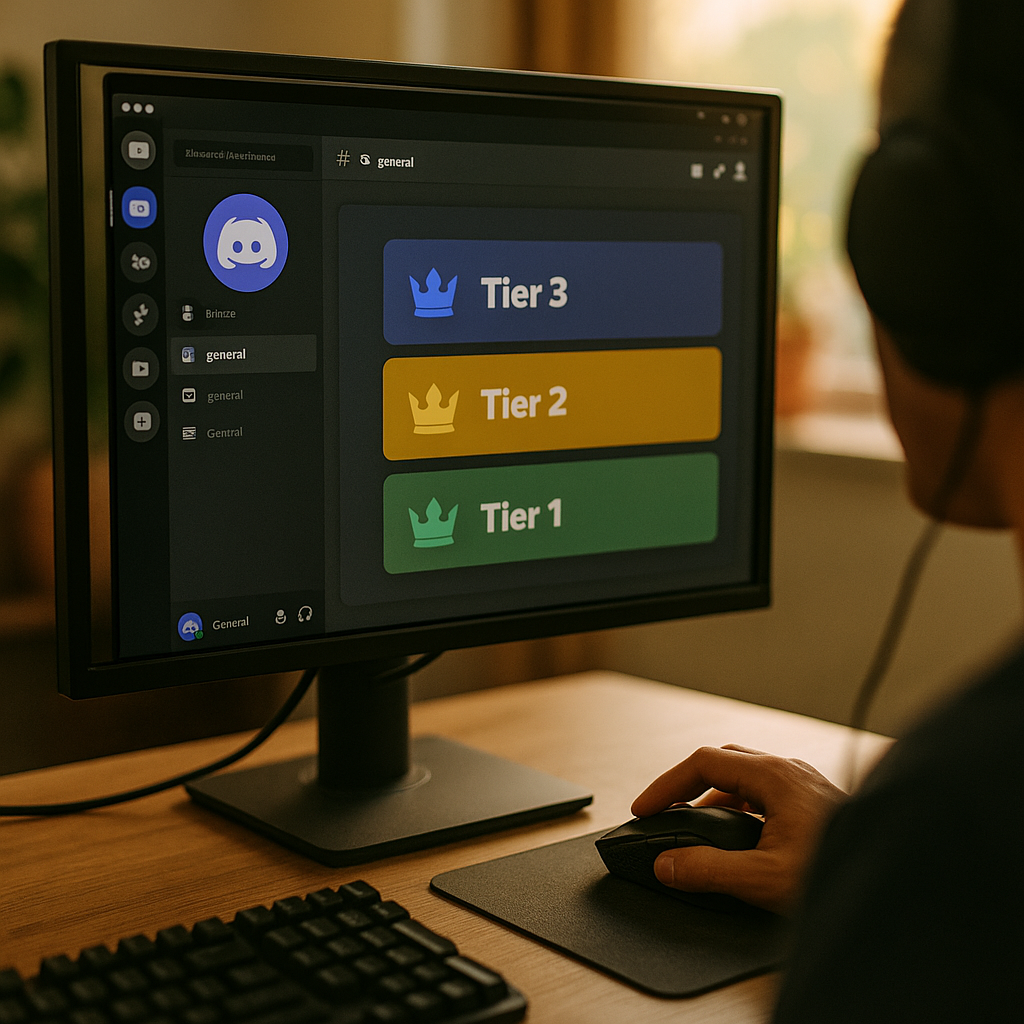
High touch retention using specialized Discord tiers gives membership businesses, creators, gaming communities, and SaaS brands a practical way to increase loyalty without overwhelming support teams. Instead of treating every member the same, brands can design tiered experiences that reward engagement, unlock expertise, and create belonging. The result is stronger retention, better member insights, and more predictable recurring revenue. Here’s the playbook.
Why Discord membership tiers improve retention
Retention improves when members clearly understand what they get, why it matters, and how to access more value over time. That is exactly where Discord membership tiers outperform generic community setups. A flat community often creates noise, uneven support expectations, and limited personalization. Tiered communities create structure.
In practice, specialized tiers let you match access, education, events, and response times to member intent. A new user may need onboarding and simple wins. A power user may want direct access to product experts, peer masterminds, or advanced office hours. A VIP customer may expect faster help, exclusive strategy sessions, or beta access. When each segment gets the right level of touch, members stay longer because the experience feels designed for them.
High-touch retention works best when the value difference between tiers is obvious and useful. Members should be able to answer three questions immediately:
- What do I get in this tier?
- How is it different from the others?
- What outcome can I expect if I participate?
That clarity reduces churn caused by confusion. It also creates natural upgrade paths. Members do not just pay for access; they pay for progress, recognition, and proximity to experts or peers they trust.
From an EEAT perspective, this approach also strengthens experience and trust. Community leaders can show real expertise through curated channels, documented workflows, office hours, and transparent moderation. Members see who is helping, what credentials they bring, and how questions get resolved. That visibility matters in 2026, when buyers increasingly evaluate the quality of a brand’s ongoing relationship, not just the initial sale.
How to design specialized Discord tiers that members actually value
The biggest mistake brands make is building tiers around internal convenience instead of member outcomes. Effective specialized Discord tiers start with segmentation by need, not by vanity labels. Before you create roles and channels, map the main retention segments in your audience.
Common segments include:
- New members: need fast onboarding, orientation, and a first success milestone.
- Core members: want consistent programming, peer connection, and practical resources.
- Advanced members: need deeper expertise, more direct access, and tailored feedback.
- VIP or enterprise members: expect concierge-style support, private spaces, and strategic collaboration.
Then translate those needs into tier benefits. Keep each tier focused on a specific transformation. For example, an education brand might structure tiers this way:
- Starter tier: onboarding path, resource library, weekly Q&A, accountability prompts.
- Growth tier: workshops, group coaching, implementation channels, monthly audits.
- Pro tier: private mastermind, direct expert feedback, early releases, faster support.
This model works because members are not paying for random perks. They are paying for increasing levels of access, context, and personal attention.
To make tiers sustainable, define service boundaries early. If one tier includes “priority support,” specify the expected response window. If another tier offers expert reviews, explain the format, frequency, and eligibility. This prevents disappointment and keeps your team from overcommitting.
You should also make channels feel purposeful. More channels do not equal more value. A compact, active structure is better than a sprawling server with dead zones. Each tier should have only the spaces needed to achieve its promised outcomes.
- Onboarding channel
- Announcements channel
- Ask-an-expert channel
- Peer accountability or wins channel
- Tier-specific event room or private discussion area
When members can instantly see where to go and what to do, engagement rises. Engagement is a leading indicator of retention.
Best community retention strategy for onboarding and activation
A strong community retention strategy begins in the first seven days. Most churn is not caused by a sudden decision; it starts when members fail to experience value quickly. Your Discord tier system should therefore include activation workflows, not just access control.
Start with a welcome sequence that tells members exactly how to begin. This can include a welcome message, role selection, a short checklist, and a prompt to introduce themselves. The goal is to move members from passive access to active participation fast.
Use a simple activation framework:
- Orient: explain the server layout, rules, and where to start.
- Personalize: assign the right tier, interests, and goals through roles or intake questions.
- Prompt action: ask members to complete one small task within 24 hours.
- Deliver a win: connect them to a useful resource, answer a question, or invite them to a live session.
- Reinforce: follow up with reminders and next-step recommendations.
For high-touch tiers, human interaction matters. Assign community managers or specialists to greet members by name, direct them to relevant channels, and recommend the next event or resource based on their goals. That one-to-one touch increases the perceived value of the tier immediately.
You should also create milestone-based programming. For example, if a member joins a SaaS customer community, the first milestone might be completing setup. The second might be launching a first campaign. The third might be using an advanced feature. Every tier can support these milestones differently, with higher tiers receiving more hands-on guidance.
This is where many readers ask a practical question: should all tiers get the same onboarding? No. Everyone should get a clear foundation, but premium tiers should receive accelerated activation. That can include private orientation, direct message support, invite-only calls, or a success roadmap tailored to their goals.
When activation is consistent, retention becomes more predictable because members connect your community to measurable progress.
Using Discord engagement tactics without creating noise
Many communities confuse activity with value. Smart Discord engagement tactics create meaningful participation, not endless notifications. High-touch retention depends on relevance. Members stay when they see a reason to return and a clear benefit when they do.
The most effective tactics combine routine, exclusivity, and responsiveness. Routine builds habit. Exclusivity increases perceived value. Responsiveness builds trust.
Use a content and interaction cadence that supports each tier:
- Weekly: office hours, expert threads, implementation check-ins, curated resource drops.
- Monthly: workshops, audits, member spotlights, roadmap previews, private networking sessions.
- Quarterly: strategic reviews, tier benefit refreshes, feedback surveys, retention analysis.
Not every event should be open to every tier. Some sessions should intentionally be reserved for advanced or VIP members. Specialized access is the point of the model. If all value is public, higher tiers become harder to justify.
At the same time, do not make lower tiers feel neglected. They should still receive enough value to remain engaged and see a credible path to upgrading. A good rule is to let lower tiers observe the existence of premium value without giving away the full experience. For example, announce that a Pro workshop happened and share one takeaway, but keep the full recording and discussion restricted.
Moderation quality also affects retention. Members need to trust that questions will be answered, discussions will stay constructive, and spam will be handled quickly. That requires response standards, escalation rules, and visible community guidelines. Expertise alone is not enough; the experience must feel organized and safe.
Another common question is whether automation harms high-touch retention. It does not if you automate the right layers. Automate role assignment, reminders, onboarding prompts, and event notifications. Keep nuanced support, strategic feedback, and sensitive member conversations human. Automation should remove friction, not replace relationships.
Metrics for member churn reduction and tier optimization
If you want lasting member churn reduction, track the behaviors that happen before cancellation. Retention is easier to improve when you can identify weak points in the member journey. Discord data, payment data, and customer success data should work together.
Start with these core metrics:
- Activation rate: percentage of new members who complete key first-week actions.
- Engagement rate by tier: posts, replies, event attendance, resource usage, or office hour participation.
- Upgrade rate: movement from entry-level to premium tiers.
- Downgrade and churn rate: by cohort, tier, and member segment.
- Response time: especially for premium support promises.
- Retention by milestone: whether members who hit a defined success point stay longer.
Do not stop at platform activity. Some quiet members stay for access, recordings, or problem-solving that happens privately. That is why qualitative feedback matters. Run short surveys, hold cancellation interviews, and ask members which benefits they use most. The answers often reveal a mismatch between what you promote and what members actually value.
Look for patterns such as:
- High join rate but low first-week participation
- Strong engagement in one tier but weak renewals in another
- Premium members using support heavily but skipping community programming
- Frequent downgrades after a trial period
Each pattern points to a different fix. Low activation suggests onboarding issues. Weak renewals may mean unclear value or poor member-fit at the point of sale. Heavy support usage with low event participation may indicate that members need more direct problem-solving and less general programming.
Review tier performance regularly and adjust pricing, benefits, or service levels based on evidence. Specialized tiers are not static. They should evolve with member needs and operational reality.
Building a premium Discord community that scales with trust
A premium Discord community must feel personal without depending entirely on founders or a few overextended moderators. That requires operational discipline. You need documented processes, clear ownership, and visible standards that members can trust.
Start by assigning roles internally. Decide who owns onboarding, moderation, event programming, support escalation, analytics, and renewal feedback. Members should know who to contact and what kind of help each person provides. This boosts confidence and reduces confusion.
Next, document your recurring workflows:
- Member onboarding and role assignment
- Tier upgrade and downgrade handling
- Priority support response standards
- Event planning and follow-up
- Moderation and incident response
- Cancellation recovery and win-back outreach
This documentation is not just an internal convenience. It supports EEAT by making your experience repeatable and your expertise consistently accessible. Members can trust a system that works even when the founder is offline.
You should also create feedback loops between community, product, and marketing teams. Questions raised in high-touch tiers often reveal friction points, unmet needs, and upsell opportunities. A specialized Discord setup becomes a live intelligence engine when teams actually use what they learn.
Finally, protect the premium feel. That means keeping promises, managing capacity, and resisting the temptation to oversell access. If a tier includes expert feedback, ensure expert bandwidth exists. If a private channel is part of the offer, keep it active and useful. Premium is not a label. It is the reliable delivery of focused value.
When done well, high-touch retention through specialized Discord tiers becomes more than a community tactic. It becomes an operating model for loyalty, expansion, and trust.
FAQs about high touch retention with Discord tiers
What is high touch retention in a Discord community?
High touch retention is a member retention approach that emphasizes personalized support, proactive engagement, and tailored experiences. In Discord, this often means using roles, private channels, live events, expert access, and faster response times to help members achieve better outcomes and remain subscribed longer.
How many Discord tiers should a business create?
Most businesses do best with two to four tiers. Too few tiers limit personalization. Too many create confusion and operational strain. Start with a basic tier, a core paid tier, and one premium tier. Add more only when you have clear demand and the team capacity to deliver distinct value.
Which businesses benefit most from specialized Discord tiers?
Creator businesses, education brands, gaming communities, coaching programs, subscription memberships, and SaaS companies often benefit most. Any business that relies on recurring revenue, customer success, or member loyalty can use tiered Discord experiences to improve retention.
How do you justify a premium Discord tier?
You justify a premium tier by offering meaningful access and outcomes, not cosmetic perks. Examples include direct expert feedback, private strategy sessions, faster support, advanced workshops, exclusive networking, and early access to products or features. The premium experience should save time, reduce friction, or accelerate results.
Can Discord tiers reduce churn if my product already has customer support?
Yes. Customer support solves issues, but a community can increase product adoption, deepen relationships, and provide peer learning. Specialized tiers add context and continuity between support interactions, which helps members stay engaged and see ongoing value.
What are the biggest mistakes to avoid?
The biggest mistakes are creating too many channels, offering vague tier benefits, overpromising support, neglecting onboarding, and failing to measure retention by tier. Another common mistake is making premium tiers sound exclusive without delivering a clearly better member experience.
Should premium Discord tiers be fully private?
Usually, premium tiers should include private elements, but not be completely isolated. Members still benefit from the energy and visibility of the wider community. A hybrid structure often works best: shared public spaces for broad engagement and private tier spaces for specialized value.
How often should I review tier performance?
Review key metrics monthly and conduct a deeper tier analysis quarterly. Monthly checks help you catch response issues, low activity, or onboarding problems early. Quarterly reviews are better for pricing decisions, benefit changes, and broader retention strategy updates.
A playbook for high touch retention using specialized Discord tiers works when every level of access is tied to a real member outcome. Clear positioning, structured onboarding, purposeful engagement, and measurable service standards turn Discord from a chat space into a retention engine. Build fewer, better tiers, deliver on each promise, and optimize based on behavior. That is the clearest path to long-term loyalty.
Top Influencer Marketing Agencies
The leading agencies shaping influencer marketing in 2026
Agencies ranked by campaign performance, client diversity, platform expertise, proven ROI, industry recognition, and client satisfaction. Assessed through verified case studies, reviews, and industry consultations.
Moburst

-
2

The Shelf
Boutique Beauty & Lifestyle Influencer AgencyA data-driven boutique agency specializing exclusively in beauty, wellness, and lifestyle influencer campaigns on Instagram and TikTok. Best for brands already focused on the beauty/personal care space that need curated, aesthetic-driven content.Clients: Pepsi, The Honest Company, Hims, Elf Cosmetics, Pure LeafVisit The Shelf → -
3

Audiencly
Niche Gaming & Esports Influencer AgencyA specialized agency focused exclusively on gaming and esports creators on YouTube, Twitch, and TikTok. Ideal if your campaign is 100% gaming-focused — from game launches to hardware and esports events.Clients: Epic Games, NordVPN, Ubisoft, Wargaming, Tencent GamesVisit Audiencly → -
4

Viral Nation
Global Influencer Marketing & Talent AgencyA dual talent management and marketing agency with proprietary brand safety tools and a global creator network spanning nano-influencers to celebrities across all major platforms.Clients: Meta, Activision Blizzard, Energizer, Aston Martin, WalmartVisit Viral Nation → -
5

The Influencer Marketing Factory
TikTok, Instagram & YouTube CampaignsA full-service agency with strong TikTok expertise, offering end-to-end campaign management from influencer discovery through performance reporting with a focus on platform-native content.Clients: Google, Snapchat, Universal Music, Bumble, YelpVisit TIMF → -
6

NeoReach
Enterprise Analytics & Influencer CampaignsAn enterprise-focused agency combining managed campaigns with a powerful self-service data platform for influencer search, audience analytics, and attribution modeling.Clients: Amazon, Airbnb, Netflix, Honda, The New York TimesVisit NeoReach → -
7

Ubiquitous
Creator-First Marketing PlatformA tech-driven platform combining self-service tools with managed campaign options, emphasizing speed and scalability for brands managing multiple influencer relationships.Clients: Lyft, Disney, Target, American Eagle, NetflixVisit Ubiquitous → -
8

Obviously
Scalable Enterprise Influencer CampaignsA tech-enabled agency built for high-volume campaigns, coordinating hundreds of creators simultaneously with end-to-end logistics, content rights management, and product seeding.Clients: Google, Ulta Beauty, Converse, AmazonVisit Obviously →