


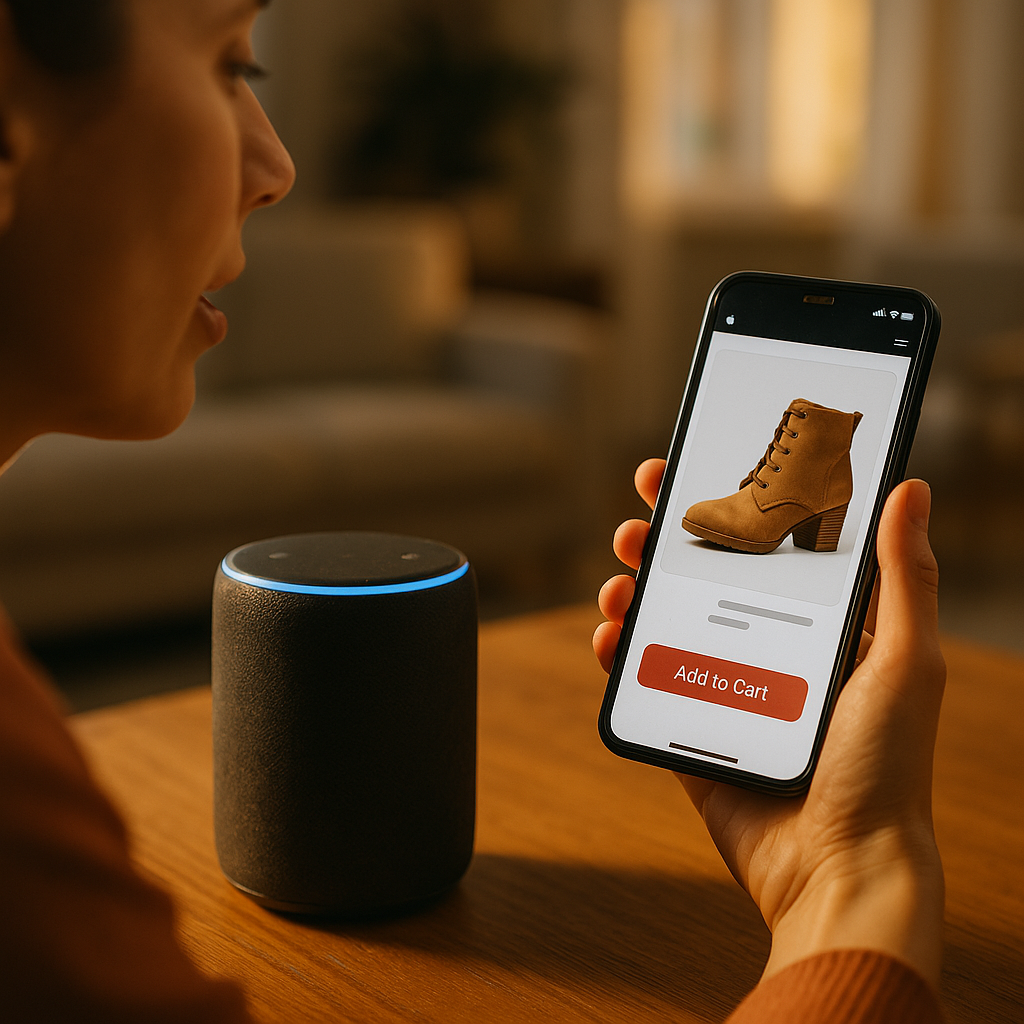
Reviewing headless ecommerce for voice first conversational shopping is essential in 2026 because brands now compete on speed, relevance, and natural dialogue as much as price. Voice interfaces are no longer experimental add-ons. They shape discovery, comparison, and checkout across devices. The real question is not whether headless fits this shift, but how well it performs when conversations drive commerce.
What headless commerce architecture means for conversational commerce
Headless commerce separates the front end customer experience from the back end ecommerce engine. In practice, that means product data, pricing, promotions, inventory, checkout, and customer accounts are exposed through APIs, while the buying experience can be delivered through websites, apps, smart speakers, in-car systems, messaging platforms, and AI assistants.
For conversational commerce, this separation matters. A voice interface does not behave like a traditional storefront. It needs structured product information, fast retrieval, intent matching, and flexible response handling. A monolithic ecommerce system can support some of this, but it often forces voice into a web-shaped model. Headless gives teams the freedom to design around conversation first.
That flexibility creates clear advantages:
- Channel independence: one commerce backend can power voice assistants, chatbots, mobile apps, kiosks, and web experiences.
- Faster iteration: teams can update voice flows without rebuilding the ecommerce core.
- Better orchestration: product search, customer data, pricing logic, and fulfillment options can be assembled across systems.
- AI readiness: large language model experiences work better when connected to clean APIs and structured commerce data.
Still, headless is not automatically the right choice. It adds architectural complexity and demands stronger governance. Brands that lack API maturity, content modeling discipline, or cross-functional ownership can end up with fragmented experiences. A useful review should examine not just capability, but operational fit.
Key benefits of voice commerce platforms built on headless systems
The strongest case for a voice commerce platform built on headless architecture is customer experience quality. Voice shopping succeeds when the system understands intent, reduces friction, and guides the user without confusion. Headless environments make that easier because they support specialized front ends and reusable backend services.
Here are the most important benefits brands typically see.
- Natural buying journeys: voice users ask for outcomes, not page views. They say “find me running shoes under $120 with arch support,” not “go to category, apply filter, sort by rating.” Headless systems can translate that conversational intent into product queries more effectively.
- Personalization at the interaction layer: voice sessions can use customer history, location, loyalty status, and inventory availability in real time. That creates more helpful recommendations and fewer dead ends.
- Unified data across channels: a shopper may start with voice, continue in an app, and complete a purchase on a website. Headless setups support continuity when identity, cart, and preferences are managed centrally.
- Speed and performance: voice interactions depend on low latency. Modular architectures can optimize response times by connecting only the services required for each step.
- Experimentation: teams can test prompts, recommendation logic, bundling offers, and checkout flows by channel without disrupting core commerce operations.
There is also a business advantage. Voice-first shopping often compresses consideration. Instead of presenting dozens of options visually, the system narrows choices and recommends. That raises the stakes of ranking logic, merchandising rules, and trust signals. Headless architectures make it easier to tune those systems and monitor outcomes.
However, benefits depend heavily on implementation quality. If product attributes are inconsistent, inventory feeds are delayed, or promotion logic is not exposed cleanly through APIs, voice experiences become brittle. In other words, headless amplifies both strengths and weaknesses.
Challenges in voice UX design and headless ecommerce implementation
Any honest review of voice UX and headless ecommerce must address the tradeoffs. The architecture is powerful, but it is not simple. Voice interfaces add another layer of complexity because users cannot scan a screen for context in the same way they can on mobile or desktop.
The first challenge is discoverability. Visual storefronts let customers browse broadly. Voice requires systems to ask clarifying questions, summarize choices, and avoid overwhelming the user. This means product content must be modeled for speech, not just search indexing. Attributes should be concise, distinct, and meaningful when read aloud.
The second challenge is conversation design. A successful voice flow needs fallback logic, disambiguation, error recovery, and handoff paths. For example, if a customer asks for “the best espresso machine,” the assistant must decide whether to rank by rating, popularity, margin, or previous behavior. It also needs a plan for follow-up questions like “Which one is quieter?” or “Can I get it by Friday?”
Third, there is integration overhead. Many ecommerce organizations still operate with separate systems for product information, content management, search, loyalty, payments, customer service, and order management. Headless can unify these through APIs, but integration work is real and often underestimated.
Other common issues include:
- Governance gaps: ownership of voice merchandising, AI responses, and customer data may be unclear.
- Measurement challenges: teams often track web metrics well but struggle to define voice-specific conversion and satisfaction metrics.
- Security and privacy: voice shopping may involve household devices, biometric authentication, and account-sensitive actions.
- Accessibility and inclusion: speech recognition must handle accents, multilingual inputs, and different speaking patterns.
These are not reasons to avoid headless. They are reasons to plan carefully. The most successful brands treat voice-first conversational shopping as a product capability, not a side project. That means dedicated ownership, strong taxonomy design, and clear escalation paths when voice is not the best interface for a task.
How API driven ecommerce improves AI shopping assistant performance
An API driven ecommerce stack is especially valuable when brands use AI shopping assistants. These assistants rely on fresh, structured, and permissioned access to data. Without that, they generate generic answers, recommend unavailable products, or fail at checkout.
At a minimum, an effective AI shopping assistant should be able to:
- Understand user intent from natural language.
- Retrieve products using semantic search and business rules.
- Compare options based on attributes, reviews, and inventory.
- Answer operational questions about shipping, returns, sizing, and compatibility.
- Build carts and complete transactions securely.
Headless architecture supports this because APIs create a clean interface between the assistant and the commerce stack. The assistant does not need to scrape a webpage or rely on brittle workarounds. It can call the catalog service, pricing engine, promotions system, order management layer, and customer profile directly.
This also improves trust. In 2026, shoppers expect AI commerce experiences to be useful, but they also expect them to be correct. If an assistant says a product is in stock, the result should reflect live inventory. If it recommends a bundle, the discount should apply exactly as described. Accuracy is part of user experience, and it is central to EEAT because users judge expertise and trustworthiness through outcomes, not claims.
Another advantage is composability. Brands can pair best-in-class search, personalization, speech-to-text, text-to-speech, and LLM orchestration tools around a stable commerce core. This reduces vendor lock-in and lets teams improve individual components over time.
That said, AI shopping assistants need guardrails. Retrieval rules, response validation, sensitive action controls, and human review processes matter. Headless makes these controls easier to implement, but brands still need strong policy design. The most mature teams treat generative AI as an orchestration layer over verified commerce systems, not as the source of truth.
Critical evaluation criteria for omnichannel retail technology in voice first shopping
When reviewing omnichannel retail technology for voice-first commerce, decision makers should avoid feature-checklist thinking. The better approach is to assess how the stack performs against customer tasks, operational realities, and long-term adaptability.
Use the following criteria.
- Data quality and structure: Can the system expose product attributes, availability, pricing, compatibility, and policy information cleanly enough for spoken interactions?
- Latency: Does the architecture support fast responses across search, recommendation, and checkout calls?
- Conversation flexibility: Can teams design voice flows with prompts, clarifications, confirmations, and fallback handling without major engineering delays?
- Cross-channel continuity: Can a shopper move from voice to app to web without losing cart state, recommendations, or order context?
- Security: Are authentication, consent, and payment controls strong enough for account-linked voice transactions?
- Analytics: Can the business measure intent completion, abandonment points, misunderstood queries, satisfaction, and assisted conversion?
- Operational ownership: Is there a clear model for who manages taxonomy, APIs, voice content, promotions, and AI behavior?
- Scalability: Can the stack support growth across geographies, languages, and device ecosystems?
It is also wise to test actual shopping scenarios instead of relying on vendor demos. Ask teams to simulate high-intent tasks such as reordering household items, comparing electronics by feature, checking local stock, applying loyalty benefits, or changing fulfillment methods mid-conversation. These tests reveal whether the architecture truly supports conversational shopping or simply connects to it superficially.
For many enterprises, the right path is phased adoption. They may start by exposing catalog and order APIs, then add conversational search, account services, and checkout orchestration. This lowers implementation risk while building internal capability.
Best practices for digital commerce transformation with headless voice commerce
A strong digital commerce transformation strategy does not begin with technology alone. It begins with use cases. Brands should identify where voice creates measurable value: replenishment, product discovery, customer support, post-purchase updates, guided recommendations, or accessibility support. Once those use cases are clear, architecture decisions become more grounded.
Based on common patterns in successful deployments, the best practices are straightforward.
- Model product data for conversation. Shorten spoken descriptions, prioritize differentiating attributes, and ensure metadata supports natural-language search.
- Design for handoff. Voice should connect smoothly to screens, text, or human agents when tasks become too complex or sensitive.
- Start with narrow, high-frequency journeys. Reorders, status checks, and simple comparisons often produce the fastest learning and strongest ROI.
- Build observability in from day one. Track misunderstood intents, API failures, response latency, and order outcomes across the full journey.
- Use human review for high-risk outputs. Promotions, compliance-heavy products, and policy explanations need stronger controls.
- Create shared ownership. Merchandising, engineering, CX, legal, and analytics should all contribute to governance.
- Prioritize trust signals. Confirm totals, delivery windows, return policies, and account actions clearly before purchase completion.
So, is headless ecommerce a good fit for voice-first conversational shopping? In most cases, yes, especially for brands that need speed, flexibility, and cross-channel consistency. But the winning factor is not the label “headless.” It is whether the organization can support the data discipline, API maturity, and experience design that voice commerce demands.
Brands with complex catalogs, multiple touchpoints, and serious AI ambitions usually benefit the most. Smaller merchants with simple needs may prefer lighter solutions until conversational shopping becomes a more meaningful share of demand. The best decision comes from mapping customer journeys to architecture capability, then validating with real-world testing.
FAQs about voice commerce and headless ecommerce
What is headless ecommerce in simple terms?
It is an ecommerce setup where the customer-facing experience is separated from the backend commerce engine. This allows brands to build shopping experiences across websites, apps, voice assistants, and other channels using APIs.
Why is headless ecommerce useful for voice-first shopping?
Voice-first shopping needs fast access to product, pricing, inventory, and customer data. Headless architecture exposes these services through APIs, making it easier to build natural conversational experiences that work across devices.
Does headless commerce automatically improve conversion rates in voice commerce?
No. It creates the technical foundation for better experiences, but conversion depends on data quality, conversation design, trust signals, response speed, and operational execution.
What are the biggest risks of using headless for conversational shopping?
The biggest risks are integration complexity, poor product data, weak ownership, and unreliable AI behavior. Without strong governance and testing, the experience can feel inconsistent or inaccurate.
How should brands measure voice commerce performance?
Useful metrics include intent completion rate, misunderstood query rate, assisted conversion, cart completion, fallback usage, customer satisfaction, repeat usage, and response latency.
Is headless ecommerce better than monolithic ecommerce for every business?
No. Businesses with simple catalogs and limited channel needs may not need the flexibility of headless yet. Enterprises with multiple touchpoints, advanced personalization, and AI commerce goals usually gain more value from it.
Can AI shopping assistants work without headless architecture?
Yes, but often with more limitations. Headless makes assistants more reliable because it gives them structured, direct access to backend services instead of forcing them to work around front-end constraints.
What should a company do first before investing in voice commerce?
Start by identifying the customer journeys where voice can remove friction or add convenience. Then audit product data, API readiness, analytics, and security before choosing technology vendors or designing voice interfaces.
Headless ecommerce gives voice-first conversational shopping the flexibility, speed, and integration depth it needs in 2026. But architecture alone does not create a strong customer experience. Brands win when they pair clean APIs, trustworthy data, careful conversation design, and measurable governance. Review headless through real shopping tasks, not hype, and the right path becomes much clearer.
Top Influencer Marketing Agencies
The leading agencies shaping influencer marketing in 2026
Agencies ranked by campaign performance, client diversity, platform expertise, proven ROI, industry recognition, and client satisfaction. Assessed through verified case studies, reviews, and industry consultations.
Moburst

-
2

The Shelf
Boutique Beauty & Lifestyle Influencer AgencyA data-driven boutique agency specializing exclusively in beauty, wellness, and lifestyle influencer campaigns on Instagram and TikTok. Best for brands already focused on the beauty/personal care space that need curated, aesthetic-driven content.Clients: Pepsi, The Honest Company, Hims, Elf Cosmetics, Pure LeafVisit The Shelf → -
3

Audiencly
Niche Gaming & Esports Influencer AgencyA specialized agency focused exclusively on gaming and esports creators on YouTube, Twitch, and TikTok. Ideal if your campaign is 100% gaming-focused — from game launches to hardware and esports events.Clients: Epic Games, NordVPN, Ubisoft, Wargaming, Tencent GamesVisit Audiencly → -
4

Viral Nation
Global Influencer Marketing & Talent AgencyA dual talent management and marketing agency with proprietary brand safety tools and a global creator network spanning nano-influencers to celebrities across all major platforms.Clients: Meta, Activision Blizzard, Energizer, Aston Martin, WalmartVisit Viral Nation → -
5

The Influencer Marketing Factory
TikTok, Instagram & YouTube CampaignsA full-service agency with strong TikTok expertise, offering end-to-end campaign management from influencer discovery through performance reporting with a focus on platform-native content.Clients: Google, Snapchat, Universal Music, Bumble, YelpVisit TIMF → -
6

NeoReach
Enterprise Analytics & Influencer CampaignsAn enterprise-focused agency combining managed campaigns with a powerful self-service data platform for influencer search, audience analytics, and attribution modeling.Clients: Amazon, Airbnb, Netflix, Honda, The New York TimesVisit NeoReach → -
7

Ubiquitous
Creator-First Marketing PlatformA tech-driven platform combining self-service tools with managed campaign options, emphasizing speed and scalability for brands managing multiple influencer relationships.Clients: Lyft, Disney, Target, American Eagle, NetflixVisit Ubiquitous → -
8

Obviously
Scalable Enterprise Influencer CampaignsA tech-enabled agency built for high-volume campaigns, coordinating hundreds of creators simultaneously with end-to-end logistics, content rights management, and product seeding.Clients: Google, Ulta Beauty, Converse, AmazonVisit Obviously →