


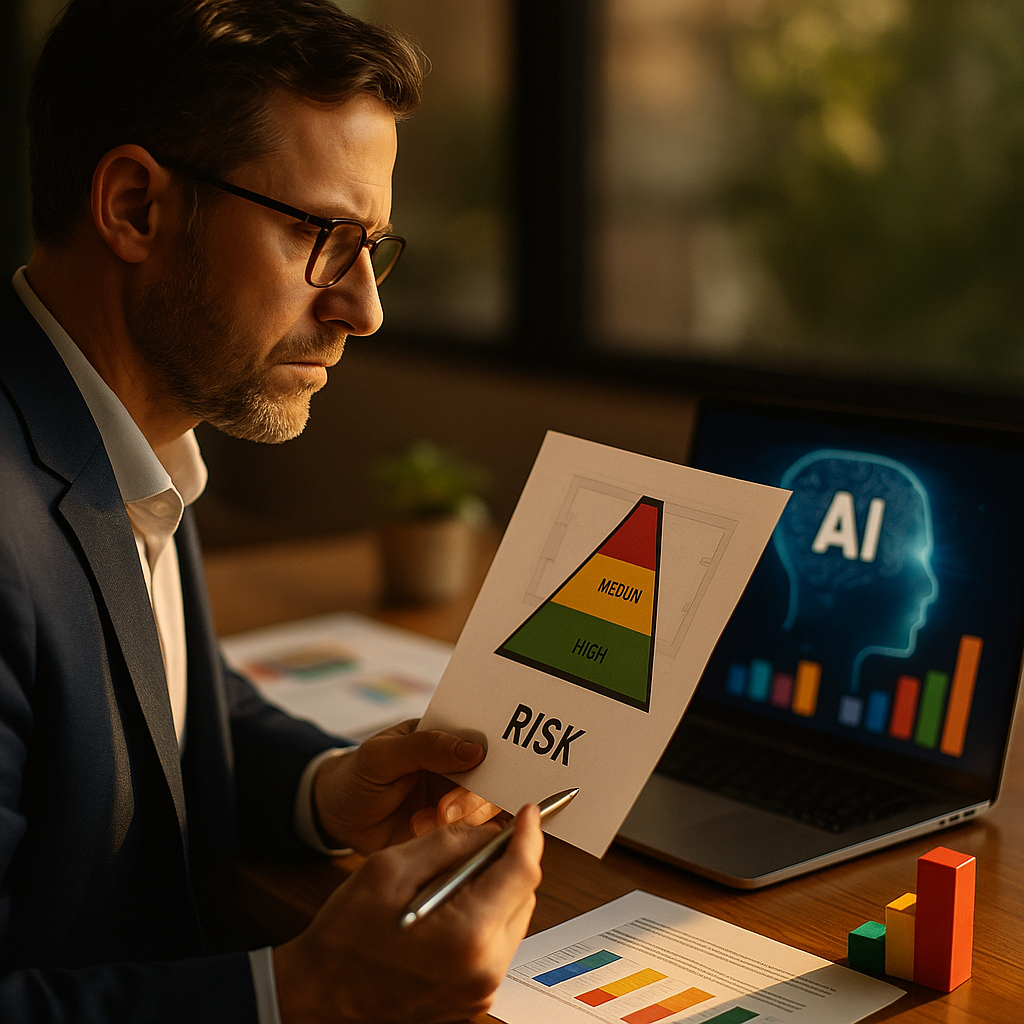
When AI Creates on Your Behalf, Who’s Watching the Brand?
A 2026 Gartner survey found that 71% of CMOs cite “loss of creative control” as their top concern with AI-driven marketing. Not budget. Not ROI measurement. Control. The fear is well-founded: AI-generated creative, platform remix features, and autonomous agent campaigns now produce brand content at a velocity no human team can fully monitor. This article delivers a practical risk framework for brand leaders navigating these tools without sacrificing brand integrity.
Why the Control Problem Is Structurally Different Now
Brand leaders have always managed risk around third-party creative. Agencies go off-brief. Influencers ad-lib. Print vendors get the Pantone wrong. These are familiar problems with familiar solutions — approvals, style guides, kill fees.
What’s changed is the surface area of risk.
Consider three concurrent forces:
- AI-generated creative at scale. Tools like Midjourney, Adobe Firefly, and Runway are producing thousands of ad variants per campaign. Many brands now run 50–200x more creative assets than they did three years ago.
- Platform remix features. TikTok’s “Remix” and Instagram’s AI-assisted Reels tools let users — and algorithms — recombine branded content with user-generated elements. Your carefully shot product video can become a meme template overnight.
- Autonomous agent campaigns. AI agents from platforms like Meta Advantage+ and Google’s Performance Max now autonomously select audiences, generate copy variations, and allocate budget — often with minimal human checkpoints.
Each of these alone is manageable. Together, they create a compounding control gap where brand-damaging content can be generated, distributed, and amplified before any human reviews it.
The real risk isn’t that AI will produce something ugly. It’s that AI will produce something almost right — close enough to ship, wrong enough to damage trust — at a scale that makes manual review impossible.
The Four-Layer Risk Framework
After interviewing brand safety leads at CPG, fintech, and DTC companies, we’ve distilled the most effective approaches into a four-layer framework. Think of it as concentric rings of defense — each layer catches what the previous one misses.
Layer 1: Upstream Guardrails (Before Content Exists)
This is where most brands stop. It’s necessary but insufficient.
Upstream guardrails include brand prompt libraries (pre-approved instructions for generative AI tools), negative prompt lists (explicit exclusions like competitor names, controversial imagery, off-brand language), and model fine-tuning constraints. If your team uses enterprise generative tools, you should be locking down system prompts at the organizational level — not relying on individual marketers to remember what’s off-limits.
Contractual guardrails matter here too. If you’re working with creators who use AI tools, your agreements need AI remix clauses that specify what can and can’t be algorithmically modified after delivery.
Layer 2: In-Flight Monitoring (While Content Is Live)
This layer addresses the gap between content going live and a human noticing a problem. For autonomous agent campaigns — where the platform itself is generating and serving creative — you need automated brand-safety scanning that runs continuously.
Tools like Brandwatch, Sprinklr, and Sprout Social now offer AI-powered creative monitoring dashboards that flag visual and textual anomalies in active campaigns. Set your thresholds tight early, then loosen as you calibrate. A false positive that pauses a high-performing ad for two hours costs far less than a brand safety incident that trends for two days.
For platform remix content, monitor branded hashtags and audio tracks daily. TikTok’s remix ecosystem moves fast — a remixed version of your sponsored content can circulate widely with altered messaging that strips required FTC disclosure requirements.
Layer 3: Legal and Compliance Backstops
Creative risk becomes legal risk faster than most marketing teams realize.
Three questions every brand leader should be able to answer right now:
- Who is liable when an AI agent generates a misleading claim? The FTC’s enforcement position is clear: the advertiser bears responsibility regardless of whether a human or an algorithm wrote the copy. Ignorance of what your autonomous campaign produced is not a defense.
- Does your creative liability framework cover AI-generated assets? Many brands haven’t updated their risk allocation models since pre-generative AI. Understanding who owns the liability for AI-generated ad creative is no longer optional — it’s a board-level conversation.
- Are your creator contracts enforceable against remix abuse? If a creator’s AI-remixed content uses your brand’s likeness in ways that violate your guidelines, can you enforce takedowns? Many standard influencer agreements have gaps here, especially around deepfakes and creator likeness rights.
Don’t wait for an incident to audit these questions. Schedule a quarterly cross-functional review with legal, brand, and your agency partners.
Layer 4: Cultural and Organizational Readiness
Frameworks fail without culture.
The brands managing AI creative risk most effectively share a common trait: they’ve made “escalation without blame” a default behavior. When a junior media buyer spots something off in an autonomous campaign, they kill the ad set first and explain later. No post-mortem punishment. No “why did you pause a campaign that was hitting CPA targets?”
This sounds soft. It’s not. It’s the single biggest differentiator between brands that catch problems in hours versus brands that catch them in news cycles.
Build the muscle for fast escalation. The cost of pausing a campaign for investigation is always lower than the cost of a brand safety headline.
What About Platform-Side Controls?
Platforms are adding guardrails, but slowly and unevenly. Meta’s Advantage+ now offers “brand suitability” filters, and Google Performance Max provides asset-level reporting that lets you see which AI-generated headlines and images are being served. TikTok’s ad platform has introduced brand safety partnerships with IAS and DoubleVerify.
These are welcome developments. They are not sufficient.
Platform controls protect the platform’s interests, which mostly — but not entirely — align with yours. The delta between “brand safe by platform standards” and “on-brand by your standards” is where reputational damage lives. Your framework needs to be platform-agnostic and brand-specific.
Operationalizing the Framework: A Realistic Timeline
You can’t implement all four layers simultaneously without overwhelming your team. Here’s a phased approach:
- Weeks 1–2: Audit current AI creative workflows. Map every point where content is generated or modified without human review. You’ll likely find more than you expect.
- Weeks 3–4: Update creator contracts and internal policies. Add AI-specific clauses. Build the disclosure compliance framework for any remixed sponsored content.
- Weeks 5–8: Deploy in-flight monitoring tools. Start with your highest-spend autonomous campaigns — that’s where exposure is greatest.
- Ongoing: Conduct monthly escalation drills. Test whether your team can identify, pause, and report a brand safety issue within 60 minutes.
The Bottom Line
Brand leaders who treat AI creative risk as a technology problem will keep losing the control battle. This is an organizational design challenge — one that demands updated contracts, continuous monitoring, clear liability frameworks, and a culture that rewards fast action over perfect analysis. Start with the audit. The framework follows.
Frequently Asked Questions
What is a brand risk framework for AI-generated creative?
A brand risk framework for AI-generated creative is a structured, multi-layered approach that combines upstream guardrails (prompt libraries, negative prompt lists), in-flight monitoring tools, legal and compliance backstops, and organizational readiness processes to prevent AI-produced content from damaging brand integrity at scale.
Who is legally liable when an AI agent produces misleading ad creative?
The advertiser is legally liable. The FTC has made clear that brands bear responsibility for all advertising claims, regardless of whether the content was written by a human or generated by an autonomous AI system. Brands cannot use algorithmic authorship as a defense against misleading claims.
How can brands maintain control over content remixed by platform AI features?
Brands should include AI remix clauses in creator contracts, monitor branded hashtags and audio tracks daily, deploy automated brand-safety scanning tools, and use platform-side controls as a supplementary — not primary — defense layer. The combination of contractual enforcement and active monitoring is the most effective approach.
What tools help monitor AI-generated creative in real time?
Enterprise tools such as Brandwatch, Sprinklr, and Sprout Social now offer AI-powered creative monitoring dashboards that flag visual and textual anomalies in active campaigns. Additionally, platform-native partnerships with IAS and DoubleVerify provide brand safety scanning for ad placements across major social platforms.
How long does it take to implement a brand safety framework for AI creative?
A realistic implementation timeline is six to eight weeks for the foundational layers — auditing workflows, updating contracts, and deploying monitoring tools. However, organizational readiness and escalation culture require ongoing investment through regular drills and cross-functional reviews on at least a monthly basis.
Top Influencer Marketing Agencies
The leading agencies shaping influencer marketing in 2026
Agencies ranked by campaign performance, client diversity, platform expertise, proven ROI, industry recognition, and client satisfaction. Assessed through verified case studies, reviews, and industry consultations.
Moburst

-
2

The Shelf
Boutique Beauty & Lifestyle Influencer AgencyA data-driven boutique agency specializing exclusively in beauty, wellness, and lifestyle influencer campaigns on Instagram and TikTok. Best for brands already focused on the beauty/personal care space that need curated, aesthetic-driven content.Clients: Pepsi, The Honest Company, Hims, Elf Cosmetics, Pure LeafVisit The Shelf → -
3

Audiencly
Niche Gaming & Esports Influencer AgencyA specialized agency focused exclusively on gaming and esports creators on YouTube, Twitch, and TikTok. Ideal if your campaign is 100% gaming-focused — from game launches to hardware and esports events.Clients: Epic Games, NordVPN, Ubisoft, Wargaming, Tencent GamesVisit Audiencly → -
4

Viral Nation
Global Influencer Marketing & Talent AgencyA dual talent management and marketing agency with proprietary brand safety tools and a global creator network spanning nano-influencers to celebrities across all major platforms.Clients: Meta, Activision Blizzard, Energizer, Aston Martin, WalmartVisit Viral Nation → -
5

The Influencer Marketing Factory
TikTok, Instagram & YouTube CampaignsA full-service agency with strong TikTok expertise, offering end-to-end campaign management from influencer discovery through performance reporting with a focus on platform-native content.Clients: Google, Snapchat, Universal Music, Bumble, YelpVisit TIMF → -
6

NeoReach
Enterprise Analytics & Influencer CampaignsAn enterprise-focused agency combining managed campaigns with a powerful self-service data platform for influencer search, audience analytics, and attribution modeling.Clients: Amazon, Airbnb, Netflix, Honda, The New York TimesVisit NeoReach → -
7

Ubiquitous
Creator-First Marketing PlatformA tech-driven platform combining self-service tools with managed campaign options, emphasizing speed and scalability for brands managing multiple influencer relationships.Clients: Lyft, Disney, Target, American Eagle, NetflixVisit Ubiquitous → -
8

Obviously
Scalable Enterprise Influencer CampaignsA tech-enabled agency built for high-volume campaigns, coordinating hundreds of creators simultaneously with end-to-end logistics, content rights management, and product seeding.Clients: Google, Ulta Beauty, Converse, AmazonVisit Obviously →