


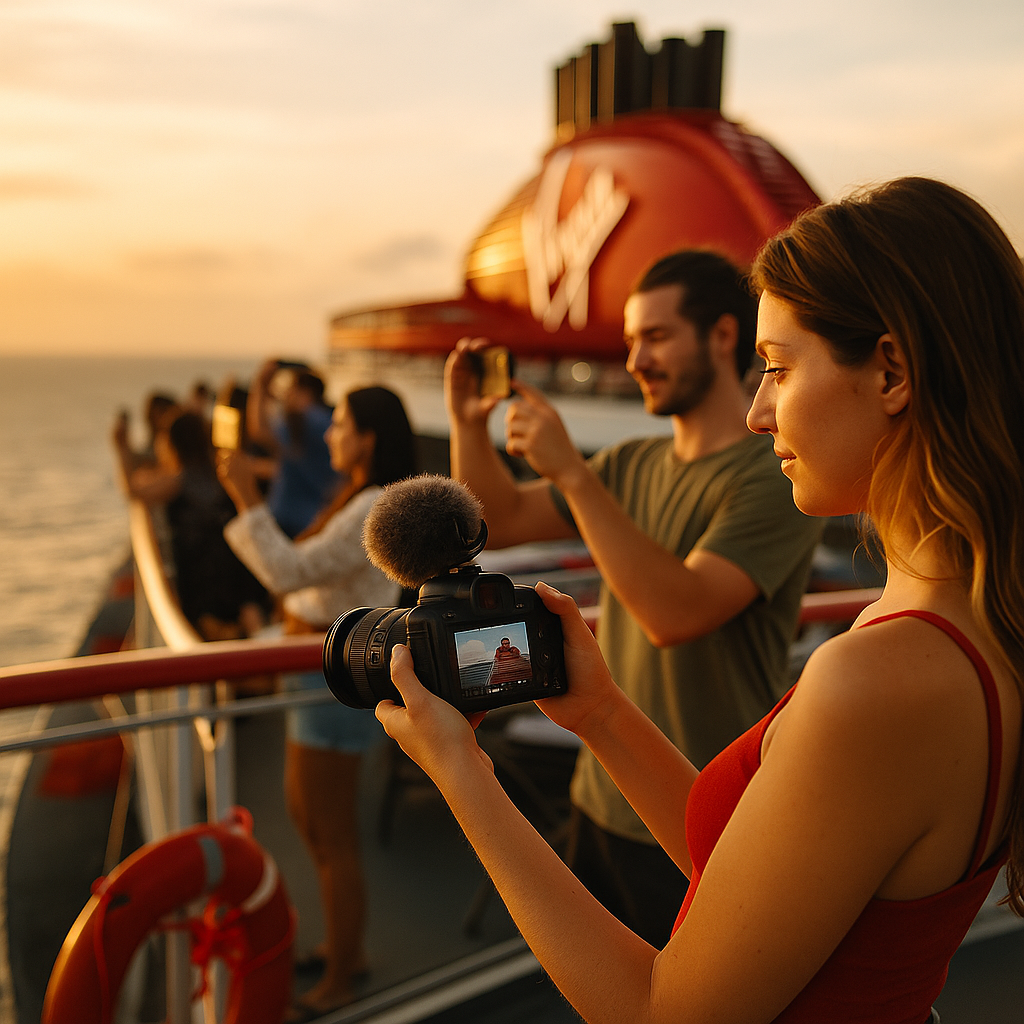
One Thousand Creators, One Ship, Zero Guarantees
When Virgin Voyages invited roughly 1,000 creators aboard a single sailing, it generated an estimated 100 million+ impressions in under a week. Impressive reach. But here’s the question brand strategists should actually be asking: what did they give up to get it?
The high-volume multi-creator campaign model — call it scale-over-control — is becoming a default play for brands chasing cultural relevance. Virgin’s cruise is the most vivid case study yet. It reveals uncomfortable truths about brand safety, attribution, and the coordination costs that nobody puts in the pitch deck.
Why Brands Keep Choosing Volume Over Precision
The math is seductive. A single macro-influencer with 5 million followers might command $150,000 for a campaign deliverable. Spread that same budget across 200 micro-creators at $750 each, and you get more content, more platforms, more authentic-feeling touchpoints. According to Statista’s influencer marketing data, brands allocated over $7 billion to influencer campaigns in the U.S. alone during recent cycles, and multi-creator activations now represent the fastest-growing segment.
Virgin Voyages went further than most. They didn’t just seed product. They created an immersive, multi-day experience where creators lived inside the brand. Every meal, every sunset, every cabin tour became content.
The upside is obvious: organic-feeling saturation. The risks are less obvious — until something goes sideways.
Brand Safety at Scale Is a Different Animal
With 10 creators, your team can vet every post before it goes live. With 100, you can at least spot-check. With 1,000? You’re running a probabilistic model, not a managed campaign.
Think about what “brand safety” actually means when a thousand independent content producers are simultaneously broadcasting from your property. Any one of them could:
- Film an interaction with staff that gets reframed negatively
- Post content that violates FTC disclosure guidelines by omitting #ad tags
- Create content that clashes with another creator’s narrative, generating controversy
- Document a service failure in real time to an audience of hundreds of thousands
Virgin Voyages reportedly managed this with pre-boarding briefings, content guidelines, and on-ship brand liaisons. But guidelines aren’t guardrails. A creator with 50K followers who films a heated exchange at the pool bar doesn’t check with your brand team first. They post it because that’s what drives engagement.
At the 1,000-creator scale, brand safety shifts from a content approval problem to a crisis-probability problem. The question isn’t whether something goes off-script — it’s how fast you can respond when it does.
Brands running these activations need real-time social listening infrastructure — tools like Brandwatch, Meltwater, or Sprout Social’s monitoring capabilities — not just post-campaign reporting. They need escalation protocols that can move in minutes, not hours. The playbook for managing viral misinformation applies directly here, even when the misinformation is accidental.
The Attribution Black Hole
Here’s where the conversation gets uncomfortable for anyone who has to justify budget to a CFO.
When 1,000 creators post about the same brand within the same 72-hour window, how do you attribute a booking, a site visit, or even a brand-lift signal to any individual creator? You can’t. Not cleanly.
Traditional affiliate-link and UTM-based attribution breaks down at this volume. A potential customer sees a TikTok from Creator A, an Instagram Story from Creator B, and a YouTube vlog from Creator C — all featuring Virgin Voyages, all within the same scroll session. Which creator drove the conversion? The honest answer: probably all of them, and none of them individually.
This is where AI-powered attribution models become non-negotiable. Media-mix modeling (MMM) and incrementality testing offer more realistic frameworks than last-click attribution for campaigns at this scale. Platforms like Zeta Global and Measured are building solutions specifically for this problem, but adoption among mid-market brands remains patchy.
Virgin Voyages likely accepted blended attribution as a cost of doing business. For a brand with their awareness goals and experiential positioning, that trade-off might work. For a DTC brand burning through Series B funding? The inability to prove per-creator ROI is a dealbreaker.
If you can’t attribute at the creator level, you need to attribute at the cohort level. Group creators by platform, audience size, and content type — then measure lift by segment, not by individual.
Coordination Risk: The Cost Nobody Budgets For
Let’s talk operations.
Managing 1,000 creator relationships simultaneously requires infrastructure that most marketing teams don’t have. Contracts. Briefs. Logistics. Dietary restrictions. Content deadlines. FTC compliance verification. Payment processing across dozens of countries and tax jurisdictions.
The coordination overhead is staggering. Duolingo’s large-scale creator program, for instance, succeeds partly because it’s built on a structured UGC design blueprint with clearly tiered participation levels. Not every creator gets the same brief. Not every creator has the same deliverables. The architecture scales because it’s designed to.
Virgin’s approach was different — a shared experience, not a structured content program. That simplifies the brief (just… document your experience) but complicates quality control. Some creators will produce cinematic content. Others will post a blurry selfie with a caption that misspells the brand name. Both represent you.
Operationally, brands running high-volume campaigns need:
- Creator management platforms — tools like CreatorIQ, Grin, or AspireIQ that handle contracts, payments, and deliverable tracking at scale
- Tiered briefing systems — different expectations for different creator segments, similar to how Gymshark structures performance-based tiers
- On-site or real-time brand liaisons — humans who can answer questions, troubleshoot, and gently redirect off-brand behavior
- Post-campaign content auditing — systematic review to flag compliance gaps before regulators or competitors do
Skip any of these and you’re not running a campaign. You’re hosting a party and hoping for the best.
When Does Scale-Over-Control Actually Make Sense?
Not every brand should attempt a 1,000-creator activation. In fact, most shouldn’t.
This approach works when three conditions are met simultaneously. First, the brand has high awareness goals and can tolerate attribution ambiguity — typically top-of-funnel plays from brands with long consideration cycles (travel, automotive, luxury). Second, the experience itself is inherently photogenic and shareable, reducing the need for prescriptive creative briefs. Third, the brand has either built or contracted the operational infrastructure to manage logistics, compliance, and crisis response at volume.
Airbnb’s approach to creator marketing shows a more targeted model — using local influencers connected to specific listings. The content is more attributable, the compliance surface area is smaller, and the operational load is distributed. It’s the opposite philosophy, and it works brilliantly for conversion-stage goals.
The takeaway isn’t that one approach is better. It’s that they solve for different things. If your KPI is bookings from a specific region, 1,000 creators on a cruise is the wrong tool. If your KPI is cultural penetration and earned-media equivalency, it might be exactly right.
The Real Lesson From the Ship
Virgin Voyages’ 1,000-creator cruise wasn’t just a marketing stunt. It was a stress test for every system that underpins influencer marketing at scale — and the results should inform how every brand strategist thinks about high-volume multi-creator campaigns moving forward.
The brands that will win with this model are the ones investing as heavily in attribution infrastructure, compliance systems, and operational playbooks as they are in creator headcount. Volume without systems isn’t scale. It’s chaos with good lighting.
Your next step: Before greenlighting any multi-creator campaign above 50 participants, require your team to present a written crisis-response protocol, a cohort-level attribution framework, and a compliance audit plan. If those three documents don’t exist, the campaign isn’t ready — no matter how exciting the concept.
FAQs
What is a high-volume multi-creator campaign?
A high-volume multi-creator campaign involves activating dozens to thousands of creators simultaneously around a single brand moment, product launch, or experience. Unlike traditional influencer partnerships with a handful of creators, these campaigns prioritize reach and cultural saturation over tight creative control, requiring specialized infrastructure for coordination, compliance, and measurement.
How do you manage brand safety with 1,000 creators?
Brand safety at this scale requires real-time social listening tools, pre-event content guidelines, on-site brand liaisons, and a documented crisis-response protocol. You cannot pre-approve every piece of content, so the focus shifts from prevention to rapid detection and response. Platforms like Brandwatch and Sprout Social can monitor mentions in near-real time to flag emerging issues.
How do you measure ROI when hundreds of creators post simultaneously?
Traditional last-click attribution breaks down in high-volume campaigns. Instead, brands should use media-mix modeling, incrementality testing, and cohort-level analysis — grouping creators by platform, audience size, and content format to measure lift per segment rather than per individual creator. AI-powered attribution tools are increasingly essential for these campaigns.
What operational infrastructure is needed for large-scale creator activations?
At minimum, brands need a creator management platform for contracts and payments, a tiered briefing system with different expectations by creator segment, on-site or real-time brand liaisons, and a post-campaign content audit process for FTC compliance. Without these systems, coordination costs can quickly erode the campaign’s return.
Is the scale-over-control model right for every brand?
No. This model works best for brands with top-of-funnel awareness goals, inherently shareable experiences, and robust operational infrastructure. Brands focused on direct-response conversions or those without the systems to manage compliance and crisis response at volume should consider smaller, more targeted creator programs with tighter attribution.
Top Influencer Marketing Agencies
The leading agencies shaping influencer marketing in 2026
Agencies ranked by campaign performance, client diversity, platform expertise, proven ROI, industry recognition, and client satisfaction. Assessed through verified case studies, reviews, and industry consultations.
Moburst

-
2

The Shelf
Boutique Beauty & Lifestyle Influencer AgencyA data-driven boutique agency specializing exclusively in beauty, wellness, and lifestyle influencer campaigns on Instagram and TikTok. Best for brands already focused on the beauty/personal care space that need curated, aesthetic-driven content.Clients: Pepsi, The Honest Company, Hims, Elf Cosmetics, Pure LeafVisit The Shelf → -
3

Audiencly
Niche Gaming & Esports Influencer AgencyA specialized agency focused exclusively on gaming and esports creators on YouTube, Twitch, and TikTok. Ideal if your campaign is 100% gaming-focused — from game launches to hardware and esports events.Clients: Epic Games, NordVPN, Ubisoft, Wargaming, Tencent GamesVisit Audiencly → -
4

Viral Nation
Global Influencer Marketing & Talent AgencyA dual talent management and marketing agency with proprietary brand safety tools and a global creator network spanning nano-influencers to celebrities across all major platforms.Clients: Meta, Activision Blizzard, Energizer, Aston Martin, WalmartVisit Viral Nation → -
5

The Influencer Marketing Factory
TikTok, Instagram & YouTube CampaignsA full-service agency with strong TikTok expertise, offering end-to-end campaign management from influencer discovery through performance reporting with a focus on platform-native content.Clients: Google, Snapchat, Universal Music, Bumble, YelpVisit TIMF → -
6

NeoReach
Enterprise Analytics & Influencer CampaignsAn enterprise-focused agency combining managed campaigns with a powerful self-service data platform for influencer search, audience analytics, and attribution modeling.Clients: Amazon, Airbnb, Netflix, Honda, The New York TimesVisit NeoReach → -
7

Ubiquitous
Creator-First Marketing PlatformA tech-driven platform combining self-service tools with managed campaign options, emphasizing speed and scalability for brands managing multiple influencer relationships.Clients: Lyft, Disney, Target, American Eagle, NetflixVisit Ubiquitous → -
8

Obviously
Scalable Enterprise Influencer CampaignsA tech-enabled agency built for high-volume campaigns, coordinating hundreds of creators simultaneously with end-to-end logistics, content rights management, and product seeding.Clients: Google, Ulta Beauty, Converse, AmazonVisit Obviously →