


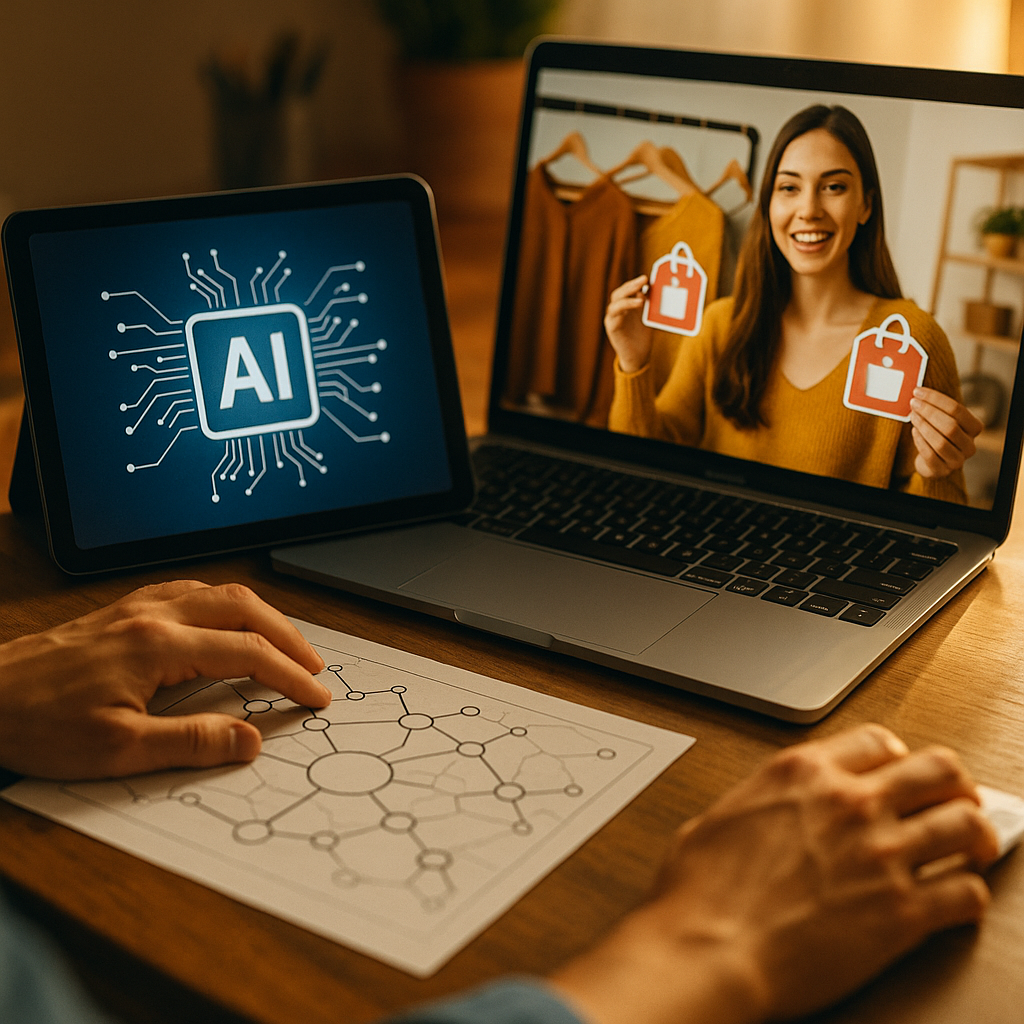
The Creator Economy Market Map Is Being Redrawn Right Now
The global influencer marketing industry has crossed $30 billion in spending, according to Statista’s latest estimates. But the market map underpinning that spend looks almost nothing like it did eighteen months ago. AI-driven automation, the rise of large-volume creator ecosystems, and integrated shoppable video have collectively restructured how platforms, agencies, brands, and individual creators interact — and who captures the most value. If your team is still operating from the old market map, you’re misallocating budget.
Three Forces Converging at Once
It’s tempting to analyze each trend in isolation. Don’t. The reason this moment feels disorienting is that AI automation, creator volume scaling, and shoppable video are not parallel developments — they’re interdependent. Each one accelerates the other two.
AI-driven automation has moved well beyond creator discovery dashboards. Platforms like CreatorIQ, Grin, and Aspire now embed agentic workflows that handle outreach sequencing, contract generation, content approval routing, and performance-based payment triggers. The result? A single campaign manager can now orchestrate 200+ creator relationships that would have required a team of five in prior cycles. That operational efficiency unlock is precisely what makes high-volume creator campaigns viable for mid-market brands, not just enterprise players.
Large-volume creator ecosystems — think 500 to 5,000 creators activated per campaign — have moved from experimental to default for categories like beauty, CPG, and quick-service restaurants. The math is straightforward: distributing spend across hundreds of micro and nano creators produces more durable reach, better geographic coverage, and stronger conversion signals than concentrating budget on a handful of macro names. Our analysis of mass creator vs. micro-influencer ROI confirmed this pattern across multiple verticals.
Integrated shoppable video has closed the gap between content and commerce. TikTok Shop, YouTube Shopping, and Instagram’s native checkout have matured to the point where a creator’s video is the storefront. Attribution no longer requires a separate pixel stack or coupon code gymnastics. The platform is the funnel.
When automation lowers the cost of managing creators, volume strategies become economically rational. When volume strategies flood platforms with shoppable content, platforms invest further in commerce infrastructure. The flywheel is already spinning.
What’s Actually Changing for Brands?
If you manage an influencer program, here’s what this convergence means operationally:
- Budget architecture shifts from talent fees to system fees. Brands are spending more on platform subscriptions, AI tooling, and commerce integration — and proportionally less on individual creator fees. Creator payments aren’t shrinking in aggregate, but the per-creator price point is dropping as volume expands.
- Campaign cadence accelerates. Always-on creator programs are replacing tentpole campaign bursts. With AI handling brief distribution, content review, and payment, there’s no operational reason to batch activations quarterly. Brands running coordinated creator bursts are layering them on top of persistent programs, not replacing them.
- Attribution becomes platform-native. The creator attribution gap that plagued mid-market brands is finally narrowing. Shoppable video generates first-party purchase data inside the platform, reducing reliance on post-purchase surveys and last-click proxies.
- Compliance complexity increases. More creators, more automated workflows, more commerce touchpoints — that’s more FTC disclosure surface area. The FTC’s updated endorsement guides apply to every single shoppable video, and automated systems need guardrails to ensure disclosure language appears correctly at scale.
The brand that wins here isn’t the one with the biggest creator budget. It’s the one with the most efficient system connecting automation, creator volume, and commerce.
How Platform Roles Are Fracturing
Platforms used to be distribution pipes. Now they want to be everything: discovery engine, campaign manager, payment processor, and storefront. TikTok, YouTube, and Meta are all building vertically integrated creator commerce stacks. Meta’s commerce tools now include native creator partnerships, AI-powered ad creative generation, and in-app checkout — a full-stack play that competes directly with standalone influencer marketing platforms.
This vertical integration creates a strategic dilemma for brands. Do you centralize operations inside one platform’s ecosystem and accept the data lock-in? Or do you maintain a multi-platform orchestration layer — using tools like Sprout Social, Aspire, or Impact.com — and accept higher operational overhead?
Most sophisticated brand teams are choosing a hybrid: platform-native commerce for shoppable activations, third-party orchestration for creator relationship management and cross-platform analytics. The key is ensuring your creator funnel strategy doesn’t become hostage to a single platform’s algorithm changes.
The Agency Model: Evolve or Erode
Agencies face an existential question. If AI can handle discovery, outreach, contracting, and performance measurement — what exactly is the agency selling?
The honest answer: strategy, relationships, and creative judgment. Those are genuinely hard to automate. But agencies that still define their value as “we manage creators for you” are watching margins compress in real time. The surviving agency models are evolving in three directions:
- Strategic consultancies that design creator ecosystem architectures for brands, then hand off execution to automated systems.
- Managed marketplace operators that combine proprietary creator networks with AI-powered campaign execution — essentially competing with platforms like TikTok’s creator marketplace on service quality.
- Commerce performance partners that tie their compensation to shoppable video GMV, aligning incentives around the metric brands actually care about.
Agencies stuck in the middle — offering neither strategic depth nor automated execution efficiency — are the ones losing briefs.
The new agency value proposition isn’t “we know creators.” It’s “we know which system architecture will generate the highest return per creator dollar across your specific category, audience, and platform mix.”
What This Means for Individual Creators
Creators aren’t passive bystanders in this restructuring. But the power dynamics are shifting beneath them.
High-volume programs create more earning opportunities for nano and micro creators — but at lower per-post rates. A creator with 8,000 followers can now participate in brand campaigns that were previously gatekept by agencies, thanks to AI-driven matching and automated onboarding. That’s real democratization. It also means more competition for every brief.
Meanwhile, elite creators with proven commerce conversion rates are commanding higher fees than ever. The shoppable video data layer makes it trivially easy to identify which creators actually drive purchases versus which ones generate vanity impressions. Brands are reallocating budgets accordingly. Our research on micro-creators and trust shows this bifurcation accelerating.
The middle tier — creators with 50K-500K followers who lack strong commerce metrics — is getting squeezed. They’re too expensive for volume programs and can’t prove the conversion lift that justifies premium pricing.
For brands evaluating creator rosters: look at commerce data first, follower count second. Shoppable video has made this possible. There’s no excuse for paying awareness rates when you can measure sales.
Where Does Synthetic Content Fit?
AI-generated creator content — synthetic avatars, AI-produced video, automated voiceovers — is a growing segment of the market map. Some brands are experimenting with fully synthetic creator personas for always-on shoppable content. The cost advantages are obvious. The brand safety risks are not trivial.
Audiences are increasingly sophisticated at detecting AI-generated content, and the backlash when they feel deceived is severe. The synthetic creator detection conversation has moved from theoretical to operational. Brands using synthetic content need clear disclosure frameworks, and they need to stress-test audience reception before scaling.
The pragmatic approach: use AI to augment human creators (editing, localization, format adaptation) rather than replace them. That captures the efficiency gains without the trust deficit.
A Practical Next Step
Map your current creator program against these three forces — automation depth, creator volume capacity, and commerce integration maturity. Score each on a 1-5 scale. The lowest score is where your next investment dollar should go, because the convergence only delivers ROI when all three components are working together.
FAQs
How is AI automation restructuring the creator economy market map?
AI automation is reducing the operational cost of managing large creator rosters by handling discovery, outreach, contracting, content approval, and performance-based payments. This enables brands to scale from dozens to hundreds or thousands of creator partnerships without proportional headcount increases, fundamentally shifting budget allocation from labor to technology infrastructure.
What are large-volume creator ecosystems and why do they matter for brands?
Large-volume creator ecosystems involve activating 500 to 5,000 creators per campaign, primarily micro and nano creators. They matter because distributing spend across many creators produces broader reach, better geographic coverage, stronger conversion signals, and reduced dependency on any single creator — improving both ROI and risk mitigation for brand programs.
How does integrated shoppable video change influencer marketing attribution?
Integrated shoppable video embeds purchase functionality directly into creator content on platforms like TikTok Shop, YouTube Shopping, and Instagram Checkout. This generates first-party transaction data inside the platform, replacing imprecise attribution methods like post-purchase surveys and last-click models with direct, platform-native purchase tracking tied to specific creators and content.
What should agencies do to remain relevant in the evolving creator economy?
Agencies should pivot toward one of three models: strategic consultancies that design creator ecosystem architectures, managed marketplace operators combining proprietary creator networks with AI execution, or commerce performance partners compensated on shoppable video GMV. Agencies that rely solely on manual creator management are seeing margin compression as automation handles those tasks more efficiently.
Is synthetic creator content a viable strategy for brands?
Synthetic creator content offers significant cost efficiencies for always-on shoppable content but carries brand safety risks, as audiences increasingly detect and penalize undisclosed AI-generated content. The recommended approach is using AI to augment human creators through editing, localization, and format adaptation rather than fully replacing them, while maintaining clear disclosure practices.
Top Influencer Marketing Agencies
The leading agencies shaping influencer marketing in 2026
Agencies ranked by campaign performance, client diversity, platform expertise, proven ROI, industry recognition, and client satisfaction. Assessed through verified case studies, reviews, and industry consultations.
Moburst

-
2

The Shelf
Boutique Beauty & Lifestyle Influencer AgencyA data-driven boutique agency specializing exclusively in beauty, wellness, and lifestyle influencer campaigns on Instagram and TikTok. Best for brands already focused on the beauty/personal care space that need curated, aesthetic-driven content.Clients: Pepsi, The Honest Company, Hims, Elf Cosmetics, Pure LeafVisit The Shelf → -
3

Audiencly
Niche Gaming & Esports Influencer AgencyA specialized agency focused exclusively on gaming and esports creators on YouTube, Twitch, and TikTok. Ideal if your campaign is 100% gaming-focused — from game launches to hardware and esports events.Clients: Epic Games, NordVPN, Ubisoft, Wargaming, Tencent GamesVisit Audiencly → -
4

Viral Nation
Global Influencer Marketing & Talent AgencyA dual talent management and marketing agency with proprietary brand safety tools and a global creator network spanning nano-influencers to celebrities across all major platforms.Clients: Meta, Activision Blizzard, Energizer, Aston Martin, WalmartVisit Viral Nation → -
5

The Influencer Marketing Factory
TikTok, Instagram & YouTube CampaignsA full-service agency with strong TikTok expertise, offering end-to-end campaign management from influencer discovery through performance reporting with a focus on platform-native content.Clients: Google, Snapchat, Universal Music, Bumble, YelpVisit TIMF → -
6

NeoReach
Enterprise Analytics & Influencer CampaignsAn enterprise-focused agency combining managed campaigns with a powerful self-service data platform for influencer search, audience analytics, and attribution modeling.Clients: Amazon, Airbnb, Netflix, Honda, The New York TimesVisit NeoReach → -
7

Ubiquitous
Creator-First Marketing PlatformA tech-driven platform combining self-service tools with managed campaign options, emphasizing speed and scalability for brands managing multiple influencer relationships.Clients: Lyft, Disney, Target, American Eagle, NetflixVisit Ubiquitous → -
8

Obviously
Scalable Enterprise Influencer CampaignsA tech-enabled agency built for high-volume campaigns, coordinating hundreds of creators simultaneously with end-to-end logistics, content rights management, and product seeding.Clients: Google, Ulta Beauty, Converse, AmazonVisit Obviously →