


The Algorithm Can’t Smell Chanel No. 5
Seventy-eight percent of luxury marketing leaders say AI-driven creator matching has produced at least one partnership they’d classify as “brand-unsafe” — not because of fraud, but because of fit. That stat, from a Launchmetrics survey of 200+ premium and luxury brand managers, should unsettle anyone running influencer programs for heritage houses. Luxury brand creator casting has entered a paradox: the tools getting faster at matching are simultaneously getting worse at understanding what makes a creator right for a century-old maison.
Why AI Matching Fails the Luxury Test
Let’s be precise about what AI creator-matching platforms actually optimize for. Tools like CreatorIQ, Traackr, and newer entrants such as Collabstr use engagement rate, audience demographics, content category tags, historical brand-lift signals, and cost-per-engagement estimates. That’s powerful for DTC brands chasing conversion efficiency. It’s dangerously reductive for a house like Hermès, Bottega Veneta, or La Mer.
The gap is intangible brand value — the constellation of taste, social context, personal reputation trajectory, and cultural positioning that no embedding model reliably captures. An algorithm might surface a creator with a 4.2% engagement rate and 68% female audience aged 25-44 in Tier 1 markets. Perfect on paper. But that same creator might have attended a competitor’s couture show last season, posted about fast-fashion dupes six months ago, or cultivated an audience that treats luxury as aspirational consumption rather than connoisseurship.
AI matching optimizes for the measurable. Luxury branding lives in the immeasurable — the gap between those two is where reputation risk hides.
This doesn’t mean AI is useless. It means AI is a filter, not a decision-maker. And the smartest heritage brands have figured that out.
The Human Casting Logic Framework
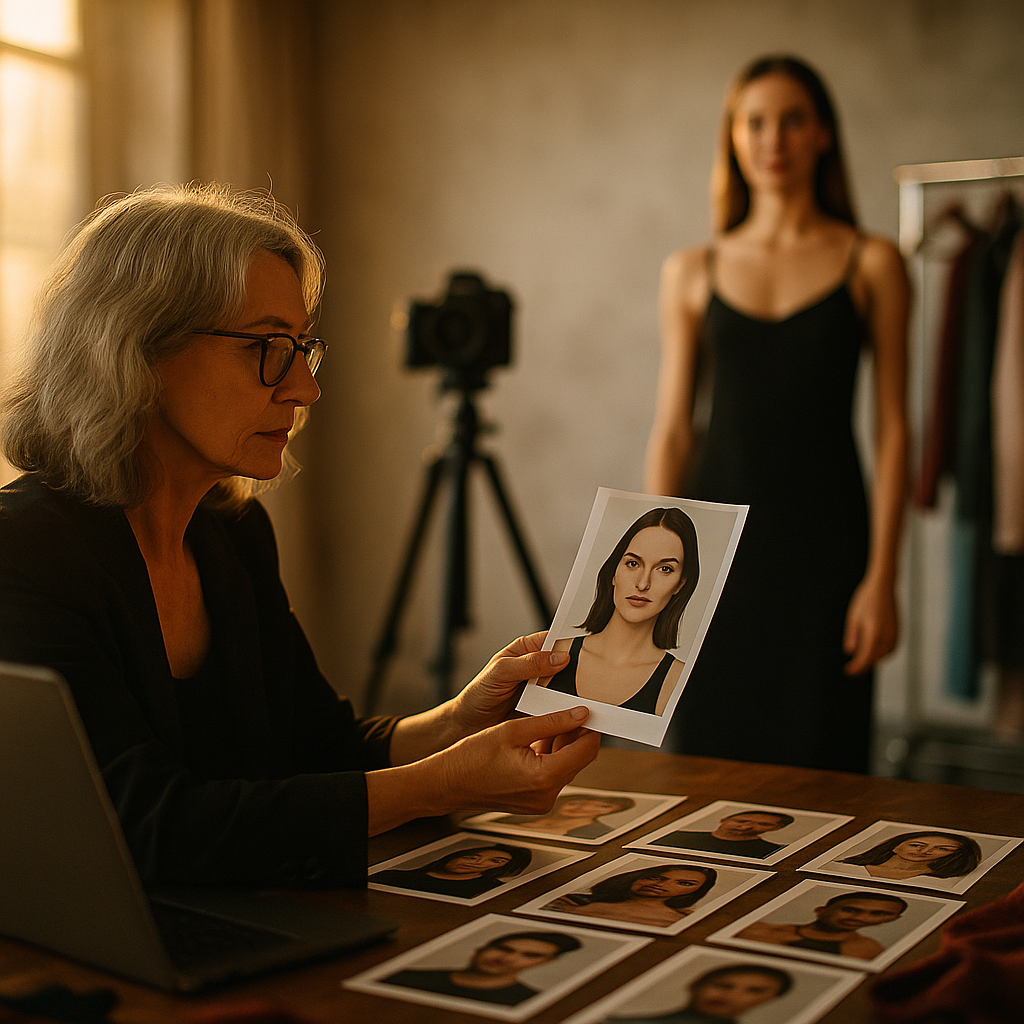
When Chanel casts a creator for a high-jewelry campaign, the process looks closer to film casting than media buying. There’s a shortlist. There are reference checks — not engagement audits, but cultural reference checks. Who does this person associate with publicly? What aesthetic do they project across platforms, not just on one feed? Do they own or wear the product already, without being paid?
This is what we call human casting logic: the layered, often intuitive evaluation that senior brand marketers and casting directors apply. It breaks down into three pillars:
- Cultural fit: Does the creator’s personal narrative, visual identity, and social graph align with the brand’s heritage codes? This goes beyond content style — it’s about whether the creator would be a credible guest at the brand’s private dinners, not just its press events.
- Long-term reputation risk: What’s the probability this creator generates a controversy that ricochets onto the brand? AI can flag past content violations, but it can’t assess the trajectory of someone’s public persona. A human can sense when a creator is overexposed, heading toward tabloid territory, or building a political identity that clashes with the brand’s positioning.
- Audience lifestyle alignment: Not just demographics — psychographics. Does the creator’s audience actually live in the brand’s ecosystem? Do they travel to the same destinations, shop at the same retailers, attend the same cultural events? This matters because luxury conversion often happens offline, in boutiques, where the audience’s real-world behavior determines ROI.
As we’ve explored in our analysis of AI scoring versus human cultural fit, the most effective programs use algorithmic discovery to build a longlist, then apply human casting logic to whittle it to the final roster.
What Does “Brand-Safe” Actually Mean for a Heritage House?
Brand safety in luxury isn’t about avoiding profanity or political content — those are table stakes. It’s about protecting exclusivity, mystique, and the perception of effortlessness that heritage houses spend decades cultivating.
Consider a real scenario. A major European fashion house (unnamed, but you’d recognize it) partnered with a macro-influencer identified through an AI platform’s “luxury affinity” scoring. The creator’s content performed well by engagement metrics. But internal brand tracking revealed something troubling: the creator’s audience overwhelmingly followed fast-fashion accounts, discount codes were their top engagement trigger, and the partnership actually diluted the brand’s desirability index among its core customer segment.
The cost wasn’t financial. It was positional.
This is why synthetic creator detection is only one piece of the brand safety puzzle. Authenticity of the person matters, but so does authenticity of the audience-brand relationship.
Operationalizing the Hybrid Model
So how do you actually build a casting process that balances algorithmic efficiency with human judgment? The brands getting this right tend to follow a four-stage pipeline:
- AI-powered longlist generation: Use platforms like Traackr, CreatorIQ, or Launchmetrics to surface 50-100 creators matching demographic, geographic, and category filters. This takes hours instead of weeks. Let the machines do what machines do well.
- Human cultural audit: A casting team — ideally including someone from brand heritage or creative direction, not just the influencer marketing team — reviews each creator’s full digital footprint. Instagram, TikTok, YouTube, but also LinkedIn presence, podcast appearances, event attendance, personal relationships visible in tagged content. This is labor-intensive. It’s also irreplaceable.
- Reputation trajectory assessment: This is forward-looking. Where is this creator headed in 12-18 months? Are they diversifying into categories that conflict with the brand? Are they growing in a way that suggests they’ll be overexposed by the time the campaign launches? Some houses hire the same firms that do executive background checks for board appointments.
- Audience psychographic validation: Use tools like Audiense or SparkToro to analyze not just who follows the creator, but what else those followers consume, buy, and value. Match that against the brand’s customer intelligence data. If the overlap is thin, walk away — regardless of how good the engagement metrics look.
This hybrid model costs more per casting decision. But for luxury brands, a single miscast partnership can erode years of positioning work. The ROI math favors caution.
The most expensive creator partnership isn’t the one with the highest fee — it’s the one that costs you brand equity you can’t buy back.
The Long-Term Roster vs. One-Off Activation
Heritage brands are increasingly moving away from one-off creator activations entirely. The trend is toward long-term ambassador relationships — creators who become genuinely embedded in the brand’s world over 12-36 month contracts. This approach has several strategic advantages.
First, it amortizes the high cost of human casting logic over multiple activations. If you’re spending 40 hours vetting a creator, you want that investment paying dividends for years, not a single Instagram carousel.
Second, long-term relationships produce content that actually feels native to the brand. A creator who’s been wearing Brunello Cucinelli for 18 months naturally integrates it differently than someone who received a gifting box last Tuesday. Audiences detect the difference, and as micro-creators outperform on trust, authenticity has become the primary conversion driver in luxury.
Third, it creates a defensible moat against competitors. When your creator is locked into a multi-season exclusivity agreement, rival houses can’t simply outbid you for the same voice. This matters enormously in categories like fine jewelry and haute couture where the addressable pool of credible creators is small.
The operational implications are significant. Your creator program shifts from a campaign-by-campaign media buy to a portfolio management discipline — closer to how a luxury house manages its retail partnerships than how a DTC brand runs performance ads. For guidance on structuring these kinds of fashion creator rosters, the industry is developing clearer benchmarks around sales lift attribution.
Where AI Still Adds Value — And Where It Doesn’t
None of this is anti-technology. The best luxury influencer programs use AI aggressively for three specific functions: discovery speed, audience overlap analysis, and post-campaign measurement. Where they deliberately limit AI is in the casting decision itself and in creative briefing.
Dior doesn’t need an algorithm to tell it that a creator’s aesthetic is wrong. LVMH’s internal teams have decades of visual literacy that no model training on tagged images can replicate. But those same teams absolutely benefit from AI surfacing creators they’d never have found manually — especially emerging voices in markets like Southeast Asia, the Middle East, and sub-Saharan Africa where luxury growth is concentrated.
The competitive edge going forward belongs to brands that build what one Kering executive described as “augmented casting intelligence” — AI-driven matching capabilities wrapped in human judgment layers that protect brand values no algorithm was trained to understand.
For brands outside the top-tier luxury segment that still market premium positioning, the takeaway is the same: invest in the human layer proportionally to the fragility of your brand perception. The more your brand depends on intangibles — craftsmanship narrative, exclusivity, cultural cachet — the more your casting process needs human gatekeepers.
Your next step: Audit your current creator casting pipeline and identify exactly where human judgment enters the process. If the answer is “after the platform recommends someone,” you’re letting an algorithm make decisions that should belong to your brand team. Move the human evaluation upstream — into the criteria definition stage, not just the approval stage.
FAQs
Why do AI creator-matching tools fail for luxury brands?
AI matching tools optimize for quantifiable metrics like engagement rate, audience demographics, and cost efficiency. They lack the ability to evaluate intangible brand values such as cultural fit, taste alignment, exclusivity perception, and long-term reputation trajectory — all of which are critical for heritage luxury positioning.
What is human casting logic in luxury influencer marketing?
Human casting logic is a multi-layered evaluation process used by luxury brands to assess creators based on cultural fit, personal reputation risk, audience lifestyle alignment, and aesthetic coherence with the brand’s heritage codes. It mirrors talent casting in film more than media buying in advertising.
How can luxury brands combine AI tools with human judgment for creator selection?
The most effective approach is a four-stage hybrid model: use AI for longlist generation and audience data analysis, then apply human cultural audits, reputation trajectory assessments, and psychographic validation before making final casting decisions. This balances speed with brand protection.
Why are long-term creator partnerships more effective for heritage brands?
Long-term partnerships amortize high vetting costs over multiple activations, produce more authentic content as creators become genuinely embedded in the brand world, and create competitive moats through exclusivity agreements that prevent rival houses from accessing the same voices.
What role does audience psychographic analysis play in luxury creator casting?
Audience psychographics go beyond demographics to evaluate whether a creator’s followers actually live within the brand’s ecosystem — shopping at the same retailers, traveling to the same destinations, and valuing the same cultural markers. This analysis prevents partnerships where strong engagement metrics mask poor lifestyle alignment with the brand’s core customers.
Top Influencer Marketing Agencies
The leading agencies shaping influencer marketing in 2026
Agencies ranked by campaign performance, client diversity, platform expertise, proven ROI, industry recognition, and client satisfaction. Assessed through verified case studies, reviews, and industry consultations.
Moburst

-
2

The Shelf
Boutique Beauty & Lifestyle Influencer AgencyA data-driven boutique agency specializing exclusively in beauty, wellness, and lifestyle influencer campaigns on Instagram and TikTok. Best for brands already focused on the beauty/personal care space that need curated, aesthetic-driven content.Clients: Pepsi, The Honest Company, Hims, Elf Cosmetics, Pure LeafVisit The Shelf → -
3

Audiencly
Niche Gaming & Esports Influencer AgencyA specialized agency focused exclusively on gaming and esports creators on YouTube, Twitch, and TikTok. Ideal if your campaign is 100% gaming-focused — from game launches to hardware and esports events.Clients: Epic Games, NordVPN, Ubisoft, Wargaming, Tencent GamesVisit Audiencly → -
4

Viral Nation
Global Influencer Marketing & Talent AgencyA dual talent management and marketing agency with proprietary brand safety tools and a global creator network spanning nano-influencers to celebrities across all major platforms.Clients: Meta, Activision Blizzard, Energizer, Aston Martin, WalmartVisit Viral Nation → -
5

The Influencer Marketing Factory
TikTok, Instagram & YouTube CampaignsA full-service agency with strong TikTok expertise, offering end-to-end campaign management from influencer discovery through performance reporting with a focus on platform-native content.Clients: Google, Snapchat, Universal Music, Bumble, YelpVisit TIMF → -
6

NeoReach
Enterprise Analytics & Influencer CampaignsAn enterprise-focused agency combining managed campaigns with a powerful self-service data platform for influencer search, audience analytics, and attribution modeling.Clients: Amazon, Airbnb, Netflix, Honda, The New York TimesVisit NeoReach → -
7

Ubiquitous
Creator-First Marketing PlatformA tech-driven platform combining self-service tools with managed campaign options, emphasizing speed and scalability for brands managing multiple influencer relationships.Clients: Lyft, Disney, Target, American Eagle, NetflixVisit Ubiquitous → -
8

Obviously
Scalable Enterprise Influencer CampaignsA tech-enabled agency built for high-volume campaigns, coordinating hundreds of creators simultaneously with end-to-end logistics, content rights management, and product seeding.Clients: Google, Ulta Beauty, Converse, AmazonVisit Obviously →