


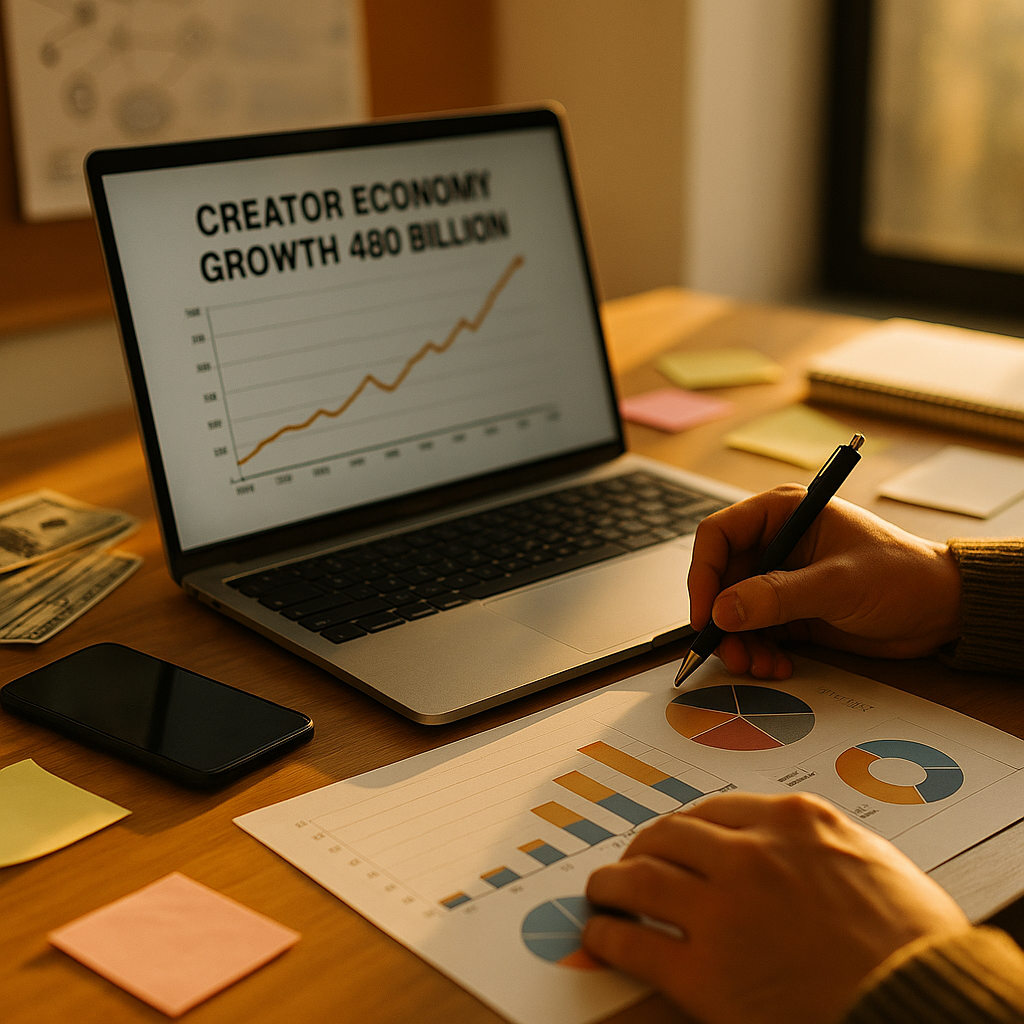
A $480 Billion Wake-Up Call for Brand Planning
Goldman Sachs projected the creator economy would reach $480 billion by 2027. We’re now close enough to that milestone that the number isn’t aspirational—it’s operational. For brand strategists still running influencer programs as a line item inside “digital media,” the creator economy growth trajectory demands a structural response: different planning cadences, different vendor relationships, different team compositions. Not incremental tweaks. Architectural changes.
Why the Old Annual Planning Cycle Is Already Broken
Most enterprise brands still lock influencer budgets in Q4 for the following fiscal year. That made sense when creator partnerships were campaign-level tactics—book a macro-influencer for a product launch, measure impressions, move on. It doesn’t survive contact with how the market actually works now.
Consider what’s shifted in the past eighteen months alone. TikTok Shop’s gross merchandise value reportedly exceeded $30 billion globally. Statista’s market data shows creator-driven commerce is growing faster than traditional social ad spend. AI-powered creator matching tools from platforms like CreatorIQ, Grin, and Aspire have compressed campaign spin-up times from weeks to days. Shoppable video formats on Instagram, YouTube, and TikTok now close the loop between content and checkout in a single session.
The planning implication? A twelve-month budget lock creates massive opportunity cost. By the time Q3 rolls around, the platform landscape, algorithm dynamics, and creator pricing may look nothing like what you modeled in October.
Brands that shift to quarterly creator-budget reallocation cycles—reserving 25-30% of annual creator spend as flexible mid-year capital—consistently outperform those locked into annual plans, according to internal benchmarks shared by multiple agency holding companies.
The fix isn’t complicated, but it requires finance-team buy-in. Structure your creator economy budget as a rolling allocation with quarterly gates, not a single annual approval. Pair each gate with a performance review that evaluates cost-per-acquisition at the creator tier level—not just top-line impressions. Our breakdown of creator attribution gaps offers a practical framework for that measurement layer.
Vendor Contracts Need an Automation Clause
Here’s a question most procurement teams haven’t thought to ask: does your influencer management platform contract include terms for AI-generated content, synthetic creator detection, and automated campaign optimization?
If the answer is no, you’re signing agreements built for a market that no longer exists.
The automation-driven expansion phase of the creator economy means that the tooling layer is evolving faster than the contract language governing it. Brands need vendor agreements that address three specific areas:
- AI content ownership and licensing. When a platform uses generative AI to remix creator assets for ad variations, who owns the derivatives? Your current MSA probably doesn’t say.
- Synthetic creator safeguards. As AI-generated influencers proliferate, your vendor should contractually guarantee synthetic creator detection as part of its vetting workflow—not as a premium add-on.
- Performance-based fee structures. Legacy SaaS pricing (flat monthly seat licenses) doesn’t align with the variable output of AI-accelerated campaigns. Push for hybrid models that tie a portion of vendor fees to campaign outcomes like ROAS or earned media value.
The negotiating leverage exists right now. Platform consolidation is intensifying competition among creator management vendors. Use it. RFP cycles should explicitly score vendors on their AI roadmap maturity, not just current feature sets.
What Should Your Headcount Actually Look Like?
This is where the conversation gets uncomfortable. Many brand-side influencer teams were built for a world of manual outreach, spreadsheet tracking, and one-off campaign management. Automation doesn’t eliminate headcount needs—it redirects them.
The roles shrinking in value: coordinator-level positions focused on creator sourcing, contract administration, and content scheduling. AI tools from companies like Brandwatch, Later, and Sprout Social (see Sprout Social’s platform) are automating these workflows with increasing reliability.
The roles gaining in value:
- Creator Strategists who can build multi-tier creator architectures—blending macro reach, micro trust, and nano authenticity into integrated programs. This isn’t something an algorithm handles well yet. Understanding micro-creator trust dynamics remains a distinctly human skill.
- AI-Tool Operators who sit between the marketing team and the martech stack, configuring automated workflows, interpreting AI-generated recommendations, and flagging when algorithmic outputs don’t match brand strategy. Think of them as the translation layer between machine intelligence and marketing judgment.
- Commercial Negotiators with deep knowledge of creator monetization models—revenue shares, affiliate structures, licensing agreements, equity deals. As creators professionalize, the deal structures look more like talent management than media buying.
A practical headcount ratio for mid-market brands running $2-10M annual creator programs: for every two coordinator roles you phase down, invest in one strategist and one AI-tool operator. You’ll net fewer total heads but significantly higher output per person.
The brands winning the automation-driven expansion aren’t those with the biggest influencer teams—they’re the ones with the most strategically composed teams. Three well-equipped people with the right tooling outperform ten people running manual processes.
The Shoppable Video Variable Nobody’s Pricing Correctly
Shoppable video is the single biggest accelerant in the creator economy’s path to $480 billion, and most brand planning models undercount its impact. Why? Because they measure creator video as a media tactic rather than a commerce channel.
When a creator’s TikTok Shop livestream generates $200K in GMV during a single session, that revenue doesn’t show up in your influencer dashboard. It shows up in your e-commerce P&L—often attributed to “organic social” or “direct traffic.” The AI and shoppable video market map we published covers this structural attribution gap in detail.
Meta’s business tools and TikTok’s advertising platform are both investing heavily in closing this loop, but the measurement infrastructure on the brand side lags behind. Fix this before your next planning cycle, or you’ll systematically underinvest in your highest-ROI creator activations.
Restructuring for the Expansion Phase: A Sequenced Approach
Don’t try to overhaul everything at once. Here’s the sequence that causes the least organizational disruption while capturing the most value:
Phase 1 (Current quarter): Audit vendor contracts for AI and automation gaps. Issue amendments or begin RFP processes for replacements. Simultaneously, map your current headcount against the strategist/operator/negotiator framework above.
Phase 2 (Next quarter): Transition to quarterly budget reallocation. Work with finance to establish the flexible capital reserve (25-30% of total creator spend). Implement attribution tagging that connects creator content to commerce outcomes, not just engagement metrics.
Phase 3 (Following quarter): Execute headcount restructuring. This means redeployment and reskilling before it means reduction. Your best coordinators already have institutional knowledge that’s irreplaceable—give them a path into strategist or operator roles with proper training budgets.
Throughout all three phases, maintain a standing relationship with your ops and tech infrastructure leads. The technical plumbing—API integrations, data pipelines, content rights management systems—constrains everything else. Get it right early.
The Bottom Line
The creator economy’s path to $480 billion isn’t a forecast you watch from the sidelines. It’s an operational mandate. Start with your vendor contracts this quarter, restructure your planning cadence next quarter, and reshape your team composition by Q3. The brands that move through this sequence fastest will own disproportionate share of the value the automation-driven expansion creates.
Frequently Asked Questions
How should brand strategists restructure annual planning cycles for creator economy growth?
Move from a single annual budget lock to quarterly reallocation cycles. Reserve 25-30% of total creator spend as flexible mid-year capital that can be deployed based on emerging platform opportunities, shifting creator pricing, and real-time campaign performance data. Pair each quarterly gate with attribution-focused performance reviews at the creator tier level.
What contract terms should brands negotiate with influencer marketing vendors during the automation expansion?
Prioritize three areas: AI-generated content ownership and licensing clarity, contractual guarantees for synthetic creator detection in vetting workflows, and performance-based or hybrid fee structures that tie vendor costs to campaign outcomes like ROAS rather than flat SaaS seat licenses. Score all vendors on AI roadmap maturity during RFP processes.
What roles are most valuable on brand-side creator marketing teams as AI automation grows?
Creator Strategists who design multi-tier program architectures, AI-Tool Operators who configure and interpret automated workflows, and Commercial Negotiators who handle increasingly complex creator deal structures. Coordinator-level roles focused on manual sourcing and scheduling are declining in strategic value as platforms automate those tasks.
Why is the creator economy expected to reach $480 billion by 2027?
The growth is driven by the convergence of shoppable video commerce, AI-powered campaign automation, platform investment in creator monetization tools, and the professionalization of creators as a media and commerce channel. Shoppable video alone is accelerating gross merchandise value at rates that outpace traditional social advertising growth.
How can brands fix creator attribution to capture full ROI from shoppable video?
Implement attribution tagging that connects creator content directly to e-commerce outcomes rather than only engagement metrics. Many shoppable video sales currently get misattributed to organic social or direct traffic. Work with platform commerce APIs from TikTok Shop, Instagram Shopping, and YouTube Shopping to close the measurement gap before your next planning cycle.
Top Influencer Marketing Agencies
The leading agencies shaping influencer marketing in 2026
Agencies ranked by campaign performance, client diversity, platform expertise, proven ROI, industry recognition, and client satisfaction. Assessed through verified case studies, reviews, and industry consultations.
Moburst

-
2

The Shelf
Boutique Beauty & Lifestyle Influencer AgencyA data-driven boutique agency specializing exclusively in beauty, wellness, and lifestyle influencer campaigns on Instagram and TikTok. Best for brands already focused on the beauty/personal care space that need curated, aesthetic-driven content.Clients: Pepsi, The Honest Company, Hims, Elf Cosmetics, Pure LeafVisit The Shelf → -
3

Audiencly
Niche Gaming & Esports Influencer AgencyA specialized agency focused exclusively on gaming and esports creators on YouTube, Twitch, and TikTok. Ideal if your campaign is 100% gaming-focused — from game launches to hardware and esports events.Clients: Epic Games, NordVPN, Ubisoft, Wargaming, Tencent GamesVisit Audiencly → -
4

Viral Nation
Global Influencer Marketing & Talent AgencyA dual talent management and marketing agency with proprietary brand safety tools and a global creator network spanning nano-influencers to celebrities across all major platforms.Clients: Meta, Activision Blizzard, Energizer, Aston Martin, WalmartVisit Viral Nation → -
5

The Influencer Marketing Factory
TikTok, Instagram & YouTube CampaignsA full-service agency with strong TikTok expertise, offering end-to-end campaign management from influencer discovery through performance reporting with a focus on platform-native content.Clients: Google, Snapchat, Universal Music, Bumble, YelpVisit TIMF → -
6

NeoReach
Enterprise Analytics & Influencer CampaignsAn enterprise-focused agency combining managed campaigns with a powerful self-service data platform for influencer search, audience analytics, and attribution modeling.Clients: Amazon, Airbnb, Netflix, Honda, The New York TimesVisit NeoReach → -
7

Ubiquitous
Creator-First Marketing PlatformA tech-driven platform combining self-service tools with managed campaign options, emphasizing speed and scalability for brands managing multiple influencer relationships.Clients: Lyft, Disney, Target, American Eagle, NetflixVisit Ubiquitous → -
8

Obviously
Scalable Enterprise Influencer CampaignsA tech-enabled agency built for high-volume campaigns, coordinating hundreds of creators simultaneously with end-to-end logistics, content rights management, and product seeding.Clients: Google, Ulta Beauty, Converse, AmazonVisit Obviously →