


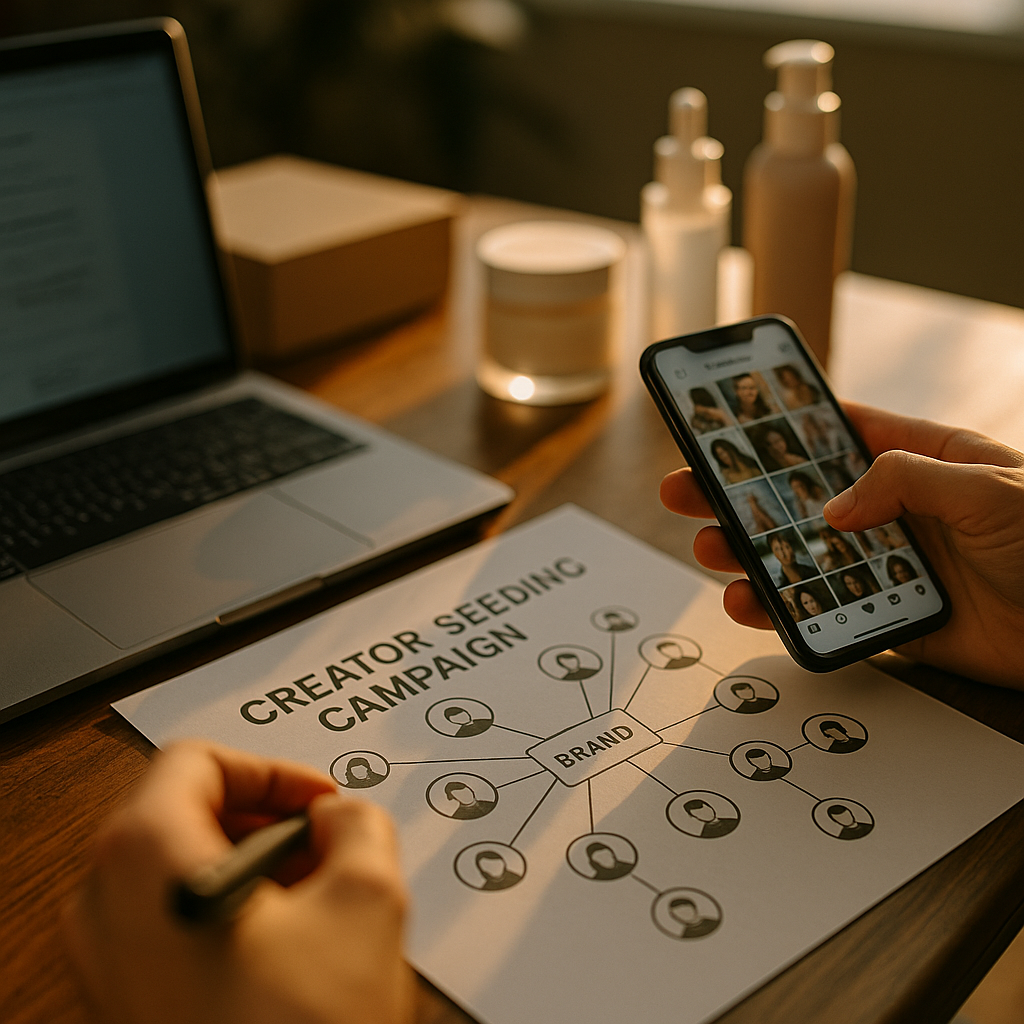
55 Creators, One Launch Window: Inside BPCM’s Pre-Launch Seeding Masterclass
Most pre-launch seeding campaigns activate creators in waves. BPCM activated 55 simultaneously — and generated 3.2x the earned media value of comparable sequential micro-influencer drops. That result didn’t happen because the creators were extraordinary. It happened because the operational infrastructure was.
This case study breaks down the brief architecture, rights management framework, and attribution design that let a single agency coordinate a high-volume simultaneous activation without the chaos that typically accompanies it. If you’re running influencer programs at scale — or planning to — the lessons here are immediately applicable.
Why Simultaneous Beats Sequential (When You Can Pull It Off)
The conventional wisdom behind sequential micro-influencer drops is sound: stagger activations to sustain conversation over weeks, avoid audience fatigue, and give each creator their moment. But that logic has a structural weakness. Sequential drops bleed momentum. Each wave competes with whatever else the algorithm is surfacing that day. By wave three, the product already feels familiar to overlap audiences — and familiarity without availability (it’s a pre-launch, after all) breeds indifference.
Simultaneous activation flips the equation. When 55 creators post within a 48-hour window, the platform algorithms register a demand signal. The content compounds. Audiences see the product from multiple trusted sources in rapid succession, which triggers what behavioral researchers call “social proof cascading” — the perception that everyone is talking about this thing.
BPCM’s internal data showed that the 48-hour burst window generated 78% of total campaign impressions within the first 72 hours — compared to 34% in the first 72 hours of their previous sequential seeding campaigns for clients of similar scale.
But here’s the catch: simultaneous activation at this scale is operationally punishing. The margin for error shrinks to near-zero. A single creator posting off-brief, off-schedule, or with incorrect disclosures doesn’t just underperform — it disrupts the entire wave’s coherence. Which is why the infrastructure matters more than the talent roster.
The Brief Architecture: Modular, Not Monolithic
BPCM didn’t send 55 creators the same brief. They built a modular brief system with three layers:
- Core layer: Non-negotiable brand guardrails — product claims, required disclosures, embargo timing, and visual standards. Identical for all 55 creators.
- Category layer: Tailored messaging angles based on creator vertical (skincare routine creators got ingredient-led talking points; lifestyle creators got aesthetic/unboxing direction; dermatology-adjacent creators got clinical framing).
- Freedom layer: Explicit guidance on where creators had full creative license — format choice, caption voice, music selection, personal storytelling hooks.
This three-tier structure solved a problem that plagues high-volume campaigns: the tension between brand consistency and creator authenticity. When everyone gets the same rigid brief, the content looks coordinated — and audiences notice. When everyone gets total freedom, the brand message fractures. The modular approach gave BPCM consistency where it mattered and diversity where it counted.
Briefs were delivered through a centralized portal (reportedly built on a customized Notion workspace synced with project management tools) rather than email. Every creator confirmed receipt, acknowledged the embargo window, and submitted content for pre-approval through the same system. No scattered threads. No “I didn’t see that attachment.” The approach mirrors best practices in brief architecture and timing that we’ve covered extensively.
Rights Management at Scale: The Part Everyone Underestimates
Fifty-five creators means fifty-five sets of usage rights to negotiate, document, and enforce. This is where most high-volume campaigns either overspend (buying blanket rights they don’t need) or underprotect (discovering too late that they can’t repurpose top-performing content for paid amplification).
BPCM structured rights into three tiers:
- Organic-only rights (30 days): Standard for all 55 creators. Content lives on their channels. The brand can reshare but not modify or run as paid.
- Paid amplification rights (90 days): Pre-negotiated with a subset of 20 creators whose audience demographics most closely matched the brand’s target customer. These rights were priced into the original contract — not negotiated after the content went live.
- Extended commercial rights (12 months): Reserved for the top 5 performers based on a pre-defined engagement threshold. These creators had a separate contract addendum activated automatically when their content crossed the performance trigger.
That third tier is worth studying closely. By defining performance triggers before launch, BPCM avoided the awkward post-campaign scramble of going back to a creator whose Reel just hit 2 million views and negotiating from a position of desperation. The creator knew the terms upfront. The brand had automatic escalation rights. Clean.
This kind of structured rights management is essential for any brand investing in creator content at volume. The FTC’s endorsement guidelines add another layer — every piece of content needed proper disclosure, and BPCM’s centralized approval system flagged posts missing #ad or equivalent tags before they went live.
Attribution Design: Measuring What Actually Matters
Here’s where the case gets genuinely interesting for performance-minded marketers.
BPCM didn’t rely on a single attribution method. They layered four:
- Unique UTM parameters per creator: Standard, but essential for click-level tracking. Each creator’s link-in-bio or swipe-up directed to a branded landing page with individual UTMs flowing into Google Analytics.
- Unique discount codes: 15 of the 55 creators received exclusive codes. This provided a direct-response signal and helped isolate which creator verticals drove highest conversion intent.
- Brand lift study via Meta: BPCM ran a concurrent Meta brand lift study measuring aided awareness, message association, and purchase intent among exposed vs. control audiences.
- Social listening sentiment analysis: Using tools like Brandwatch and Sprout Social, the team tracked conversation volume, sentiment trajectory, and share-of-voice changes during the 48-hour window and for two weeks after.
The multi-layer approach matters because no single attribution method tells the full story in influencer marketing. UTMs miss dark social sharing. Discount codes undercount brand-aware buyers who go directly to the site. Brand lift studies measure perception but not behavior. Layering them together gave BPCM a composite picture that any one method would have missed.
The campaign drove a 41% lift in aided awareness among the target demographic and a 2.8x return on influencer spend when factoring in earned media value — metrics that only became visible through the multi-layered attribution stack.
For brands exploring AI-driven approaches to attribution, platforms like Zeta Global are pushing the frontier. Our analysis of AI attribution for influencer revenue covers how identity resolution is changing the measurement game.
What Made This Work — And What Could Break It
Three structural decisions separated this campaign from the typical “send product to 50 people and hope for the best” approach:
1. Pre-selecting for reliability, not just reach. BPCM weighted creator selection toward those with proven on-time delivery rates from previous campaigns. A creator with 800K followers who misses an embargo is worth less than one with 40K who posts exactly when briefed.
2. Embedding a human escalation layer. The team assigned five internal coordinators — roughly one per 11 creators — responsible for real-time troubleshooting during the activation window. Shipping delays, content revision requests, platform glitches: someone owned each problem within minutes, not hours.
3. Building the paid amplification plan before a single organic post went live. Media budget was pre-allocated. Creative review for whitelisted ads was pre-approved. When top-performing content surfaced, the paid team boosted it within hours — not days. This is a pattern we’ve seen in burst playbook strategies for limited-edition drops.
Where could this model break? Scale without infrastructure. If you attempt 55 simultaneous activations with a two-person team and email-based workflows, you’ll get a mess. The operational overhead is real: BPCM reportedly dedicated a team of eight for six weeks of pre-production. For brands considering similar scale, learning from both large-scale creator activations and their pitfalls is critical homework.
The Bigger Strategic Implication
This case isn’t really about 55 creators. It’s about the shift from influencer marketing as a media buy to influencer marketing as a logistics and systems challenge. The brands winning in high-volume activation aren’t the ones with the biggest budgets or the best talent rosters. They’re the ones with the tightest operations.
Measurement platforms like Sprout Social and Brandwatch give you the data layer. But the competitive advantage lives in brief architecture, rights scaffolding, and real-time coordination — the unsexy infrastructure that turns a creator list into a campaign engine.
Your next step: Before your next multi-creator activation, audit your brief delivery system, rights escalation framework, and attribution stack against the three-tier models described here. If any of the three has gaps, you’re not ready to scale — and adding more creators will only amplify the problems.
FAQs
How many coordinators does a 55-creator simultaneous activation require?
BPCM used approximately one internal coordinator per 11 creators, totaling five dedicated team members for real-time troubleshooting during the activation window. The broader campaign preparation involved a team of eight over six weeks. Understaffing this function is the most common failure point in high-volume activations.
Why did simultaneous activation outperform sequential micro-influencer drops?
Simultaneous posting within a 48-hour window triggers algorithmic amplification and social proof cascading — audiences encounter the product from multiple trusted sources in rapid succession. BPCM’s data showed 78% of total impressions landed within 72 hours, compared to 34% for sequential campaigns of similar scale, concentrating awareness during the critical pre-launch period.
How should rights management be structured for large-scale creator campaigns?
Use a tiered rights model: organic-only rights as baseline for all creators, pre-negotiated paid amplification rights for a strategic subset, and performance-triggered extended commercial rights for top performers. Critically, all terms — including escalation triggers — should be defined in contracts before launch to avoid costly post-campaign negotiations.
What attribution methods work best for simultaneous influencer activations?
No single method is sufficient. Layer unique UTM parameters per creator, selective discount codes, platform brand lift studies (such as Meta’s), and social listening sentiment analysis. This composite approach captures click-level behavior, direct response, perception shifts, and dark social sharing that any individual method would miss.
What is a modular brief system in influencer marketing?
A modular brief separates instructions into a core layer (non-negotiable brand guardrails), a category layer (tailored messaging by creator vertical), and a freedom layer (areas of full creative license). This structure maintains brand consistency while preserving creator authenticity — solving the central tension of multi-creator campaigns.
Top Influencer Marketing Agencies
The leading agencies shaping influencer marketing in 2026
Agencies ranked by campaign performance, client diversity, platform expertise, proven ROI, industry recognition, and client satisfaction. Assessed through verified case studies, reviews, and industry consultations.
Moburst

-
2

The Shelf
Boutique Beauty & Lifestyle Influencer AgencyA data-driven boutique agency specializing exclusively in beauty, wellness, and lifestyle influencer campaigns on Instagram and TikTok. Best for brands already focused on the beauty/personal care space that need curated, aesthetic-driven content.Clients: Pepsi, The Honest Company, Hims, Elf Cosmetics, Pure LeafVisit The Shelf → -
3

Audiencly
Niche Gaming & Esports Influencer AgencyA specialized agency focused exclusively on gaming and esports creators on YouTube, Twitch, and TikTok. Ideal if your campaign is 100% gaming-focused — from game launches to hardware and esports events.Clients: Epic Games, NordVPN, Ubisoft, Wargaming, Tencent GamesVisit Audiencly → -
4

Viral Nation
Global Influencer Marketing & Talent AgencyA dual talent management and marketing agency with proprietary brand safety tools and a global creator network spanning nano-influencers to celebrities across all major platforms.Clients: Meta, Activision Blizzard, Energizer, Aston Martin, WalmartVisit Viral Nation → -
5

The Influencer Marketing Factory
TikTok, Instagram & YouTube CampaignsA full-service agency with strong TikTok expertise, offering end-to-end campaign management from influencer discovery through performance reporting with a focus on platform-native content.Clients: Google, Snapchat, Universal Music, Bumble, YelpVisit TIMF → -
6

NeoReach
Enterprise Analytics & Influencer CampaignsAn enterprise-focused agency combining managed campaigns with a powerful self-service data platform for influencer search, audience analytics, and attribution modeling.Clients: Amazon, Airbnb, Netflix, Honda, The New York TimesVisit NeoReach → -
7

Ubiquitous
Creator-First Marketing PlatformA tech-driven platform combining self-service tools with managed campaign options, emphasizing speed and scalability for brands managing multiple influencer relationships.Clients: Lyft, Disney, Target, American Eagle, NetflixVisit Ubiquitous → -
8

Obviously
Scalable Enterprise Influencer CampaignsA tech-enabled agency built for high-volume campaigns, coordinating hundreds of creators simultaneously with end-to-end logistics, content rights management, and product seeding.Clients: Google, Ulta Beauty, Converse, AmazonVisit Obviously →