


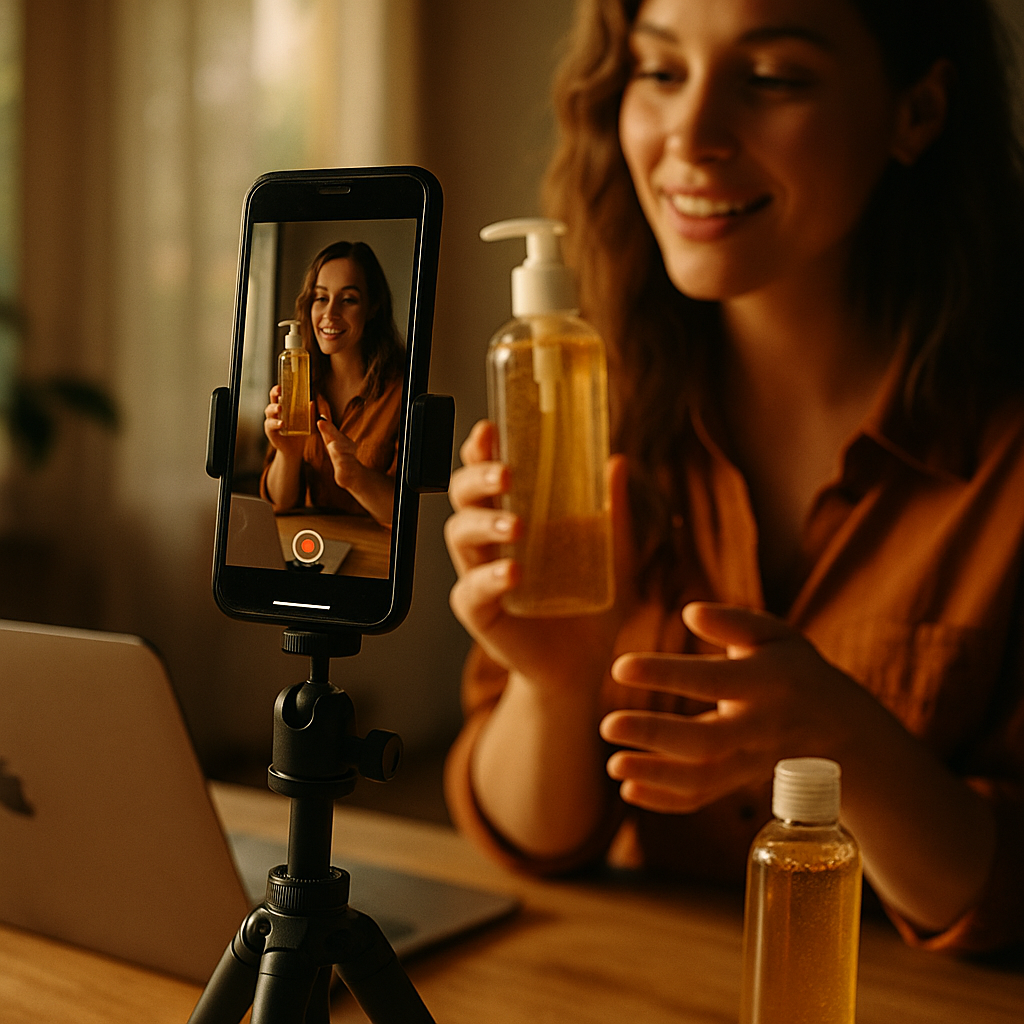
When Organic Reach Alone Stops Paying the Bills
Brands that rely solely on organic creator content are leaving measurable revenue on the table. A regional bank and a mid-tier CPG brand recently proved that combining organic creator posts with paid amplification — on TikTok and Instagram simultaneously — can generate measurable sales uplift that neither channel delivers alone. Here’s how the playbook actually worked.
The Setup: Two Very Different Brands, One Shared Problem
The two brands came from opposite ends of the product spectrum. One was a regional bank operating across six southeastern U.S. states, trying to drive new checking account openings among 25–40-year-olds. The other was a CPG snack brand — mid-range price point, national grocery distribution, competing in a brutally crowded aisle against both legacy players and DTC disruptors.
What they shared: solid creator relationships, modest paid social budgets, and zero confidence that their existing measurement frameworks were capturing actual sales impact. Both had run influencer campaigns before. Both had celebrated vanity metrics. Neither had a clean line from creator content to revenue.
That’s the real problem this case study addresses. Not reach. Not engagement rate. Revenue attribution — the thing most influencer programs still get wrong.
Why the Hybrid Model Changes the Math
The core mechanic is deceptively simple: let organic creator content prove itself first, then amplify the winners with paid spend. But the execution requires discipline most brands skip.
Both brands deployed what their agencies called a “test-and-boost” framework. Creators posted organically — no paid dark post label, no boosted disclaimer — and the content ran for 48 to 72 hours to accumulate authentic engagement signals. Then the highest-performing posts by watch-through rate and save rate (not raw likes) were whitelisted and pushed as paid placements targeting lookalike audiences derived from each brand’s existing customer lists.
This matters for one reason above all others: paid amplification of content that has already earned organic trust converts at a materially different rate than cold creative. The creative isn’t a brand ad — it’s a creator’s genuine post that happens to be reaching more people. The audience processes it differently. The trust transfer is already embedded.
Amplifying organic creator posts that have already proven engagement is not a media buy. It’s a trust multiplier. Brands that treat it like a standard paid social placement are measuring the wrong thing.
For context on how attribution infrastructure has evolved to support this kind of measurement, the work being done around AI identity resolution by brands like Coke and Hershey provides a useful benchmark for what’s now technically achievable.
Platform Mechanics: TikTok vs. Instagram Performed Very Differently
Both platforms were in play, but they did not behave the same way — and the brands that acknowledge this distinction will build smarter programs.
On TikTok, the CPG brand saw organic content from a cohort of 18 mid-tier creators (followers ranging from 80K to 400K) generate strong early watch-through rates on recipe-adjacent content. When those posts were amplified using TikTok’s Spark Ads format — which boosts the original organic post rather than creating a separate dark ad — the cost-per-click on traffic to a retailer landing page dropped 34% compared to standard in-feed creative from a prior campaign. More importantly, the brand used TikTok’s attribution tools in combination with retail sales data from a major grocery partner to isolate a 6.2% sales uplift in markets where the amplified content ran versus control markets.
On Instagram, the regional bank leaned heavily on Reels with creator-style storytelling — creators explaining personal finance moments, not product pitches. The bank’s team used Meta’s Partnership Ads (formerly branded content ads) through Meta Business Suite to amplify creator handles directly, preserving the social proof of the original post’s comments and likes. The bank tracked new account openings via unique landing page URLs tied to each creator and each amplification burst, ultimately attributing 1,140 net-new checking account openings to the combined organic-plus-paid effort over a 10-week period.
That’s not a brand awareness number. That’s a business outcome.
The Measurement Stack That Made Attribution Possible
Attribution is where most case studies get vague. Let’s not do that here.
The CPG brand used a geo-matched sales lift methodology — essentially splitting retail markets into exposed and unexposed groups and comparing scanner data. Their analytics partner pulled point-of-sale data directly from the grocery retailer and overlaid it against paid delivery data by DMA. It’s not cheap, and it requires a retailer willing to share data, but it produces a defensible number that finance will accept.
The bank used a simpler stack but executed it cleanly: unique UTM parameters per creator per post, dedicated landing page variants, and Salesforce integration to tie form completions to actual account openings (not just leads). They also ran a post-campaign survey through a third-party panel — Sprout Social’s research team has documented similar survey-lift frameworks — confirming aided awareness lift of 14 percentage points in the target demographic.
The lesson: you don’t need a $2M data infrastructure. You need clean UTMs, a dedicated conversion path, and at minimum a geo or survey-based lift study. The brands that skip measurement setup before launch are the ones writing vague case studies afterward.
For a model of how creator programs can be architected with measurement baked in from the start, the BPCM 55-creator seeding blueprint offers a replicable framework worth reviewing before finalizing your brief.
What the Creative Actually Looked Like
Neither brand ran polished, agency-produced content. That was intentional.
The CPG snack brand gave creators a product brief and two guardrails — feature the product in a food context, include a retailer call-to-action — then stepped back. The top-performing organic post before amplification was a 28-second TikTok of a creator making a late-night snack plate. No graphics. No voiceover. Just a relatable moment with the product visible for roughly 14 seconds. That post was boosted and became the campaign’s single highest-revenue-driving asset.
The bank’s best-performing Instagram Reel featured a creator walking through how she set up her first savings goal using the bank’s mobile app. She wasn’t a finance influencer. She was a lifestyle creator with a 200K following in Charlotte, North Carolina. The post’s comment section became a customer service thread. The bank’s social team engaged directly, which created a secondary trust signal that boosted conversion on the paid amplification that followed.
This aligns with broader patterns documented in research on social video driving retail sales — the less produced the content feels, the more it converts when amplified authentically.
The creative that performs best in paid amplification is almost never what a brand would have approved in a traditional review process. If your legal and brand teams are approving everything before organic posting, you’ve already filtered out your winners.
Compliance and Disclosure: What Both Brands Got Right
Financial services adds a compliance layer that most CPG brands don’t have to navigate. The bank’s creators were required to include a short disclosure in captions — not buried, not hidden in hashtags — confirming the content was in partnership with the bank. The bank’s legal team worked off FTC endorsement guidelines and added a state-level banking disclosure requirement on top of that.
The CPG brand’s compliance burden was lighter, but they still ran every post through a pre-publication review for allergen claims and nutrition language. Both brands used creator contract language that explicitly permitted whitelisting and paid amplification of organic posts — without this clause, boosting a creator’s post can create legal exposure. Get this in the contract before the campaign launches, not after.
Measurement discipline and compliance architecture are what separate revenue-accountable influencer programs from expensive brand experiments. The brands in this case study treated both as operational requirements, not afterthoughts.
Numbers That Justify a Second Campaign
Here’s the summary that matters to a budget owner:
- CPG brand: 6.2% sales uplift in amplified markets vs. control, measured via retail scanner data over 8 weeks
- Regional bank: 1,140 net-new checking account openings attributable to the combined organic-plus-paid program over 10 weeks
- Both brands reported lower cost-per-acquisition using amplified organic creator content vs. their prior standalone paid social campaigns
- Average paid amplification budget per top-performing creator post: approximately $3,500–$7,000, a fraction of producing a traditional paid creative asset
Neither brand had unlimited resources. Both had a clear measurement mandate from their CMOs. The hybrid model delivered because it treated organic creator content as a creative testing layer, not an end in itself. Paid amplification was the distribution engine — but it only ran on content that had already earned its place.
If you’re planning a similar program, start by auditing your creator contracts for whitelisting rights and mapping your conversion path before the first post goes live. Everything else follows from those two decisions.
Frequently Asked Questions
What is the “test-and-boost” framework for creator content?
The test-and-boost framework involves publishing organic creator content first, allowing it to run for 48–72 hours to accumulate authentic engagement signals, and then using paid amplification (such as TikTok Spark Ads or Meta Partnership Ads) to boost only the posts that demonstrate strong performance metrics like watch-through rate and save rate. This ensures paid budget is allocated to content that has already proven its resonance with real audiences.
How did the regional bank measure sales uplift from influencer marketing?
The bank used unique UTM parameters for each creator and each post, combined with dedicated landing page variants tied directly to account opening forms in Salesforce. This allowed them to attribute 1,140 net-new checking account openings to the combined organic-plus-paid influencer program over 10 weeks. They supplemented this with a third-party post-campaign survey measuring aided awareness lift.
What compliance considerations apply to influencer marketing in financial services?
Financial services brands must comply with FTC endorsement guidelines requiring clear, prominent disclosure of paid partnerships — not buried in hashtags. State-level banking disclosure requirements may apply on top of federal rules. Creator contracts must also explicitly grant whitelisting and paid amplification rights before any boosting begins to avoid legal exposure.
Why does amplifying organic creator posts outperform standard paid social creative?
Organic creator posts that are subsequently amplified carry built-in social proof — existing comments, likes, and authentic creator voice — that audiences process as trusted peer content rather than a brand advertisement. This trust transfer results in higher conversion rates and lower cost-per-acquisition compared to traditional paid social creative produced independently of creator relationships.
What measurement stack do brands need to attribute creator-driven sales?
At minimum, brands need clean UTM parameters per creator per post, a dedicated conversion path (unique landing pages or promo codes), and integration between social analytics and a CRM or sales system. For CPG brands with retail distribution, geo-matched sales lift studies using scanner data from retail partners provide defensible revenue attribution. Survey-based lift studies add an awareness layer that supports the quantitative data.
How much budget should brands allocate to amplifying organic creator posts?
In the case studies examined, brands spent approximately $3,500–$7,000 per top-performing organic creator post on paid amplification. This is significantly less than producing and distributing traditional paid social creative assets. The key is reserving amplification budget for posts that have already demonstrated organic performance rather than boosting all creator content uniformly.
Top Influencer Marketing Agencies
The leading agencies shaping influencer marketing in 2026
Agencies ranked by campaign performance, client diversity, platform expertise, proven ROI, industry recognition, and client satisfaction. Assessed through verified case studies, reviews, and industry consultations.
Moburst

-
2

The Shelf
Boutique Beauty & Lifestyle Influencer AgencyA data-driven boutique agency specializing exclusively in beauty, wellness, and lifestyle influencer campaigns on Instagram and TikTok. Best for brands already focused on the beauty/personal care space that need curated, aesthetic-driven content.Clients: Pepsi, The Honest Company, Hims, Elf Cosmetics, Pure LeafVisit The Shelf → -
3

Audiencly
Niche Gaming & Esports Influencer AgencyA specialized agency focused exclusively on gaming and esports creators on YouTube, Twitch, and TikTok. Ideal if your campaign is 100% gaming-focused — from game launches to hardware and esports events.Clients: Epic Games, NordVPN, Ubisoft, Wargaming, Tencent GamesVisit Audiencly → -
4

Viral Nation
Global Influencer Marketing & Talent AgencyA dual talent management and marketing agency with proprietary brand safety tools and a global creator network spanning nano-influencers to celebrities across all major platforms.Clients: Meta, Activision Blizzard, Energizer, Aston Martin, WalmartVisit Viral Nation → -
5

The Influencer Marketing Factory
TikTok, Instagram & YouTube CampaignsA full-service agency with strong TikTok expertise, offering end-to-end campaign management from influencer discovery through performance reporting with a focus on platform-native content.Clients: Google, Snapchat, Universal Music, Bumble, YelpVisit TIMF → -
6

NeoReach
Enterprise Analytics & Influencer CampaignsAn enterprise-focused agency combining managed campaigns with a powerful self-service data platform for influencer search, audience analytics, and attribution modeling.Clients: Amazon, Airbnb, Netflix, Honda, The New York TimesVisit NeoReach → -
7

Ubiquitous
Creator-First Marketing PlatformA tech-driven platform combining self-service tools with managed campaign options, emphasizing speed and scalability for brands managing multiple influencer relationships.Clients: Lyft, Disney, Target, American Eagle, NetflixVisit Ubiquitous → -
8

Obviously
Scalable Enterprise Influencer CampaignsA tech-enabled agency built for high-volume campaigns, coordinating hundreds of creators simultaneously with end-to-end logistics, content rights management, and product seeding.Clients: Google, Ulta Beauty, Converse, AmazonVisit Obviously →