


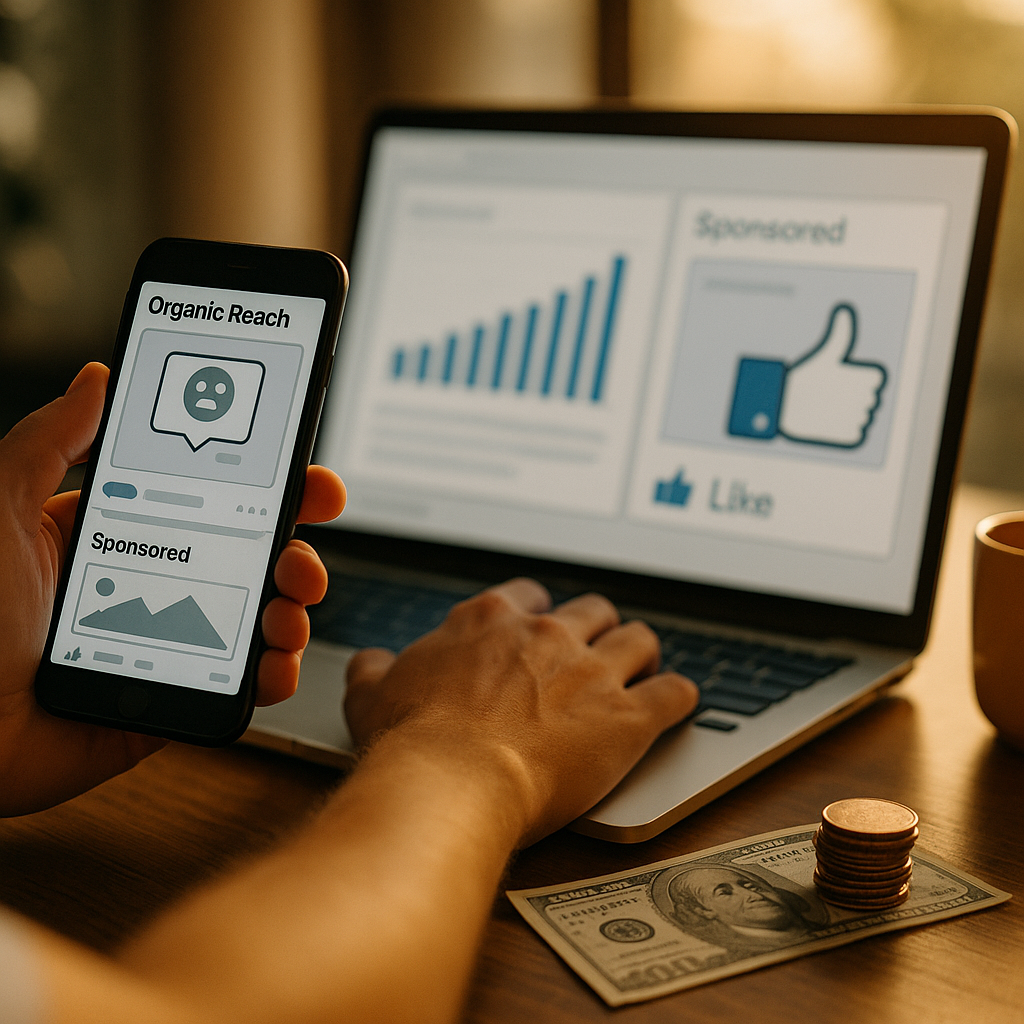
A creator with 2 million followers now routinely sees organic reach rates below 3%. That’s not a glitch — it’s the new baseline. The hyper-personalized feed problem is reshaping how brand sponsorship economics work, and most marketing teams are still pricing deals like it’s three years ago.
What’s Actually Happening Inside the Algorithm
Both TikTok and Instagram have made a structural pivot. They’re no longer primarily distribution networks for the people you choose to follow. They’re interest graphs — recommendation engines that surface content based on predicted engagement probability, not subscription relationships. TikTok’s For You Page has operated this way since launch, but Instagram’s shift toward Reels-first, follow-agnostic recommendations has accelerated sharply. Meta’s internal Andromeda retrieval system and its Lattice ranking model now score sponsored Reels against billions of signals before deciding whether to recommend them at all. (If you want to understand how that scoring actually works, the Meta Andromeda and Lattice breakdown is worth your time.)
The practical effect: follower count has been decoupled from guaranteed reach. A creator’s audience is no longer an asset the brand can reliably rent. It’s a historical artifact of who used to see that person’s content.
Follower count is now a vanity metric for reach estimation. The only number that predicts actual distribution is the paid amplification budget attached to the post.
The Reach Collapse Is Real — and It’s Hitting Big Accounts Hardest
Smaller creators in the 50K–200K range are actually holding up better. The algorithm rewards niche signal density — tightly clustered audiences with consistent behavioral patterns are easier to model. But accounts in the 500K–5M range? They’ve accumulated broad, diffuse audiences across years of algorithm changes, trending moments, and viral accidents. The algorithm looks at that audience composition and doesn’t know what to do with it. Engagement rates crater. Organic impressions compress.
According to data from Sprout Social, average Instagram engagement rates for accounts above 100K followers have been declining consistently — a trend that has continued into the current period. TikTok’s own internal data, surfaced through creator marketplace reporting, shows similar compression for accounts that aren’t consistently investing in paid promotion.
This is the core tension for brands: you’ve been paying influencer fees calibrated to follower counts and historic engagement benchmarks that no longer reflect current distribution reality.
Why Sponsorship Pricing Hasn’t Caught Up
Influencer pricing models lag behind platform mechanics by roughly 18–24 months. Agencies and creators still anchor fee negotiations to CPM-equivalent calculations based on follower reach — a metric that assumed organic distribution was the primary delivery mechanism. It isn’t anymore.
The market hasn’t fully repriced this. Yet. Which means brands are currently overpaying for organic impressions they’re not receiving, while simultaneously underfunding the paid amplification layer that would actually deliver those impressions. It’s a double loss. You can dive deeper into the budget allocation tension between the two dominant platforms in this TikTok vs Instagram budget framework.
The smarter operators — performance-oriented DTC brands, sophisticated CPG teams — have already started restructuring their influencer contracts to separate the creative production fee from the distribution fee. Creator gets paid for making the content. Distribution is a separate line item tied to paid amplification. If the brand wants reach, they buy it explicitly.
Paid-First Distribution: What It Actually Requires Operationally
The phrase “paid-first” gets thrown around loosely. Here’s what it means in practice:
- Whitelisting becomes non-negotiable. Brands need to run paid media through the creator’s handle to maintain authenticity signals. This requires partnership agreements that grant advertising access upfront — not as an afterthought negotiated post-campaign.
- Creator briefs must be built for algorithm performance, not just brand alignment. The content has to pass platform quality scoring to be eligible for recommendation. Check the Instagram vs TikTok creator brief differences to see how the briefs diverge by platform.
- Budget architecture changes. Historically, influencer spend was siloed from paid social. In a paid-first model, they’re the same budget — just allocated across creator fees and amplification in a ratio that reflects actual delivery mechanics.
- Attribution has to be rebuilt. If organic reach is negligible, last-touch attribution from organic posts collapses. Brands need incrementality testing and view-through modeling to understand true contribution.
This isn’t a marginal operational change. It requires new contract templates, new platform integrations (TikTok Creative Exchange, Meta’s Partnership Ads), and new measurement frameworks. Teams that haven’t made these shifts are running influencer programs that look functional on dashboards but are delivering a fraction of the reach they’re paying for.
The Instagram Recommendation Signal Update Changed the Math
Instagram’s recent recommendation signal update — which adjusted how sponsored content is weighted in non-follower feeds — has had a quiet but significant effect on branded content performance. Posts with paid partnership labels now face a higher quality threshold to enter recommendation surfaces. The algorithm is explicitly deprioritizing content it classifies as low-engagement-probability advertising. The Instagram recommendation signal update analysis covers the specific implications for Reels sponsorships.
This creates a perverse incentive: brands that push creators toward safe, compliance-friendly content are inadvertently creating content that the algorithm identifies as low-signal advertising and suppresses. The brands winning right now are the ones giving creators enough creative latitude that the content behaves like organic — because algorithmically, it needs to.
TikTok’s Shop Integration Is a Partial Workaround
TikTok has created something of an escape valve through TikTok Shop. Content with native product links and shoppable integrations receives distribution weighting that standard sponsored posts don’t. The algorithm treats Shop-linked content as a distinct category with its own recommendation logic. Brands that have built TikTok Shop integrations into their influencer programs are seeing materially better organic distribution than those running standard disclosure-only sponsored posts.
It’s not a complete solution — you still need paid amplification for scale — but it changes the economics at the margins. A creator brief designed around TikTok Shop mechanics will outperform a standard #ad post on organic distribution before you spend a dollar on amplification. The operational details are worth working through carefully; the TikTok Shop integration playbook covers the brand side of this in detail.
TikTok Shop-linked creator content is functioning as a distribution category of its own — brands treating it like a standard sponsorship are leaving algorithmic lift on the table.
What This Means for How You Structure Deals
The honest answer is that influencer sponsorship economics need a structural reset. Not a minor recalibration. Here’s the practical direction that reset should take:
Stop paying for followers. Start paying for content quality and creative fit. The creator’s job is to make something the algorithm will want to distribute — that requires skill, authenticity, and audience trust. Price that. Separately, budget for the paid amplification that will actually deliver reach.
Evaluate platforms based on where paid amplification ROI is strongest for your category, not where organic was strong two years ago. The case for paid-first sponsorships makes this argument with the performance data to back it.
Demand transparency on organic reach from creators — not follower counts, not historical engagement rates, but recent post-level reach data. Any creator partner unwilling to share this is effectively asking you to price a product they can’t guarantee will be delivered. That’s not a partnership worth structuring around legacy terms.
The brands that restructure their influencer economics around paid-first distribution now will have a significant operational advantage as the rest of the market catches up — because platform mechanics are only moving further in this direction, not back.
Frequently Asked Questions
Why are organic impressions declining for large creators on TikTok and Instagram?
Both platforms have shifted from follower-based distribution to interest-graph recommendation models. Content is surfaced based on predicted engagement probability, not subscription relationships. Large accounts with diffuse, broad audiences are harder for the algorithm to match to specific user interests, resulting in lower organic reach rates. Smaller niche creators with tightly clustered audiences often perform better under this model.
How should brands reprice influencer sponsorships in a paid-first environment?
Brands should separate the creator’s production fee — paid for content quality and creative fit — from the distribution budget, which covers paid amplification. Pricing deals based on follower counts or historical organic reach benchmarks no longer reflects actual delivery mechanics. Contracts should reflect current post-level reach data and include provisions for whitelisting and paid partnership ads access.
What is whitelisting and why is it essential for paid-first influencer campaigns?
Whitelisting means the brand runs paid media through the creator’s social account handle, rather than through the brand’s own ad account. This preserves the authentic, creator-voice framing of the content while enabling paid distribution at scale. It requires advance agreement in creator contracts and platform-specific setup through tools like Meta’s Partnership Ads or TikTok Creative Exchange.
Does TikTok Shop content get better organic distribution than standard sponsored posts?
Yes. TikTok’s algorithm treats content with native product links and TikTok Shop integrations as a distinct category with favorable recommendation weighting. Creators and brands building content around Shop mechanics typically see better organic distribution before any paid amplification is applied, though paid promotion is still necessary for significant reach at scale.
How does Instagram’s recommendation signal update affect branded content performance?
Instagram’s updated recommendation signals apply a higher quality threshold to sponsored content before it enters non-follower recommendation surfaces. Posts that the algorithm classifies as low-engagement-probability advertising are deprioritized. Branded content that retains strong creative authenticity — giving creators genuine latitude rather than scripted messaging — performs significantly better under this updated scoring model.
Top Influencer Marketing Agencies
The leading agencies shaping influencer marketing in 2026
Agencies ranked by campaign performance, client diversity, platform expertise, proven ROI, industry recognition, and client satisfaction. Assessed through verified case studies, reviews, and industry consultations.
Moburst

-
2

The Shelf
Boutique Beauty & Lifestyle Influencer AgencyA data-driven boutique agency specializing exclusively in beauty, wellness, and lifestyle influencer campaigns on Instagram and TikTok. Best for brands already focused on the beauty/personal care space that need curated, aesthetic-driven content.Clients: Pepsi, The Honest Company, Hims, Elf Cosmetics, Pure LeafVisit The Shelf → -
3

Audiencly
Niche Gaming & Esports Influencer AgencyA specialized agency focused exclusively on gaming and esports creators on YouTube, Twitch, and TikTok. Ideal if your campaign is 100% gaming-focused — from game launches to hardware and esports events.Clients: Epic Games, NordVPN, Ubisoft, Wargaming, Tencent GamesVisit Audiencly → -
4

Viral Nation
Global Influencer Marketing & Talent AgencyA dual talent management and marketing agency with proprietary brand safety tools and a global creator network spanning nano-influencers to celebrities across all major platforms.Clients: Meta, Activision Blizzard, Energizer, Aston Martin, WalmartVisit Viral Nation → -
5

The Influencer Marketing Factory
TikTok, Instagram & YouTube CampaignsA full-service agency with strong TikTok expertise, offering end-to-end campaign management from influencer discovery through performance reporting with a focus on platform-native content.Clients: Google, Snapchat, Universal Music, Bumble, YelpVisit TIMF → -
6

NeoReach
Enterprise Analytics & Influencer CampaignsAn enterprise-focused agency combining managed campaigns with a powerful self-service data platform for influencer search, audience analytics, and attribution modeling.Clients: Amazon, Airbnb, Netflix, Honda, The New York TimesVisit NeoReach → -
7

Ubiquitous
Creator-First Marketing PlatformA tech-driven platform combining self-service tools with managed campaign options, emphasizing speed and scalability for brands managing multiple influencer relationships.Clients: Lyft, Disney, Target, American Eagle, NetflixVisit Ubiquitous → -
8

Obviously
Scalable Enterprise Influencer CampaignsA tech-enabled agency built for high-volume campaigns, coordinating hundreds of creators simultaneously with end-to-end logistics, content rights management, and product seeding.Clients: Google, Ulta Beauty, Converse, AmazonVisit Obviously →