


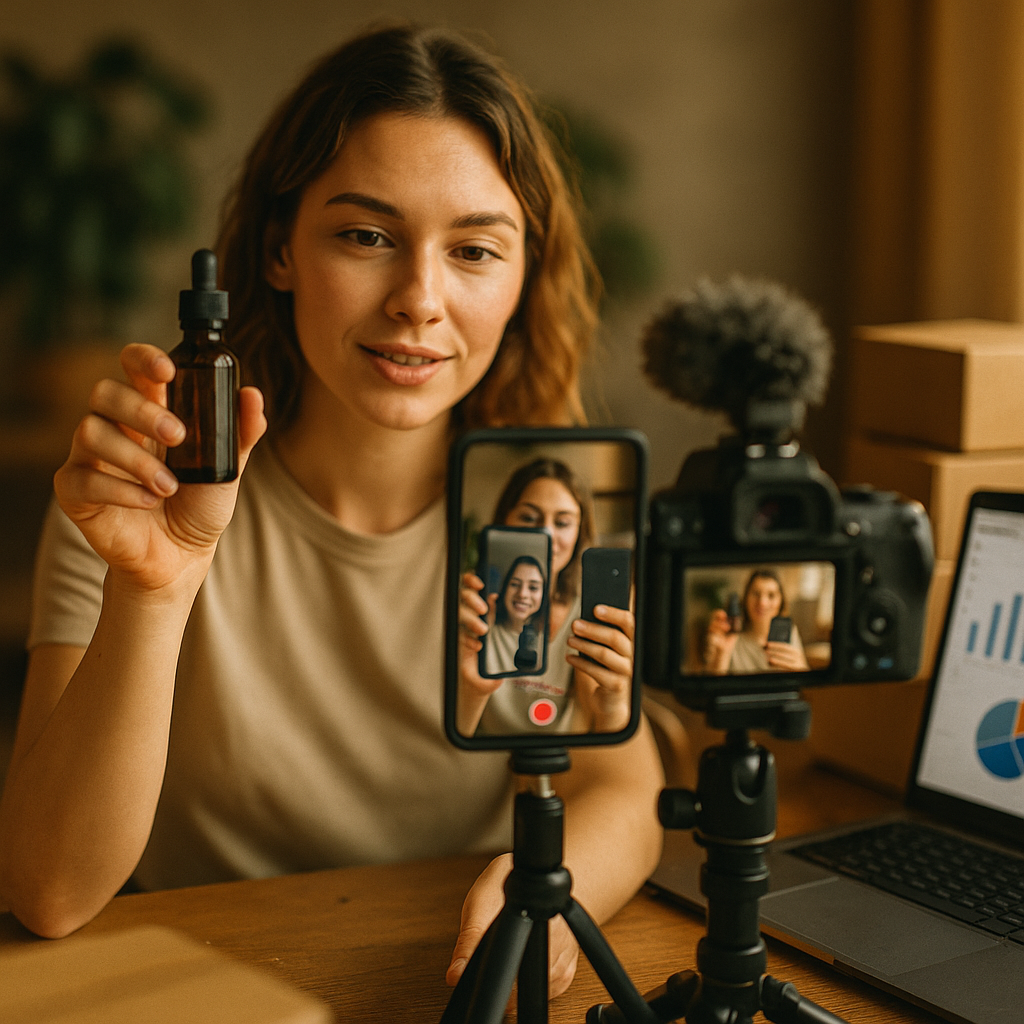
The CPA Gap Is Widening — and It Favors Smaller Creators
Brands running large-scale influencer deals are paying premium fees for reach they can’t convert. Meanwhile, a growing cohort of high-engagement micro-creators — typically 10K–100K followers — paired with smart amplification strategies is consistently beating mega-influencer benchmarks on cost-per-acquisition. The gap isn’t marginal. It’s structural.
Data from Sprout Social consistently shows micro-influencers generating engagement rates 3–5x higher than accounts with over 1M followers. But engagement alone isn’t the full story. The real performance driver in the current environment is the combination of authentic audience resonance and algorithmic eligibility — meaning content that platforms are structurally inclined to distribute beyond the creator’s existing follower base.
If your influencer strategy is still anchored to follower count as a primary selection criterion, you’re optimizing for a metric that platforms stopped rewarding two platform cycles ago.
Why Algorithms Now Favor Micro-Creator Content
TikTok, Instagram Reels, and YouTube Shorts have all shifted toward interest-graph distribution — content is shown to users based on behavioral signals, not social graphs. That shift fundamentally changes who wins.
A mega-influencer’s post reaches their audience first. If that audience doesn’t engage immediately — and highly followed accounts often attract passive, low-intent followers — the algorithm reads weak signals and throttles distribution. A micro-creator’s tightly niched audience, by contrast, tends to engage faster and more deeply. The algorithm interprets those early engagement bursts as quality signals and pushes the content further.
Algorithmic amplification doesn’t reward follower size — it rewards engagement velocity. Micro-creators with niche audiences generate the early signal quality that triggers platform-native distribution, effectively giving brands free reach on top of paid partnerships.
This is why amplified creator spend is becoming a core budget line item for performance-focused marketing teams. Brands aren’t just paying for the post — they’re using paid amplification to pour accelerant on organic content that’s already showing strong early signals. The playbook: let the post breathe for 24–48 hours organically, measure engagement velocity, then boost the top performers via Spark Ads on TikTok or Partnership Ads on Instagram.
What’s Actually Driving the CPA Advantage
Let’s be specific. There are four mechanics at play:
- Higher audience trust: Micro-creators typically maintain closer, more parasocial relationships with their followers. Recommendations carry more weight. Click-through intent is higher.
- Lower negotiated fees: A creator with 40K highly engaged followers in a specific vertical costs a fraction of a creator with 2M broadly distributed followers. The denominator in your CPA equation starts smaller.
- Format alignment: Smaller creators tend to produce content in formats that perform natively on platform — unpolished, direct-to-camera, conversational — which algorithms reward with higher organic reach. For a deeper look at how format affects conversion by vertical, see this breakdown on content format ROI.
- Amplification leverage: Because micro-creator content is cheaper to license and boost, brands can run 10–15 micro-creator amplification tests for the same budget as one mega-influencer post. The portfolio approach reduces variance and surfaces winners faster.
The compounding effect of these four factors is what produces the CPA gap. None of them is individually decisive — together, they’re increasingly difficult to argue against in a performance review.
The Selection Problem (and How AI Matching Solves Part of It)
Here’s the operational challenge brands face: finding micro-creators who are both genuinely engaged and algorithmically amplifiable at scale is labor-intensive. You can’t eyeball a profile and know whether their content reliably triggers broad distribution. You need signal data — average reach-to-follower ratios, saves-to-views rates, share velocity — that most standard influencer platforms don’t surface cleanly.
This is where AI-assisted matching tools are changing the workflow. Platforms like Grin, Creator.co, and Aspire now incorporate amplification-eligibility signals alongside traditional engagement metrics. The shift from “who has the best engagement rate” to “whose content platform algorithms want to distribute” is subtle but consequential.
That said, AI matching has real limitations. It’s strong on pattern recognition and weak on brand fit nuance. The brands getting the best results are using AI to build a qualified shortlist, then applying human judgment for the final selection — particularly for brand safety, tone alignment, and audience authenticity verification. AI matching and rate compression are reshaping what brands pay and who they select, but the human layer still matters.
Building the Amplification-Ready Micro-Creator Program
The operational structure matters as much as the strategy. Here’s what high-performing programs share:
- Tiered creator pools by niche depth. Don’t run a flat roster. Segment creators by sub-vertical specificity. A fitness creator who posts about powerlifting for women over 40 will outperform a general fitness creator for the right brand every time. Niche depth drives audience trust, and audience trust drives conversion. See the strategic case for niche creator curation for more on building this architecture.
- Content licensing built into contracts from day one. You need whitelisting or usage rights before you can amplify. Brands that negotiate these rights after the fact pay a significant premium. Lock in 90-day usage rights as a standard contract term.
- A 48-hour organic observation window. Post the content organically, measure engagement velocity in the first 24–48 hours, then make amplification decisions based on actual performance data. This is significantly more efficient than boosting everything immediately.
- Clear attribution infrastructure. UTM parameters, unique discount codes, and platform-native conversion tracking need to be set up before launch. If you can’t measure CPA at the creator level, you can’t optimize. TikTok Ads Manager and Meta Business Suite both offer Partnership Ad tools that integrate attribution cleanly.
- Portfolio diversification across 8–15 creators per campaign. This isn’t just about risk management. Multiple micro-creators across a niche create a coordinated signal that reinforces brand presence across the interest graph without looking like a coordinated campaign to the audience.
Brands treating micro-creator programs as a volume play — seeding hundreds of creators with minimal structure — are leaving performance on the table. The advantage comes from precision selection plus amplification infrastructure, not raw creator count.
Rate Negotiations Have Changed — Use That Leverage
The current creator economy has more supply-side pressure than most brands realize. Mid-tier and micro-creator rates have compressed meaningfully, and sophisticated brands are renegotiating baseline fees while adding performance bonuses tied to CPA or ROAS thresholds. This hybrid structure aligns incentives and reduces upfront risk.
For brands looking to restructure existing creator agreements, the tactical playbook on renegotiating creator rates is worth working through before your next contract cycle. The key principle: lead with data from your existing program, not market generalizations.
One important compliance note — as you scale amplified content, ensure your disclosure framework extends to boosted posts. The FTC’s endorsement guidelines apply to paid amplification of creator content, not just organic sponsored posts. Many brands are inadvertently creating compliance exposure when they boost creator content without ensuring proper disclosures remain visible in the amplified format.
The Scalability Question
The pushback from large brand teams is usually operational: “We can’t manage 50 micro-creator relationships with our current team.” It’s a legitimate concern, but it’s increasingly solvable. The combination of AI-assisted outreach, templatized briefing workflows, and creator management platforms has reduced the per-creator operational burden significantly. Brands running 40–60 creator partnerships per quarter are doing it with teams that would have managed 8–10 relationships five years ago.
The brands that haven’t solved this yet are the ones treating micro-creator programs as an extension of their traditional influencer workflow, rather than building a separate operational model for it. These are fundamentally different programs requiring different tooling, different briefing cadences, and different success metrics.
The CPA data is clear. The operational path is available. The question for your program is whether you’re structured to capture it — or still paying for reach you can’t trace to revenue.
Frequently Asked Questions
What follower range qualifies as a micro-creator for amplification purposes?
Most platforms and agencies define micro-creators as accounts with 10,000–100,000 followers. For amplification purposes, the more meaningful qualifier is engagement rate and content distribution performance — specifically, whether the creator’s content consistently achieves a reach-to-follower ratio above 1.0 (meaning it reaches more people than follow the account). Nano-creators (1K–10K) can also deliver strong CPAs in highly specific niches, but the minimum audience size for statistical significance in CPA measurement is typically around 10K.
How do I identify which micro-creators have high algorithmic amplification potential?
Look beyond standard engagement rate. The key metrics are: average video views versus follower count (reach multiplier), save rate and share rate on recent posts, consistency of performance across content types, and whether the creator’s recent content has shown organic reach spikes indicating platform-native distribution. Tools like Grin, Aspire, and Creator.co surface some of these signals. You can also manually audit a creator’s last 20 posts in their native analytics before contracting.
Do micro-creator amplification programs work for B2B brands?
Yes, though the platform mix differs. LinkedIn micro-creator amplification is underutilized and often delivers strong CPA for B2B audiences due to high professional intent. The same structural logic applies — niche creators with tight professional audiences generate higher engagement quality, which the LinkedIn algorithm rewards with expanded distribution. Amplifying top-performing organic creator content via LinkedIn’s Thought Leader Ads is a direct equivalent to TikTok Spark Ads or Instagram Partnership Ads.
What disclosure rules apply when I amplify micro-creator content through paid ads?
FTC guidelines require that paid endorsements be clearly disclosed regardless of whether the content is organic or amplified. When you boost a creator’s post through whitelisted or partnership ad formats, the disclosure must remain visible in the amplified unit. “Paid partnership” labels in platform-native formats generally satisfy this requirement, but brands should verify that disclosures aren’t cropped or hidden in the ad format being used. Always review the FTC’s current endorsement guidance before scaling a program.
Is it better to work with many micro-creators or a smaller set with longer-term relationships?
Both approaches have merit, and the right answer depends on your campaign goals. For performance-driven acquisition campaigns, a broader pool of 10–20 creators per campaign allows for faster optimization and portfolio diversification. For brand-building and sustained category authority, deeper relationships with 5–8 creators over multiple months tend to build audience familiarity and trust more effectively. High-performing brands typically run both in parallel — a stable core creator roster for always-on content, and a rotating pool for campaign-specific acquisition pushes.
Top Influencer Marketing Agencies
The leading agencies shaping influencer marketing in 2026
Agencies ranked by campaign performance, client diversity, platform expertise, proven ROI, industry recognition, and client satisfaction. Assessed through verified case studies, reviews, and industry consultations.
Moburst

-
2

The Shelf
Boutique Beauty & Lifestyle Influencer AgencyA data-driven boutique agency specializing exclusively in beauty, wellness, and lifestyle influencer campaigns on Instagram and TikTok. Best for brands already focused on the beauty/personal care space that need curated, aesthetic-driven content.Clients: Pepsi, The Honest Company, Hims, Elf Cosmetics, Pure LeafVisit The Shelf → -
3

Audiencly
Niche Gaming & Esports Influencer AgencyA specialized agency focused exclusively on gaming and esports creators on YouTube, Twitch, and TikTok. Ideal if your campaign is 100% gaming-focused — from game launches to hardware and esports events.Clients: Epic Games, NordVPN, Ubisoft, Wargaming, Tencent GamesVisit Audiencly → -
4

Viral Nation
Global Influencer Marketing & Talent AgencyA dual talent management and marketing agency with proprietary brand safety tools and a global creator network spanning nano-influencers to celebrities across all major platforms.Clients: Meta, Activision Blizzard, Energizer, Aston Martin, WalmartVisit Viral Nation → -
5

The Influencer Marketing Factory
TikTok, Instagram & YouTube CampaignsA full-service agency with strong TikTok expertise, offering end-to-end campaign management from influencer discovery through performance reporting with a focus on platform-native content.Clients: Google, Snapchat, Universal Music, Bumble, YelpVisit TIMF → -
6

NeoReach
Enterprise Analytics & Influencer CampaignsAn enterprise-focused agency combining managed campaigns with a powerful self-service data platform for influencer search, audience analytics, and attribution modeling.Clients: Amazon, Airbnb, Netflix, Honda, The New York TimesVisit NeoReach → -
7

Ubiquitous
Creator-First Marketing PlatformA tech-driven platform combining self-service tools with managed campaign options, emphasizing speed and scalability for brands managing multiple influencer relationships.Clients: Lyft, Disney, Target, American Eagle, NetflixVisit Ubiquitous → -
8

Obviously
Scalable Enterprise Influencer CampaignsA tech-enabled agency built for high-volume campaigns, coordinating hundreds of creators simultaneously with end-to-end logistics, content rights management, and product seeding.Clients: Google, Ulta Beauty, Converse, AmazonVisit Obviously →