


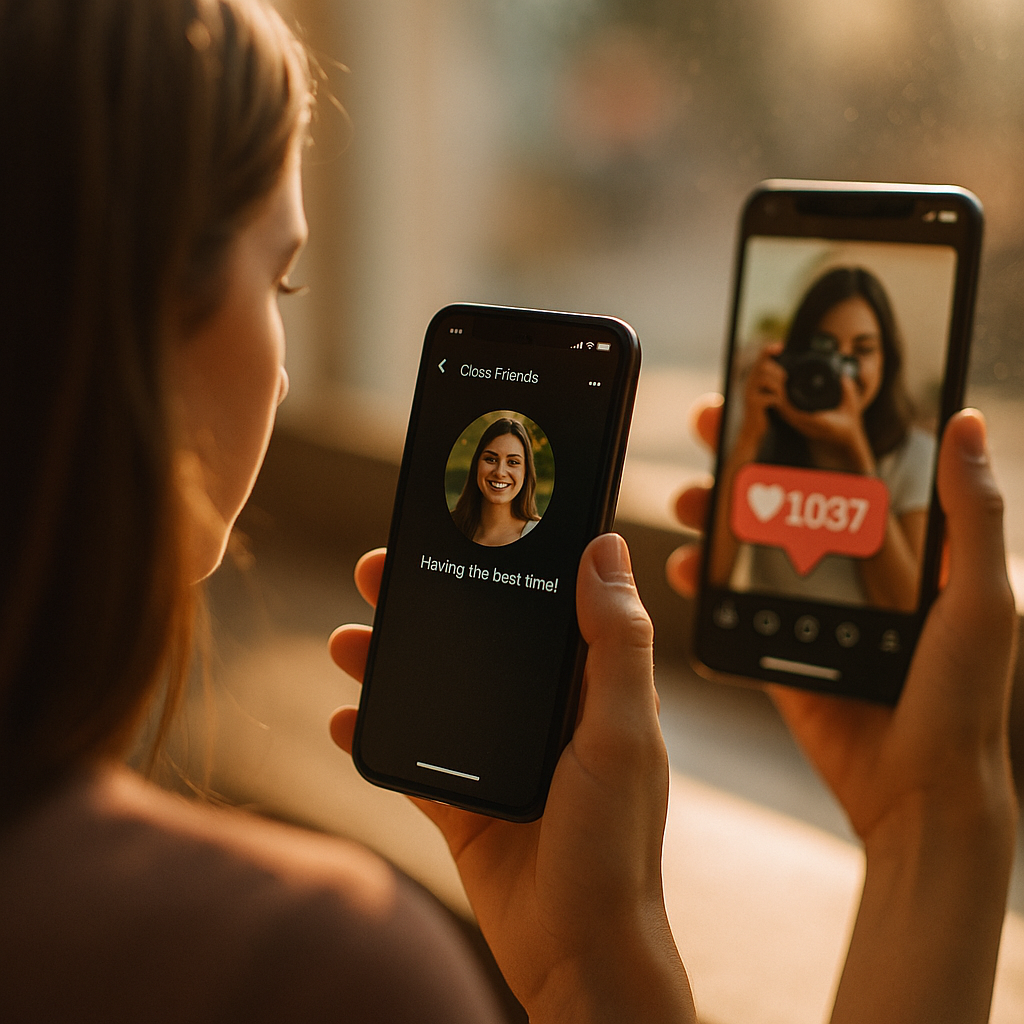
Over 70% of Gen Z social interactions now happen in private or semi-private spaces — group chats, Close Friends stories, and DMs — rather than public feeds. If your influencer measurement stack isn’t built for that reality, you’re not just missing data. You’re flying blind on your most valuable audience segment.
The Public Feed Is Losing the Generation That Matters Most
Gen Z didn’t abandon social media. They reorganized it. The performative broadcast layer — the curated grid, the mass-reach story — has become the domain of brands and creators optimizing for algorithms. Actual human conversation migrated somewhere else: Instagram’s Close Friends feature, group DMs, and increasingly, platform-adjacent tools like Discord and Geneva.
This is not a trend. It’s a structural behavioral shift that’s been compounding for three years. And for brand strategists running influencer programs on Instagram, the implications are significant. Reach metrics and feed impressions no longer reflect where trust is actually being built.
When Gen Z recommends a product in a Close Friends story or a group chat, that endorsement carries social proof that a paid public post can’t replicate — and it’s almost entirely invisible to your measurement tools.
What Close Friends and Group Chats Actually Do to Your Visibility
Instagram’s Close Friends feature lets creators — and regular users — share content with a curated sub-list of followers. No brand can buy access to that segment. No algorithm surfaces it to people outside the list. And critically, no third-party analytics tool can see it.
Group chats work similarly. When a micro-creator shares your product link in a group DM with 40 tight friends, that’s potentially 40 high-trust impressions that register nowhere in your attribution model. This is the dark social problem at its most acute.
Dark social — a term coined by Alexis Madrigal back in 2012 — originally described traffic from shared links in private messaging apps that shows up in analytics as “direct” traffic. The Close Friends migration is the same problem, amplified and institutionalized inside Instagram itself. What you see in Sprout Social or Meta Business Suite is increasingly a fraction of what’s actually happening.
For brands spending against micro-creator amplification strategies that depend on measurable reach, this is a genuine ROI blind spot.
Creator Measurement Is Now Structurally Broken for This Cohort
Most brand-side measurement frameworks for influencer programs rely on some combination of: impressions, engagement rate, story views, link clicks, and conversion tracking via UTM parameters or promo codes. All of these assume public content.
Close Friends stories generate no public impression data. Group chat shares generate no referral data — or they show as direct traffic in GA4. Promo codes shared privately still convert, but the attribution chain is severed. You see the sale; you don’t see the influence event that drove it.
This creates a measurement gap that’s particularly damaging for mid-to-small creator programs where the ROI case is already harder to make. If your micro-creator’s most trusted recommendations happen in Close Friends and group chats, your reported engagement rate looks lower than reality — and you may pull budget from exactly the creators who are actually moving the needle.
The answer isn’t to force creators onto public feeds. That would destroy the authenticity that makes the recommendation valuable in the first place. The answer is to rethink what you measure and how you attribute.
Dark Social Attribution: What Actually Works Now
There’s no single fix, but there is a stack of complementary approaches that sophisticated teams are already deploying.
1. Incrementality testing over last-click attribution. Run geo-holdout tests or exposed/control panels around creator campaigns. If Close Friends content is driving conversions, you’ll see a lift in the exposed group that isn’t captured by UTM data. Tools like Measured, Northbeam, and Meta’s own Conversion Lift studies support this approach.
2. Creator-specific promo codes with loose attribution windows. Extend your attribution window from 7 days to 30 days. Private shares convert on slower cycles because they’re shared in context — someone sees it in a group chat, comes back later, searches for the brand, and buys. If your window is too narrow, you miss it entirely.
3. Post-purchase surveys. Simple, high-signal. Ask “How did you hear about us?” and build a custom response option for Instagram close friends or word-of-mouth from a friend. Tools like KnoCommerce and Fairing specialize in this. The data is directional, not precise, but directional is better than invisible.
4. Brand search lift monitoring. If a creator’s Close Friends story drives private sharing, you’ll often see a branded search spike 24-72 hours later. Monitor Google Search Console and Google Trends for brand name and product-level query increases timed to campaign windows.
5. Qualitative creator debriefs. Ask your creators directly. Did they share to Close Friends? Did they mention it in DMs or group chats? What was the reaction? This qualitative signal won’t appear in any dashboard, but it helps you understand whether your campaign penetrated the private layer. Deeper audience intelligence starts with the creator themselves.
Brand Visibility Strategy Has to Change
If the audience has moved to private channels, brands can’t follow them directly. But they can create conditions that make creators want to bring them there.
The strategic implication: brand value to the creator’s inner circle is now a competitive differentiator. Products that are genuinely talk-worthy — that solve real problems, have a story worth sharing, or confer social currency — will travel through Close Friends and group chats organically. Products that feel like ads will stay on the public feed and nowhere else.
This is why authentic creator alignment has moved from a “nice to have” to a structural requirement. If you’re still briefing creators with rigid talking points and mandating specific hashtags, you’re optimizing for the public feed performance metrics that matter less and less to your target audience. The shift in creator leverage isn’t just about rates — it’s about who controls the context of brand storytelling.
Some brands are explicitly building Close Friends-native programs: gifting products to creators specifically for private-layer recommendations, with zero expectation of public posts. The measurement model is entirely survey- and search-lift-based. It requires a different risk tolerance, but the brands doing it report qualitative signal that’s hard to ignore. Consider reading about how Gen Z’s search behavior intersects with these private sharing patterns — the two dynamics are deeply linked.
The brands winning with Gen Z aren’t the ones with the highest reach. They’re the ones whose products are worth talking about in a 15-person group chat at 11pm — and that’s a product and positioning problem, not a media buying problem.
Platform Risk and What Meta’s Doing About It
Meta is not passive here. The company has been actively expanding private sharing features — broadcast channels, enhanced group DM tools, and Close Friends functionality that now extends to Reels. From Meta’s business perspective, this keeps users inside the ecosystem rather than migrating to iMessage or WhatsApp for social sharing.
But every private-layer feature Meta adds also reduces the reach of paid and organic brand content. It’s a structural tension the platform hasn’t resolved. Brand spending on Instagram is partly subsidizing the infrastructure that makes brand content harder to see.
For brand strategists, this reinforces the case for renegotiating creator partnership structures to account for private-layer influence — performance bonuses tied to search lift and survey attribution, not just link clicks. It also means platform diversification isn’t optional. Relying on Instagram feed metrics as your primary success signal is a measurement strategy built on a shrinking foundation. Sprout Social’s research consistently shows engagement rate benchmarks declining on public content year-over-year as private sharing rises.
TikTok faces the same dynamic, though its algorithm is still powerful enough to surface public content effectively. But the behavioral direction is consistent across platforms: TikTok’s own internal data shows DM sharing of videos outpacing public resharing among users under 25. The private layer is winning everywhere.
For a fuller picture of how measurement complexity is compounding across the creator economy, eMarketer’s tracking of social commerce attribution gaps is worth monitoring regularly. And for compliance teams dealing with the disclosure implications of private-layer influencer content, the FTC’s endorsement guidance is increasingly relevant — the rules on disclosure don’t disappear because a post is behind a Close Friends list.
Start here: Audit your current attribution model for dark social gaps, add post-purchase survey infrastructure before your next creator campaign, and have an explicit conversation with your top five creators about how much of their authentic brand advocacy happens off the public feed. That conversation alone will reshape your measurement priorities faster than any tool purchase.
Frequently Asked Questions
What is dark social and why does it matter for influencer marketing?
Dark social refers to social sharing that happens in private channels — DMs, group chats, messaging apps, and features like Instagram’s Close Friends — where standard analytics tools can’t track the referral source. For influencer marketers, it matters because a significant portion of Gen Z purchase decisions are influenced by private recommendations that never show up in UTM data, impressions reports, or engagement metrics. Brands that only measure public feed performance are systematically undercounting the ROI of their creator programs.
Can brands access Instagram Close Friends content for measurement purposes?
No. Instagram does not provide brands, agencies, or third-party analytics platforms with data on Close Friends story views, engagement, or sharing activity. The only way to get signal from Close Friends content is indirectly — through post-purchase surveys, brand search lift monitoring, incrementality testing, and direct qualitative debriefs with creators.
How should brands adjust their influencer contracts to account for private-layer sharing?
Contracts should move away from impression-floor guarantees tied solely to public content and toward performance structures that include search lift bonuses, survey-attributed conversion incentives, and qualitative reporting requirements. Brands should also explicitly ask creators to disclose whether they plan to share branded content on Close Friends or in group chats, both for measurement purposes and to ensure FTC disclosure obligations are met even in private contexts.
Does the FTC require disclosure for sponsored content shared in Close Friends or group chats?
Yes. The FTC’s endorsement guidelines apply regardless of whether content is public or shared with a limited audience. If a creator has a material connection to a brand — whether through payment, gifting, or affiliate arrangements — they are required to disclose that connection even in Close Friends stories or group chat shares. Brands should include clear disclosure requirements in all creator contracts and briefs, covering both public and private content formats.
What measurement tools work best for dark social attribution?
No single tool solves dark social completely, but a combination approach works well. Incrementality testing platforms like Northbeam, Measured, and Triple Whale help isolate creator campaign lift from confounding factors. Post-purchase survey tools like KnoCommerce and Fairing capture self-reported attribution. Google Search Console and Google Trends provide branded search lift data. Together, these tools give a more complete picture than UTM-based attribution alone, particularly for Gen Z audiences who share and purchase through private channels.
Top Influencer Marketing Agencies
The leading agencies shaping influencer marketing in 2026
Agencies ranked by campaign performance, client diversity, platform expertise, proven ROI, industry recognition, and client satisfaction. Assessed through verified case studies, reviews, and industry consultations.
Moburst

-
2

The Shelf
Boutique Beauty & Lifestyle Influencer AgencyA data-driven boutique agency specializing exclusively in beauty, wellness, and lifestyle influencer campaigns on Instagram and TikTok. Best for brands already focused on the beauty/personal care space that need curated, aesthetic-driven content.Clients: Pepsi, The Honest Company, Hims, Elf Cosmetics, Pure LeafVisit The Shelf → -
3

Audiencly
Niche Gaming & Esports Influencer AgencyA specialized agency focused exclusively on gaming and esports creators on YouTube, Twitch, and TikTok. Ideal if your campaign is 100% gaming-focused — from game launches to hardware and esports events.Clients: Epic Games, NordVPN, Ubisoft, Wargaming, Tencent GamesVisit Audiencly → -
4

Viral Nation
Global Influencer Marketing & Talent AgencyA dual talent management and marketing agency with proprietary brand safety tools and a global creator network spanning nano-influencers to celebrities across all major platforms.Clients: Meta, Activision Blizzard, Energizer, Aston Martin, WalmartVisit Viral Nation → -
5

The Influencer Marketing Factory
TikTok, Instagram & YouTube CampaignsA full-service agency with strong TikTok expertise, offering end-to-end campaign management from influencer discovery through performance reporting with a focus on platform-native content.Clients: Google, Snapchat, Universal Music, Bumble, YelpVisit TIMF → -
6

NeoReach
Enterprise Analytics & Influencer CampaignsAn enterprise-focused agency combining managed campaigns with a powerful self-service data platform for influencer search, audience analytics, and attribution modeling.Clients: Amazon, Airbnb, Netflix, Honda, The New York TimesVisit NeoReach → -
7

Ubiquitous
Creator-First Marketing PlatformA tech-driven platform combining self-service tools with managed campaign options, emphasizing speed and scalability for brands managing multiple influencer relationships.Clients: Lyft, Disney, Target, American Eagle, NetflixVisit Ubiquitous → -
8

Obviously
Scalable Enterprise Influencer CampaignsA tech-enabled agency built for high-volume campaigns, coordinating hundreds of creators simultaneously with end-to-end logistics, content rights management, and product seeding.Clients: Google, Ulta Beauty, Converse, AmazonVisit Obviously →