


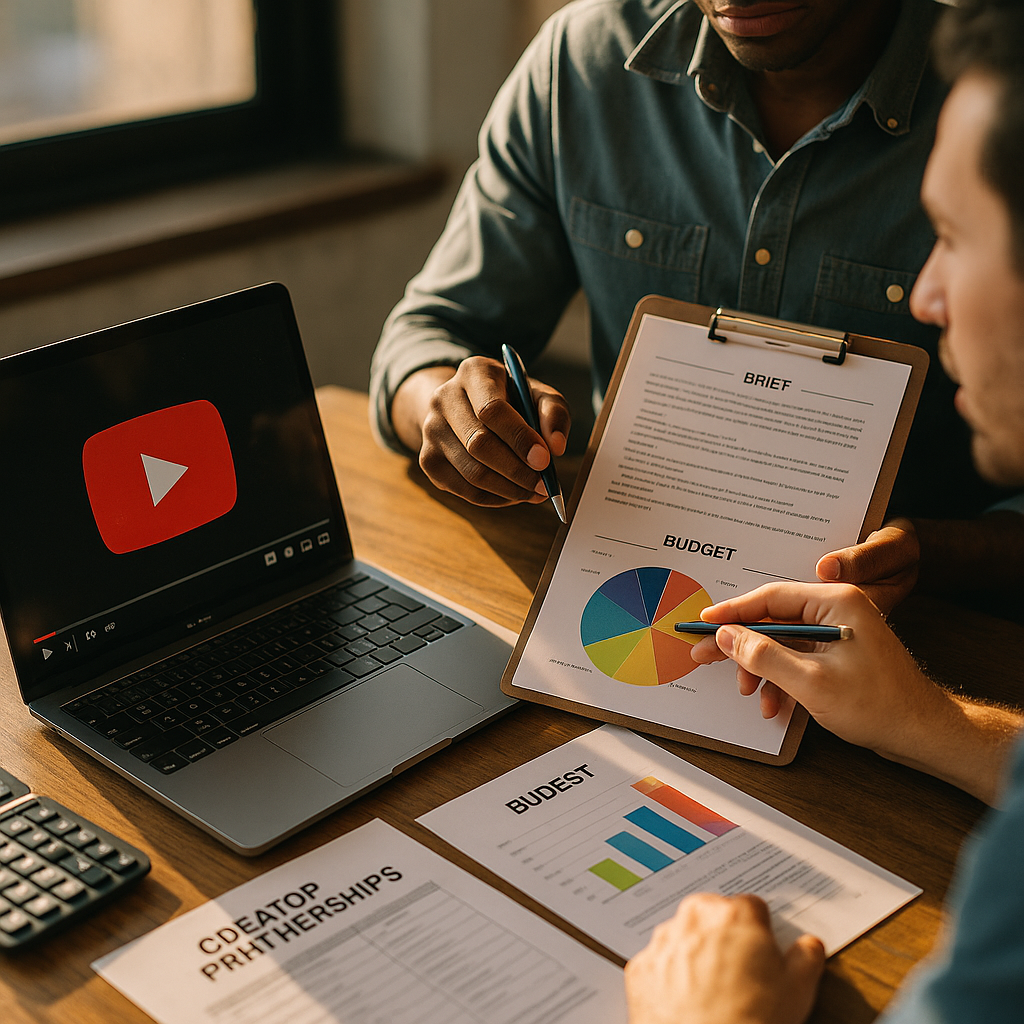
YouTube channels are pulling more 18-to-49 viewers than any single cable network. That’s not a trend—that’s a structural shift in how entertainment is consumed, and most brand partnership briefs haven’t caught up.
The Streaming Comparison Brands Are Ignoring
When MrBeast’s Beast Games launched on Amazon Prime Video, it didn’t just prove that creators can make premium content—it proved that the audience follows the creator, not the platform. YouTube now accounts for over 11% of all U.S. television screen time according to Nielsen data, consistently outperforming Netflix on connected TV. This isn’t niche. This is primetime.
Yet most brand teams still brief YouTube creators like social media influencers: 60-second integrations, logo placement, a discount code. That’s like buying a 30-second spot during a prestige drama and asking the props department to hold up your product.
YouTube now accounts for more U.S. television screen time than Netflix. Brands still briefing creators like social media influencers are buying primetime inventory at podcast rates—and wasting most of it.
The mismatch between how audiences experience creator content and how brands buy it is becoming one of the most expensive inefficiencies in modern media planning.
Why the Old Brief Format Fails at Scale
The standard influencer brief was built for Instagram Stories in 2018. It optimizes for compliance, not storytelling. It specifies what to say, not what to feel. And it treats the creator as a distribution channel rather than a creative partner.
On a platform where viewers are watching 45-minute documentary-style videos, sitting through 20-episode series, and returning to a channel week after week like a favorite show—a brand integration that feels grafted on is worse than no integration at all. Audience trust is the asset. Disrespecting the editorial context damages it.
The brief redesign has to start with a different question. Instead of “what do we need the creator to say about our product,” the question should be: “what story is this creator already telling, and where does our brand genuinely belong inside it?”
That shift requires more pre-brief research, more creative dialogue, and frankly, more respect for the creator’s audience relationship. It also requires brands to move budget responsibility. This work sits between brand marketing and media buying—and most org charts aren’t built to handle that overlap cleanly. Brands dealing with creator leverage shifts already know that creator-side power is only growing. Briefing practices need to reflect that reality.
Budget Allocation: The Media Mindset Shift
If YouTube creator channels are competing directly with HBO, Peacock, and Netflix for the same primetime viewing window, they should be competing for the same media dollars. That argument is increasingly hard to dismiss.
The traditional media plan separates “paid social” from “streaming/CTV” and allocates accordingly. Creator partnerships usually sit in the paid social bucket, often under “influencer marketing,” with budget ranges calibrated to follower counts and CPM estimates that haven’t been stress-tested against television equivalents.
Run the comparison yourself. A mid-six-figure sponsorship with a YouTube creator producing 10 million views on a long-form piece—with brand integration that runs 3-to-5 minutes inside a 30-minute video—costs a fraction of what a 30-second spot costs during a scripted drama with the same reach. The engagement depth isn’t comparable to passive TV viewing either. The creator’s audience showed up for that creator. They’re not flipping channels.
For brands willing to invest in verified creator measurement frameworks that actually translate creator metrics into media equivalencies, the budget case practically makes itself.
Practically, this means carving out a distinct “creator content” budget line that sits alongside—not below—streaming and CTV spend. It means evaluating creator partnerships on CPM, brand recall lift, and content longevity alongside standard influencer KPIs. And it means giving internal media planners the mandate to consider top YouTube channels as part of upfront and scatter market conversations.
Redesigning the Partnership Brief for Long-Form Reality
What does a brief actually look like when you’re working with a creator who operates more like a TV showrunner than a social media personality?
Start with the audience, not the product. A good brief for a long-form YouTube creator should include a detailed audience insight section—not just demographics, but behavioral context. When are they watching? What emotional state are they in? What other content do they consume on the channel? This shapes tone, pacing, and where the integration can land naturally.
Next, build in creative latitude explicitly. The brief should outline brand guardrails (messaging pillars, claims restrictions, legal requirements) without scripting the delivery. The best performing brand integrations on YouTube are ones where the creator’s voice is unmistakable—where the product recommendation feels like something they’d say to a friend, not a compliance-approved read. Tools like Sprout Social and brand listening platforms can help you audit whether past integrations landed as native content or felt like interruptions.
Define success metrics upfront that match the format. View-through rate matters more than click-through rate in long-form. Brand recall surveys, comment sentiment analysis, and second-view rates (viewers rewatching the integration segment) are signals worth measuring. Direct-response codes are useful, but they shouldn’t be the only north star. Understanding format-specific ROI by vertical helps set realistic benchmarks before the contract is signed.
Finally, build in content longevity clauses. A YouTube video doesn’t disappear after 24 hours. That integration you paid for in Q1 is still driving views—and brand impressions—18 months later. Usage rights, exclusivity windows, and performance bonuses tied to long-tail performance should all be in the brief architecture from the start.
The Risk of Not Moving Fast Enough
Category-exclusive partnerships with top-tier YouTube creators are already being locked up. Beauty, gaming, financial services, and direct-to-consumer brands that moved early now have long-term content relationships that function like owned media. Late movers are finding that the best creators have waitlists—and that rates for brand-new relationships have increased substantially as demand has caught up with the opportunity.
There’s also audience capture risk. A competitor who integrates authentically into a creator’s storytelling over 12 months builds a different kind of brand equity than one who runs a single sponsored video. The cumulative effect of repeated, contextual brand presence inside a creator’s content universe compounds. That’s a moat. And it closes faster than most media planning cycles can respond to.
Category-exclusive creator partnerships function like owned media when built correctly. Every quarter a brand delays is a quarter a competitor spends building that moat.
For brands evaluating whether to renegotiate existing arrangements, the framework for renegotiating creator rates needs to account for this new positioning reality—not just follower counts and engagement rates, but the creator’s competitive position within their content category and their audience’s viewing behavior on television screens.
Platform Dynamics and Where YouTube Sits in the Funnel
One thing brands consistently underestimate: YouTube’s search functionality makes it a consideration-stage engine, not just an awareness vehicle. A viewer discovering a creator’s 2-year-old video about a product category and then encountering a brand integration in that video is a different conversion path than a Reels impression. That long-tail discovery behavior is increasingly relevant for Gen Z audiences who use social platforms as search engines.
This full-funnel reality means YouTube creator content can and should be mapped across multiple stages of the purchase journey. Awareness through broad-reach longform content. Consideration through tutorial, review, and “day in the life” formats. Conversion through community posts, Shorts, and linked storefronts. Brands with sophisticated media mix models are starting to capture this, but most are still assigning YouTube creator spend to “brand awareness” and calling it a day.
The creators themselves are building content architectures designed to serve this funnel. They’re not just making videos—they’re building channels. That’s an ecosystem. And brands that treat it like one—rather than as a series of one-off sponsorships—will extract dramatically more value from every dollar spent.
Regulatory exposure also scales with investment. The FTC’s endorsement guidelines apply regardless of whether you’re buying a 30-second social post or a 10-minute sponsored segment inside a premium series. Disclosure requirements, affiliate link transparency, and material connection declarations don’t get simpler as deals get bigger—they get more complex. Build compliance review into the brief process, not as an afterthought after creative is locked.
What Brands Should Do Next
Audit your current brief template against a long-form content standard: does it allow for authentic editorial integration, or does it just demand compliance? If it’s the latter, it’s costing you performance. Then identify three to five YouTube creators in your category who are already producing content your target audience watches on TV screens—and start building relationships before your competitors lock them up.
Frequently Asked Questions
How is YouTube creator content different from traditional influencer marketing?
YouTube creator content operates more like premium television programming than social media posting. Creators build series, episodic content, and long-form narratives with loyal audiences who return week after week. This changes how brands should integrate—moving from 60-second reads to editorial partnerships that fit naturally within a creator’s storytelling format. The viewing context is also different: a significant share of YouTube consumption now happens on television screens, making it a direct competitor to streaming platforms for primetime attention.
How should brands budget for YouTube creator partnerships compared to streaming or CTV?
Brands should evaluate top-tier YouTube creator partnerships using the same CPM and brand recall frameworks applied to streaming and CTV buys. Because long-form creator integrations can run three to five minutes inside highly engaged content, the effective cost per attention-minute is often significantly lower than comparable streaming inventory. Budget should be allocated as a distinct “creator content” line item alongside—not subordinate to—streaming and CTV spend, especially for creators consistently generating millions of views per video on television screens.
What should a redesigned creator brief include for long-form YouTube partnerships?
A brief designed for long-form YouTube creators should include detailed audience behavioral insights, clear brand guardrails without scripted delivery requirements, success metrics appropriate to long-form content (view-through rate, brand recall, comment sentiment), and content longevity clauses that address usage rights and performance over the video’s full lifespan. It should explicitly grant creative latitude so the creator’s authentic voice is preserved—this is what protects the audience trust that makes the integration valuable in the first place.
How can brands measure ROI on YouTube creator integrations?
ROI measurement for YouTube creator integrations should go beyond click-through rates and discount code redemptions. Effective measurement includes view-through rate, brand recall lift studies, comment sentiment analysis, second-view rates on the integration segment, and long-tail performance tracking over six to eighteen months after publication. Matching these metrics against media equivalency benchmarks for streaming and CTV helps justify the investment internally and supports budget reallocation away from traditional media buys.
What are the compliance risks brands should watch for in YouTube creator deals?
FTC endorsement guidelines require clear disclosure of material connections regardless of deal size or content format. For long-form YouTube content, this means prominent and timely disclosure—both verbally within the video and in the description. As deals grow in scale and complexity, brands should also review affiliate link transparency, exclusivity clauses, and any claims made about product performance that could trigger regulatory scrutiny. Compliance review should be integrated into the brief and contract process, not added after creative is finalized.
Top Influencer Marketing Agencies
The leading agencies shaping influencer marketing in 2026
Agencies ranked by campaign performance, client diversity, platform expertise, proven ROI, industry recognition, and client satisfaction. Assessed through verified case studies, reviews, and industry consultations.
Moburst

-
2

The Shelf
Boutique Beauty & Lifestyle Influencer AgencyA data-driven boutique agency specializing exclusively in beauty, wellness, and lifestyle influencer campaigns on Instagram and TikTok. Best for brands already focused on the beauty/personal care space that need curated, aesthetic-driven content.Clients: Pepsi, The Honest Company, Hims, Elf Cosmetics, Pure LeafVisit The Shelf → -
3

Audiencly
Niche Gaming & Esports Influencer AgencyA specialized agency focused exclusively on gaming and esports creators on YouTube, Twitch, and TikTok. Ideal if your campaign is 100% gaming-focused — from game launches to hardware and esports events.Clients: Epic Games, NordVPN, Ubisoft, Wargaming, Tencent GamesVisit Audiencly → -
4

Viral Nation
Global Influencer Marketing & Talent AgencyA dual talent management and marketing agency with proprietary brand safety tools and a global creator network spanning nano-influencers to celebrities across all major platforms.Clients: Meta, Activision Blizzard, Energizer, Aston Martin, WalmartVisit Viral Nation → -
5

The Influencer Marketing Factory
TikTok, Instagram & YouTube CampaignsA full-service agency with strong TikTok expertise, offering end-to-end campaign management from influencer discovery through performance reporting with a focus on platform-native content.Clients: Google, Snapchat, Universal Music, Bumble, YelpVisit TIMF → -
6

NeoReach
Enterprise Analytics & Influencer CampaignsAn enterprise-focused agency combining managed campaigns with a powerful self-service data platform for influencer search, audience analytics, and attribution modeling.Clients: Amazon, Airbnb, Netflix, Honda, The New York TimesVisit NeoReach → -
7

Ubiquitous
Creator-First Marketing PlatformA tech-driven platform combining self-service tools with managed campaign options, emphasizing speed and scalability for brands managing multiple influencer relationships.Clients: Lyft, Disney, Target, American Eagle, NetflixVisit Ubiquitous → -
8

Obviously
Scalable Enterprise Influencer CampaignsA tech-enabled agency built for high-volume campaigns, coordinating hundreds of creators simultaneously with end-to-end logistics, content rights management, and product seeding.Clients: Google, Ulta Beauty, Converse, AmazonVisit Obviously →