


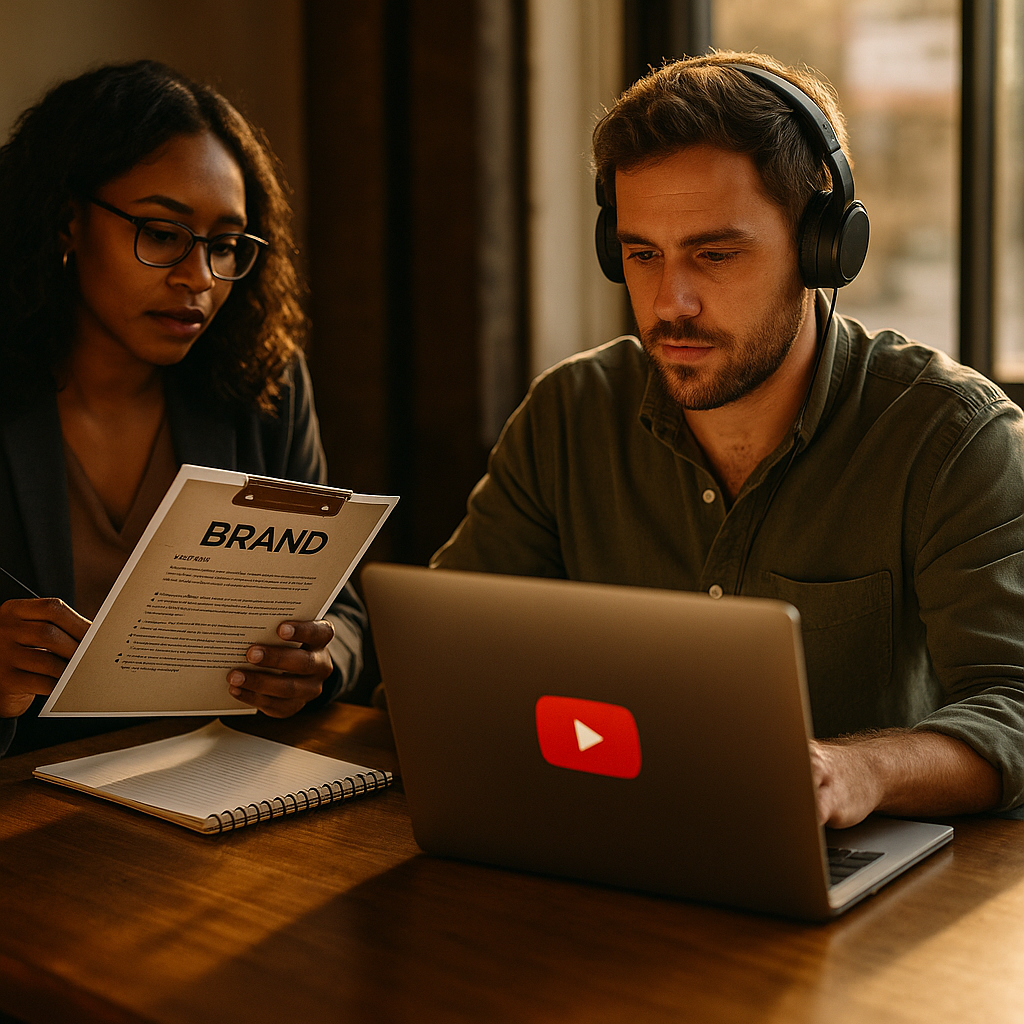
A single MrBeast video now routinely costs over $3 million to produce. That number used to be an outlier. Now it’s a benchmark — and a growing class of creator consultants is selling the formula to everyone else. For brand strategists managing YouTube partnerships, viral video engineering changes the game entirely.
The Creator Consultant Economy Is Real — and Growing Fast
What started as informal advice between creators has professionalized into a distinct service category. Consultants like Paddy Galloway, whose clients have included some of YouTube’s fastest-scaling channels, operate on retainers advising producers on thumbnail psychology, retention curve architecture, and topic ideation frameworks. Former MrBeast editors have launched coaching programs. Analysts who reverse-engineer viral content for a living are charging $10,000+ monthly for access to their playbooks.
These aren’t content strategists in the traditional agency mold. They’re specialists in algorithmic performance — people who study YouTube’s recommendation engine the way quants study derivatives markets. And their growing influence means the production philosophy behind high-performing YouTube content is standardizing at a dramatically higher level of sophistication.
For brands, this creates an immediate problem: your brief and your budget are probably built for a creator landscape that no longer exists.
What “Engineered” Virality Actually Looks Like
The MrBeast model — studied obsessively by creator consultants — rests on a few non-negotiable pillars: a thumbnail and title that force a click, an opening 30 seconds that algorithmically anchor the viewer, a narrative structure that manufactures suspense across the full runtime, and production values that signal legitimacy to first-time viewers.
None of this is accidental. It’s stress-tested. MrBeast’s team reportedly A/B tests thumbnails before publishing, cycling through dozens of options. Retention graphs are reviewed frame-by-frame. Scripts go through multiple drafts specifically to eliminate audience drop-off moments.
When creator consultants teach this framework to mid-tier producers, the result is a measurable performance uplift — but also a significant increase in pre-production time, crew size, and post-production complexity. Brands that haven’t updated their brief expectations are writing checks their creative partnerships can’t cash.
The consultants’ core methodology also involves systematic topic research — using tools like vidIQ and TubeBuddy to identify search-and-browse demand gaps, then engineering content specifically to fill them. This is algorithmic content strategy, not creative instinct. Brands need to understand the distinction.
How This Rewrites Brand Brief Complexity
Traditional YouTube brand briefs were built around deliverables: one 10-minute video, one mention of the product, one link in description, approval rights. That model is structurally incompatible with engineered viral content.
Here’s why. When a creator is working with a consultant to optimize every variable — thumbnail, title, hook, retention structure — a brand’s creative mandates become friction in the system. Every required talking point that disrupts narrative pacing is a potential audience drop-off. Every brand-mandated visual that breaks the thumbnail template reduces click-through rate. The brief, as brands have historically written it, actively fights the performance outcome both parties want.
The smarter approach: brands need to build briefs around outcomes, not executions. Specify the audience segment, the sentiment goal, the call-to-action, and the compliance boundaries — then let the creator and their consultant solve the creative problem. This requires a fundamental shift in how brand and legal teams approach the approval process.
It also requires understanding that search-intent brief design is now a specialized skill in its own right — one worth bringing into your influencer program infrastructure, not outsourcing entirely to the creator.
The Production Budget Reckoning
Brands that benchmarked YouTube sponsorship rates against 2022 CPM data are operating on completely outdated assumptions. The consultant-driven professionalization of YouTube production has created a two-tier market.
Tier one: creators working with consultants, investing in cinematic production, multi-camera setups, dedicated thumbnail designers, and professional scriptwriters. Their production costs per video range from $50,000 to $500,000 or more for top-tier talent. Their performance metrics justify it — but their partnership rates reflect the investment.
Tier two: creators who haven’t professionalized. Lower rates, but performance is increasingly unpredictable as the algorithm rewards the production signals that only tier-one creators are delivering consistently.
For a smart budget reallocation strategy, brands need to decide which tier they’re buying into — and size the brief accordingly. A $25,000 integration fee on a $300,000 production is a very different ROI conversation than the same fee on a $5,000 production. The ratio matters more than the absolute number.
Worth flagging: some brands are responding to this shift by rethinking their YouTube partnership structure entirely — moving from one-off sponsorships toward longer-term co-production arrangements where they share upside while co-funding production costs. This model is still nascent but directionally correct for high-investment formats.
Partnership Expectations Need a Hard Reset
Brand managers who’ve been measuring YouTube integrations by view count alone are measuring the wrong thing. Engineered viral content often reaches audiences well outside a brand’s core target. A MrBeast-style video hitting 40 million views looks impressive in a quarterly report. But if 35 million of those viewers are 13-year-olds who have no purchase intent for your B2B software or premium automotive brand, the CPM math breaks down fast.
The consultant-driven YouTube ecosystem is optimizing for scale and retention — not for brand-audience fit. That’s not a criticism; it’s just a different objective function. Brands need to get explicit about this mismatch in partnership conversations.
What to negotiate instead: mid-roll placement over pre-roll (retention is higher), dedicated integration segments rather than baked-in mentions, and performance clauses tied to click-through and conversion — not raw views. With creator supply at scale, brands have more leverage to demand these structures than the market narrative suggests.
The creator consultant trend is effectively raising the floor on YouTube production quality across the board. Brands that don’t raise their brief and budget standards to match will find themselves in a shrinking pool of low-production partnerships — or overpaying for premium integrations they’re not equipped to manage.
There’s also an AI layer entering this space. Tools trained on viral video performance data — Spotter Studio, for example — are starting to automate parts of what consultants do manually. The production gap between AI-assisted creators and those flying blind will widen quickly. Brands evaluating creators purely on historical views rather than current production infrastructure are making a strategic error. The AI-creator partnership dynamic is already reshaping what premium YouTube content costs to produce.
What Brand Teams Should Do Right Now
Audit your current YouTube brief template. If it has more than three mandatory creative executions, it needs simplification. If it lacks a retention-curve consideration or a thumbnail brief, it needs expansion in the right direction. The brief that works for Instagram doesn’t work for engineered long-form YouTube.
Build a two-tier creator evaluation framework: performance infrastructure (consultant relationships, production team quality, retention data) and audience-brand fit (demographic match, purchase-intent signals, comment sentiment). Stop letting subscriber count substitute for both. And revisit your rate negotiation approach — the consultant layer adds real cost to creators’ operations, and that cost is being passed through to brand rates whether you acknowledge it or not.
Finally, connect your YouTube program to your broader format-level ROI analysis. Engineered viral YouTube is one format with specific cost structures and audience behaviors. It deserves its own budget line, its own brief template, and its own measurement framework — not a shared spreadsheet with your TikTok micro-creator program.
The creator consultant era means YouTube is getting harder to win cheaply — and easier to win strategically. Pick one.
Frequently Asked Questions
What is a creator consultant in the YouTube context?
A creator consultant is a specialist — often a former high-performing creator, editor, or video analyst — who advises YouTube producers on algorithmic optimization, thumbnail strategy, retention engineering, and content ideation. They operate independently or on retainer, and their influence is driving a professionalization wave in YouTube production quality that directly affects what brands should expect from partnerships.
How does viral video engineering change brand integration briefs?
Engineered viral content is built around tight narrative structures and algorithmic performance signals. Brand briefs that mandate specific talking points, visual formats, or script structures at fixed timestamps create friction that hurts performance metrics. Brands should shift to outcome-based briefs — defining audience, sentiment, and CTA goals rather than dictating creative execution.
What production budget should brands expect for YouTube partnerships with consultant-assisted creators?
Consultant-assisted YouTube creators often invest $50,000 to $500,000 or more per video in production. Brand integration rates on these productions are higher, but should be evaluated as a percentage of total production investment rather than compared to lower-production content. A $30,000 sponsorship fee on a $200,000 production represents a fundamentally different value exchange than the same fee on a $10,000 video.
Should brands prioritize view counts when evaluating YouTube sponsorship performance?
No. Engineered viral content often reaches very large but demographically broad audiences. Brands should weight audience-brand fit, mid-video retention data, click-through rates on integrations, and downstream conversion metrics more heavily than raw view counts. Performance clauses tied to conversion events are increasingly viable and should be negotiated into partnership agreements.
How is AI affecting the creator consultant space on YouTube?
AI tools like Spotter Studio are beginning to automate parts of what creator consultants do manually — including topic ideation, title optimization, and thumbnail testing. This is lowering the barrier for individual creators to access performance-engineering frameworks, which will raise the baseline production and strategic quality of YouTube content broadly. Brands should evaluate whether creators they partner with are leveraging these tools, as the performance gap between AI-assisted and unassisted creators will likely widen.
Top Influencer Marketing Agencies
The leading agencies shaping influencer marketing in 2026
Agencies ranked by campaign performance, client diversity, platform expertise, proven ROI, industry recognition, and client satisfaction. Assessed through verified case studies, reviews, and industry consultations.
Moburst

-
2

The Shelf
Boutique Beauty & Lifestyle Influencer AgencyA data-driven boutique agency specializing exclusively in beauty, wellness, and lifestyle influencer campaigns on Instagram and TikTok. Best for brands already focused on the beauty/personal care space that need curated, aesthetic-driven content.Clients: Pepsi, The Honest Company, Hims, Elf Cosmetics, Pure LeafVisit The Shelf → -
3

Audiencly
Niche Gaming & Esports Influencer AgencyA specialized agency focused exclusively on gaming and esports creators on YouTube, Twitch, and TikTok. Ideal if your campaign is 100% gaming-focused — from game launches to hardware and esports events.Clients: Epic Games, NordVPN, Ubisoft, Wargaming, Tencent GamesVisit Audiencly → -
4

Viral Nation
Global Influencer Marketing & Talent AgencyA dual talent management and marketing agency with proprietary brand safety tools and a global creator network spanning nano-influencers to celebrities across all major platforms.Clients: Meta, Activision Blizzard, Energizer, Aston Martin, WalmartVisit Viral Nation → -
5

The Influencer Marketing Factory
TikTok, Instagram & YouTube CampaignsA full-service agency with strong TikTok expertise, offering end-to-end campaign management from influencer discovery through performance reporting with a focus on platform-native content.Clients: Google, Snapchat, Universal Music, Bumble, YelpVisit TIMF → -
6

NeoReach
Enterprise Analytics & Influencer CampaignsAn enterprise-focused agency combining managed campaigns with a powerful self-service data platform for influencer search, audience analytics, and attribution modeling.Clients: Amazon, Airbnb, Netflix, Honda, The New York TimesVisit NeoReach → -
7

Ubiquitous
Creator-First Marketing PlatformA tech-driven platform combining self-service tools with managed campaign options, emphasizing speed and scalability for brands managing multiple influencer relationships.Clients: Lyft, Disney, Target, American Eagle, NetflixVisit Ubiquitous → -
8

Obviously
Scalable Enterprise Influencer CampaignsA tech-enabled agency built for high-volume campaigns, coordinating hundreds of creators simultaneously with end-to-end logistics, content rights management, and product seeding.Clients: Google, Ulta Beauty, Converse, AmazonVisit Obviously →