


Your Organic Reach Budget Is About to Become a Compliance Casualty
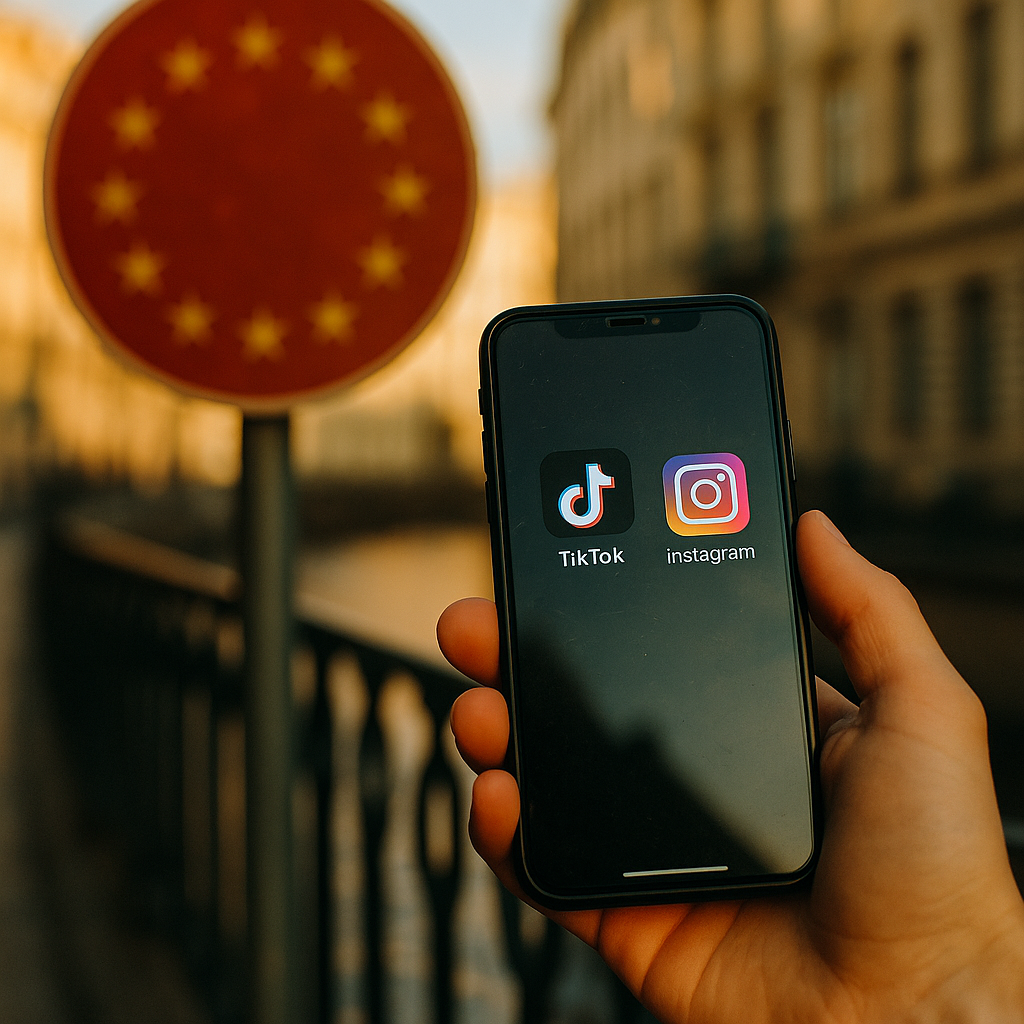
Organic reach on TikTok and Instagram was already declining before regulators got involved. Now the EU Digital Services Act’s addictive design provisions are forcing both platforms to structurally redesign their recommendation engines — and the collateral damage will land directly on brand content distribution. If your influencer program still treats organic amplification as a meaningful reach driver, you’re modeling on assumptions that are actively being legislated out of existence.
What the EU Is Actually Mandating
The DSA’s addictive design requirements aren’t vague guidelines — they’re operational directives. Platforms classified as Very Large Online Platforms (VLOPs) must now offer users chronological feeds, disable autoplay loops, restrict notifications designed to maximize session time, and — critically — provide recommendation systems that are not based on profiling for users who opt out. TikTok and Meta both operate under VLOP designation, which means the European Commission has direct enforcement authority over their algorithmic architecture.
The practical consequence? Both platforms are being forced to dampen the very engagement signals — watch time, loop behavior, compulsive scrolling — that their recommendation algorithms were built around. When you weaken those signals, you weaken the algorithm’s ability to identify and amplify high-performing organic content. Reach compression isn’t a side effect. It’s mathematically inevitable.
TikTok has already started surfacing a “For You” feed opt-out for EU users. Instagram has introduced a chronological feed option and reduced the weight of engagement-bait content in recommendations. Neither platform has disclosed the exact algorithmic coefficients that changed — they never do — but the downstream metrics tell the story. Mid-tier creator accounts in EU markets are reporting organic reach drops of 20–35% on content that would have performed normally six months ago.
When regulators force platforms to reduce behavioral manipulation signals, they don’t just protect users — they systematically erode the organic distribution mechanics that brand content depends on. There is no surgical fix for this. It’s architectural.
Why This Isn’t Just a European Problem
Platform architecture doesn’t run on geographic segmentation. When TikTok rebuilds its recommendation engine to satisfy DSA compliance, it’s not running a parallel European instance — it’s modifying core infrastructure that affects global behavior. The same is true for Meta’s Instagram adjustments. Regulatory compliance changes become product changes, and product changes are global by default.
We’ve seen this pattern before. When Apple’s ATT framework launched in 2021, the targeting degradation wasn’t confined to iOS users — it reshaped the entire programmatic ecosystem because platforms had to rebuild their ad attribution models from the ground up. The DSA’s addictive design crackdown will work the same way. Compliance built for Berlin will flatten organic reach in Boston.
Brands running global influencer programs need to stop treating EU regulatory developments as regional footnotes in quarterly reports. They are leading indicators of platform-wide infrastructure shifts. Your US-market organic reach numbers in Q3 and Q4 will reflect decisions being made in EU compliance teams right now.
The Paid-Amplification Dependency Model: How to Plan for It
This is where operational planning gets uncomfortable. Most brand influencer programs are still built on a content-first, boost-if-needed model — you produce the content, hope for organic distribution, and allocate paid amplification as a reactive supplement. That model is broken. organic-first thinking is no longer a viable default on either TikTok or Instagram, and DSA enforcement is accelerating the timeline.
The new planning model has to work in reverse. Start with your required reach and frequency targets. Work backward to determine what percentage of that reach can realistically be achieved organically — and apply a regulatory-compression discount of at least 25–30% to whatever your current organic benchmarks are. The remainder is your paid-amplification floor, not ceiling. Budget from there.
Concretely, that means three things need to change in your platform investment model:
- Creator fee structures: Separate content production fees from distribution value. If organic reach is structurally compressed, the creator’s follower count matters less than their content quality and spark/boost eligibility. Brief accordingly — see how Instagram Reels briefs need to be restructured for algorithm resilience.
- Platform line items: Add a mandatory paid-amplification line item to every influencer activation — not as an optional boost, but as a required distribution cost. Model it as 30–50% of creator fees on TikTok and Instagram activations.
- Performance benchmarks: Retire organic reach and impressions as primary KPIs for influencer content. Replace them with paid-amplified reach efficiency (cost per verified view at target completion rate) and downstream conversion signals.
For TikTok specifically, the TikTok Ads Manager Spark Ads format — which lets brands amplify creator-originated content as paid placements — is no longer a nice-to-have. It’s the distribution mechanism you should be planning your entire TikTok creator program around. If a piece of creator content isn’t cleared for Spark Ads in the brief stage, you’re leaving your distribution strategy to algorithmic luck you can no longer rely on.
On Instagram, the Meta Business Suite Partnership Ads tool gives brands the same boosting capability for creator content. The key operational requirement: partnership ad permissions need to be negotiated at brief stage, not as an afterthought after content is live. Build it into your creator agreements now. Refer to our guidance on briefing Instagram creators for partnership-ready content structures.
What This Means for TikTok Shop Activations Specifically
TikTok Shop is a particular pressure point here. The platform’s commerce layer was built on the premise that organic viral content could drive impulse purchases at scale — a low-cost, high-velocity distribution model that worked precisely because TikTok’s recommendation engine was optimized for behavioral compulsion. DSA compliance dismantles that premise for EU markets and, by extension, weakens it globally.
If your TikTok Shop strategy depends on organic video discovery driving click-through to product listings, you need to stress-test that model now. The TikTok Shop creator brief architecture needs to account for paid-amplification dependency from the first activation, not the fifth.
TikTok Shop’s commerce flywheel was powered by algorithmic behavioral loops. Regulators are cutting the power. Brands that haven’t built paid amplification into their Shop activation economics are running a model that’s being deprecated in real time.
Platform Diversification Isn’t the Answer (But It’s Part of It)
The instinctive response to reach compression on TikTok and Instagram is to redistribute budget toward less-regulated platforms. YouTube, Reddit, and even X get mentioned in these conversations. That’s not wrong — diversification reduces single-platform dependency — but it’s not a solution to the underlying structural shift.
YouTube’s algorithm has its own paid-partnership dynamics worth understanding — the YouTube paid partnership algorithm operates differently from TikTok and Instagram in ways that matter for brief design. Reddit’s high-intent audience has genuine value for consideration-phase content, and the Reddit AI ads product has matured significantly. But none of these platforms are immune to regulatory pressure — they just haven’t faced it yet at the same intensity.
The durable answer isn’t platform arbitrage. It’s rebuilding your investment model around the assumption that paid amplification is a structural cost of distribution on all major social platforms, not an optional performance lever. The DSA is accelerating a shift that was already underway. Treat it as a forcing function to fix your planning model, not a temporary disruption to wait out.
For brands currently evaluating how to split creator budgets between TikTok and Instagram given these shifts, the TikTok vs Instagram budget allocation framework provides a practical starting point — though the paid-amplification dependency adjustments outlined here should be layered on top.
The Planning Action That Can’t Wait
Audit your current influencer program’s organic reach assumptions this quarter. Apply a 25–30% regulatory compression discount to every TikTok and Instagram organic benchmark you’re using for planning. Then rebuild your paid-amplification line items from that adjusted baseline — not as a hedge, but as a structural budget requirement. Platforms are no longer in the business of giving brands free distribution. Regulators just made that official.
—
Frequently Asked Questions
How do EU addictive design regulations directly affect brand content reach on TikTok and Instagram?
The EU Digital Services Act requires TikTok and Instagram to reduce recommendation algorithms that rely on behavioral manipulation signals like watch-time loops and autoplay. Since these signals are what platforms use to identify and amplify high-performing content, weakening them compresses organic reach for all content — including branded and creator-sponsored posts. Brands in EU markets are already seeing organic reach drops of 20–35%, and because platform infrastructure is global, this affects performance outside Europe as well.
What is paid-amplification dependency and why does it matter for influencer budget planning?
Paid-amplification dependency means that a brand’s content distribution is structurally reliant on paid placements — such as TikTok Spark Ads or Meta Partnership Ads — rather than organic algorithmic reach. As regulatory changes reduce organic reach reliability, paid amplification shifts from an optional performance booster to a required distribution cost. Brands need to model it as 30–50% of creator fees on TikTok and Instagram activations rather than treating it as a reactive budget item.
Does EU regulatory compliance on TikTok and Instagram affect markets outside Europe?
Yes. Platforms don’t run separate algorithmic architectures for different geographic markets. When TikTok or Instagram modifies its recommendation engine to comply with EU DSA requirements, those infrastructure changes affect global performance. This mirrors the impact of Apple’s ATT framework, which reshaped global ad targeting even though it was primarily a privacy compliance response. Brands should treat EU regulatory changes as leading indicators of global platform behavior shifts.
Should brands shift budget away from TikTok and Instagram to avoid these issues?
Diversification is prudent, but it doesn’t solve the underlying structural issue. YouTube, Reddit, and other platforms have their own algorithm dynamics and are not immune to future regulatory pressure. The durable fix is rebuilding your investment model to treat paid amplification as a structural distribution cost on all major social platforms — not arbitraging to less-regulated channels that may face similar scrutiny later.
How should TikTok Shop activation briefs change in response to these regulatory shifts?
TikTok Shop briefs need to incorporate paid-amplification requirements from the outset. Creator content should be structured and cleared for Spark Ads eligibility before production begins, not after. Since TikTok Shop’s commerce model relied heavily on organic viral discovery, brands must now build amplification budgets directly into Shop activation economics — treating paid distribution as a fixed cost rather than a variable performance lever.
Top Influencer Marketing Agencies
The leading agencies shaping influencer marketing in 2026
Agencies ranked by campaign performance, client diversity, platform expertise, proven ROI, industry recognition, and client satisfaction. Assessed through verified case studies, reviews, and industry consultations.
Moburst

-
2

The Shelf
Boutique Beauty & Lifestyle Influencer AgencyA data-driven boutique agency specializing exclusively in beauty, wellness, and lifestyle influencer campaigns on Instagram and TikTok. Best for brands already focused on the beauty/personal care space that need curated, aesthetic-driven content.Clients: Pepsi, The Honest Company, Hims, Elf Cosmetics, Pure LeafVisit The Shelf → -
3

Audiencly
Niche Gaming & Esports Influencer AgencyA specialized agency focused exclusively on gaming and esports creators on YouTube, Twitch, and TikTok. Ideal if your campaign is 100% gaming-focused — from game launches to hardware and esports events.Clients: Epic Games, NordVPN, Ubisoft, Wargaming, Tencent GamesVisit Audiencly → -
4

Viral Nation
Global Influencer Marketing & Talent AgencyA dual talent management and marketing agency with proprietary brand safety tools and a global creator network spanning nano-influencers to celebrities across all major platforms.Clients: Meta, Activision Blizzard, Energizer, Aston Martin, WalmartVisit Viral Nation → -
5

The Influencer Marketing Factory
TikTok, Instagram & YouTube CampaignsA full-service agency with strong TikTok expertise, offering end-to-end campaign management from influencer discovery through performance reporting with a focus on platform-native content.Clients: Google, Snapchat, Universal Music, Bumble, YelpVisit TIMF → -
6

NeoReach
Enterprise Analytics & Influencer CampaignsAn enterprise-focused agency combining managed campaigns with a powerful self-service data platform for influencer search, audience analytics, and attribution modeling.Clients: Amazon, Airbnb, Netflix, Honda, The New York TimesVisit NeoReach → -
7

Ubiquitous
Creator-First Marketing PlatformA tech-driven platform combining self-service tools with managed campaign options, emphasizing speed and scalability for brands managing multiple influencer relationships.Clients: Lyft, Disney, Target, American Eagle, NetflixVisit Ubiquitous → -
8

Obviously
Scalable Enterprise Influencer CampaignsA tech-enabled agency built for high-volume campaigns, coordinating hundreds of creators simultaneously with end-to-end logistics, content rights management, and product seeding.Clients: Google, Ulta Beauty, Converse, AmazonVisit Obviously →