


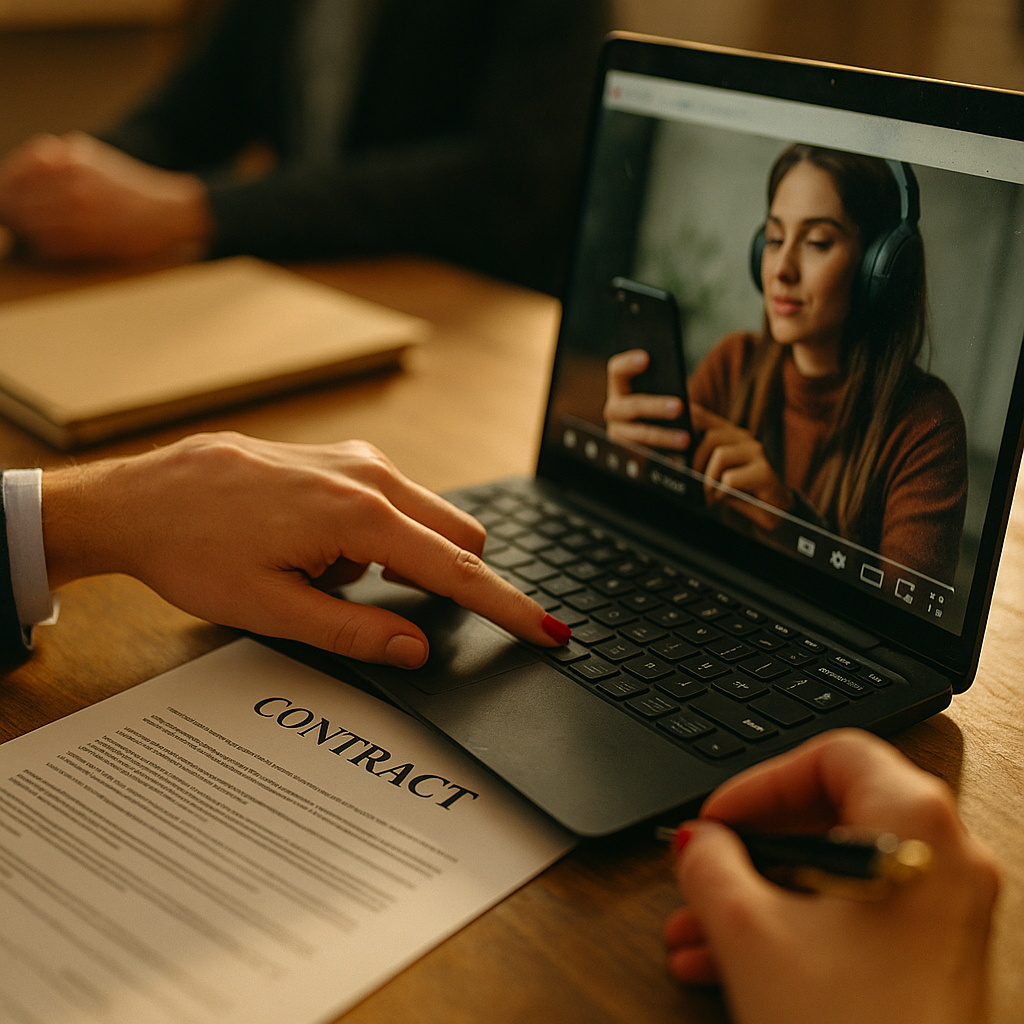
Your Creator Agreements Almost Certainly Have a Gap the Take-It-Down Act Will Exploit
Over 90% of brand-side creator agreements were drafted before non-consensual intimate image (NCII) removal obligations became a federal compliance requirement. That’s not a minor oversight — it’s a liability waiting to be triggered. With the Take-It-Down Act compliance enforcement window now active, brand legal teams that haven’t audited their creator contracts and platform partnership standards are operating on borrowed time.
What the Take-It-Down Act Actually Requires — and Why Brands Are in the Blast Radius
The Take-It-Down Act mandates that covered platforms remove non-consensual intimate images — including AI-generated deepfakes — within 48 hours of a verified request. The FTC holds enforcement authority, and the statute’s scope extends beyond social platforms to any service that hosts or distributes content, which means brand-owned channels, campaign microsites, and co-branded creator hubs are all potentially covered.
This is where most brand legal teams have underestimated their exposure. They’ve focused on the platform side — TikTok, Instagram, YouTube — and assumed platform compliance transfers downstream. It doesn’t. A brand that co-hosts creator content, embeds UGC on a product page, or operates a branded portal with creator submissions has independent obligations. Platform compliance is a floor, not a ceiling.
For a deeper read on how this law intersects with existing creator contract architecture, the Take-It-Down Act contract compliance framework is a useful starting reference before you move into the audit phase.
Three Contract Language Failures That Will Haunt Brand Legal Teams
Audit your current creator agreements against these three gaps. All three are endemic across agency-drafted and in-house templates alike.
1. No NCII-specific representation and warranty clause. Most agreements include general IP ownership warranties and morality clauses, but they don’t explicitly require creators to warrant that submitted content does not contain NCII — whether real or AI-generated. Without this, a brand hosting that content shares the exposure window.
2. No removal cooperation obligation. The Take-It-Down Act’s 48-hour window is tight. If your creator agreement doesn’t include an affirmative obligation requiring creators to cooperate with takedown requests — removing content from their own channels, providing source files, ceasing distribution — you’re depending on goodwill in a crisis scenario. That’s not a legal strategy.
3. No indemnification carve-out for NCII-related claims. Standard indemnification language covers IP infringement and disclosure violations. Very few agreements specifically carve out NCII liability or extend indemnification obligations to cover regulatory fines arising from a creator’s content. That gap needs to close now.
A morality clause that doesn’t specifically reference non-consensual intimate imagery — including AI-generated synthetic content — is functionally incomplete under the Take-It-Down Act framework. Broad language won’t hold up under FTC scrutiny.
If you’re also reviewing contract language for AI-generated content risks more broadly, the guidance on deepfake ad law and AI content policy covers intersecting obligations that often travel with NCII exposure in synthetic media scenarios.
Platform Partnership Standards: Verification Is Now a Procurement Question
Here’s the operational reality brands are avoiding: platform partnerships need to be evaluated against NCII removal capability the same way you’d evaluate brand safety scoring or viewability standards. This isn’t a legal team problem alone — it’s a procurement and partnership governance problem.
When a brand signs a partnership with an emerging creator platform, a branded content marketplace, or a UGC aggregation tool, the due diligence checklist needs to include:
- Does the platform have a documented NCII removal process that meets the 48-hour federal standard?
- Is there a designated point of contact for legal removal requests, and what’s the SLA?
- Does the platform’s terms of service explicitly prohibit NCII, or does it rely on general community standards language?
- Has the platform demonstrated compliance infrastructure — hashing technology, verified reporting channels — consistent with the FTC’s enforcement guidance?
- What indemnification does the platform offer brands in the event of a compliant takedown failure?
Established platforms like Meta, TikTok, and YouTube have invested in NCII detection infrastructure — Meta’s partnership with StopNCII is a documented example of hash-matching technology in practice. Smaller creator economy platforms may have none of this. Brand legal teams should require written attestation of compliance posture before executing platform partnership agreements going forward.
This due diligence imperative connects directly to how brands are thinking about contract clauses that preserve brand leverage — including leverage over platform partners, not just individual creators.
The FTC Enforcement Posture Brands Should Actually Prepare For
The FTC has signaled it will pursue cases that demonstrate pattern failures — not just isolated incidents. That means a single NCII complaint that a brand or its partner platform fails to process within 48 hours is less dangerous than a pattern of inadequate response infrastructure. Legal teams should document their compliance architecture proactively, because the FTC’s standard for “reasonable” processes is going to be shaped by the enforcement actions it brings first.
Fines under the Take-It-Down Act can reach $50,000 per violation for knowing violations. At volume — across a creator roster of 50+ active partners — that math gets uncomfortable fast. The compliance cost of getting ahead of this is a fraction of the exposure cost of getting behind it.
It’s also worth connecting this to the broader FTC enforcement environment. The agency’s activity around FTC disclosure rules and influencer marketing has established a precedent for holding brands — not just creators or platforms — accountable for systemic failures. That same logic applies here.
The FTC doesn’t need to prove bad intent to levy fines under the Take-It-Down Act. A documented failure to build adequate removal infrastructure is sufficient. Brands need paper trails showing affirmative compliance steps, not just the absence of complaints.
Audit Protocol: Where Brand Legal Teams Should Start This Week
Don’t treat this as a full contract re-paper exercise — that’s a six-month project. Start with triage.
First, identify every channel, platform, and hosting environment where your brand distributes or co-hosts creator-generated content. That includes owned channels, paid media placements using creator assets, and any platform where your brand has a co-branded presence. Second, pull the five most recently executed creator agreements and map them against the three contract gaps identified above. Third, contact your top three platform partners and request written confirmation of their NCII removal process and compliance posture under the Take-It-Down Act.
For teams building a more systematic pre-campaign review process, the pre-flight compliance checklist is a practical operational tool — adapt it to include NCII-specific verification steps at the creator onboarding and platform selection stages.
You should also cross-reference your creator agreement templates against the contract gaps and disclosure risk analysis for a broader view of where brand exposure is clustering right now.
Legal teams working with outside counsel should brief them explicitly on the synthetic media angle. AI-generated NCII is covered under the statute, which means the copyright and content ownership dimensions of your creator agreements need to be reviewed simultaneously — not sequentially.
FAQs
Does the Take-It-Down Act apply to brands, or only to social media platforms?
The statute applies to any online platform that hosts or distributes user-generated content and has a certain threshold of users, which can include brand-owned campaign sites, co-branded creator portals, and UGC aggregation tools. Brands should not assume their exposure is limited to the major social platforms they partner with.
What does “48-hour removal” mean operationally for a brand’s legal team?
It means that once a verified NCII removal request is received, the platform or hosting entity must remove the content within 48 hours. For brands operating owned channels, this requires having a documented intake process, a designated responder, and a technical workflow capable of acting within that window — not just a general content moderation policy.
Do creator agreements need to be re-papered immediately, or is an amendment sufficient?
In most cases, a targeted amendment or addendum covering NCII representation and warranty, removal cooperation obligations, and indemnification carve-outs is sufficient for existing agreements. New agreements should incorporate these provisions in the base template. Full re-papering is generally unnecessary unless the agreement is otherwise due for renewal.
Are AI-generated deepfakes covered under the Take-It-Down Act?
Yes. The statute explicitly covers AI-generated synthetic intimate images, not just real photographs or videos. This significantly expands the risk surface for brands working with AI content generation tools, virtual influencers, or any workflow where synthetic media of identifiable individuals could be produced.
What should a brand require from a creator platform before signing a partnership agreement?
Brands should require written documentation of the platform’s NCII removal process, confirmation of a 48-hour or faster SLA, evidence of NCII detection infrastructure (such as hash-matching technology), and contractual indemnification in the event the platform fails to meet its removal obligations and the brand incurs regulatory exposure as a result.
How does the FTC enforce the Take-It-Down Act against non-platform entities like brands?
The FTC can pursue enforcement against any covered entity that hosts or distributes content and fails to maintain adequate NCII removal processes. Fines for knowing violations can reach $50,000 per violation. The FTC’s enforcement posture emphasizes systemic infrastructure failures over isolated incidents, which means documented compliance architecture is a meaningful defense.
Start this week: Pull your three most active creator agreements, map them against the NCII contract gaps above, and send a written compliance inquiry to your top platform partners. Documentation created now is your best defense if the FTC comes looking later.
Top Influencer Marketing Agencies
The leading agencies shaping influencer marketing in 2026
Agencies ranked by campaign performance, client diversity, platform expertise, proven ROI, industry recognition, and client satisfaction. Assessed through verified case studies, reviews, and industry consultations.
Moburst

-
2

The Shelf
Boutique Beauty & Lifestyle Influencer AgencyA data-driven boutique agency specializing exclusively in beauty, wellness, and lifestyle influencer campaigns on Instagram and TikTok. Best for brands already focused on the beauty/personal care space that need curated, aesthetic-driven content.Clients: Pepsi, The Honest Company, Hims, Elf Cosmetics, Pure LeafVisit The Shelf → -
3

Audiencly
Niche Gaming & Esports Influencer AgencyA specialized agency focused exclusively on gaming and esports creators on YouTube, Twitch, and TikTok. Ideal if your campaign is 100% gaming-focused — from game launches to hardware and esports events.Clients: Epic Games, NordVPN, Ubisoft, Wargaming, Tencent GamesVisit Audiencly → -
4

Viral Nation
Global Influencer Marketing & Talent AgencyA dual talent management and marketing agency with proprietary brand safety tools and a global creator network spanning nano-influencers to celebrities across all major platforms.Clients: Meta, Activision Blizzard, Energizer, Aston Martin, WalmartVisit Viral Nation → -
5

The Influencer Marketing Factory
TikTok, Instagram & YouTube CampaignsA full-service agency with strong TikTok expertise, offering end-to-end campaign management from influencer discovery through performance reporting with a focus on platform-native content.Clients: Google, Snapchat, Universal Music, Bumble, YelpVisit TIMF → -
6

NeoReach
Enterprise Analytics & Influencer CampaignsAn enterprise-focused agency combining managed campaigns with a powerful self-service data platform for influencer search, audience analytics, and attribution modeling.Clients: Amazon, Airbnb, Netflix, Honda, The New York TimesVisit NeoReach → -
7

Ubiquitous
Creator-First Marketing PlatformA tech-driven platform combining self-service tools with managed campaign options, emphasizing speed and scalability for brands managing multiple influencer relationships.Clients: Lyft, Disney, Target, American Eagle, NetflixVisit Ubiquitous → -
8

Obviously
Scalable Enterprise Influencer CampaignsA tech-enabled agency built for high-volume campaigns, coordinating hundreds of creators simultaneously with end-to-end logistics, content rights management, and product seeding.Clients: Google, Ulta Beauty, Converse, AmazonVisit Obviously →