


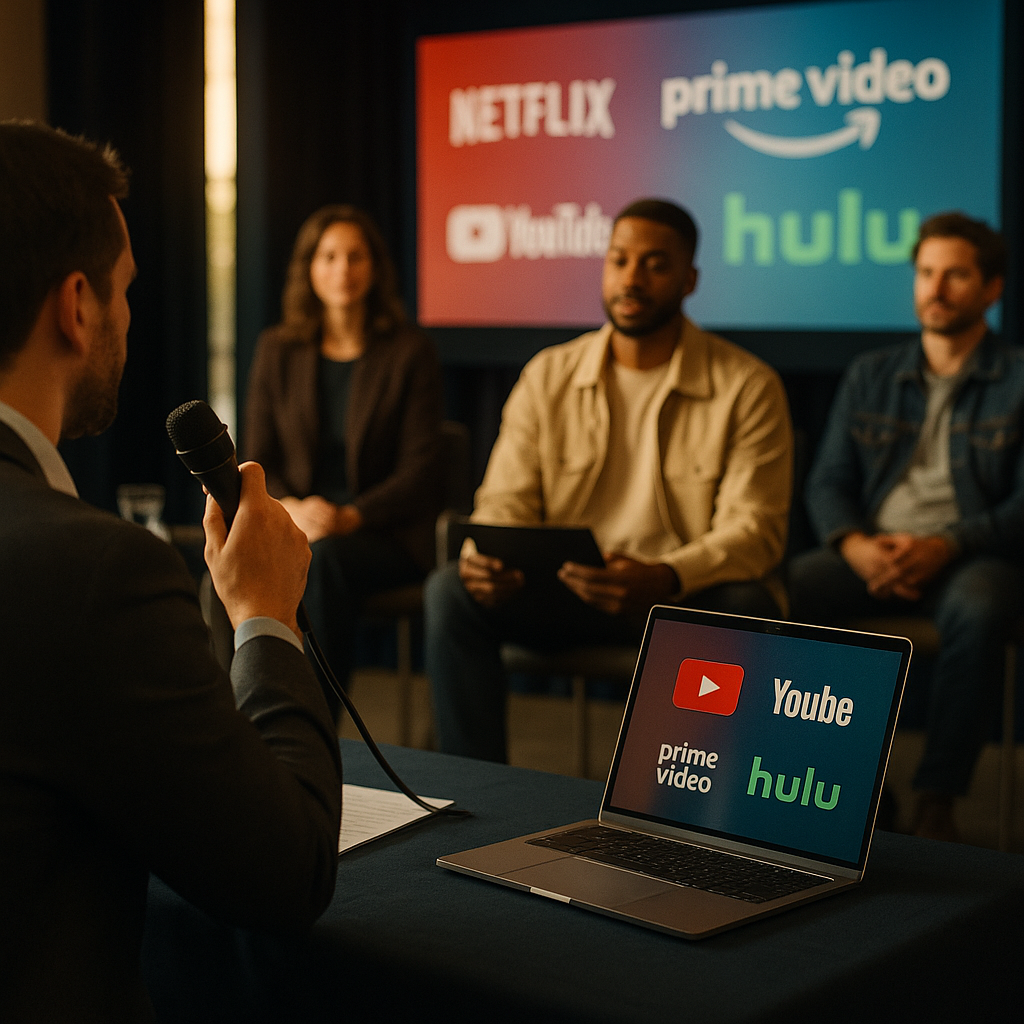
Creator channels now average more primetime viewing hours than three of the top five cable networks combined. If that hasn’t triggered a full review of your partnership architecture, it should have. The rise of creator inventory as a legitimate streaming era creator program investment category — ratified by its inclusion in major upfront presentations — demands a structural response, not a tactical tweak.
The Upfronts Signal You Can’t Ignore
When YouTube took the stage at the IAB NewFronts and Upfronts with connected TV data and creator-backed programming packages, it wasn’t a novelty act. It was a market signal. Advertisers responding to that signal aren’t just buying media — they’re validating a new asset class. eMarketer data pegs U.S. connected TV ad spend accelerating past $30 billion, with creator-originated content claiming an expanding share of that inventory.
The implication for brand strategists is blunt: creator partnerships can no longer live exclusively in the social media line of a media plan. They belong in the video investment discussion alongside streaming commitments to Netflix, Hulu, and Peacock. If your planning process doesn’t reflect that, your competitors’ upfront commitments already do.
For context on how this shift is reshaping media buying mechanics, the evolving dynamic between creator-adjacent ads vs streaming upfronts is worth reviewing before you walk into your next planning cycle.
What “Competing With Streaming” Actually Means for Your Architecture
Creators aren’t supplementing streaming — they’re competing with it for the same finite attention budget. A viewer who watches three hours of MrBeast, MKBHD, or Chamberlain Coffee’s Emma Chamberlain on a Tuesday evening is not watching Netflix. That’s not a metaphor. That’s a media consumption reality that should reshape how you sequence and weight creator investment.
The old architecture looked like this: TV and streaming handled brand awareness at scale, while creators handled mid-funnel consideration and community activation. Clean lanes. Easy budget logic.
The new architecture doesn’t have clean lanes. Top-tier creators — especially those with long-form YouTube presence and podcast extensions — now deliver the reach and brand-building capacity that used to be reserved for broadcast. Meanwhile, streaming platforms are racing to add ad-supported tiers and creator-adjacent content to stay competitive. The lanes have merged. Your architecture needs to merge with them.
Brands that still treat creator spend as a social media line item are systematically underinvesting in one of the highest-reach video environments available — and overpaying for equivalent impressions on legacy platforms.
This means three structural shifts are non-negotiable:
- Budget elevation: Creator investment must move from social/digital budgets into video or brand budgets where it competes directly with streaming CPMs on equivalent reach metrics.
- Deal architecture upgrade: Transactional sponsored post agreements don’t support long-form, series-based, or upfront-style commitments. You need contracts built for sustained partnership, not one-off activations.
- Measurement alignment: Creator content needs to be evaluated on brand lift, reach, and share of attention — not just engagement rate and swipe-ups.
Redesigning the Partnership Stack
Think about creator relationships in three tiers — not by follower count, but by content format and attention depth.
Tier One: Anchor Creators. These are your long-form, high-retention partners. YouTube channels with 30+ minute average view durations, podcast creators with weekly audiences, and newsletter-to-video crossover personalities. These creators command upfront-style commitments: multi-episode integrations, first-look deals, and co-production arrangements. The mechanics of sponsored deals with subscription creators are fundamentally different from standard influencer contracts — duration, IP considerations, and exclusivity windows all require more sophisticated terms.
Tier Two: Format Specialists. Short-form creators on TikTok, Instagram Reels, and YouTube Shorts who drive discovery and cultural fluency. These operate closer to traditional paid social — but even here, the architecture is shifting. Paid-first campaign architecture is increasingly the right frame, where organic creator posts seed content that gets amplified programmatically into connected TV and streaming environments.
Tier Three: Community Amplifiers. Micro and mid-tier creators who extend reach into specific verticals or demographics. These are the engine of your always-on layer. The micro-creator network model works here, but only when distribution and amplification infrastructure are already in place.
The mistake most brands make is managing all three tiers with the same operational playbook. They’re not the same business. Anchor creators need dedicated brand stewards, not campaign managers juggling 40 relationships. Format specialists need creative iteration speed and paid amplification triggers. Community amplifiers need systematized briefs and lightweight compliance workflows.
The Brief as Architecture Document
In a streaming-era program, the creator brief isn’t a campaign instruction sheet. It’s a brand architecture document. It needs to communicate tone, visual language, narrative arc, and the specific role this creator plays in the broader media ecosystem — not just the talking points for a 60-second read.
Long-form creators especially need this framing. When a creator is producing a 20-minute video that happens to feature your brand, they need to understand where that video sits in your annual storytelling calendar and how it connects to the streaming-level awareness work happening in parallel. Writing briefs that support integrated storytelling is a skill most brand teams haven’t developed yet — and it’s becoming a competitive advantage.
Contract Architecture for the Upfront Era
This is where most programs have the widest gap. Upfront-style creator commitments require contract structures that most influencer marketing teams have never negotiated. A few specifics:
- Performance escalators: Build in tiered compensation tied to viewership or brand lift thresholds. Creators who outperform share in the upside — which incentivizes quality and retention. Performance escalator contracts are increasingly standard in premium creator deals.
- Content licensing windows: If you’re treating creator content as streaming-era inventory, you need the rights to distribute it across CTV placements, paid social, and owned channels. This is often under-negotiated.
- Exclusivity carve-outs: Category exclusivity for anchor creators is reasonable. Blanket exclusivity clauses that prevent creators from working with tangential categories will kill talent acquisition at the top tier.
- Data ownership: First-party audience data from creator integrations — newsletter subscribers, podcast listeners, YouTube channel memberships — is increasingly valuable. Clarify ownership and sharing terms upfront.
The brands winning in creator-streaming convergence aren’t outspending competitors — they’re out-structuring them. Better contracts, better briefs, and better amplification infrastructure compound over time into durable competitive advantage.
Measurement That Matches the Investment Level
If you’ve elevated creator spend to the video investment tier, your measurement framework has to follow. CPE (cost per engagement) is irrelevant for a 25-minute brand integration on a YouTube channel with 8 million subscribers. What you actually need:
- Brand lift studies tied to specific creator integrations (YouTube’s BrandConnect and Tubular Labs both offer this capability)
- Reach and frequency analysis that accounts for creator audience overlap with your streaming buys
- Attention metrics — average view duration, completion rate by segment — rather than impression counts
- Attribution modeling that connects creator exposure to downstream search lift and conversion
Industry measurement standards for creator content are still maturing, but brands that wait for perfect methodology will lose ground to those building attribution frameworks now. Sprout Social and platforms like HubSpot have expanded their creator analytics capabilities, though the most sophisticated CTV-creator attribution still requires custom modeling.
The unified video planning framework for creator and TV upfront content is the practical starting point for aligning measurement across these investment categories.
Budget Sequencing in a Constrained Environment
CMO budgets aren’t expanding to accommodate the creator-streaming convergence. That means this is fundamentally a reallocation question. The brands getting this right are pulling from two places: legacy display and pre-roll spend with demonstrably poor attention metrics, and over-indexed celebrity influencer spend that delivers reach without depth.
Moving that budget into anchor creator programs and upfront-style commitments creates a flywheel: better content drives higher retention, which drives better performance data, which justifies larger commitments in the next planning cycle. But it requires organizational patience — and the CFO conversation that goes with it.
For the broader budget sequencing logic, the CMO budget sequencing framework addresses how to prioritize reallocation when every category is competing for the same constrained resources.
The concrete next step: Audit your top three creator partners against streaming-era criteria — content format, audience retention depth, contract flexibility, and measurement alignment. If none of them pass, you’re not running a streaming-era creator program. You’re running a 2019 influencer marketing program with a bigger budget.
Frequently Asked Questions
What does it mean for creator channels to “compete with streaming platforms”?
It means creators are capturing the same primetime viewing hours that streaming services like Netflix and Hulu compete for. Long-form YouTube creators, podcast-to-video personalities, and subscription content creators now command multi-hour weekly viewing sessions from audiences that would otherwise be watching traditional streaming content. For brands, this means creator inventory delivers genuine brand-building reach — not just social engagement — and should be planned against streaming alternatives on equivalent attention and reach metrics.
Why are creator programs appearing at TV upfronts?
The inclusion of creator inventory at upfront presentations — particularly through YouTube’s participation in IAB NewFronts and upfront weeks — reflects the maturation of creator content as a premium video advertising category. Advertisers can now buy creator-originated content on connected TV, negotiate upfront commitments with creator-backed programming, and receive brand lift measurement on par with traditional TV. This signals that creator inventory has graduated from a social media tactic to a mainstream media buying category.
How should creator program budgets be restructured to reflect this shift?
Creator investment should migrate from social media or digital line items into the video or brand investment category, where it can be planned and measured against streaming CPMs. This typically means reallocating budget from underperforming display, pre-roll, or celebrity influencer spend into anchor creator partnerships that deliver depth of attention. The budget sequencing decision should be tied to creator performance data — specifically, reach, retention, and brand lift — rather than social engagement metrics.
What contract structures are needed for upfront-style creator commitments?
Upfront-style creator deals require multi-episode or multi-quarter commitments, content licensing windows that cover CTV and paid distribution, category exclusivity for anchor partners, and performance escalator clauses that link compensation to viewership or brand lift outcomes. Brands also need to negotiate first-party data sharing terms, especially for creators with subscription or newsletter audiences. Standard sponsored post agreements are not sufficient for this level of partnership and will create legal and commercial gaps.
How do you measure creator program ROI at streaming investment levels?
At streaming-level investment, the right measurement framework includes brand lift studies tied to specific creator integrations, reach and frequency analysis that accounts for audience overlap with other video buys, attention metrics like average view duration and completion rate, and attribution modeling that connects creator exposure to downstream search and conversion behavior. Engagement rate and impression counts are insufficient at this investment tier. Platforms like YouTube BrandConnect and third-party tools like Tubular Labs support more sophisticated creator measurement.
Top Influencer Marketing Agencies
The leading agencies shaping influencer marketing in 2026
Agencies ranked by campaign performance, client diversity, platform expertise, proven ROI, industry recognition, and client satisfaction. Assessed through verified case studies, reviews, and industry consultations.
Moburst

-
2

The Shelf
Boutique Beauty & Lifestyle Influencer AgencyA data-driven boutique agency specializing exclusively in beauty, wellness, and lifestyle influencer campaigns on Instagram and TikTok. Best for brands already focused on the beauty/personal care space that need curated, aesthetic-driven content.Clients: Pepsi, The Honest Company, Hims, Elf Cosmetics, Pure LeafVisit The Shelf → -
3

Audiencly
Niche Gaming & Esports Influencer AgencyA specialized agency focused exclusively on gaming and esports creators on YouTube, Twitch, and TikTok. Ideal if your campaign is 100% gaming-focused — from game launches to hardware and esports events.Clients: Epic Games, NordVPN, Ubisoft, Wargaming, Tencent GamesVisit Audiencly → -
4

Viral Nation
Global Influencer Marketing & Talent AgencyA dual talent management and marketing agency with proprietary brand safety tools and a global creator network spanning nano-influencers to celebrities across all major platforms.Clients: Meta, Activision Blizzard, Energizer, Aston Martin, WalmartVisit Viral Nation → -
5

The Influencer Marketing Factory
TikTok, Instagram & YouTube CampaignsA full-service agency with strong TikTok expertise, offering end-to-end campaign management from influencer discovery through performance reporting with a focus on platform-native content.Clients: Google, Snapchat, Universal Music, Bumble, YelpVisit TIMF → -
6

NeoReach
Enterprise Analytics & Influencer CampaignsAn enterprise-focused agency combining managed campaigns with a powerful self-service data platform for influencer search, audience analytics, and attribution modeling.Clients: Amazon, Airbnb, Netflix, Honda, The New York TimesVisit NeoReach → -
7

Ubiquitous
Creator-First Marketing PlatformA tech-driven platform combining self-service tools with managed campaign options, emphasizing speed and scalability for brands managing multiple influencer relationships.Clients: Lyft, Disney, Target, American Eagle, NetflixVisit Ubiquitous → -
8

Obviously
Scalable Enterprise Influencer CampaignsA tech-enabled agency built for high-volume campaigns, coordinating hundreds of creators simultaneously with end-to-end logistics, content rights management, and product seeding.Clients: Google, Ulta Beauty, Converse, AmazonVisit Obviously →