


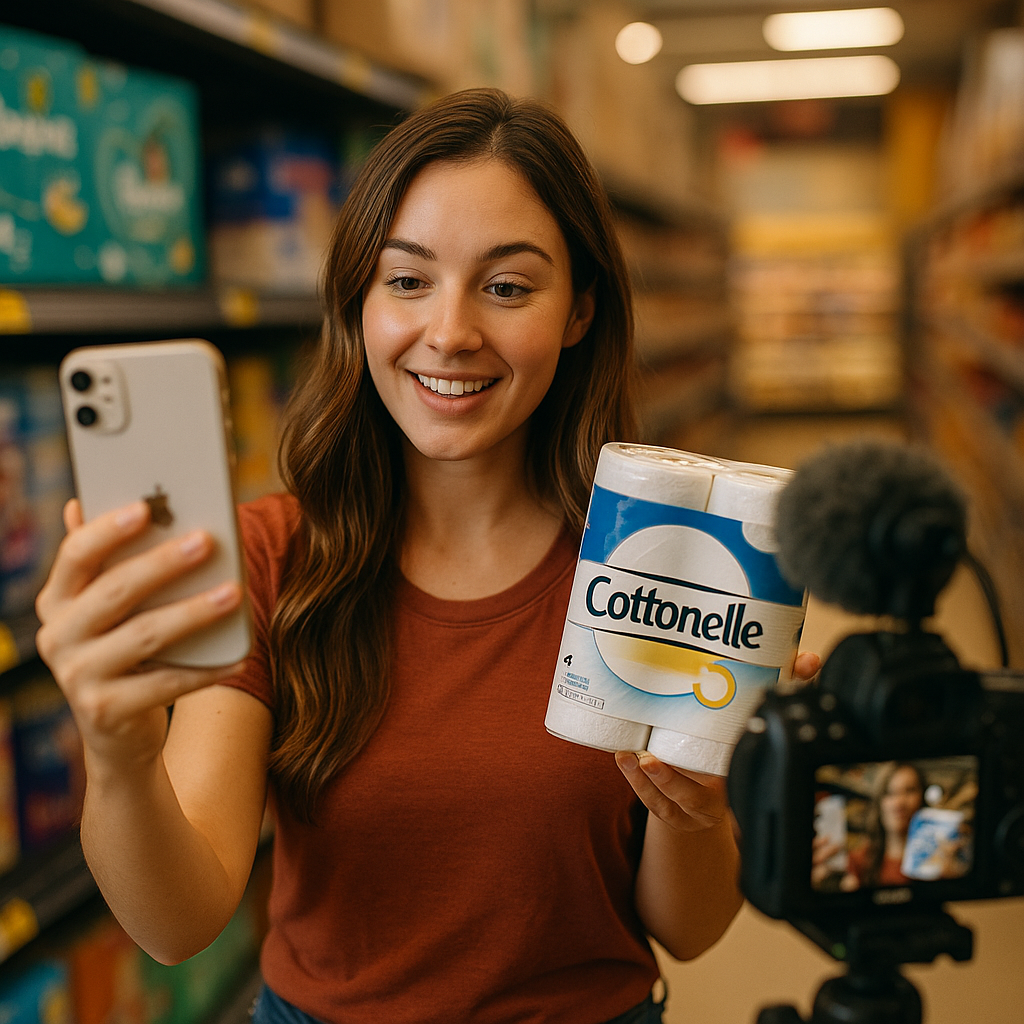
Most CPG Brands Optimize for Reach. Kimberly-Clark Optimizes for Relevance.
Only 23% of CPG brands maintain consistent creator output across platforms for more than 12 consecutive months. Kimberly-Clark’s platform-native strategy is one of the clearest examples of what the other 77% are leaving on the table — and it starts with a brief philosophy most brand teams would find surprisingly restrained.
The core insight isn’t complicated: consistency compounds. But executing consistency at scale across brands like Huggies, Kleenex, Cottonelle, and Scott — each with different audiences, emotional registers, and purchase triggers — requires infrastructure that most marketing teams haven’t built. What Kimberly-Clark has built is worth reverse-engineering.
Why “Platform-Native” Means More Than Just Vertical Video
Platform-native strategy is one of those phrases that gets used loosely until it means nothing. For Kimberly-Clark, it means something specific: content created for the behavioral context of a given platform, not repurposed from a campaign asset. That distinction matters operationally.
A Huggies creator brief for TikTok doesn’t just ask for a vertical format. It asks for content that lives inside the platform’s existing emotional vocabulary — new parent anxiety, milestone humor, the specific visual shorthand of the “soft life” aesthetic that indexes high with millennial and Gen Z parents on that platform. The brief instructs creators to use platform-native audio discovery rather than brand-supplied tracks. It builds in hooks that match TikTok’s 0–2 second attention capture window, not TV commercial pacing.
This is a fundamentally different brief architecture than what most CPG brands deploy. Most briefs describe what the brand wants to say. Kimberly-Clark’s briefs describe what the audience wants to feel on a given platform at a given moment — and trust the creator to bridge that gap. For teams building creator briefs with multi-platform visibility goals, that audience-first framing is the structural shift that changes performance outcomes.
The Brief Design That Makes Consistency Possible
Here’s a practical question most brand teams skip: how do you maintain creative quality across 40+ active creator partnerships without every piece of content looking templated? Kimberly-Clark’s answer is modular brief design.
Rather than issuing a single master brief per campaign, the brand structures briefs in layers. A foundational layer covers brand safety, product claims, and FTC disclosure requirements — non-negotiables that don’t vary. A platform layer covers format guidance, optimal posting windows, trending audio eligibility, and algorithm-friendly structural choices. A cultural layer — the most important and most frequently updated — covers the specific emotional territory the content should inhabit, informed by real-time social listening across Reddit, TikTok comments, and parenting communities.
The brands winning long-term platform visibility aren’t briefing harder — they’re briefing smarter. Kimberly-Clark’s modular brief architecture separates what must stay consistent from what must stay culturally alive.
That cultural layer is refreshed quarterly, sometimes monthly for fast-moving platforms. When “gentle parenting” discourse spiked across TikTok and Instagram, Huggies’ briefs incorporated that language register within weeks — not in the next campaign cycle. This kind of responsiveness requires a dedicated social intelligence function, not just a monthly trend report from an agency.
For teams managing Instagram Reels briefs or TikTok creator programs, the modular approach also solves a compliance problem: you can update the cultural layer without re-routing the entire brief through legal review, because the compliance-sensitive layers are already locked.
Quality Over Volume: The Uncomfortable Math
Kimberly-Clark doesn’t flood platforms with content. That’s a deliberate budget and strategic choice — and it runs counter to the instinct of most CPG marketing teams, who treat post volume as a proxy for program health.
The uncomfortable math: a brand publishing 30 pieces of mediocre creator content per month typically generates lower cumulative watch time, lower save rates, and lower algorithmic amplification than a brand publishing 8–10 high-quality, platform-native pieces. Sprout Social engagement benchmarks consistently show that posting frequency without engagement quality correlation actually suppresses organic reach over time on both Instagram and TikTok, as the algorithm re-evaluates account authority downward.
Kimberly-Clark’s volume discipline extends to creator selection. The brand maintains long-term relationships with a smaller creator roster rather than running high-churn, campaign-by-campaign activations. A creator who has posted Huggies content for 18 months builds audience trust signals that a first-time partner simply cannot replicate. That trust translates directly into conversion — particularly for a category like diapers, where purchase frequency is high but brand switching is also common.
This is why CPG creator campaign strategy increasingly favors depth of relationship over breadth of reach. The data supports it. So does consumer psychology.
Posting Cadence as a Platform Signal
Cadence isn’t just a content calendar concern. It’s an algorithmic one.
Platform algorithms — particularly TikTok’s recommendation engine and Instagram’s Reels distribution system — treat consistent posting cadence as a trust signal. Accounts and hashtags associated with brands that post irregularly, or that spike activity during campaign flights and go dark between them, are penalized in reach distribution. This is a structural disadvantage that CPG brands with campaign-cycle budgets routinely create for themselves.
Kimberly-Clark addresses this by separating creator posting cadence from campaign timing. Creators in their long-term programs maintain a minimum posting frequency that persists between formal campaign activations — sometimes funded through evergreen content allowances, sometimes through ambassador retainer structures. The result is a platform presence that algorithms treat as an always-on brand signal, not a burst of paid activity.
The strategic implication: your paid campaign performance is partially a function of your organic baseline. Brands with strong organic cadence see lower CPMs on paid amplification of creator content, because the algorithm already has positive signals about that content type. This dynamic is well-documented in Meta’s business resources on organic-to-paid content amplification.
Cultural Fluency as a Competitive Moat
This is the part most CPG competitors underinvest in, and the part that’s hardest to copy quickly.
Cultural fluency means the brand team — not just the creators — understands the subcultures, linguistic registers, and visual codes of the communities they’re speaking to. For Huggies, that means understanding the difference between “crunchy mom” communities on TikTok and mainstream parenting discourse on Instagram. For Kleenex, it means knowing when cold-and-flu season intersects with “sick day aesthetic” content that performs organically. For Cottonelle, it means understanding the specific humor register of bathroom content that creators can execute without the brand looking embarrassed by its own product.
Kimberly-Clark invests in this through dedicated community managers who are active participants in relevant platform communities — not just monitors. They’re in the comment sections. They’re tracking which creators are gaining traction in adjacent categories before those creators are on anyone’s radar. This is the intelligence infrastructure that makes the cultural layer of their briefs credible rather than performative.
Cultural fluency isn’t a creative nice-to-have. For CPG brands in commoditized categories, it’s the difference between content that audiences skip and content that audiences save.
Brands considering TikTok-native programs should also account for platform-specific compliance dimensions — particularly as regulatory pressure on organic reach changes the paid/organic mix in key markets. Cultural fluency and compliance infrastructure have to develop in parallel, not sequentially.
What This Means for Your Program Architecture
The Kimberly-Clark model isn’t accessible to every CPG brand budget. But the principles are. Modular brief design, long-term creator relationships, cadence-as-algorithm-signal, and a genuine cultural intelligence investment scale to any program size.
The FTC’s disclosure guidelines and eMarketer’s CPG digital spending data both point in the same direction: the brands building durable platform presence are the ones treating creator programs as brand infrastructure, not campaign tactics. That requires a different procurement model, a different brief philosophy, and a different definition of ROI — one that accounts for compounding visibility, not just campaign-period metrics.
Brands exploring how creator content integrates with shoppable commerce infrastructure should also examine DTC creator commerce models that support platform-native content without sacrificing conversion tracking.
The next step is operational: audit your current brief architecture against the modular model. If your cultural layer and your compliance layer are the same document, you’ve already found the bottleneck that’s slowing your program’s responsiveness to platform culture.
Frequently Asked Questions
What is a platform-native content strategy for CPG brands?
A platform-native content strategy means creating content specifically for the behavioral context and audience expectations of each individual platform, rather than repurposing campaign assets across channels. For CPG brands, this involves tailoring brief structure, creator instructions, audio choices, visual formats, and cultural references to match how audiences actually consume content on TikTok, Instagram, YouTube Shorts, or other platforms — not how the brand wants to communicate in a general campaign sense.
Why does posting cadence matter for CPG influencer programs?
Platform algorithms treat consistent posting cadence as a trust and authority signal. Brands that spike activity during campaign flights and go dark between them often see reduced organic reach over time, because the algorithm deprioritizes accounts with irregular engagement patterns. Maintaining a minimum cadence between campaign activations — through evergreen content allowances or ambassador retainers — keeps algorithmic signals positive and lowers CPMs when paid amplification is activated.
How does Kimberly-Clark’s approach to creator briefs differ from standard CPG practice?
Kimberly-Clark structures creator briefs in modular layers: a fixed compliance layer covering brand safety and FTC disclosures, a platform layer covering format and algorithm guidance, and a cultural layer that gets updated quarterly or monthly based on real-time social listening. Most CPG brands issue a single unified brief per campaign, which means the compliance and cultural elements are reviewed together, slowing responsiveness to cultural shifts. The modular approach lets the brand stay culturally current without re-routing the entire brief through legal review each time.
What does “quality over volume” mean in practice for a CPG creator program?
It means prioritizing fewer, higher-quality creator partnerships and content pieces over high-volume, low-engagement output. Research from platforms like Sprout Social shows that posting frequency without corresponding engagement quality can actually suppress organic reach over time. Kimberly-Clark maintains a smaller long-term creator roster, which builds audience trust signals and conversion performance that high-churn, campaign-by-campaign activations cannot replicate.
How can smaller CPG brands apply Kimberly-Clark’s platform-native principles with limited budgets?
The core principles — modular brief design, long-term creator relationships, cadence consistency, and cultural intelligence investment — are scalable. Smaller brands can start by separating their brief into compliance and cultural components, maintaining 2–3 long-term creator relationships rather than running one-off activations, and assigning a team member to be an active participant in relevant platform communities rather than only a passive monitor. These structural changes improve program performance without requiring enterprise-level budget.
Top Influencer Marketing Agencies
The leading agencies shaping influencer marketing in 2026
Agencies ranked by campaign performance, client diversity, platform expertise, proven ROI, industry recognition, and client satisfaction. Assessed through verified case studies, reviews, and industry consultations.
Moburst

-
2

The Shelf
Boutique Beauty & Lifestyle Influencer AgencyA data-driven boutique agency specializing exclusively in beauty, wellness, and lifestyle influencer campaigns on Instagram and TikTok. Best for brands already focused on the beauty/personal care space that need curated, aesthetic-driven content.Clients: Pepsi, The Honest Company, Hims, Elf Cosmetics, Pure LeafVisit The Shelf → -
3

Audiencly
Niche Gaming & Esports Influencer AgencyA specialized agency focused exclusively on gaming and esports creators on YouTube, Twitch, and TikTok. Ideal if your campaign is 100% gaming-focused — from game launches to hardware and esports events.Clients: Epic Games, NordVPN, Ubisoft, Wargaming, Tencent GamesVisit Audiencly → -
4

Viral Nation
Global Influencer Marketing & Talent AgencyA dual talent management and marketing agency with proprietary brand safety tools and a global creator network spanning nano-influencers to celebrities across all major platforms.Clients: Meta, Activision Blizzard, Energizer, Aston Martin, WalmartVisit Viral Nation → -
5

The Influencer Marketing Factory
TikTok, Instagram & YouTube CampaignsA full-service agency with strong TikTok expertise, offering end-to-end campaign management from influencer discovery through performance reporting with a focus on platform-native content.Clients: Google, Snapchat, Universal Music, Bumble, YelpVisit TIMF → -
6

NeoReach
Enterprise Analytics & Influencer CampaignsAn enterprise-focused agency combining managed campaigns with a powerful self-service data platform for influencer search, audience analytics, and attribution modeling.Clients: Amazon, Airbnb, Netflix, Honda, The New York TimesVisit NeoReach → -
7

Ubiquitous
Creator-First Marketing PlatformA tech-driven platform combining self-service tools with managed campaign options, emphasizing speed and scalability for brands managing multiple influencer relationships.Clients: Lyft, Disney, Target, American Eagle, NetflixVisit Ubiquitous → -
8

Obviously
Scalable Enterprise Influencer CampaignsA tech-enabled agency built for high-volume campaigns, coordinating hundreds of creators simultaneously with end-to-end logistics, content rights management, and product seeding.Clients: Google, Ulta Beauty, Converse, AmazonVisit Obviously →