


The Production Gap Is Closing — Fast
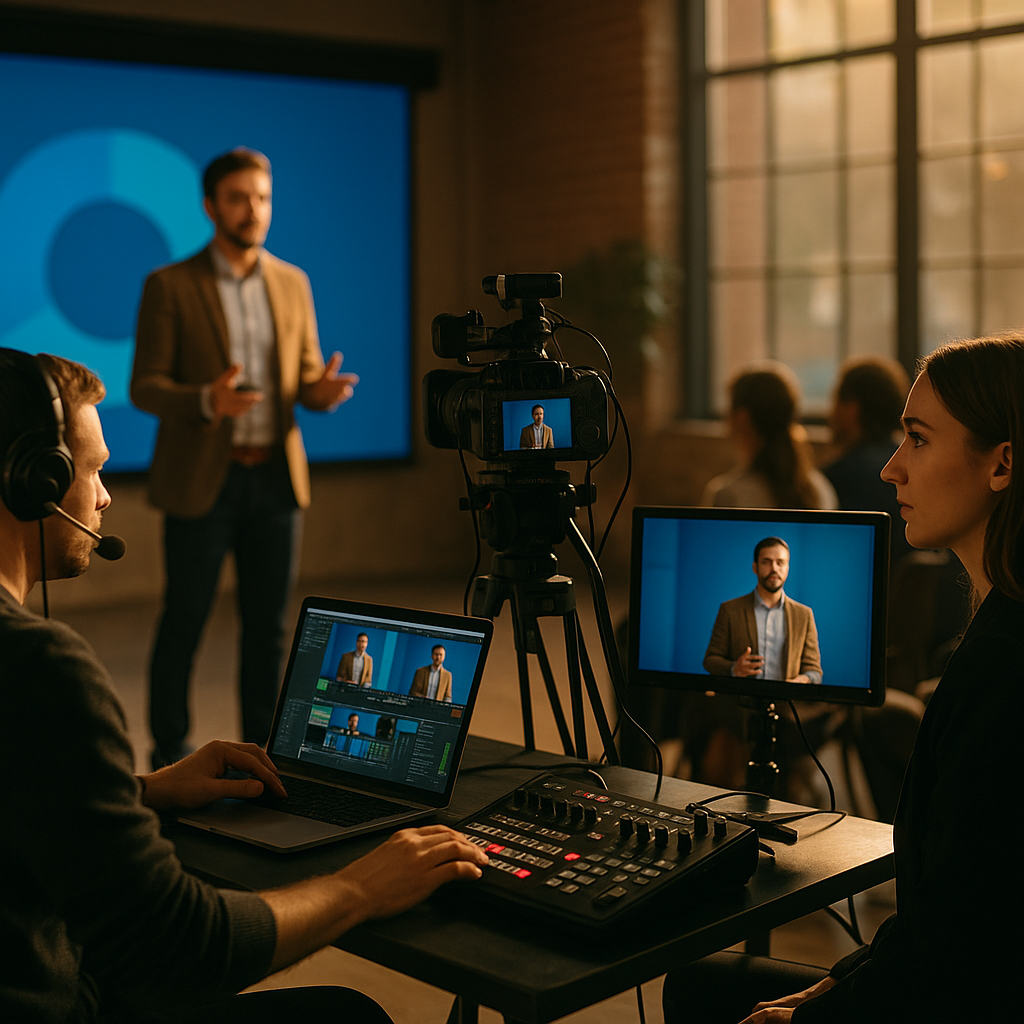
Sixty-eight percent of consumers say production quality directly influences their perception of brand credibility during live shopping events. That single stat should reframe how mid-market brands think about creator-hosted product launches. Broadcast quality creator live events are no longer a luxury reserved for Fortune 500 budgets — and the brands that recognize this shift first are building a durable competitive advantage.
Why Live Production Quality Became a Commerce Variable
Live commerce is no longer a novelty. Platforms like TikTok Shop, YouTube Shopping, and Amazon Live have conditioned audiences to expect a certain floor of production professionalism. Drop below that floor and you don’t just look cheap — you signal risk to buyers sitting on the fence about a purchase decision.
Enterprise brands understood this years ago. They built studio infrastructure, hired broadcast directors, and locked in satellite uplinks and fiber connections for flagship events. Mid-market brands watched from the sidelines, told themselves the investment didn’t pencil out, and settled for a creator with a ring light and a decent smartphone.
That calculus is broken now. Mobile broadcast-grade hardware — specifically technologies in the TVU Go category — has collapsed the barrier between consumer-grade streaming and broadcast-quality live production. A creator can now transmit a multi-camera, low-latency, broadcast-spec stream from virtually any location using bonded cellular, without a production truck, without a crew of twenty, and without a six-figure infrastructure invoice.
The question for mid-market brand strategists isn’t whether broadcast-quality live events are achievable — it’s whether your competitors are already running them while you’re still debating the budget line item.
What TVU Go-Level Infrastructure Actually Means for Brand Teams
TVU Go is a professional mobile live transmission solution that bonds multiple cellular connections to deliver broadcast-quality video streams — the same technology used by news networks for remote reporting. When we reference “TVU Go-level infrastructure,” we’re describing a category of tools that deliver reliable, low-latency, broadcast-spec streaming from mobile setups, without dependence on fragile venue Wi-Fi or expensive satellite uplinks.
For brand teams, here’s what that means operationally:
- Location independence: Creator-hosted launches can happen in experiential venues, rooftop settings, retail floors, or outdoor activations — anywhere that makes sense for the brand story, not wherever fiber happens to terminate.
- Multi-camera production: Directors can switch between angles in real time, matching the visual language audiences associate with polished broadcast content.
- Redundancy: Bonded cellular means a dropped connection on one carrier doesn’t kill your stream — critical when a product launch moment is driving real-time purchase intent.
- Scalable crew requirements: A lean team of three or four people can execute what previously required a full OB (outside broadcast) unit.
The downstream brand perception impact is significant. Brands that have moved to this infrastructure tier report that their creator-hosted events are frequently mistaken for network-produced content — and that confusion is the point. Credibility by association is real. If your product launch looks like it belongs on a streaming platform, the product feels like it belongs in that tier too.
The Creator Side of This Equation
Creators who are serious about long-term brand partnership revenue are already investing in or seeking access to this infrastructure. They understand that brands paying $50K–$150K for a creator-hosted commerce event aren’t just buying reach — they’re buying the full production value that makes the event worth broadcasting.
For brand teams briefing these creators, the framing matters. Rather than treating production infrastructure as a cost to negotiate down, treat it as a creative constraint that unlocks new formats. A multi-camera live event with broadcast-quality switching allows for demo segments, audience Q&A windows, countdown overlays, in-stream checkout integrations, and narrative arcs that single-camera streams simply can’t support. When you’re briefing creators for shoppable experiences, the production spec is part of the brief — not an afterthought.
Creators with TVU Go-level capability are also able to stream simultaneously to YouTube, TikTok, and Instagram Live with consistent quality across all outputs. That multi-destination broadcast model changes your reach math entirely.
How Mid-Market Brands Are Actually Deploying This
Consider a DTC skincare brand in the $40M–$80M revenue range. Previously, their product launch event options were binary: rent a studio in LA for a scripted livestream that costs $80K and feels sterile, or let a creator go live from their home setup and accept the quality ceiling that comes with it.
With mobile broadcast infrastructure, that same brand can host a creator-led launch event at a boutique hotel suite, a garden location, or a co-branded pop-up — locations that reinforce their brand aesthetic — with broadcast-spec output at a total production cost in the $15K–$30K range for a two-to-three hour event. The visual quality is indistinguishable from a studio production. The environment is on-brand. The creator’s natural energy is preserved because they’re in a real space, not a green screen setup.
This is not theoretical. Brands in beauty, wellness, fashion, and specialty food are running this playbook now. The operational infrastructure to support it — bonded cellular transmitters, portable multi-camera switching hardware, cloud encoding platforms — has commoditized enough that production companies specializing in creator events are offering it as a standard service tier.
Pairing this production capability with smart live commerce creator briefing is what separates brands that execute well from those that simply have the right equipment.
Production quality sets the stage, but conversion architecture — how you structure the live event for purchase intent — is what turns viewership into revenue. Both have to be engineered in the brief.
Risk, Compliance, and Brand Safety at Scale
Broadcast-quality events also introduce broadcast-level accountability. When your creator-hosted stream looks like a network production, audiences and regulators hold it to that standard. The FTC’s disclosure requirements for sponsored content apply in live streaming contexts — and a professional-looking stream with an undisclosed commercial relationship is a more visible compliance target than a casual creator post.
Brand safety considerations extend to stream content moderation. Live chat, real-time product claims, and unscripted creator commentary all carry risk. Brands investing in production quality need to invest equally in pre-event briefing on claim boundaries, live chat moderation staffing, and a kill-switch protocol if something goes sideways on air. This is where a structured creator brief that documents approved claims, prohibited language, and escalation procedures becomes non-negotiable.
There’s also the question of content rights post-event. Broadcast-quality VOD from a creator live event is a significant content asset — for organic repurposing, paid amplification, and retail media placements. Establishing rights ownership clearly in the contract before the event is a discipline that the production quality upgrade should prompt. For teams managing UGC rights clearance at scale, live event content should be built into that workflow from the start.
The Competitive Window Won’t Stay Open Long
Infrastructure advantages commoditize quickly in marketing. The window where TVU Go-level mobile production is a genuine differentiator — where mid-market brands can genuinely look like enterprise operations — is probably a 24-to-36 month window before this becomes table stakes. eMarketer’s live commerce projections consistently show audience expectations rising alongside platform investment in live shopping infrastructure.
Brands that move now establish creator relationships, production workflows, and audience expectations anchored to broadcast quality. Brands that wait will be catching up to a standard their competitors set. The gap between TV-caliber aesthetics and creator content is closing from both directions — and the brands at the intersection will own the credibility dividend.
For teams evaluating platform strategy, YouTube’s live commerce tools and TikTok’s shopping infrastructure are both investing heavily in features that reward production quality with algorithmic distribution advantages. That’s not incidental — it’s a direct incentive structure for upgrading your live event production tier.
The operational move: audit your next two creator-hosted live events and determine whether the production spec is commensurate with the audience expectation and purchase intent you’re trying to generate. If there’s a gap, close it before your Q4 launch calendar locks.
—
Frequently Asked Questions
What is TVU Go-level mobile streaming infrastructure?
TVU Go is a professional mobile live transmission platform that bonds multiple cellular connections to deliver broadcast-quality, low-latency video streams. “TVU Go-level infrastructure” refers to a category of mobile broadcast tools that enable professional-grade streaming from any location without reliance on studio facilities or satellite uplinks — the same technology used by broadcast news networks for remote field transmission.
How much does a broadcast-quality creator live event cost for a mid-market brand?
With modern mobile broadcast infrastructure, a mid-market brand can execute a broadcast-quality creator-hosted live event for approximately $15,000–$30,000 for a two-to-three hour production, including mobile broadcast hardware, a lean production crew, and multi-camera switching. This compares favorably to traditional studio livestream productions, which often run $60,000–$100,000 or more for comparable output quality.
What platforms support broadcast-quality creator live events?
YouTube Live, TikTok Live, Instagram Live, and Amazon Live all support broadcast-quality RTMP or SRT stream ingest, meaning a TVU Go-level mobile production can simultaneously broadcast to multiple platforms with consistent quality. YouTube and TikTok in particular have invested heavily in live commerce infrastructure that rewards higher production quality with improved algorithmic distribution.
What compliance risks should brands address for creator-hosted live events?
FTC disclosure requirements apply to live streaming sponsored content — creators must clearly disclose commercial relationships in real time. Brands should also address live product claim boundaries in pre-event briefing, establish live chat moderation protocols, and define a content intervention procedure for off-script moments. Post-event VOD content should be covered by explicit rights agreements established before the event.
How does broadcast production quality affect live commerce conversion rates?
Production quality functions as a credibility signal during live commerce events — audiences associate broadcast-quality visual presentation with brand authority and product confidence. Research indicates that production quality directly influences brand credibility perception, which in turn affects purchase intent. Brands using broadcast-spec live production for creator-hosted launches consistently report stronger conversion rates and higher average order values compared to lower-production-quality streams targeting the same audience segments.
Top Influencer Marketing Agencies
The leading agencies shaping influencer marketing in 2026
Agencies ranked by campaign performance, client diversity, platform expertise, proven ROI, industry recognition, and client satisfaction. Assessed through verified case studies, reviews, and industry consultations.
Moburst

-
2

The Shelf
Boutique Beauty & Lifestyle Influencer AgencyA data-driven boutique agency specializing exclusively in beauty, wellness, and lifestyle influencer campaigns on Instagram and TikTok. Best for brands already focused on the beauty/personal care space that need curated, aesthetic-driven content.Clients: Pepsi, The Honest Company, Hims, Elf Cosmetics, Pure LeafVisit The Shelf → -
3

Audiencly
Niche Gaming & Esports Influencer AgencyA specialized agency focused exclusively on gaming and esports creators on YouTube, Twitch, and TikTok. Ideal if your campaign is 100% gaming-focused — from game launches to hardware and esports events.Clients: Epic Games, NordVPN, Ubisoft, Wargaming, Tencent GamesVisit Audiencly → -
4

Viral Nation
Global Influencer Marketing & Talent AgencyA dual talent management and marketing agency with proprietary brand safety tools and a global creator network spanning nano-influencers to celebrities across all major platforms.Clients: Meta, Activision Blizzard, Energizer, Aston Martin, WalmartVisit Viral Nation → -
5

The Influencer Marketing Factory
TikTok, Instagram & YouTube CampaignsA full-service agency with strong TikTok expertise, offering end-to-end campaign management from influencer discovery through performance reporting with a focus on platform-native content.Clients: Google, Snapchat, Universal Music, Bumble, YelpVisit TIMF → -
6

NeoReach
Enterprise Analytics & Influencer CampaignsAn enterprise-focused agency combining managed campaigns with a powerful self-service data platform for influencer search, audience analytics, and attribution modeling.Clients: Amazon, Airbnb, Netflix, Honda, The New York TimesVisit NeoReach → -
7

Ubiquitous
Creator-First Marketing PlatformA tech-driven platform combining self-service tools with managed campaign options, emphasizing speed and scalability for brands managing multiple influencer relationships.Clients: Lyft, Disney, Target, American Eagle, NetflixVisit Ubiquitous → -
8

Obviously
Scalable Enterprise Influencer CampaignsA tech-enabled agency built for high-volume campaigns, coordinating hundreds of creators simultaneously with end-to-end logistics, content rights management, and product seeding.Clients: Google, Ulta Beauty, Converse, AmazonVisit Obviously →