


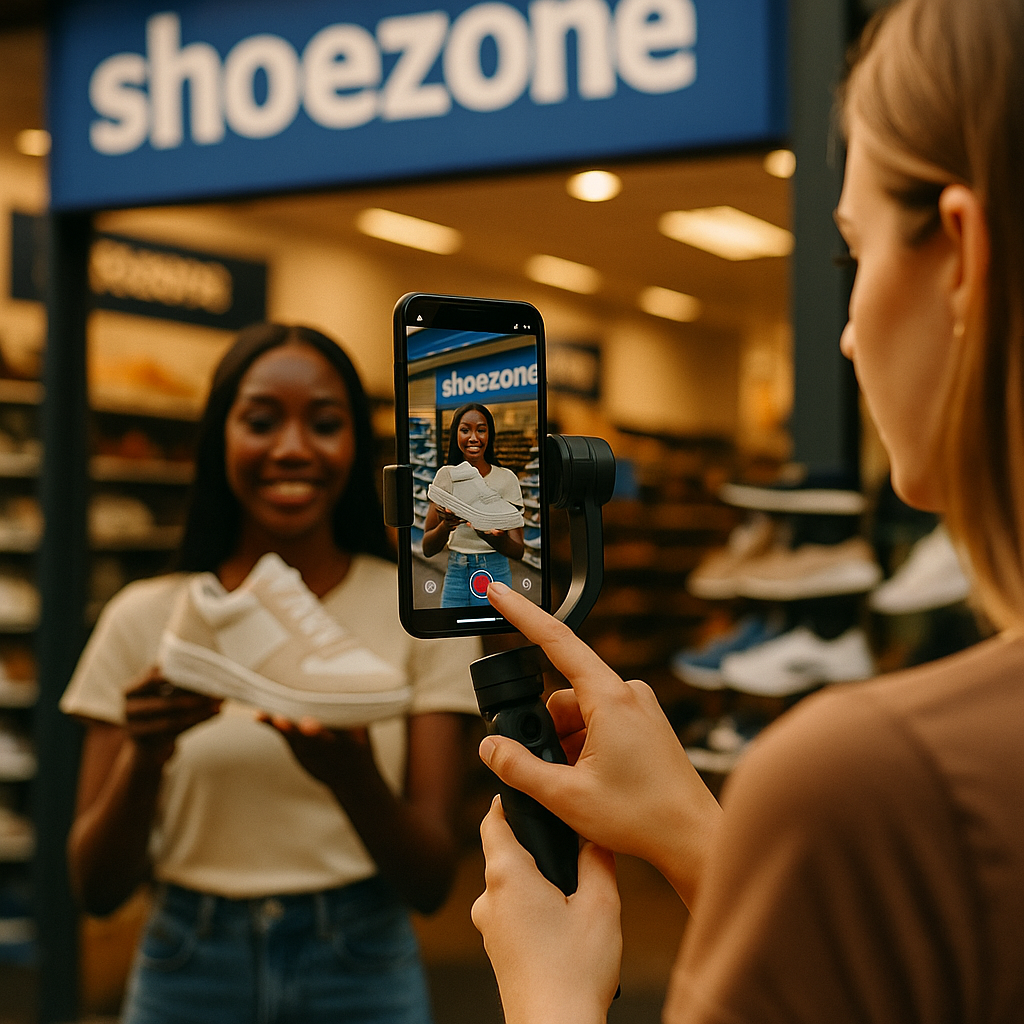
Fewer than 20% of traditional footwear retailers have a functioning TikTok Shop strategy. Shoezone just changed its position on that list, and the mechanics behind its launch tell brand teams exactly what a disciplined social-commerce entry looks like in practice.
Why Shoezone’s Move Matters Beyond the Headlines
Shoezone is not a luxury brand. It’s a value-positioned British footwear chain with over 400 stores and a customer base that skews older. Launching on TikTok Shop is not the obvious play. That’s precisely what makes it interesting.
The decision signals a deliberate audience expansion strategy, not a vanity play. Shoezone is using TikTok Shop as a channel to reach 16-to-28-year-old shoppers who would never walk into a high street store voluntarily but will absolutely buy £15 trainers if a creator they follow makes the recommendation feel native. That’s the bet. And it’s a smart one.
For brand strategists watching from the sidelines, the Shoezone approach offers a replicable framework. The entry architecture, creator brief structure, and attribution setup are all worth dissecting.
TikTok Shop Entry Architecture: What “Launching Right” Actually Requires
Most brands botch their TikTok Shop launches by treating the platform like a product catalog with video thumbnails. Shoezone’s approach appears to follow the more sophisticated model: content-first, commerce-second. The shop functionality sits behind organic discovery, not in front of it.
The entry architecture has three operational layers worth noting:
- Product selection discipline: Not the full catalog. A curated set of hero SKUs with strong visual appeal, low price-point friction, and fast dispatch capability. TikTok Shop’s conversion is impulse-driven. Products priced under £30 consistently outperform in the first 90 days of a new shop launch.
- Creator affiliate onboarding: Using TikTok’s native TikTok Shop affiliate program to recruit creators at scale rather than managing bilateral deals. This reduces operational overhead and enables rapid testing across creator tiers.
- Storefront content cadence: Feeding the shop with a consistent volume of short-form video content from both the brand account and affiliate creators. Algorithmic visibility on TikTok Shop is correlated with content frequency, not just spend.
The practical implication: if your brand is planning a TikTok Shop entry, the first 60 days are about seeding the right creators and establishing content velocity, not optimizing conversion rate. The latter is a second-phase problem.
TikTok Shop’s discovery algorithm rewards content volume from diverse creator sources. A brand with 30 affiliate creators posting twice weekly will consistently outrank a brand running a single polished hero campaign in the Shop tab.
Creator Link Attribution: The Operational Problem Nobody Talks About Loudly
Here’s where it gets technically important for anyone running a multi-creator program. TikTok Shop’s native affiliate attribution assigns commission and tracks conversions through in-app product links, which sounds clean. In practice, it creates a measurement challenge the moment creators start directing traffic from multiple content surfaces: TikTok organic posts, TikTok LIVE, Stories (where applicable), and off-platform channels like Instagram Reels or YouTube Shorts reposts.
Shoezone’s category (affordable footwear) means creators are likely posting across platforms simultaneously. A creator might feature the same white trainers in a TikTok affiliate post and an Instagram Reel with a link-in-bio. Without cross-channel attribution architecture, Shoezone’s performance team is only seeing a fraction of the creator-influenced revenue picture.
The attribution stack that resolves this typically combines:
- TikTok Shop’s native affiliate dashboard for in-app conversion data
- UTM-parameterized URLs for any off-platform creator placements
- A third-party attribution or analytics layer (tools like Northbeam, Triple Whale, or AI-driven attribution platforms) to stitch cross-channel signals
- Creator-specific discount codes as a secondary attribution signal, especially useful for LIVE commerce sessions where click-through is lower
This isn’t an edge case. Any retailer running TikTok Shop alongside a broader creator program will hit this problem. The brands building durable attribution infrastructure now are the ones that will make smarter budget allocation decisions six months in. For a deeper look at how brands are tackling this challenge more broadly, Unilever’s mass creator attribution approach is instructive.
Targeting Younger Shoppers: The Demographic Shift Shoezone Is Engineering
Shoezone’s existing customer base is heavily weighted toward family shoppers and older demographics. TikTok Shop is the surgical tool for audience expansion rather than a replacement channel.
This dual-audience model has real operational tension. The brand identity that resonates with a 45-year-old value-conscious parent is not the same identity that makes a 19-year-old feel like buying is a cultural act. The creator brief becomes the translation layer.
What effective creator briefs for this use case look like in practice:
- Tone latitude: Allow creators to speak in their own register. A creator with a Gen Z audience built on self-deprecating humor should not be forced into a product demo format. Give them the product, a key claim, and a conversion link. Let them build the context.
- Trend-adjacent hooks: Brief creators to connect products to existing TikTok content verticals (outfit check, “get ready with me,” wardrobe hauls) rather than inventing new formats. Algorithmic distribution rewards trend participation.
- Price transparency: For value footwear, the price IS the hook. Brief creators explicitly to feature the price point. “These are £14.99” is a more effective opening than any lifestyle framing for TikTok Shop conversion.
Brands like PepsiCo have demonstrated how precise TikTok creator briefs generate active attention rather than passive scroll-past. The same principle applies in retail commerce: creator brief structure directly determines whether content converts or entertains without commercial outcome.
The Retail Brand Entry Playbook: What Other Retailers Should Extract
Shoezone’s launch is a case study in measured platform entry rather than a big-bang launch. That’s the transferable lesson.
Traditional retailers entering TikTok Shop often make one of two errors. The first is over-investment in production quality (polished studio content that feels out of place in a native feed). The second is under-investment in creator relationship infrastructure (dropping product links with no affiliate support, brief, or commission clarity). Both failure modes are avoidable.
The practical entry sequence for retail brands:
- Phase 1 (weeks 1-4): Establish the storefront, select 5-10 hero SKUs, set affiliate commission rates at or above category average to attract creator attention early
- Phase 2 (weeks 5-12): Onboard 20-50 micro and mid-tier creators via the affiliate marketplace; prioritize content velocity over production quality
- Phase 3 (weeks 13+): Identify top-performing creators for deeper partnerships, introduce LIVE commerce sessions, and begin paid amplification on organic content that has already demonstrated organic pull
Retailers who have shifted toward social video as a primary discovery channel consistently outperform those still relying on static paid social. Social video-led retail strategies are producing measurably stronger engagement and conversion metrics, which makes the case for Shoezone’s approach even stronger.
The brands winning on TikTok Shop right now are not the ones with the biggest budgets. They’re the ones with the tightest creator brief architecture and the willingness to let creators own the narrative.
Platform-side data from eMarketer consistently shows TikTok driving higher purchase intent among 18-34 demographics than any other social platform. For a value footwear retailer, that’s the addressable market expansion Shoezone needs.
One more operational consideration: compliance. TikTok Shop affiliate content requires clear disclosure under FTC guidelines and the UK’s ASA standards. Brands running UK-based creator programs should ensure their affiliate terms explicitly require disclosure language in every post and LIVE session. Non-compliance risk sits with the brand, not just the creator, when systematic failures occur. For retail programs scaling fast, a compliance audit process built into creator onboarding is non-negotiable.
For teams interested in the creator compensation dimension, Gymshark’s performance-based tier model offers a comparable retail-adjacent framework. And if your brand is in early-stage creator program design, the Target shoppable link approach shows how a large retailer structured its dual-creator program for measurable conversion outcomes.
The broader Statista data on social commerce adoption rates makes the directional case clearly: social-first commerce is not a trend to monitor. It is a channel to resource properly now.
Shoezone’s TikTok Shop launch is not a story about one footwear retailer. It’s a signal about where the retail acquisition economy is heading and which brand teams are building the operational muscle to participate in it.
Your immediate next step: Audit your current TikTok Shop affiliate commission structure against category benchmarks, and map your attribution stack before you scale creator volume. Both gaps are cheaper to fix before launch than after.
Frequently Asked Questions
What is TikTok Shop affiliate attribution and why does it matter for retailers?
TikTok Shop’s affiliate attribution system tracks conversions that originate from creator product links posted within the TikTok platform. When a creator tags a product in their video or LIVE session, the resulting purchases are attributed to that creator for commission purposes. For retailers, this matters because it directly ties creator content to revenue, enables performance-based compensation, and creates a feedback loop for identifying which creators and content formats drive the highest return. The challenge is that this attribution only captures in-app conversions, meaning off-platform creator activity on Instagram or YouTube requires supplementary tracking infrastructure.
How should a retail brand structure its TikTok Shop launch to target younger shoppers effectively?
A phased approach works best. Start by selecting hero SKUs with strong visual appeal and low price-point friction (under £30 for impulse categories). Onboard 20-50 micro and mid-tier creators through TikTok’s native affiliate marketplace rather than managing bilateral deals. Brief creators to use trend-adjacent content formats like outfit checks or haul videos, and specifically instruct them to feature the price point prominently. Avoid over-directing tone. Gen Z audiences respond to creator-native voice, not brand-scripted product demos. Scale what performs in the first 90 days using paid amplification on organic content that has already shown pull.
What creator types work best for value footwear brands on TikTok Shop?
Micro-creators (10,000-100,000 followers) with high engagement rates in fashion, lifestyle, or budget shopping verticals consistently outperform mega-influencers for value retail categories. Their audiences trust their product opinions, their content feels native rather than commercial, and their commission costs are lower. For a brand like Shoezone, prioritizing creators whose audience demographic skews 18-28 and who regularly post outfit, haul, or “affordable finds” content will produce stronger conversion rates than broader celebrity-style partnerships.
How do UK retailers manage compliance for TikTok Shop creator content?
UK-based creator programs must comply with ASA (Advertising Standards Authority) rules requiring clear disclosure of any paid or affiliate relationship. This means creators must label content as an ad or affiliate post in a visible, unambiguous way. Brands should build disclosure requirements into their affiliate terms and conditions, conduct periodic content audits, and implement a reporting process for non-compliant posts. Compliance responsibility does not sit solely with the creator; brands can face regulatory scrutiny if systematic undisclosure is identified across their program.
What attribution tools should retailers use alongside TikTok Shop’s native dashboard?
TikTok Shop’s native affiliate dashboard provides in-app conversion data, but retailers running multi-channel creator programs need a supplementary layer. Tools like Northbeam, Triple Whale, or enterprise-level AI attribution platforms can stitch cross-channel signals and provide a more complete revenue picture. UTM-parameterized URLs for off-platform creator placements and creator-specific discount codes for LIVE sessions are low-cost additions that significantly improve attribution accuracy without requiring a full platform overhaul.
Top Influencer Marketing Agencies
The leading agencies shaping influencer marketing in 2026
Agencies ranked by campaign performance, client diversity, platform expertise, proven ROI, industry recognition, and client satisfaction. Assessed through verified case studies, reviews, and industry consultations.
Moburst

-
2

The Shelf
Boutique Beauty & Lifestyle Influencer AgencyA data-driven boutique agency specializing exclusively in beauty, wellness, and lifestyle influencer campaigns on Instagram and TikTok. Best for brands already focused on the beauty/personal care space that need curated, aesthetic-driven content.Clients: Pepsi, The Honest Company, Hims, Elf Cosmetics, Pure LeafVisit The Shelf → -
3

Audiencly
Niche Gaming & Esports Influencer AgencyA specialized agency focused exclusively on gaming and esports creators on YouTube, Twitch, and TikTok. Ideal if your campaign is 100% gaming-focused — from game launches to hardware and esports events.Clients: Epic Games, NordVPN, Ubisoft, Wargaming, Tencent GamesVisit Audiencly → -
4

Viral Nation
Global Influencer Marketing & Talent AgencyA dual talent management and marketing agency with proprietary brand safety tools and a global creator network spanning nano-influencers to celebrities across all major platforms.Clients: Meta, Activision Blizzard, Energizer, Aston Martin, WalmartVisit Viral Nation → -
5

The Influencer Marketing Factory
TikTok, Instagram & YouTube CampaignsA full-service agency with strong TikTok expertise, offering end-to-end campaign management from influencer discovery through performance reporting with a focus on platform-native content.Clients: Google, Snapchat, Universal Music, Bumble, YelpVisit TIMF → -
6

NeoReach
Enterprise Analytics & Influencer CampaignsAn enterprise-focused agency combining managed campaigns with a powerful self-service data platform for influencer search, audience analytics, and attribution modeling.Clients: Amazon, Airbnb, Netflix, Honda, The New York TimesVisit NeoReach → -
7

Ubiquitous
Creator-First Marketing PlatformA tech-driven platform combining self-service tools with managed campaign options, emphasizing speed and scalability for brands managing multiple influencer relationships.Clients: Lyft, Disney, Target, American Eagle, NetflixVisit Ubiquitous → -
8

Obviously
Scalable Enterprise Influencer CampaignsA tech-enabled agency built for high-volume campaigns, coordinating hundreds of creators simultaneously with end-to-end logistics, content rights management, and product seeding.Clients: Google, Ulta Beauty, Converse, AmazonVisit Obviously →