


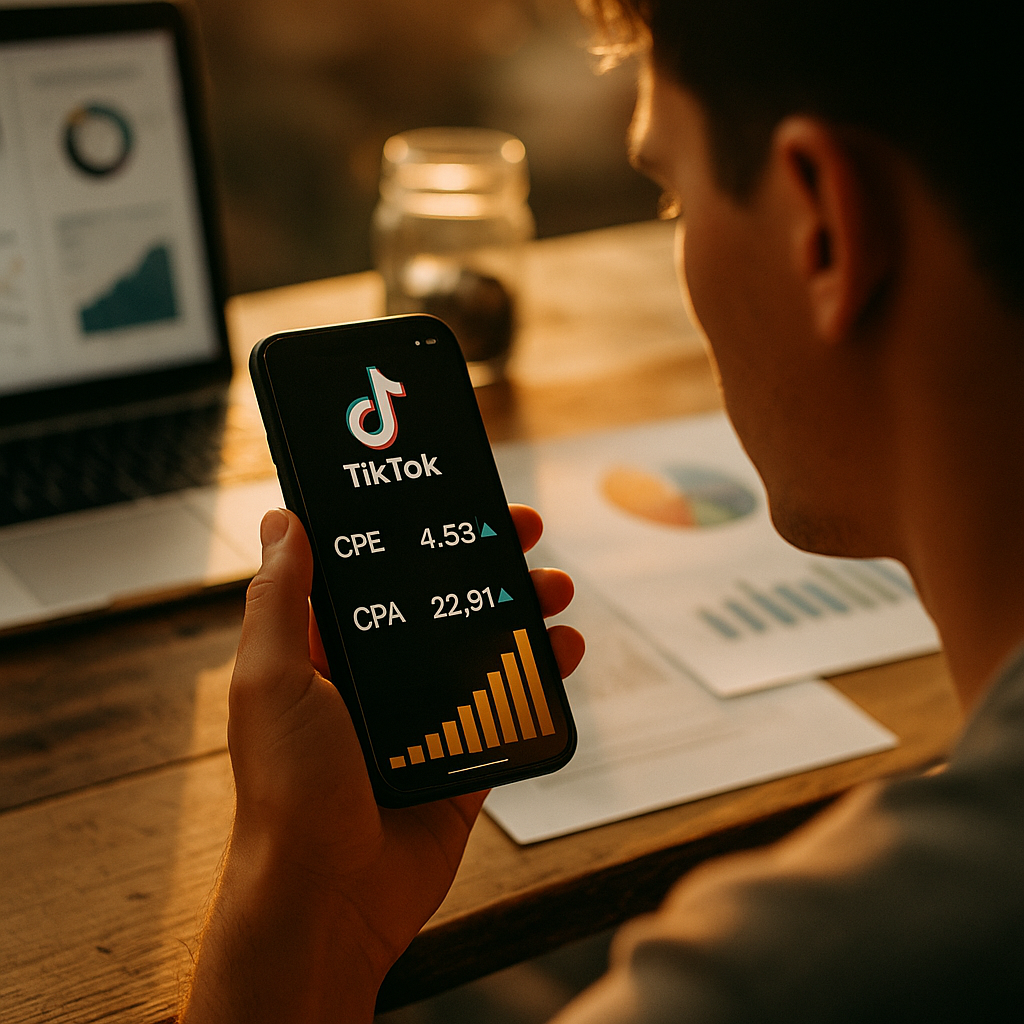
TikTok’s micro-creator segment, creators with 10K to 250K followers, is no longer the budget-friendly arbitrage play it was two years ago. CPE benchmarks in this tier have climbed 30-45% over the past 18 months, and brands still running campaigns on 2023-era rate assumptions are quietly bleeding margin on every activation. If your budget model hasn’t been rebuilt to reflect the new pricing reality, this article will show you exactly where to start.
The Micro-Creator Middle Class Is a Real Economic Force Now
Call it the professionalization of the middle tier. Creators in the 10K-250K follower band have figured out their leverage. They have tight audience relationships, strong comment section trust, and conversion rates that routinely outperform macro-influencers in categories like beauty, food, personal finance, and fitness. Platforms have noticed. TikTok’s creator marketplace now surfaces engagement quality signals alongside raw follower counts, giving mid-tier creators better visibility to brand buyers than they’ve ever had before.
The result: these creators have options. Competing brand offers. Agencies pitching them roster deals. And increasingly, the confidence to hold firm on rates that would have seemed aggressive 24 months ago.
For brand-side teams, the practical implication is that the old “volume of micro activations at low cost” playbook has a ceiling. You can still run it, but the economics are tighter, and the margin for error on creator selection is smaller. See how TikTok data is reshaping micro rate cards to understand how the supply side has shifted.
What the CPE and CPA Benchmark Shifts Actually Mean for Budget Modeling
Let’s get specific. Cost-per-engagement for TikTok micro-creators in high-competition verticals (beauty, apparel, wellness) has moved from a $0.03-0.06 range to $0.08-0.14 in many reported benchmarks. Cost-per-acquisition figures, when tracked through TikTok Shop affiliate links or pixel attribution, show similar pressure: CPA in the $18-35 range for mid-tier fashion creators is becoming more common, versus the sub-$15 CPAs brands were modeling in prior planning cycles.
If your Q3 campaign brief still uses last year’s CPE assumptions, you’re not running a campaign strategy — you’re running a budget fiction. Rebuild your benchmarks before you brief a single creator.
The modeling fix is not complicated, but it requires discipline. First, segment your creator tiers at the campaign planning stage, not the reporting stage. Separate your 10K-50K “nano-micro” tier from your 50K-250K “established micro” tier, because their pricing trajectories have diverged. The lower band is still more price-competitive; the upper band is where the rate inflation is most acute.
Second, build in a 15-20% rate buffer as a standard line item in your micro-creator budget, not as a contingency fund but as an expected cost of market-rate negotiation. Third, pull benchmark data from platforms like Sprout Social or third-party tools like Influencer Hero and Modash quarterly, not annually. The gap between your internal assumptions and market reality widens faster than most planning cycles accommodate.
Rate Negotiation Has Changed — Stop Anchoring on Follower Count
The single most costly mistake brand teams make in creator negotiations right now is using follower count as the primary pricing anchor. A creator with 80K followers and a 7% engagement rate on TikTok is worth materially more than a creator with 200K followers and a 1.2% rate, full stop. Sophisticated creators know this. Their managers know this. And if your team is still quoting rates based on follower brackets from an IAB rate card that wasn’t updated recently, you’re negotiating from a position of ignorance.
The better anchor set: engagement rate, view-to-follower ratio, comment sentiment quality, and prior CPA performance if available. For a deeper look at how frameworks are evolving, the IAB-UK creator qualification framework offers a structured approach to tiering creators by capability, not just reach.
Practically, this means your negotiation prep needs to include a creator’s last 30-day performance pull, not just their media kit. Ask for native TikTok analytics screenshots (or verify via a platform integration). If a creator resists sharing performance data, that’s diagnostic information in itself.
One more lever that’s being underutilized: content usage rights carve-outs. Many brands are paying full exclusivity rates when they only need whitelisting rights for paid amplification. Unbundling usage rights from exclusivity is a legitimate negotiation tactic that can recover 10-25% of rate in categories where creators are protective of their organic feed. For a broader look at how flat-fee structures are being repriced, flat-fee influencer contracts are mispriced in ways that compound over time.
Exclusivity Term Strategy: The Hidden Cost Center Nobody Is Tracking
Exclusivity clauses are where brand budget models quietly fall apart. The standard 30-90 day category exclusivity terms that were acceptable when creator rates were lower now carry a meaningful premium — and many brands are paying it without calculating the true cost.
Here’s the math problem: if a micro-creator charges a 20-30% rate premium for category exclusivity (common in competitive verticals like supplements, fintech apps, or DTC apparel), and you’re running 15-20 micro activations per campaign flight, that exclusivity premium compounds into a six-figure overage on an annualized budget. Most brand managers aren’t modeling this as a discrete line item.
The strategic fix has three components. First, define category exclusivity narrowly in your contracts. “Apparel” is not a useful exclusivity category if you’re a running shoe brand. “Performance running footwear” is. Narrow definitions cost less and cause fewer disputes. Second, match exclusivity duration to your actual media amplification window. If your paid whitelisting campaign runs for three weeks, a 60-day exclusivity term is dead money after week three. Align the windows. Third, consider tiered exclusivity: full exclusivity during the active campaign window, soft exclusivity (no direct competitor posts) for 30 days post-campaign, then release. Creators respond better to structured terms than to open-ended restrictions.
Exclusivity is not a binary clause — it’s a pricing variable. Treat it like one, and you’ll recover meaningful budget across even a mid-sized creator roster.
For brands running multi-platform programs, understanding how TikTok-specific exclusivity interacts with Instagram or YouTube deals is also critical. See the broader picture on TikTok creator tier pricing to understand how platform-specific rate structures should inform cross-platform contract terms.
Budget Reallocation Signals to Watch Right Now
Given rising CPE and CPA benchmarks, some brands are pruning their micro-creator rosters and concentrating spend on fewer, better-performing creators. This is a rational response, but it carries its own risk: over-concentration in a small creator set increases brand safety exposure and reduces content variety, which eMarketer research consistently links to audience fatigue.
A more durable reallocation model is to tighten your performance threshold for renewal, not for initial activation. Run more creators on a single-activation trial basis, then concentrate repeat budget on the cohort that clears your CPA or CPE threshold. This keeps your discovery funnel broad while ensuring your repeat spend is performance-validated. Tools like Statista’s creator economy data and platforms like Grin or Aspire can support this kind of cohort analysis at scale.
Also worth modeling: the shift toward TikTok Shop affiliate structures as a complement to flat-fee sponsorships. When creators earn a commission on conversions, their incentive alignment improves and your fixed cost exposure drops. This doesn’t eliminate the need for base compensation, but it can restructure deals in ways that reduce upfront CPE pressure while maintaining creator quality. For teams thinking about how to split creator spend across platforms and formats, the paid-first creator economy budget framework is a useful structural reference.
One signal that’s worth tracking: the FTC’s disclosure enforcement activity around TikTok Shop affiliate content is increasing. If your budget model relies heavily on affiliate-commission structures without clear disclosure protocols built into your creator briefs, that’s a compliance exposure worth addressing now, not after a warning letter.
The Operational Takeaway for Brand Teams
Audit your current micro-creator rate assumptions against live market benchmarks this quarter. Then rebuild your exclusivity clause language to price usage rights and category restrictions as separate line items. These two structural changes will give your negotiating team more leverage and your CFO a more defensible budget model than any amount of volume-based micro-creator scaling can provide on its own.
FAQs
What is driving the increase in TikTok micro-creator CPE benchmarks?
Several factors are converging: increased brand demand for mid-tier creators who deliver stronger engagement rates than macro-influencers, creator professionalization (more managers, agents, and rate card awareness), and TikTok’s marketplace surfacing performance data that validates higher pricing. Creators in the 50K-250K follower range now have enough competing offers to hold firm on rates that would have been declined 18-24 months ago.
How should brands restructure their budget models to account for rising CPA benchmarks?
Segment your creator tiers in the planning phase (not post-campaign), build a 15-20% rate buffer as a standard line item rather than a contingency, and refresh your benchmark data quarterly using tools like Modash, Influencer Hero, or Sprout Social. Don’t model CPA expectations from prior campaign cycles without checking against current market data in your specific vertical.
What is the most effective way to negotiate exclusivity terms with micro-creators?
Define exclusivity categories as narrowly as possible, align the exclusivity window to your actual paid amplification period (not a blanket 60-90 days), and consider tiered exclusivity structures that separate the active campaign window from a lighter post-campaign restriction period. Unbundling usage rights from category exclusivity can also recover 10-25% of rate in competitive negotiations.
When does a TikTok affiliate commission structure make sense instead of a flat-fee deal?
Affiliate structures (such as TikTok Shop commissions) work best when the creator has a demonstrated track record of driving purchase behavior, when the product has a clear and short purchase consideration window, and when the brand wants to reduce upfront CPE exposure while maintaining creator incentive alignment. They are not a substitute for base compensation in most mid-tier creator deals but work well as a hybrid model.
How do rising micro-creator rates on TikTok affect multi-platform campaign budgets?
When TikTok micro-creator rates rise, the relative cost efficiency of adjacent platforms like Instagram Reels or YouTube Shorts shifts. Brands should model CPE and CPA benchmarks cross-platform annually and be prepared to reweight spend toward whichever platform delivers the best performance efficiency in their vertical. Exclusivity clauses written for TikTok also need to specify whether they extend to other short-form platforms or are TikTok-specific.
Top Influencer Marketing Agencies
The leading agencies shaping influencer marketing in 2026
Agencies ranked by campaign performance, client diversity, platform expertise, proven ROI, industry recognition, and client satisfaction. Assessed through verified case studies, reviews, and industry consultations.
Moburst

-
2

The Shelf
Boutique Beauty & Lifestyle Influencer AgencyA data-driven boutique agency specializing exclusively in beauty, wellness, and lifestyle influencer campaigns on Instagram and TikTok. Best for brands already focused on the beauty/personal care space that need curated, aesthetic-driven content.Clients: Pepsi, The Honest Company, Hims, Elf Cosmetics, Pure LeafVisit The Shelf → -
3

Audiencly
Niche Gaming & Esports Influencer AgencyA specialized agency focused exclusively on gaming and esports creators on YouTube, Twitch, and TikTok. Ideal if your campaign is 100% gaming-focused — from game launches to hardware and esports events.Clients: Epic Games, NordVPN, Ubisoft, Wargaming, Tencent GamesVisit Audiencly → -
4

Viral Nation
Global Influencer Marketing & Talent AgencyA dual talent management and marketing agency with proprietary brand safety tools and a global creator network spanning nano-influencers to celebrities across all major platforms.Clients: Meta, Activision Blizzard, Energizer, Aston Martin, WalmartVisit Viral Nation → -
5

The Influencer Marketing Factory
TikTok, Instagram & YouTube CampaignsA full-service agency with strong TikTok expertise, offering end-to-end campaign management from influencer discovery through performance reporting with a focus on platform-native content.Clients: Google, Snapchat, Universal Music, Bumble, YelpVisit TIMF → -
6

NeoReach
Enterprise Analytics & Influencer CampaignsAn enterprise-focused agency combining managed campaigns with a powerful self-service data platform for influencer search, audience analytics, and attribution modeling.Clients: Amazon, Airbnb, Netflix, Honda, The New York TimesVisit NeoReach → -
7

Ubiquitous
Creator-First Marketing PlatformA tech-driven platform combining self-service tools with managed campaign options, emphasizing speed and scalability for brands managing multiple influencer relationships.Clients: Lyft, Disney, Target, American Eagle, NetflixVisit Ubiquitous → -
8

Obviously
Scalable Enterprise Influencer CampaignsA tech-enabled agency built for high-volume campaigns, coordinating hundreds of creators simultaneously with end-to-end logistics, content rights management, and product seeding.Clients: Google, Ulta Beauty, Converse, AmazonVisit Obviously →