


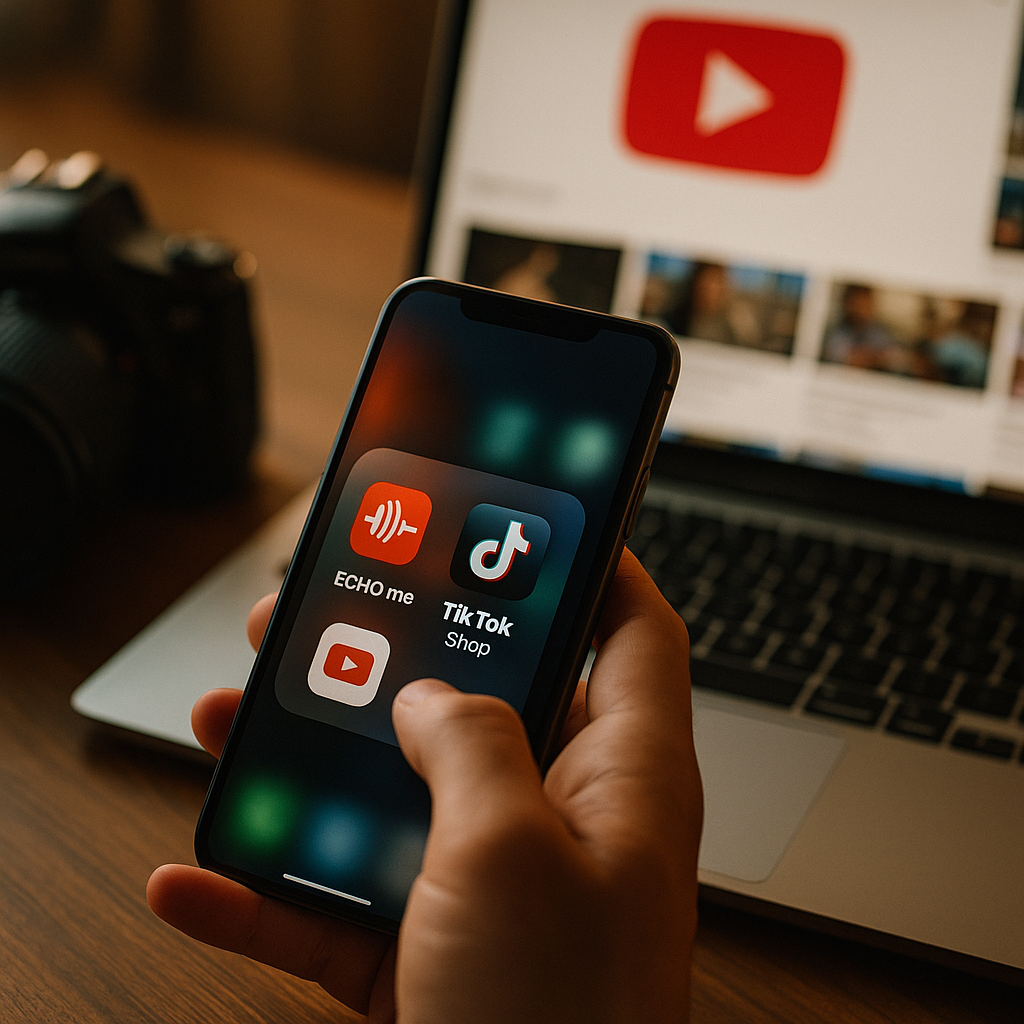
Brands running video commerce programs are making a high-stakes bet right now: does creator-embedded shopping on YouTube outperform the legacy link-in-description model, or does TikTok Shop’s social commerce infrastructure still own the conversion layer? The answer depends on how you run the YouTube ECHO-ME agentic commerce evaluation, and most brand teams are skipping critical steps.
What ECHO-ME Actually Is (And What It Isn’t)
ECHO-ME stands for Embedded Commerce with Heuristic Optimization and Machine-Executed checkout. It is YouTube’s agentic commerce architecture that allows creators to embed shoppable product units directly within video content, with an AI layer that dynamically adjusts which products surface, in what sequence, and at what timestamp based on viewer behavior signals. Unlike static product cards or affiliate links dropped in a description box, ECHO-ME responds to watch-time patterns, pause behavior, replay loops, and audience segment data in real time.
This is not a minor UI upgrade. It is a fundamentally different commerce model. The agent is making merchandising decisions on your behalf, inside someone else’s content, at scale. That has significant implications for brand control, attribution, and compliance.
When an AI agent is selecting which of your SKUs to surface inside a creator’s video, your merchandising strategy is no longer fully in your hands. Brand teams need explicit governance protocols before activating ECHO-ME at scale.
The Three-Way Comparison Your Team Should Be Running
Before any budget allocation decision, define the actual competing models on the table. For most brand video commerce teams, the evaluation breaks into three distinct paths:
- ECHO-ME agentic commerce: AI-driven embedded product surfaces within YouTube creator videos, with machine-executed optimization across SKUs and timestamps.
- Link-in-description (LID): Creator includes trackable affiliate or direct-purchase links in the video description, often supplemented by verbal CTAs. Attribution is click-based and creator-dependent.
- Social commerce alternatives: Primarily TikTok Shop, Instagram Shopping, and Pinterest’s native checkout, each with their own algorithmic amplification of shoppable content.
The mistake most brand teams make is treating this as a pure conversion rate comparison. That framing misses three operational dimensions that actually determine ROI at scale: attribution integrity, creator relationship impact, and stack compatibility.
Attribution Is Where the Evaluation Gets Complicated
Link-in-description has a long, well-understood attribution trail. A UTM-tagged URL, a creator-specific promo code, a last-click or first-touch model in your CRM. Simple. Auditable. Easy to defend in a CMO revenue review.
ECHO-ME introduces agentic attribution. The system logs impressions and interactions at the product-card level, but the decision about which product to show was made by the model, not by your team. If ECHO-ME surfaces a lower-margin SKU because its click-through signal is stronger, you may be optimizing for platform conversion metrics that don’t align with your profitability targets. This is exactly the kind of misalignment covered in work on AI agent attribution failures that brand teams consistently underestimate until they’re already in a budget reconciliation meeting.
Social commerce attribution on TikTok Shop and Meta is a different problem entirely: walled gardens, limited pixel fidelity post-iOS changes, and platform-reported ROAS numbers that frequently diverge from what your CRM shows. If you are operating multi-CRM attribution architecture, you already know this gap. The question is whether ECHO-ME’s agentic layer creates a third, equally opaque data silo, or whether YouTube’s API access is genuinely better than what Meta and TikTok provide.
Creator Relationship Risk Is Real
This point gets almost no coverage in vendor evaluations. When you activate ECHO-ME on a creator’s channel, the AI agent may surface competitor-adjacent products, lower-priced alternatives from your own catalog, or simply de-prioritize the hero SKU the creator verbally endorsed in the video. Creators notice. Some have already flagged in creator community forums that agentic product surfaces undercut their editorial authority, which directly affects their willingness to do deeper integration deals.
If your influencer program depends on long-term creator relationships rather than transactional one-off posts, factor this into the evaluation. Link-in-description, for all its tracking limitations, keeps the creator in control of what they recommend and when. That autonomy is part of what makes creator content authentic. Disrupt it carelessly and you are paying premium creator rates for content that performs like display advertising.
When evaluating platforms, tools like creator management platforms such as Aspire, CreatorIQ, and Traackr are increasingly building creator sentiment tracking into their dashboards. Use them to monitor creator friction signals before they become contract renegotiations.
Stack Compatibility and Operational Readiness
Running an honest ECHO-ME evaluation requires your MarTech stack to be ready for agentic inputs. Specifically: does your product catalog feed update in near-real time? Can your CRM ingest YouTube’s commerce API events without custom middleware? Does your compliance team have a review process for AI-selected product placements?
Most teams are not operationally ready. A MarTech readiness audit before activation will surface gaps that are far cheaper to fix before go-live than after. The integration failure patterns for agentic systems are consistent and well-documented: stale catalog data, mismatched product identifiers, and insufficient logging for post-campaign attribution reconciliation.
For brands using TikTok Shop or Meta’s Commerce Manager as the comparison baseline, the catalog sync infrastructure you already have built may transfer directly to ECHO-ME. If it doesn’t, that implementation delta is a real cost that belongs in your TCO model.
A brand team that can’t answer “which SKUs did the ECHO-ME agent surface, at what timestamps, and why” after a campaign has a governance gap, not just a reporting gap.
A Practical Scoring Framework
When structuring the formal evaluation, score each commerce model across five dimensions. Weight them based on your program’s strategic priority:
- Attribution fidelity: How cleanly does purchase data connect back to the specific creator, content unit, and product placement? LID scores highest here on transparency; ECHO-ME requires more API work to achieve comparable clarity.
- Conversion rate potential: Early data from YouTube’s commerce pilot partners suggests embedded agentic units outperform description links by a significant margin for impulse and discovery categories. Social commerce on TikTok Shop remains competitive for sub-$50 products with strong visual appeal.
- Brand control: LID gives you full SKU control. ECHO-ME gives the agent control within parameters you set. Social commerce platforms have their own algorithmic surfaces that may promote competitor listings. Define your tolerance before scoring.
- Creator experience impact: As noted above, this is underweighted in most evaluations and tends to surface as a problem in renewal negotiations.
- Operational scalability: How many creators can you activate on each model with your current team size and tooling? ECHO-ME has higher setup overhead per creator but lower ongoing management once live. LID scales with creator count linearly. Social commerce requires platform-specific workflow duplication.
For deeper measurement infrastructure, particularly if you’re running real-time ROI dashboards for live creator campaigns, make sure your data model can accommodate ECHO-ME’s event schema from day one. Retrofitting attribution pipelines mid-campaign is expensive and error-prone.
Also worth examining: how data clean room vendors are beginning to support agentic commerce data flows, which could close some of the attribution transparency gap between ECHO-ME and LID in the near term.
For broader context on YouTube-specific strategy decisions, including how teams are structuring in-house versus external management, the YouTube strategy consultant vs. in-house model debate is directly relevant to who owns this evaluation internally.
External research from eMarketer and Statista consistently shows that social commerce adoption is accelerating fastest in categories with high visual discovery value (beauty, apparel, home goods), which should inform which product lines you prioritize for ECHO-ME pilots versus which you keep on LID for now. FTC disclosure requirements, outlined at FTC.gov, apply to all three models and need to be verified for compliance with agentic placements specifically, since the disclosure mechanism differs when the product selection is AI-generated rather than creator-chosen.
Run a 60-day pilot on a single creator tier with one product category before committing budget. Use that pilot to stress-test your attribution pipeline, get creator feedback on the ECHO-ME experience, and generate the internal data you need to defend a scaling decision to finance.
FAQ
Frequently Asked Questions
What is YouTube ECHO-ME agentic commerce?
ECHO-ME (Embedded Commerce with Heuristic Optimization and Machine-Executed checkout) is YouTube’s AI-driven commerce architecture that embeds shoppable product units directly within creator videos. An AI agent dynamically selects which products to surface, at which timestamps, based on real-time viewer behavior signals including watch time, pauses, and audience segment data.
How does ECHO-ME compare to link-in-description for brand attribution?
Link-in-description provides a transparent, auditable attribution trail using UTM parameters and creator-specific promo codes that connect cleanly to CRM data. ECHO-ME introduces agentic attribution where the AI system logs product-card interactions, but SKU selection is machine-made. This requires additional API configuration and governance protocols to achieve the same attribution clarity as LID models.
Should brands use ECHO-ME or TikTok Shop for video commerce?
The choice depends on product category, audience demographics, and operational infrastructure. TikTok Shop has stronger native conversion data for sub-$50 discovery categories, while ECHO-ME’s embedded format can outperform description links for mid-funnel video content where viewers are already engaged. Most mature brand programs will run both in parallel with distinct attribution frameworks for each.
What are the creator relationship risks of activating ECHO-ME?
When ECHO-ME’s AI agent selects which products to surface, it may override the creator’s verbal recommendation or prioritize SKUs that differ from what the creator endorsed. This can reduce the authenticity signal that drives creator content performance and may affect creator willingness to negotiate deeper integration deals. Brand teams should monitor creator sentiment and contractually define product surface parameters before activation.
What MarTech infrastructure does a brand need before running an ECHO-ME pilot?
At minimum: a real-time product catalog feed, CRM integration capable of ingesting YouTube commerce API events, a compliance review process for AI-selected placements, and a logging system that captures which SKUs were served, at what timestamps, and to which audience segments. Teams should run a MarTech readiness audit before activating ECHO-ME to identify catalog sync gaps and attribution pipeline issues.
Do FTC disclosure rules apply to AI-selected product placements in ECHO-ME?
Yes. FTC disclosure requirements apply regardless of whether a product placement is creator-selected or AI-generated. However, the disclosure mechanism may differ for agentic placements since the creator did not personally choose the product. Brand legal and compliance teams should review current FTC guidance on automated endorsements and ensure disclosure language is visible at the point of the agentic product surface, not only in the video description.
Top Influencer Marketing Agencies
The leading agencies shaping influencer marketing in 2026
Agencies ranked by campaign performance, client diversity, platform expertise, proven ROI, industry recognition, and client satisfaction. Assessed through verified case studies, reviews, and industry consultations.
Moburst

-
2

The Shelf
Boutique Beauty & Lifestyle Influencer AgencyA data-driven boutique agency specializing exclusively in beauty, wellness, and lifestyle influencer campaigns on Instagram and TikTok. Best for brands already focused on the beauty/personal care space that need curated, aesthetic-driven content.Clients: Pepsi, The Honest Company, Hims, Elf Cosmetics, Pure LeafVisit The Shelf → -
3

Audiencly
Niche Gaming & Esports Influencer AgencyA specialized agency focused exclusively on gaming and esports creators on YouTube, Twitch, and TikTok. Ideal if your campaign is 100% gaming-focused — from game launches to hardware and esports events.Clients: Epic Games, NordVPN, Ubisoft, Wargaming, Tencent GamesVisit Audiencly → -
4

Viral Nation
Global Influencer Marketing & Talent AgencyA dual talent management and marketing agency with proprietary brand safety tools and a global creator network spanning nano-influencers to celebrities across all major platforms.Clients: Meta, Activision Blizzard, Energizer, Aston Martin, WalmartVisit Viral Nation → -
5

The Influencer Marketing Factory
TikTok, Instagram & YouTube CampaignsA full-service agency with strong TikTok expertise, offering end-to-end campaign management from influencer discovery through performance reporting with a focus on platform-native content.Clients: Google, Snapchat, Universal Music, Bumble, YelpVisit TIMF → -
6

NeoReach
Enterprise Analytics & Influencer CampaignsAn enterprise-focused agency combining managed campaigns with a powerful self-service data platform for influencer search, audience analytics, and attribution modeling.Clients: Amazon, Airbnb, Netflix, Honda, The New York TimesVisit NeoReach → -
7

Ubiquitous
Creator-First Marketing PlatformA tech-driven platform combining self-service tools with managed campaign options, emphasizing speed and scalability for brands managing multiple influencer relationships.Clients: Lyft, Disney, Target, American Eagle, NetflixVisit Ubiquitous → -
8

Obviously
Scalable Enterprise Influencer CampaignsA tech-enabled agency built for high-volume campaigns, coordinating hundreds of creators simultaneously with end-to-end logistics, content rights management, and product seeding.Clients: Google, Ulta Beauty, Converse, AmazonVisit Obviously →