


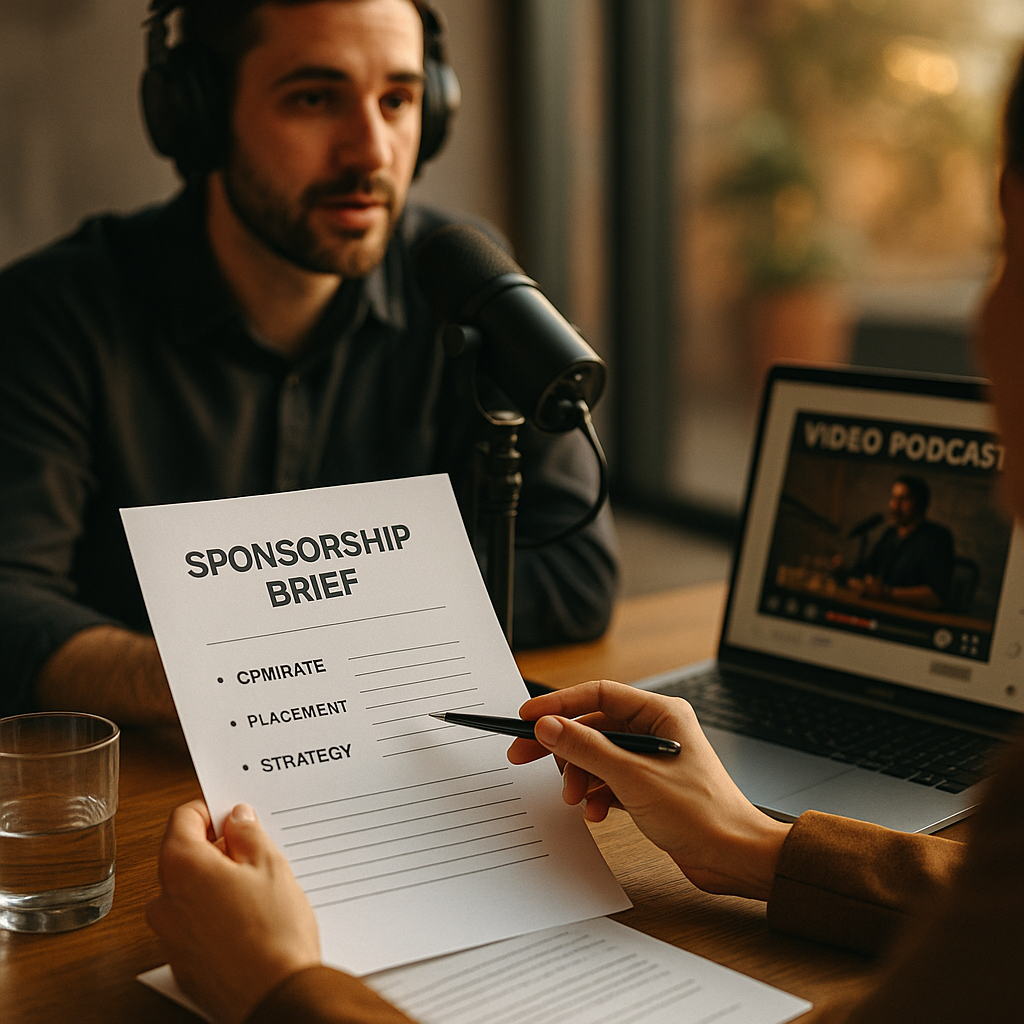
Video Podcast Sponsorship Is Now a Serious Media Buy
Podcast advertising crossed $2.5 billion in annual spend, and the majority of that growth is now coming from video. YouTube’s Brandcast positioning of creator-hosted video podcasts as premium inventory signals something media buyers can no longer treat as experimental: the video podcast creator format has become a legitimate, measurable line item in brand media plans.
The format’s rise isn’t accidental. YouTube systematically pushed podcast discovery through its app, formalized podcast shelf placements, and built creator monetization tools that make long-form, episodic content economically rational for creators to produce consistently. For brand sponsors, that consistency is the asset. A creator who drops a 60-minute video podcast every Tuesday is building appointment viewing — and that audience behavior maps closely to how linear TV audiences were valued for decades.
What Brandcast’s Creator Pivot Actually Signals
Google’s annual Brandcast presentation shifted noticeably toward creator inventory. Where previous years leaned on NFL Sunday Ticket and premium licensing deals, recent positioning places creators — many of them video podcasters — alongside those properties as comparable reach vehicles. That’s a deliberate signal to brand media buyers: YouTube is asking you to budget creator sponsorships at television CPM logic, not social media CPM logic.
The distinction matters operationally. Social CPMs are performance-driven, often $5 to $15, optimized for clicks and conversions. Television CPMs historically run $20 to $50+ for targeted cable. Video podcast CPMs on YouTube are clustering between $18 and $40 for host-read sponsorships in categories like finance, health, and B2B software, according to data tracked by platforms like Spotify’s Megaphone and independent buyers using tools from Magellan AI. That’s a completely different benchmark conversation than what most influencer marketing teams are used to having with their finance partners.
Brand media buyers who benchmark video podcast CPMs against short-form social inventory are systematically underpaying for reach and overpaying when they negotiate — because they’re using the wrong comparison set entirely.
Sponsorship Brief Design Has to Change
If you’re still sending creators a one-page brand safety checklist and a 30-second talking points document, you’re not briefing a podcast sponsor. You’re briefing a social post. The brief architecture for video podcast sponsorships operates on fundamentally different creative and legal logic.
First, episode integration depth. Video podcasts support three distinct placement types: pre-roll (typically 60-90 seconds), mid-roll (90-120 seconds, highest attention), and embedded segment sponsorships where the creator interviews a brand representative or dedicates a full chapter to a sponsored topic. Each placement type requires a different brief structure. A mid-roll host-read needs messaging hierarchy, proof points the creator can speak to authentically, and clear FTC disclosure language — not a script, but structured talking points with mandatory disclosure language integrated.
Second, evergreen content obligations. Unlike a social post that decays in 48 hours, a YouTube video podcast episode compounds views for months. Your brief must address whether the sponsorship language can remain in the video indefinitely, or whether it requires a sunset clause if product pricing, claims, or availability changes. Legal review at the brief stage — not post-production — is the only way to manage this. Brands with strong FTC-compliant creator brief processes already understand this compounding liability dynamic.
Third, the series commitment structure. One-off episode sponsorships are the least efficient buy in this format. The brief should specify whether you’re buying single episodes, episode blocks (typically 4-8), or season-level exclusivity. The creative brief changes substantially based on that commitment level, because series-level buys allow for narrative continuity — something single-episode buys can’t deliver.
Audience Targeting Logic for Video Podcast Buyers
Contextual targeting in video podcasts runs differently than display or pre-roll. You’re not layering demographic data onto an auction — you’re selecting a creator whose existing audience composition matches your customer profile. That requires a different research stack.
Useful signals to pull before writing a single brief:
- YouTube audience demographics from the creator’s media kit or verified via third-party tools like Modash or Grin — specifically age-gender skew and top geographic markets
- Episode-level retention data, which shows whether the audience actually stays through mid-roll placements (this is negotiable to request and serious creators will have it)
- Search-driven vs. subscription-driven viewership split — a podcast that generates 60% of its views from YouTube Search is behaving more like SEO content than social content, which changes how you think about long-tail impression value
- Brand affinity signals from any prior sponsorship disclosures in the video description or pinned comments, which you can audit manually or via tools like Podchaser
The YouTube Ads ecosystem also now supports Brand Lift measurement for creator integrations, which gives media buyers attitudinal data beyond click-through. If your buying team hasn’t activated Brand Lift studies alongside creator sponsorship buys, you’re missing the measurement layer that justifies higher CPMs to internal stakeholders.
CPM Benchmarking: Build a New Reference Frame
The most common mistake brands make when evaluating video podcast CPMs is using their existing influencer marketing benchmarks as anchors. Short-form CPMs and video podcast CPMs are not comparable. The attention economics are different. A 90-second host-read embedded in a 45-minute episode that the viewer actively chose to watch is categorically different from a 15-second pre-roll the viewer skips.
A working CPM framework for video podcast sponsorships should reference three data points: the creator’s trailing 90-day average views per episode (not subscriber count), the category premium (finance and B2B software typically command 40-60% category premiums over lifestyle content), and placement type. Mid-roll host-reads are the premium placement and should be priced accordingly. Pre-roll and post-roll carry lower attention weights — roughly 60-70% of mid-roll value by most agency estimates.
For brands producing content across formats, the CTV ad inventory brief framework offers useful structural parallels. Video podcasts and CTV creator content share audience attention dynamics and compounding view logic that short-form formats simply don’t replicate.
Trailing 90-day episode view averages are a more reliable CPM input than subscriber count — a creator with 200K subscribers and 80K average views per episode is a better buy than one with 800K subscribers averaging 15K views.
Brief Design for Long-Form Doesn’t Mean Loose Creative
One operational failure point brands hit consistently: assuming that because the format is conversational and creator-driven, the brief can be vague. The opposite is true. Long-form video podcast integrations require more precise brief architecture than short-form, because the creator needs to make real editorial choices about where and how to integrate the brand within a structured episode format.
The best-performing video podcast sponsorship briefs include: a one-paragraph brand context summary written in plain language the creator can adapt verbally, two to three mandatory proof points (claims the brand can substantiate and the creator should hit), one hard exclusion list (competitors, topics, claims that must be avoided), the FTC disclosure language in exact form, and a clear definition of what “approval” means — whether the brand reviews a script, a rough cut, or nothing at all. Teams who’ve already refined documentary-style sponsorship briefs have a head start here, since episode-based long-form requires the same structural rigor.
For brands newer to episodic brief design, studying how AI search-optimized creator briefs structure mandatory messaging elements is a useful adjacent framework — the information hierarchy logic transfers directly to video podcast integration design.
It’s also worth pressure-testing your brief against the actual episode format. A creator who runs a strict interview show has limited flexibility for a mid-segment product demo. Match the integration type to the episode structure before finalizing the brief, not after.
Compliance and Brand Safety in an Always-On Format
Video podcasts create a compliance surface area that most influencer program managers haven’t fully mapped. The core issue: an episode published today may generate its peak viewership in eight months, after the product has changed, the claim has expired, or the regulatory environment has shifted. Advertisers in regulated categories (financial services, supplements, healthcare) need contractual language that addresses modification rights and takedown protocols, not just initial disclosure requirements.
The FTC’s endorsement guidelines apply to video podcast integrations exactly as they do to social posts, including host-read segments where the creator is compensated. The disclosure must be clear and conspicuous — verbal disclosure at the start of the segment plus a written disclosure in the video description is the current standard practice for risk mitigation. Agencies using tools like compliance monitoring platforms should configure keyword alerts for their sponsored episodes in perpetuity, not just at launch.
For programs running at scale, connecting brief-level compliance requirements to a broader influencer program audit framework is non-negotiable. The UGC repurposing pipeline framework is one model for systematizing content rights and compliance tracking across multiple creator relationships simultaneously.
Measurement infrastructure also needs updating. Standard influencer reporting dashboards typically track reach, engagement rate, and link clicks. Video podcast measurement should additionally track: average view duration of sponsored episodes, view velocity over 90 days post-publication, brand search lift (query volume for your brand name in the two weeks after episode launch), and direct attribution via unique promo codes or landing page URLs.
Tools like eMarketer’s media benchmarks and Magellan AI’s podcast ad intelligence can help buyers calibrate these metrics against category benchmarks rather than evaluating each creator buy in isolation.
The shift YouTube’s Brandcast framing represents isn’t subtle: creator-hosted video podcasts are being positioned as premium media, and the buying infrastructure needs to catch up. Audit your current brief templates against long-form integration requirements now — the next RFP that comes across your desk may be pricing video podcast inventory at TV CPMs, and you’ll want to negotiate from a position of knowledge.
FAQs
What CPM should brands expect to pay for video podcast sponsorships on YouTube?
Video podcast CPMs on YouTube typically range from $18 to $40 for host-read mid-roll placements, depending on creator category, episode view averages, and audience demographics. Finance and B2B software categories command premiums of 40-60% above lifestyle content. These rates are closer to targeted cable TV CPMs than to social media CPMs and should be benchmarked accordingly.
How is a video podcast sponsorship brief different from a standard influencer brief?
A video podcast brief must address integration placement type (pre-roll, mid-roll, or embedded segment), series commitment structure, evergreen content obligations including potential sunset clauses, episode-specific FTC disclosure language, and creator editorial constraints based on the show’s format. Standard influencer briefs designed for short-form posts do not cover these dimensions adequately.
How should media buyers evaluate a video podcast creator’s audience before buying a sponsorship?
Buyers should review trailing 90-day average views per episode (more reliable than subscriber count), episode-level retention data through mid-roll placements, the ratio of search-driven versus subscription-driven viewership, and verified audience demographic data from tools like Modash or the creator’s YouTube Studio analytics. Brand affinity signals from prior sponsorship disclosures are also useful context.
What FTC disclosure requirements apply to video podcast integrations?
The FTC’s endorsement guidelines apply to video podcast host-read sponsorships exactly as they do to social posts. The current standard practice for compliance is a clear verbal disclosure at the start of the sponsored segment plus written disclosure in the video description. For regulated categories, additional contractual language covering modification rights and takedown protocols is recommended.
What metrics should brands track for video podcast sponsorship performance?
Beyond standard reach and engagement, brands should track average view duration of sponsored episodes, view velocity over 90 days post-publication, brand search lift in the two weeks following episode launch, and direct attribution via unique promo codes or dedicated landing page URLs. YouTube Brand Lift studies can also provide attitudinal measurement data to support CPM justification internally.
Top Influencer Marketing Agencies
The leading agencies shaping influencer marketing in 2026
Agencies ranked by campaign performance, client diversity, platform expertise, proven ROI, industry recognition, and client satisfaction. Assessed through verified case studies, reviews, and industry consultations.
Moburst

-
2

The Shelf
Boutique Beauty & Lifestyle Influencer AgencyA data-driven boutique agency specializing exclusively in beauty, wellness, and lifestyle influencer campaigns on Instagram and TikTok. Best for brands already focused on the beauty/personal care space that need curated, aesthetic-driven content.Clients: Pepsi, The Honest Company, Hims, Elf Cosmetics, Pure LeafVisit The Shelf → -
3

Audiencly
Niche Gaming & Esports Influencer AgencyA specialized agency focused exclusively on gaming and esports creators on YouTube, Twitch, and TikTok. Ideal if your campaign is 100% gaming-focused — from game launches to hardware and esports events.Clients: Epic Games, NordVPN, Ubisoft, Wargaming, Tencent GamesVisit Audiencly → -
4

Viral Nation
Global Influencer Marketing & Talent AgencyA dual talent management and marketing agency with proprietary brand safety tools and a global creator network spanning nano-influencers to celebrities across all major platforms.Clients: Meta, Activision Blizzard, Energizer, Aston Martin, WalmartVisit Viral Nation → -
5

The Influencer Marketing Factory
TikTok, Instagram & YouTube CampaignsA full-service agency with strong TikTok expertise, offering end-to-end campaign management from influencer discovery through performance reporting with a focus on platform-native content.Clients: Google, Snapchat, Universal Music, Bumble, YelpVisit TIMF → -
6

NeoReach
Enterprise Analytics & Influencer CampaignsAn enterprise-focused agency combining managed campaigns with a powerful self-service data platform for influencer search, audience analytics, and attribution modeling.Clients: Amazon, Airbnb, Netflix, Honda, The New York TimesVisit NeoReach → -
7

Ubiquitous
Creator-First Marketing PlatformA tech-driven platform combining self-service tools with managed campaign options, emphasizing speed and scalability for brands managing multiple influencer relationships.Clients: Lyft, Disney, Target, American Eagle, NetflixVisit Ubiquitous → -
8

Obviously
Scalable Enterprise Influencer CampaignsA tech-enabled agency built for high-volume campaigns, coordinating hundreds of creators simultaneously with end-to-end logistics, content rights management, and product seeding.Clients: Google, Ulta Beauty, Converse, AmazonVisit Obviously →