


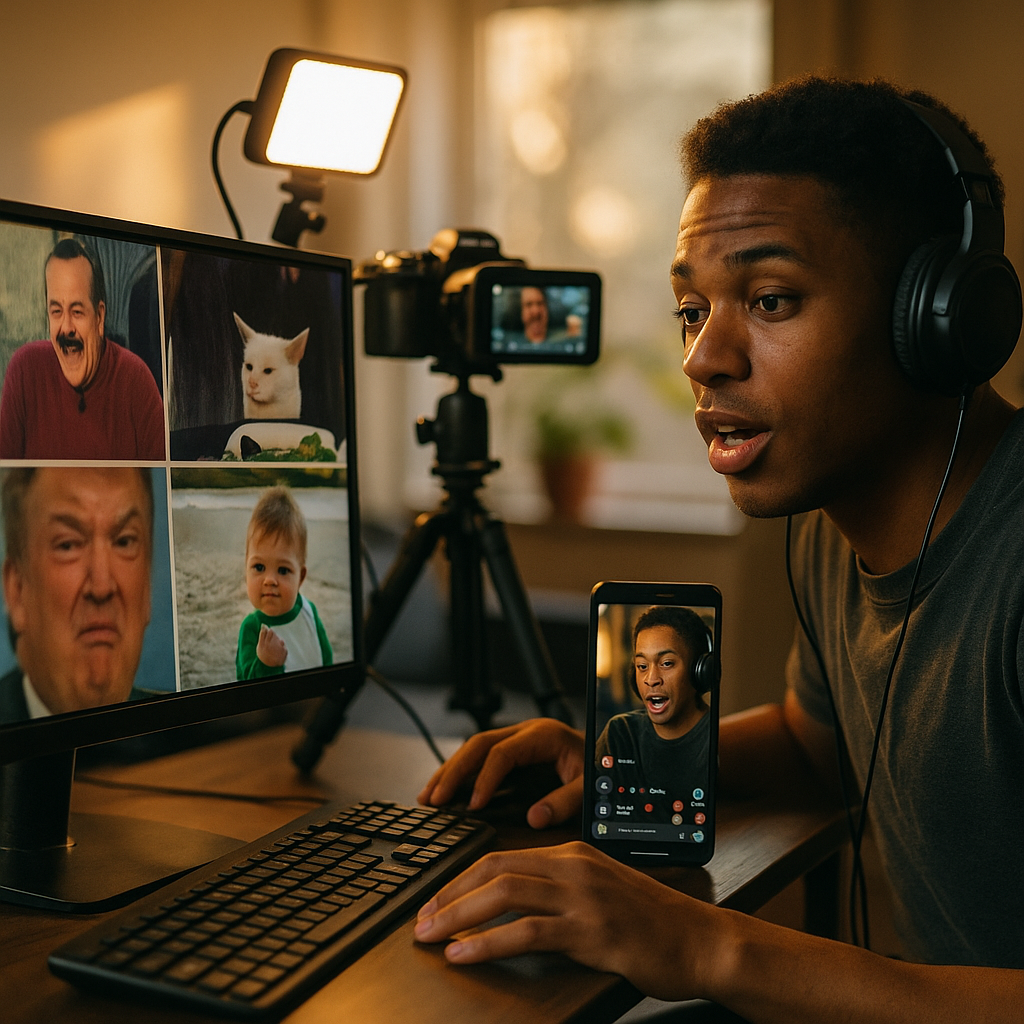
Most Brands Are Still Treating Memes as Accidents
Roughly 60% of internet users share meme content weekly, yet fewer than one in five brand teams have a documented process for capturing, licensing, or amplifying creator-generated memes at speed. That gap is not a content problem. It is an operations problem — and the brands closing it are turning community humor and live reaction culture into a reliable distribution engine.
Why Meme and Reaction Content Earns Primary Asset Status
The instinct to file memes under “community management” instead of “media strategy” is understandable but expensive. A brand-adjacent meme that lands in a high-velocity moment on TikTok or X can generate earned impressions that dwarf a paid campaign at a fraction of the cost. agile UGC operations are how you stop leaving that value on the table.
Reaction livestreams follow the same logic. When a creator reacts to your product launch, ad drop, or brand moment in real time, their audience’s emotional response becomes part of your brand story. That is participatory storytelling. It is not supplemental — it is the main event for a significant slice of Gen Z and younger millennial audiences who trust peer commentary over polished production.
Creator-generated memes and reaction content function as distributed cultural endorsements. When your operations stack can capture and amplify them within hours, not days, they become a repeatable media asset class — not a lucky accident.
The operational shift requires reframing two things: what counts as a “primary asset” inside your content hierarchy, and who owns the process of identifying, clearing, and deploying community content at speed.
Building the Internal UGC Operations Stack
A functional UGC operations stack for meme and reaction content has four layers. Each layer needs an owner, a toolset, and a defined SLA.
Layer 1: Signal Detection. You cannot amplify what you cannot find. Tools like Sprout Social, Brandwatch, and Talkwalker can surface brand-adjacent meme activity and trending audio-visual formats in near real time. Set up keyword clusters that go beyond branded hashtags — include product slang, community nicknames, and recurring joke formats your audience uses to reference you. Assign a dedicated social listening analyst or rotate the responsibility with a documented triage protocol.
Layer 2: Rapid Rights Clearance. This is where most brands stall. Speed is the entire value proposition of meme culture, and a five-day legal review cycle destroys it. Build a pre-approved UGC licensing template (simple, direct message-based) that your team can deploy within two hours of identifying a piece of content worth amplifying. Platforms like Tagboard and TINT have built rights management flows into their UGC tooling specifically to reduce this friction. Make sure your template language aligns with FTC disclosure requirements when the amplification involves paid promotion.
Layer 3: Templatized Production. Not every meme needs a production team. Build a library of pre-cleared visual frames, caption styles, and audio beds that your creative ops team can use to natively extend a meme format without starting from scratch. 60-second approval workflows become achievable when the creative infrastructure is already built. Tools like Canva Enterprise, Adobe Express, and Figma with shared brand templates are the workhorses here.
Layer 4: Distribution and Attribution. Amplifying community content without tracking its downstream effect is how this work stays invisible to leadership. Tag every UGC asset in your analytics stack with a content type label (meme, reaction clip, community livestream highlight) so you can build a performance baseline over time. UTM parameters, platform-native analytics, and a simple attribution model that separates organic lift from paid boost are the minimum viable setup.
The Reaction Livestream Play: Operationalizing Community Moments
Reaction livestreams deserve their own operational lane because they combine the intimacy of live content with the cultural resonance of meme formats. A creator watching your Super Bowl spot, your product reveal, or your brand controversy in real time — with their audience reacting alongside them — generates content that is almost impossible to replicate with scripted production.
The brands executing this well are doing three things. First, they brief creators in advance with structured reaction briefs that give enough context to produce quality commentary without scripting the emotional response. Second, they treat simulcast windows (airing brand content and creator reactions simultaneously) as a formal media format, not an experiment. See how reaction livestream briefs for simulcast can formalize this into a repeatable campaign format. Third, they capture highlight clips from those streams within 24 hours and feed them back into their paid social rotation as authentic social proof.
The operational requirement: a dedicated coordinator who monitors live creator streams during key brand moments, flags usable clips, and initiates the rights clearance flow before the moment cools. This is a real role. At brands like Meta-partnered creator programs, these coordinators sit inside the influencer marketing team, not community management — a structural signal worth copying.
Community Livestreams as Cultural Relevance Infrastructure
Discord stages, Twitch watch parties, and TikTok Lives are not peripheral events. For certain product categories — gaming, beauty, food, fintech — they are the primary venue where brand perception is formed. Community briefs for Discord and Twitch can help your team structure these activations as repeatable brand infrastructure rather than one-off experiments.
The operations stack here is lighter than it looks. You need: a shortlist of 8-15 community creators who regularly host in your category, a standing outreach cadence (not just campaign-by-campaign), a clip extraction workflow for post-event highlights, and a budget line that treats community livestreams as owned media, not earned-media luck.
Brands that build standing relationships with community livestream creators — rather than activating them only for launches — develop a real-time cultural listening post that no paid research panel can replicate.
Governance Without Killing the Speed Advantage
The single biggest operational risk in this model is well-intentioned brand safety processes that require three rounds of legal and compliance review before anything gets out the door. By the time approval arrives, the meme is dead and the reaction stream is archived.
The solution is not to bypass governance — it is to build a tiered approval framework. Category A content (pre-cleared format, no claims, creator already on roster): one approver, two-hour SLA. Category B content (new creator, format adjacent to regulated product claims): two approvers, 24-hour SLA. Category C content (anything touching legal, regulatory, or sensitive topics): full review, no speed expectation. Most meme and reaction content will fall into Category A. Document this framework, get legal sign-off on it once, and then operate inside it without relitigating every piece.
If you want to understand how entertainment-first briefs can be designed to stay within these guardrails from the start, the brief structure itself becomes a governance tool.
What Good Looks Like at Scale
Brands operating this well share a few structural features: a dedicated UGC ops role (or a team with explicit UGC responsibility), a toolstack that connects listening, rights management, and production templates into a single workflow, and a reporting cadence that puts meme and reaction content performance in front of the same leadership that reviews paid media metrics.
The goal is not virality. The goal is a systematic process for converting community cultural activity into brand distribution. Industry research consistently shows that UGC drives higher trust signals than branded content across most demographics. The brands that treat this as an operations problem rather than a creative lottery are the ones building durable cultural relevance — not just catching lightning in a bottle.
Start by auditing one month of brand-adjacent meme and reaction content you did not capture or amplify. Estimate its reach. Then ask whether you can afford to leave that value sitting in a creator’s analytics dashboard next month.
Frequently Asked Questions
What is a UGC operations stack for meme content?
A UGC operations stack for meme content is an internal system that combines social listening tools, rapid rights clearance workflows, templatized creative production, and attribution tracking. It allows brand teams to identify creator-generated memes and reaction content, secure usage rights quickly, extend or amplify those assets in native formats, and measure their downstream impact — treating them as a primary distribution channel rather than incidental community content.
How do brands get rights to creator-generated memes quickly?
The fastest approach is a pre-approved DM-based licensing template that a brand can deploy within two hours of identifying a piece of content. Platforms like TINT and Tagboard have built UGC rights management flows that streamline this process. The template should be reviewed and approved by legal once, then used repeatedly within defined content categories, eliminating the need for case-by-case legal review on standard UGC.
What is a reaction livestream brief and why does it matter for brands?
A reaction livestream brief is a structured creative document that gives creators enough context about a brand moment (a product launch, ad drop, or live event) to produce informed commentary without scripting their emotional response. It matters because reaction livestreams generate authentic social proof and high-trust content that scripted production cannot replicate. Formalizing the brief structure allows brands to run simulcast reaction campaigns as a repeatable media format with measurable results.
How do you measure ROI on meme and community livestream content?
Tag all UGC assets in your analytics stack with a content-type label (meme, reaction clip, community livestream highlight) to build a performance baseline. Track earned impressions, engagement rate, and downstream conversion using UTM parameters for any clicked content. Compare CPM and engagement benchmarks against your paid social baseline. Over time, this data allows you to build a defensible ROI case for the operations investment and allocate budget accordingly.
How can brands participate in meme culture without appearing inauthentic?
The most effective approach is amplification rather than origination — elevating what the community has already created rather than manufacturing memes in-house. When brands do originate meme formats, they should work with creators who have native fluency in the format, use entertainment-first brief structures that prioritize humor and cultural resonance over brand messaging, and avoid over-branding assets that need to feel organic to travel effectively in community spaces.
Top Influencer Marketing Agencies
The leading agencies shaping influencer marketing in 2026
Agencies ranked by campaign performance, client diversity, platform expertise, proven ROI, industry recognition, and client satisfaction. Assessed through verified case studies, reviews, and industry consultations.
Moburst

-
2

The Shelf
Boutique Beauty & Lifestyle Influencer AgencyA data-driven boutique agency specializing exclusively in beauty, wellness, and lifestyle influencer campaigns on Instagram and TikTok. Best for brands already focused on the beauty/personal care space that need curated, aesthetic-driven content.Clients: Pepsi, The Honest Company, Hims, Elf Cosmetics, Pure LeafVisit The Shelf → -
3

Audiencly
Niche Gaming & Esports Influencer AgencyA specialized agency focused exclusively on gaming and esports creators on YouTube, Twitch, and TikTok. Ideal if your campaign is 100% gaming-focused — from game launches to hardware and esports events.Clients: Epic Games, NordVPN, Ubisoft, Wargaming, Tencent GamesVisit Audiencly → -
4

Viral Nation
Global Influencer Marketing & Talent AgencyA dual talent management and marketing agency with proprietary brand safety tools and a global creator network spanning nano-influencers to celebrities across all major platforms.Clients: Meta, Activision Blizzard, Energizer, Aston Martin, WalmartVisit Viral Nation → -
5

The Influencer Marketing Factory
TikTok, Instagram & YouTube CampaignsA full-service agency with strong TikTok expertise, offering end-to-end campaign management from influencer discovery through performance reporting with a focus on platform-native content.Clients: Google, Snapchat, Universal Music, Bumble, YelpVisit TIMF → -
6

NeoReach
Enterprise Analytics & Influencer CampaignsAn enterprise-focused agency combining managed campaigns with a powerful self-service data platform for influencer search, audience analytics, and attribution modeling.Clients: Amazon, Airbnb, Netflix, Honda, The New York TimesVisit NeoReach → -
7

Ubiquitous
Creator-First Marketing PlatformA tech-driven platform combining self-service tools with managed campaign options, emphasizing speed and scalability for brands managing multiple influencer relationships.Clients: Lyft, Disney, Target, American Eagle, NetflixVisit Ubiquitous → -
8

Obviously
Scalable Enterprise Influencer CampaignsA tech-enabled agency built for high-volume campaigns, coordinating hundreds of creators simultaneously with end-to-end logistics, content rights management, and product seeding.Clients: Google, Ulta Beauty, Converse, AmazonVisit Obviously →