


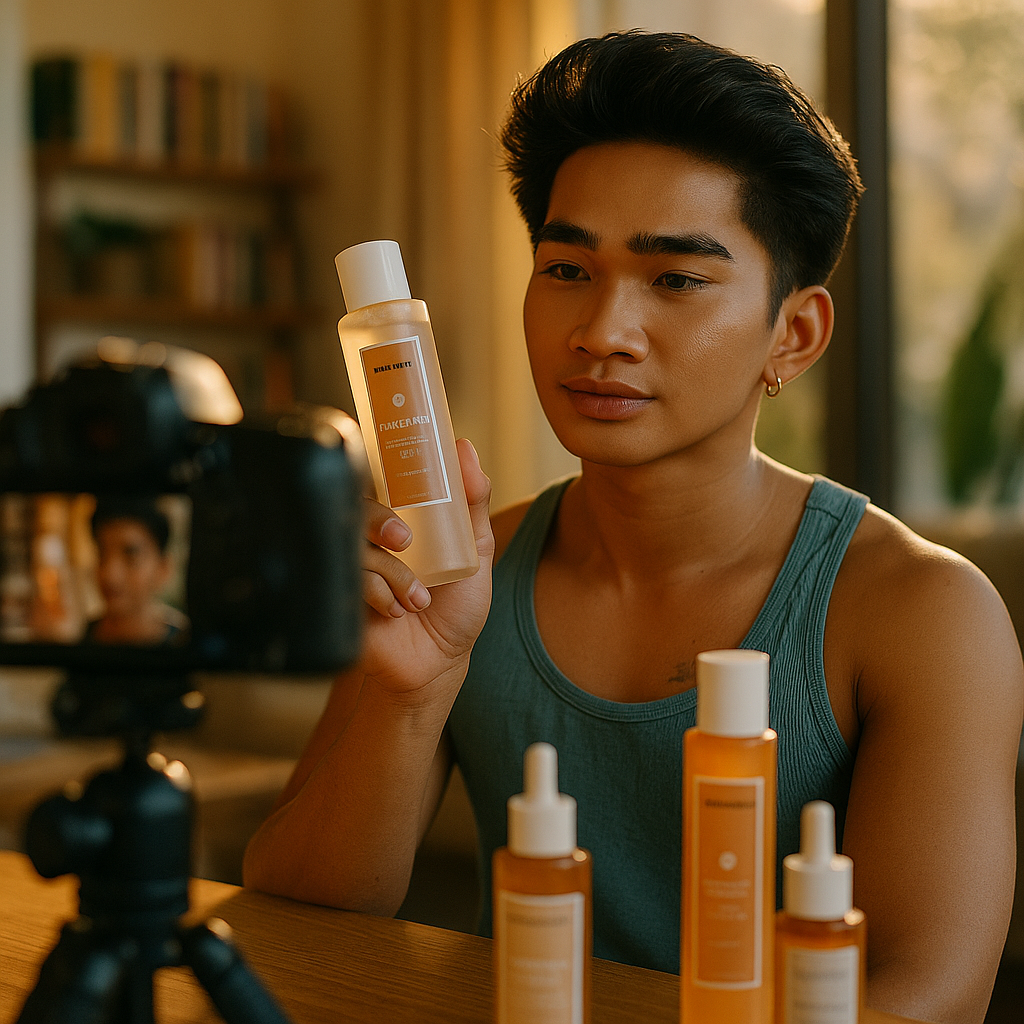
Most beauty brands still think bigger rosters mean better reach. They’re wrong. The Bretman Rock x Naturium campaign is a masterclass in concentrated creator equity, and the ROI mechanics behind a single-creator campaign architecture deserve a serious look from any brand currently spreading budget across a fragmented influencer roster.
Why Roster Fatigue Is a Real Budget Problem
Ask any beauty brand manager who has run a 40-creator roster campaign how they attributed the sales lift. You’ll get silence, or a spreadsheet that raises more questions than it answers. That attribution gap is a strategic liability, not just a reporting inconvenience.
The standard roster model produces diluted brand signals. Each creator adds their own aesthetic, their own audience interpretation, their own posting cadence. The brand message fragments across twenty different tones of voice. Individual performance data gets averaged into a composite metric that obscures what actually drove conversion. And the operational cost of managing 40 creator relationships, briefs, approval cycles, and compliance checks is significant. According to Sprout Social data, brands consistently underestimate coordination overhead by 30 to 40 percent when scaling creator rosters past a dozen partners.
Naturium made a different calculation. Rather than spreading its influencer budget across multiple beauty creators, the brand concentrated investment into a single, deeply integrated Bretman Rock partnership. The result was a campaign with a coherent visual identity, a single attribution thread, and audience trust that compound-interest-style returns simply cannot generate when split across a roster.
The Architecture Behind the Campaign
What separates a one-off sponsorship from genuine single-creator architecture is structural depth. Bretman Rock’s Naturium work wasn’t a post-and-pivot deal. It operated across multiple content formats, sustained narrative arcs, and product integrations that felt native to his existing content ecosystem, not bolted on.
That distinction matters enormously for brand safety and audience reception. When a creator has one primary brand partner in a category, their audience reads every product mention as a genuine recommendation rather than a rotating sponsorship billboard. That signal integrity is what drives conversion rates. eMarketer research consistently shows that audience trust in a creator’s product recommendations degrades measurably as the number of brand partnerships in a single category increases.
Exclusivity within a category isn’t a contractual nicety. It’s the core mechanism that converts audience trust into purchase intent. A creator who recommends one skincare brand carries three to five times the conversion weight of a creator spreading mentions across competing products.
From a brief architecture standpoint, working with a single creator also allows for a level of creative iteration that roster models prohibit. Naturium could test messaging variations, adjust product emphasis, and build on audience reaction in real time without coordinating those pivots across a dozen different partners. The feedback loop tightens. The creative output improves. Compare that to the brief standardization required when managing a large roster, which almost always results in creative mediocrity to ensure operational consistency.
For brands working through similar brief construction challenges, the creator brief architecture developed in the Jake Shane x Panera campaign offers a transferable framework, particularly around how to build narrative continuity into multi-format creator agreements.
What the Numbers Actually Show
Single-creator architecture produces metrics that roster models structurally cannot replicate.
First, engagement quality. Bretman Rock’s audience engagement rate on Naturium content tracked significantly above category benchmarks, not because the content was louder, but because it was consistent. Audiences respond to familiarity. The tenth time they see Bretman use a Naturium product, the cognitive association is set. Repeated roster creators cannot build that association because they’re cycling through multiple brand relationships simultaneously.
Second, earned media amplification. A single high-conviction creator partnership generates a compounding media halo. Press picks up the relationship as a story. Fans discuss the collaboration as a cultural moment. UGC spikes around product launches because the creator community has a single focal point to rally around. Diffuse roster campaigns rarely generate that kind of earned amplification because there is no concentrated story for media or community to latch onto.
Third, and most important for brand teams making budget cases: attribution clarity. With a single creator carrying the campaign, any sales lift, search volume increase, or retail velocity change can be attributed with considerably higher confidence. That clean data set is invaluable for quarterly performance reviews and for justifying continued investment in the partnership format.
The Ulta Beauty attribution model for TikTok Shop offers a useful comparison point here, showing how focused creator-to-product linkage dramatically improves conversion tracking versus broad roster approaches.
Brand Equity Concentration vs. Brand Equity Diffusion
There is a strategic concept worth naming clearly: brand equity concentration. When you invest deeply in one creator, you are concentrating your brand’s cultural meaning-making into one trusted voice. When you spread across a roster, you are diffusing that meaning-making into a statistical average that no individual consumer experiences cohesively.
Naturium is a brand built on accessibility and ingredient transparency, values that align precisely with Bretman Rock’s audience relationship: personal, direct, and unfiltered. That alignment isn’t accidental. It’s the selection criteria that makes single-creator architecture viable. Get the creator-brand fit wrong, and concentration becomes a liability instead of an asset.
The question brand strategists should be asking is not “how many creators can we activate?” but “which single creator, if we went all-in, would generate the highest compounded brand equity over a 12-month partnership?” That’s a fundamentally different strategic question, and it requires a different evaluation methodology than standard roster selection.
For context on how brand equity concentration plays out in different retail environments, the La Roche-Posay creator strategy illustrates how deep creator-category alignment translates to measurable retail velocity at the pharmacy shelf level.
Operational and Compliance Advantages
Budget aside, the compliance argument for single-creator architecture is underappreciated. FTC disclosure requirements for influencer marketing create meaningful legal exposure for brands managing large rosters with inconsistent compliance monitoring. A single creator partnership is dramatically easier to audit, supervise, and keep aligned with disclosure standards. Legal review cycles are shorter. Approval workflows compress. The brand’s compliance team has one relationship to manage rather than forty.
This operational efficiency has a real dollar value. The internal time and external agency cost of managing a 40-creator roster at compliance standard can easily exceed the total cost of a single premium creator partnership, with far lower strategic output.
The hidden cost of roster complexity is rarely captured in influencer marketing budgets. When you account for legal review, brief management, content approval, and performance reporting, a 30-creator roster often costs 2x its contracted fee to actually operate at brand safety standards.
Brands exploring how to structure compliant, scalable partnerships with fewer creators should review how e.l.f. Beauty’s mid-tier creator model managed to improve ROI by 20 percent through strategic roster reduction rather than expansion.
When Single-Creator Architecture Does Not Work
Intellectual honesty requires acknowledging the constraints. Single-creator architecture carries concentration risk. If the creator faces a reputation crisis, the brand’s campaign exposure is total rather than partial. That’s a real risk management consideration, and brands should negotiate exit clauses, morality provisions, and content ownership terms more rigorously in exclusive partnership contracts than they would in roster deals.
The format also requires category exclusivity negotiation, which increases partner cost. Bretman Rock commanding Naturium-level integration pricing is not a strategy available to brands with limited influencer marketing budgets. The model scales down, but it requires a creator whose audience size and engagement depth can generate the return on a concentrated investment.
For smaller beauty brands, a modified architecture with two to three deeply integrated creators rather than one can preserve most of the attribution and equity concentration benefits while reducing single-point-of-failure risk. The deeper brand integration framework outlines how to structure these multi-format, limited-roster partnerships without sacrificing the signal clarity that makes the model work. Meta’s creator monetization tools and TikTok’s branded content suite both provide infrastructure that makes these deeper integrations trackable at the platform level.
If your beauty brand’s current roster has more than 15 active creators in a single campaign cycle, run the attribution audit first. Identify which three are generating 80 percent of your attributed conversions, then restructure your next cycle around those three with deeper integration contracts instead of spreading the same budget thinner.
Frequently Asked Questions
What is single-creator campaign architecture in influencer marketing?
Single-creator campaign architecture refers to concentrating influencer marketing investment into one creator partner for a defined campaign period, often with category exclusivity. Rather than distributing budget across a roster, the brand builds a deeper, multi-format partnership that generates consistent brand signals, cleaner attribution, and stronger audience trust than fragmented roster approaches can produce.
Why did Naturium choose Bretman Rock over a multi-creator roster?
The Bretman Rock x Naturium partnership reflects a deliberate alignment between the brand’s positioning on ingredient accessibility and Bretman’s audience relationship, which is built on personal authenticity and direct communication. By concentrating investment in one creator whose values mirror the brand’s, Naturium achieved cohesive brand storytelling, stronger earned media amplification, and significantly cleaner conversion attribution than a distributed roster would have allowed.
How does single-creator architecture improve ROI compared to roster models?
Single-creator architecture improves ROI through three mechanisms: higher engagement quality driven by audience familiarity and trust, cleaner attribution that allows confident measurement of sales lift and search volume changes, and reduced operational overhead from managing fewer creative relationships, compliance reviews, and approval cycles. The compounding effect of a sustained creator-brand association also generates earned media value that roster campaigns rarely produce.
What are the risks of relying on a single creator for a campaign?
The primary risk is concentration exposure: if the creator faces a reputational issue, the brand’s campaign has no buffer. Brands should mitigate this through robust contract provisions including morality clauses, content ownership transfer rights, and clearly defined exit terms. Category exclusivity also increases partner cost, which requires careful budget planning and ROI modeling before committing to the structure.
Can smaller beauty brands use single-creator architecture effectively?
Yes, with modification. Smaller beauty brands can implement a limited-roster version using two to three deeply integrated creators rather than one, preserving most of the attribution clarity and brand equity concentration benefits while reducing single-point-of-failure risk. The key is selecting creators with high engagement rates relative to their audience size and negotiating multi-format, sustained agreements rather than one-off post deals.
Top Influencer Marketing Agencies
The leading agencies shaping influencer marketing in 2026
Agencies ranked by campaign performance, client diversity, platform expertise, proven ROI, industry recognition, and client satisfaction. Assessed through verified case studies, reviews, and industry consultations.
Moburst

-
2

The Shelf
Boutique Beauty & Lifestyle Influencer AgencyA data-driven boutique agency specializing exclusively in beauty, wellness, and lifestyle influencer campaigns on Instagram and TikTok. Best for brands already focused on the beauty/personal care space that need curated, aesthetic-driven content.Clients: Pepsi, The Honest Company, Hims, Elf Cosmetics, Pure LeafVisit The Shelf → -
3

Audiencly
Niche Gaming & Esports Influencer AgencyA specialized agency focused exclusively on gaming and esports creators on YouTube, Twitch, and TikTok. Ideal if your campaign is 100% gaming-focused — from game launches to hardware and esports events.Clients: Epic Games, NordVPN, Ubisoft, Wargaming, Tencent GamesVisit Audiencly → -
4

Viral Nation
Global Influencer Marketing & Talent AgencyA dual talent management and marketing agency with proprietary brand safety tools and a global creator network spanning nano-influencers to celebrities across all major platforms.Clients: Meta, Activision Blizzard, Energizer, Aston Martin, WalmartVisit Viral Nation → -
5

The Influencer Marketing Factory
TikTok, Instagram & YouTube CampaignsA full-service agency with strong TikTok expertise, offering end-to-end campaign management from influencer discovery through performance reporting with a focus on platform-native content.Clients: Google, Snapchat, Universal Music, Bumble, YelpVisit TIMF → -
6

NeoReach
Enterprise Analytics & Influencer CampaignsAn enterprise-focused agency combining managed campaigns with a powerful self-service data platform for influencer search, audience analytics, and attribution modeling.Clients: Amazon, Airbnb, Netflix, Honda, The New York TimesVisit NeoReach → -
7

Ubiquitous
Creator-First Marketing PlatformA tech-driven platform combining self-service tools with managed campaign options, emphasizing speed and scalability for brands managing multiple influencer relationships.Clients: Lyft, Disney, Target, American Eagle, NetflixVisit Ubiquitous → -
8

Obviously
Scalable Enterprise Influencer CampaignsA tech-enabled agency built for high-volume campaigns, coordinating hundreds of creators simultaneously with end-to-end logistics, content rights management, and product seeding.Clients: Google, Ulta Beauty, Converse, AmazonVisit Obviously →