


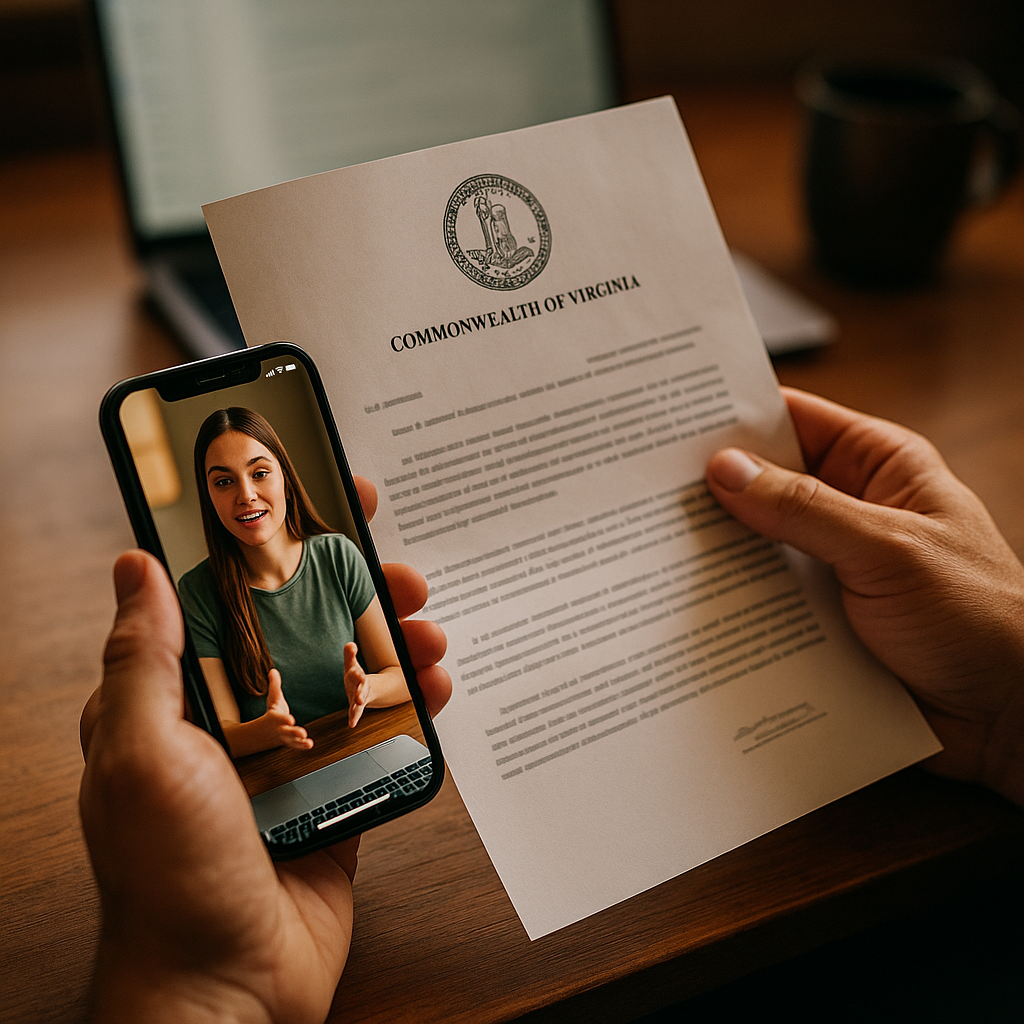
More than 68% of influencer campaigns now use location-based audience segmentation to target creator content by metro area, zip code, or neighborhood — and most brands have no idea their data practices may already violate multiple state privacy laws. Geolocation data and creator campaign targeting just got significantly more complicated, and Virginia’s amendment is the trigger point.
What Virginia’s Amendment Actually Changes
Virginia’s Consumer Data Protection Act (VCDPA) has been in force since 2023, but the precise geolocation amendment effective July 1 closes a critical loophole. Previously, “precise geolocation” was defined as data that could identify a person within a 1,750-foot radius. The amendment tightens that to data capable of identifying location within a specific address or building. For influencer marketing teams, this distinction matters more than it might appear.
Location data tied to creator audiences — the kind platforms like Meta, TikTok, and Snap sell as targeting segments — frequently includes precise enough signals to fall under the amended definition. When you build a campaign that says “show this creator’s content to followers in Richmond, VA with location history indicating frequent visits to Whole Foods,” you are almost certainly processing data the amendment now treats as sensitive. That requires opt-in consent, not just opt-out.
Virginia’s amendment shifts precise geolocation from an opt-out right to an opt-in requirement — a structural change that invalidates most existing location-based targeting consent frameworks brands inherited from their DSPs and platform ad tools.
The Multi-State Compliance Stack Is Getting Heavier
Virginia is not operating in a vacuum. Brands running national creator campaigns are already operating under a patchwork of state-level location data obligations:
- California (CPRA): Precise geolocation is sensitive personal information requiring opt-in consent for collection and use, with a 15-minute retention limit for real-time location data used in ads.
- Colorado (CPA): Sensitive data processing, including precise geolocation, requires consumer consent before processing begins.
- Texas (TDPSA): Sensitive data categories include precise geolocation, with opt-in consent required.
- Montana, Oregon, and Iowa: Each has enacted variations of sensitive data protections that include location signals.
The common thread: nearly every modern state privacy law treats precise geolocation as sensitive. The variation is in thresholds, enforcement mechanisms, and what “consent” specifically requires. For a brand running a creator campaign targeting audiences in 15 states simultaneously, the effective standard is the most restrictive law in the stack — which, after July 1, increasingly looks like Virginia and California running in parallel.
For context on how similar compliance layering affects creator contracts, the approach to AI and synthetic performer clauses in master service agreements offers a useful structural model: you embed the most restrictive standard and apply it universally rather than managing jurisdiction-by-jurisdiction variations.
Where Location Data Actually Enters Your Creator Campaign Stack
Most marketing teams think of geolocation targeting as something that happens at the media buy level. That mental model is incomplete. Location data enters creator campaigns at multiple points:
- Audience segmentation tools: Platforms like Traackr, Influencity, and Sprinklr allow geo-filtering of creator audiences by follower location clusters. Those audience location signals are derived from user data that may be subject to state privacy laws.
- Platform targeting layers: When a creator’s content is boosted or whitelisted through Meta’s branded content tools or TikTok’s Spark Ads, the advertiser applies geographic targeting that processes audience location data.
- Attribution and analytics: Post-campaign attribution tools that match store visits or in-store conversions to exposed creator audiences are processing location data, often precise enough to trigger the new Virginia standard.
- Creator prospecting: Some platforms allow brands to identify creators whose audiences cluster in specific geographies. The underlying data source for those audience maps is location signals from users who may not have consented to use in this context.
None of these are theoretical edge cases. They are standard operating procedure for mid-market and enterprise influencer programs. Each one requires scrutiny against the Virginia amendment and parallel state laws.
The social commerce privacy compliance obligations on TikTok, Meta, and LinkedIn add another layer here. When creator content drives social commerce transactions, location data from purchase attribution flows back into the campaign analytics stack — creating a data loop that touches multiple sensitive data categories simultaneously.
Auditing Your Location-Based Segmentation: Where to Start
A compliance audit for geolocation data in creator campaigns is not a legal department exercise you hand off and wait for. It requires marketing operations input because the data flows are campaign-specific. Here is a practical starting framework:
- Map every data touchpoint. Document where location data enters your campaign workflow: audience discovery, targeting setup, content distribution, and attribution. Include third-party tools and platform APIs, not just your primary DSP.
- Classify data precision. For each touchpoint, determine whether the location data meets the “precise” threshold under Virginia’s amended definition and California’s CPRA. When in doubt, treat it as precise.
- Audit consent mechanisms upstream. The platforms supplying audience location data should be able to demonstrate that the underlying users consented to their data being used for advertising segmentation. Request data processing agreements (DPAs) that explicitly address sensitive data categories.
- Review creator contracts for data obligations. If your creator agreements include performance requirements tied to geo-targeted distribution, those contracts may implicitly assign data processing responsibilities to creators who have no compliance infrastructure. Contract revision limits and brand safety clauses need updating to address this gap.
- Update your data retention policies. California’s 15-minute limit on real-time location data in advertising contexts is not widely implemented. If your attribution vendor is storing location signals beyond operational necessity, that is a liability.
The Virginia geolocation compliance audit framework specifically addresses how these obligations translate to influencer program workflows, including platform-specific consent chain documentation.
The riskiest assumption brands make is that platform compliance covers their liability. When you apply geo-targeting to a creator campaign, you are acting as a data controller — not a passive platform user. That distinction is what Virginia’s amendment makes explicit.
Platform Responsibility vs. Brand Responsibility
This is where most legal reviews stall. Brands assume that because Meta or TikTok processes the underlying location data, the platform bears the consent obligation. That assumption does not hold under most state privacy frameworks. When a brand configures a geo-targeted creator campaign, the brand is a controller of that processing decision. The platform is a processor. Controller liability sits with you.
FTC guidance on data brokers and sensitive data categories reinforces this point: the entity directing the use of sensitive data for commercial targeting purposes carries primary compliance responsibility. State AGs in California, Virginia, and Colorado have signaled similar interpretations in enforcement correspondence, even where formal actions have not yet been taken.
On the platform side, review your DPAs with Meta, Google, TikTok, and any influencer marketing platform that surfaces audience location data. Specifically look for: whether sensitive data is explicitly excluded from certain targeting options, whether the platform’s consent mechanisms satisfy opt-in (not just opt-out) standards, and whether you have contractual recourse if the platform’s consent framework is later found deficient.
For brands operating under consolidated agency structures, the creator program governance implications of this compliance responsibility are significant. When an agency configures geo-targeting on your behalf, your DPA with that agency needs to clearly assign controller-processor roles.
The Operational Fix Most Brands Are Skipping
Privacy law compliance in influencer marketing tends to get treated as a one-time legal review rather than an operational capability. That is the wrong frame. Location data practices change with every campaign, every new platform integration, and every updated tool in your martech stack.
Build a standing review protocol: every new platform integration that surfaces audience location data goes through a data classification check before it enters active campaigns. This is not burdensome if the checklist is tight: Does this data meet the “precise” threshold? Does the upstream consent chain support opt-in use for advertising? Is the DPA current?
Consider also the upstream risk from AI-driven audience intelligence tools. Platforms using machine learning to infer audience location from behavioral signals — rather than GPS data directly — are creating synthetic location attributes that may still meet the “precise” threshold if they are specific enough. This connects directly to AI liability in marketing questions that brands are only beginning to properly assign.
State privacy regulators are watching ad tech closely. The IAPP has documented a measurable increase in state AG inquiries related to location data in advertising contexts since the CPRA took effect. Virginia’s amendment accelerates that trajectory.
External resources worth reviewing: the FTC’s commercial surveillance guidance, the California AG’s CPRA enforcement updates, and the IAB’s privacy compliance frameworks for programmatic and social advertising all contain operational guidance applicable to creator campaign geo-targeting.
The bottom line: run your geo-targeting audit now, before the next campaign brief hits your desk with a “target by metro area” instruction that activates a data chain your contracts and consent mechanisms cannot currently support.
Frequently Asked Questions
What does Virginia’s precise geolocation amendment require from brands running influencer campaigns?
Virginia’s amendment, effective July 1, requires brands that process precise geolocation data (now defined as data specific enough to identify a location within a building or address) as part of audience targeting to obtain opt-in consent from consumers before that data is used. For influencer campaigns, this applies when geo-filtered audience segments, location-based creative targeting, or attribution tools using location signals are deployed to reach Virginia residents. Brands acting as data controllers — which includes any brand configuring geo-targeting parameters — bear primary compliance responsibility, not the platform.
Does platform-level geo-targeting (like Meta or TikTok ad targeting) expose brands to Virginia geolocation liability?
Yes. When a brand configures geographic targeting for a creator campaign through Meta Ads Manager, TikTok Spark Ads, or similar tools, the brand is acting as a data controller directing the processing of audience location data. The platform is a processor. Under Virginia’s VCDPA and most modern state privacy laws, controller liability rests with the entity making targeting decisions. Brands cannot assume platform compliance frameworks satisfy their own obligations, particularly where opt-in consent for sensitive data is required.
Which other state privacy laws apply to location-based creator audience targeting?
California (CPRA), Colorado (CPA), Texas (TDPSA), Montana, Oregon, and Iowa all classify precise geolocation as sensitive personal information requiring opt-in consent before processing for advertising purposes. California additionally imposes a 15-minute retention limit on real-time location data used in ad contexts. Brands running multi-state influencer campaigns should apply the most restrictive standard across the full campaign footprint rather than attempting jurisdiction-by-jurisdiction compliance management.
Do influencer marketing platforms like Traackr or Sprinklr create geolocation compliance risk?
Yes, if those platforms surface audience location data to help brands identify creators whose followers cluster in specific geographies, or to filter audiences by location for targeting purposes. The underlying data powering those audience maps derives from user location signals. Brands should request data processing agreements from these vendors that explicitly address how sensitive data categories, including precise geolocation, are handled and whether upstream consent chains support advertising use.
How should creator contracts be updated to address geolocation data compliance?
Creator master service agreements should be updated to: clarify data processing roles when creators use location-tagged content or distribute geo-targeted boosted posts; include representations that creators will not independently collect or process audience location data outside approved platform tools; and establish indemnification provisions for compliance failures tied to geo-targeting configurations. Brands should also ensure their agency agreements clearly define controller and processor roles for any geo-targeting work performed on the brand’s behalf.
Top Influencer Marketing Agencies
The leading agencies shaping influencer marketing in 2026
Agencies ranked by campaign performance, client diversity, platform expertise, proven ROI, industry recognition, and client satisfaction. Assessed through verified case studies, reviews, and industry consultations.
Moburst

-
2

The Shelf
Boutique Beauty & Lifestyle Influencer AgencyA data-driven boutique agency specializing exclusively in beauty, wellness, and lifestyle influencer campaigns on Instagram and TikTok. Best for brands already focused on the beauty/personal care space that need curated, aesthetic-driven content.Clients: Pepsi, The Honest Company, Hims, Elf Cosmetics, Pure LeafVisit The Shelf → -
3

Audiencly
Niche Gaming & Esports Influencer AgencyA specialized agency focused exclusively on gaming and esports creators on YouTube, Twitch, and TikTok. Ideal if your campaign is 100% gaming-focused — from game launches to hardware and esports events.Clients: Epic Games, NordVPN, Ubisoft, Wargaming, Tencent GamesVisit Audiencly → -
4

Viral Nation
Global Influencer Marketing & Talent AgencyA dual talent management and marketing agency with proprietary brand safety tools and a global creator network spanning nano-influencers to celebrities across all major platforms.Clients: Meta, Activision Blizzard, Energizer, Aston Martin, WalmartVisit Viral Nation → -
5

The Influencer Marketing Factory
TikTok, Instagram & YouTube CampaignsA full-service agency with strong TikTok expertise, offering end-to-end campaign management from influencer discovery through performance reporting with a focus on platform-native content.Clients: Google, Snapchat, Universal Music, Bumble, YelpVisit TIMF → -
6

NeoReach
Enterprise Analytics & Influencer CampaignsAn enterprise-focused agency combining managed campaigns with a powerful self-service data platform for influencer search, audience analytics, and attribution modeling.Clients: Amazon, Airbnb, Netflix, Honda, The New York TimesVisit NeoReach → -
7

Ubiquitous
Creator-First Marketing PlatformA tech-driven platform combining self-service tools with managed campaign options, emphasizing speed and scalability for brands managing multiple influencer relationships.Clients: Lyft, Disney, Target, American Eagle, NetflixVisit Ubiquitous → -
8

Obviously
Scalable Enterprise Influencer CampaignsA tech-enabled agency built for high-volume campaigns, coordinating hundreds of creators simultaneously with end-to-end logistics, content rights management, and product seeding.Clients: Google, Ulta Beauty, Converse, AmazonVisit Obviously →