


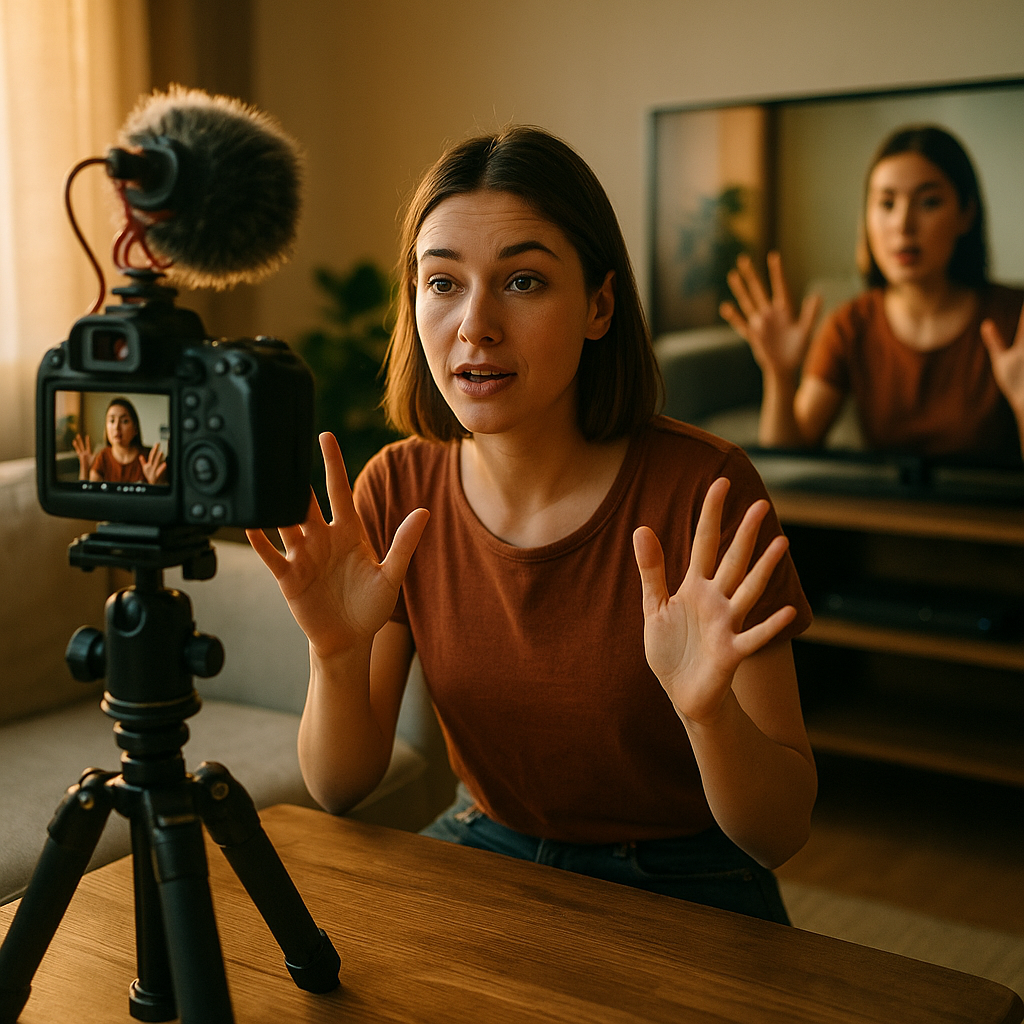
Connected TV ad spend is projected to surpass $40 billion in the U.S. alone, yet most brands are still commissioning two separate production pipelines: one for social, one for streaming. That redundancy is expensive, slow, and entirely avoidable. Production-quality creator assets, built under the right brief, can travel from TikTok discovery all the way into premium CTV inventory without touching a post-production budget twice.
Why the Gap Exists Between Social Content and CTV Inventory
The honest answer is that most creator briefs were written for the algorithm, not the ad server. A brief optimized for TikTok reach tells a creator to film vertically, hook in under two seconds, and keep it under 60 seconds. None of that is wrong for social discovery. But it produces an asset that a CTV buyer, running a pre-roll on Peacock or Paramount+, cannot use without significant recutting.
The result is a brand paying a creator for one deliverable, then paying a production house to reverse-engineer something television-adjacent from it. That is a structural problem with the brief, not the creator.
Brands running sophisticated omnichannel programs have started to solve this upstream. They are rewriting briefs to account for both discovery intent and broadcast technical requirements before the camera rolls. For a practical framework on structuring these, the omnichannel creator brief approach for routing content across paid social and CTV is worth reviewing in detail.
What “Production-Quality” Actually Means in a Creator Brief
This is where most brands get vague, and vague briefs produce unusable footage. Production quality for CTV repurposing has specific, non-negotiable technical minimums:
- Resolution: 4K capture minimum, even if the social deliverable is compressed to 1080p. You need the headroom for broadcast specs.
- Frame rate: 24fps or 30fps, locked. Variable frame rates are a post-production nightmare for broadcast editors.
- Audio: Lavalier or directional boom mic, not the camera’s internal microphone. Streaming platforms have audio normalization standards (typically -14 LUFS for most OTT environments) that phone audio rarely meets cleanly.
- Aspect ratio planning: The creator should shoot native 16:9 or shoot wide and crop for vertical. Shooting only 9:16 vertical and then expanding to horizontal produces unusable letterboxed footage.
- Headroom and safe zones: Graphic overlays, lower thirds, and brand bugs need clear space. Brief the creator on where text will be placed in post so they leave visual breathing room.
- B-roll volume: Request at least 2:1 B-roll ratio. CTV cuts run longer and editors need coverage. Social editors rarely need this; broadcast editors always do.
None of this is asking the creator to become a production crew. Many mid-tier and macro creators already own the gear or work with a shooter. The brief just needs to specify requirements rather than assume them. The CTV and short-form social production guide covers the technical floor in more detail for teams building out their spec sheets.
Structuring the Brief for Dual-Purpose Delivery
The architecture of the brief itself has to change. You are commissioning one shoot that produces multiple distinct deliverables, and the creator needs to understand that from day one, not learn it during revisions.
A dual-purpose brief structure should include:
- Primary social deliverable: The hook-driven, platform-native short form that goes out organically or as a paid social unit. This is what the creator optimizes their performance energy toward.
- Long-form master cut: A 60-to-90-second or 2-minute version that tells a complete story with a defined narrative arc, brand integration at natural points, and a proper close. This is the CTV-ready asset.
- Clean audio pass: Request a version of key dialogue or voiceover recorded cleanly without background music, for broadcast mixing flexibility.
- Brand-safe cutdowns: Specify 15-second and 30-second lifts from the long form, cut to broadcast timing conventions, not social pacing.
The single most expensive mistake in creator-led CTV production is treating the long-form cut as an afterthought. Brief it as the primary asset. Let the social cut be the derivative.
This inversion of priority is uncomfortable for social-first teams. But it is the only way to guarantee the CTV asset has the structure it needs. A creator who knows from the start that the 90-second master is what the brand actually needs will plan their shoot accordingly.
For brands managing this across multiple creators simultaneously, the multi-format asset strategy from a single shoot offers a scalable framework worth adapting.
Narrative Structure: The Part Most Social Briefs Skip
Social content lives and dies by the hook. CTV content lives and dies by the middle. That is the fundamental tension brands need to address in how they brief creative structure.
A CTV viewer sitting through a pre-roll or a mid-roll on a streaming service is in a lean-back context. They did not choose your ad, but they will tolerate it if it earns their attention across its full length. A creator who has trained on social mechanics knows how to grab attention in two seconds. They have often never been briefed on how to sustain it for 60 or 90.
The brief needs to provide a narrative scaffold, not just a talking points list. Something like: establish context (10 seconds), create tension or need (20 seconds), introduce brand as resolution (20 seconds), deliver proof point or emotional payoff (20 seconds), close with clear call to action (10 seconds). Creators who work in long-form YouTube or podcast-adjacent content will adapt to this quickly. Creators whose entire career is short-form Reels may need more guardrails.
Matching creator archetype to format is part of the brief strategy. The creator as narrative architect approach is designed exactly for this use case, where the creator’s storytelling role expands beyond the hook.
Rights, Exclusivity, and CTV Licensing: Don’t Learn This the Hard Way
A creator who agreed to one Instagram post has not agreed to have their likeness broadcast on Hulu. This catches brands off guard more often than it should.
CTV usage requires explicit broadcast rights language in the contract. This typically means:
- Paid media usage rights, specifically extended to OTT and CTV platforms, named by name where possible (Peacock, Hulu, Amazon, Pluto TV, Tubi, etc.)
- Duration of usage rights, usually 12 months with an option to extend
- Geographic scope of broadcast rights
- Music clearance confirmation, because any background music in the creator’s content must be cleared for broadcast, not just for social platforms
Music licensing is the most common operational failure point. A creator who used a licensed track through TikTok’s commercial sound library has platform-specific rights. That track cannot go on a CTV ad without a separate sync license. Brief the creator to use original score, brand-provided music, or cleared royalty-free tracks from services like Musicbed or Artlist, both of which offer broadcast-ready licensing tiers. The FTC’s endorsement guidelines also apply to CTV placements, so disclosure requirements need to be addressed for the broadcast format specifically.
Distribution Strategy: From Discovery to the Living Room
Once the assets are built and cleared, the distribution pathway becomes a media planning question. The social cut launches first, seeding awareness and generating performance data. High-performing social content, specifically creative that is generating strong view-through rates and positive sentiment, can then be prioritized for CTV amplification.
Platforms like The Trade Desk and SpringServe allow programmatic CTV buying with audience targeting that can mirror the social audience that already responded to the content. This is the actual efficiency unlock: you are not just repurposing an asset, you are following a proven creative signal into a higher-intent viewing environment.
Social performance data is the most underused input in CTV creative selection. If a creator’s 60-second cut held 80% view-through on YouTube, that is your strongest signal it will perform in a lean-back CTV context.
Some brands have started building this feedback loop systematically, using social performance as a creative testing layer before committing CTV media budget. It is a smart risk mitigation strategy. eMarketer’s CTV data consistently shows that creative quality is the primary variable in CTV completion rates, making the upfront investment in briefing quality a directly measurable ROI lever.
For teams managing the full distribution architecture, reviewing how CTV-ready briefs are structured for both social and TV feeds will help align media planning with production planning from the start. And for the programmatic routing layer, understanding IAB’s CTV standards for ad formats ensures your assets meet the technical specs required by major DSPs before trafficking.
Start your next creator campaign by auditing existing briefs against CTV technical minimums. If the brief doesn’t specify resolution, audio standards, aspect ratio, and usage rights for broadcast, it is not a dual-purpose brief. Fix that before the shoot, not after.
FAQs
What technical specs should a creator brief include for CTV repurposing?
At minimum, the brief should specify 4K resolution capture, a locked frame rate of 24fps or 30fps, broadcast-standard audio recorded with an external microphone (targeting -14 LUFS normalization), native 16:9 framing or a dual-aspect shoot plan, clear safe zones for graphic overlays, and a minimum 2:1 B-roll ratio. These specifications ensure the footage can be trafficked to OTT platforms without a second production pass.
How long should creator content be to qualify as CTV ad inventory?
Standard CTV ad units run at 15 seconds, 30 seconds, or 60 seconds. For a creator asset to be truly repurposable, brief a long-form master cut of 90 seconds to 2 minutes, from which 15-second, 30-second, and 60-second cutdowns can be edited. The social deliverable can be a separate, shorter cut optimized for platform-native performance without constraining the broadcast edit.
Do brands need separate contracts for CTV usage of creator content?
Yes. Standard influencer agreements covering organic posts or even paid social usage do not automatically extend to broadcast or OTT. CTV usage requires explicit written rights covering the specific platforms by name, usage duration, geographic scope, and music clearance for broadcast. Failing to secure these rights before trafficking is a significant legal and operational risk.
Which creators are best suited for dual-purpose social and CTV production?
Creators with long-form experience, particularly those producing content on YouTube, podcasts, or documentary-style formats, adapt more readily to CTV narrative structure. Short-form specialists can produce excellent social cuts but may require more structured narrative scaffolding in the brief to deliver a broadcast-ready long form. Creator archetype matching should be part of the initial selection process, not an afterthought.
Can social performance data inform CTV creative selection?
Absolutely. View-through rates, completion rates, and sentiment from social placements are reliable signals for predicting CTV performance. Brands running sophisticated omnichannel programs use social distribution as a creative testing layer, prioritizing creator assets with strong completion metrics for CTV amplification. This approach reduces CTV creative risk and improves completion rate performance at the media buy level.
Top Influencer Marketing Agencies
The leading agencies shaping influencer marketing in 2026
Agencies ranked by campaign performance, client diversity, platform expertise, proven ROI, industry recognition, and client satisfaction. Assessed through verified case studies, reviews, and industry consultations.
Moburst

-
2

The Shelf
Boutique Beauty & Lifestyle Influencer AgencyA data-driven boutique agency specializing exclusively in beauty, wellness, and lifestyle influencer campaigns on Instagram and TikTok. Best for brands already focused on the beauty/personal care space that need curated, aesthetic-driven content.Clients: Pepsi, The Honest Company, Hims, Elf Cosmetics, Pure LeafVisit The Shelf → -
3

Audiencly
Niche Gaming & Esports Influencer AgencyA specialized agency focused exclusively on gaming and esports creators on YouTube, Twitch, and TikTok. Ideal if your campaign is 100% gaming-focused — from game launches to hardware and esports events.Clients: Epic Games, NordVPN, Ubisoft, Wargaming, Tencent GamesVisit Audiencly → -
4

Viral Nation
Global Influencer Marketing & Talent AgencyA dual talent management and marketing agency with proprietary brand safety tools and a global creator network spanning nano-influencers to celebrities across all major platforms.Clients: Meta, Activision Blizzard, Energizer, Aston Martin, WalmartVisit Viral Nation → -
5

The Influencer Marketing Factory
TikTok, Instagram & YouTube CampaignsA full-service agency with strong TikTok expertise, offering end-to-end campaign management from influencer discovery through performance reporting with a focus on platform-native content.Clients: Google, Snapchat, Universal Music, Bumble, YelpVisit TIMF → -
6

NeoReach
Enterprise Analytics & Influencer CampaignsAn enterprise-focused agency combining managed campaigns with a powerful self-service data platform for influencer search, audience analytics, and attribution modeling.Clients: Amazon, Airbnb, Netflix, Honda, The New York TimesVisit NeoReach → -
7

Ubiquitous
Creator-First Marketing PlatformA tech-driven platform combining self-service tools with managed campaign options, emphasizing speed and scalability for brands managing multiple influencer relationships.Clients: Lyft, Disney, Target, American Eagle, NetflixVisit Ubiquitous → -
8

Obviously
Scalable Enterprise Influencer CampaignsA tech-enabled agency built for high-volume campaigns, coordinating hundreds of creators simultaneously with end-to-end logistics, content rights management, and product seeding.Clients: Google, Ulta Beauty, Converse, AmazonVisit Obviously →