


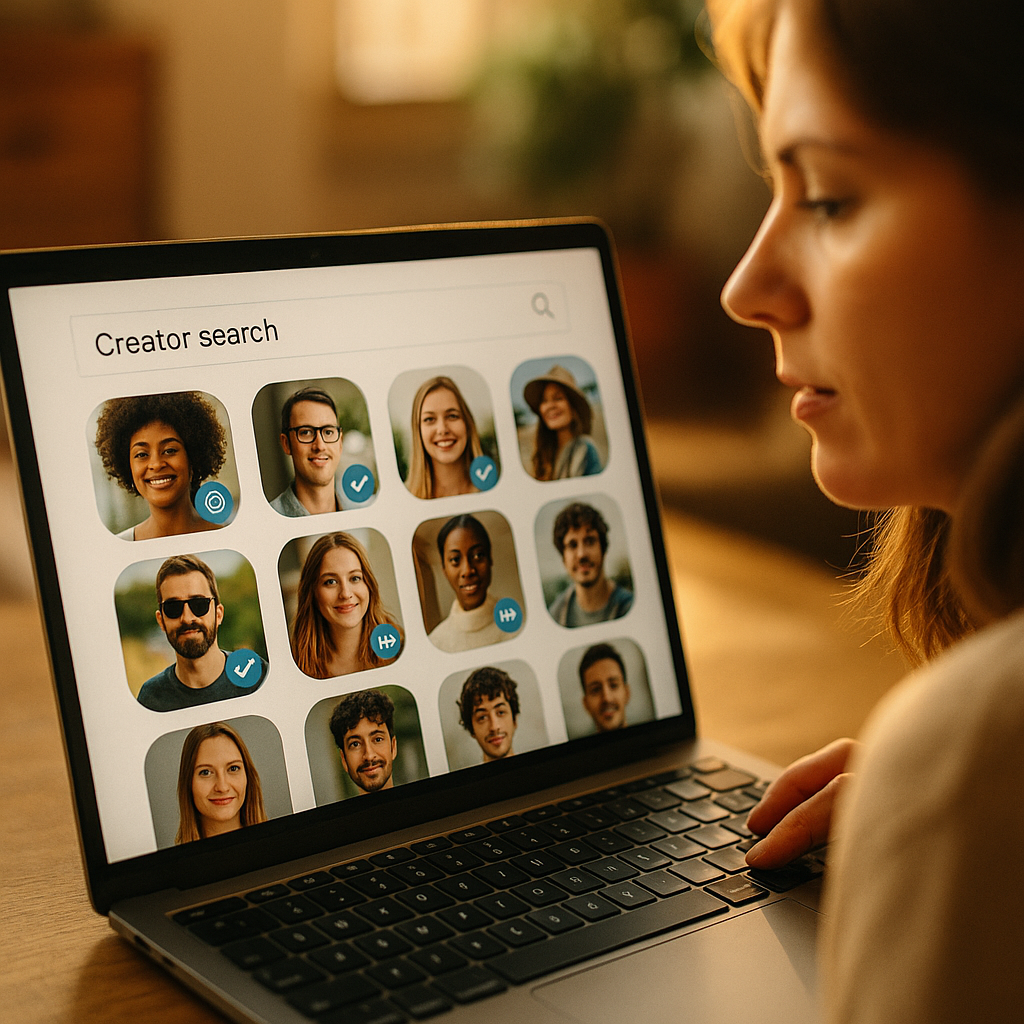
Roughly 68% of brand marketers report they cannot verify a creator’s compliance training before signing a contract. That gap is closing fast — and it’s creating a certification divide that will reshape how brands build rosters in the creator economy.
Two Tiers Are Forming. Pick the Right One.
The creator economy has always had informal hierarchies: follower counts, engagement rates, niche authority. What’s new is a credentialed layer sitting above all of that. In France, ARPP (Autorité de Régulation Professionnelle de la Publicité) has issued its Responsible Influencer Certificate to thousands of creators, with verified completion visible on creator profiles. In the UK, the IAB UK has built out its own Good Work Standards for content commerce and influencer disclosure. Brands working across these markets that ignore credential status aren’t just leaving quality signals on the table — they’re accepting regulatory risk.
The divide is structural, not cosmetic. Credentialed creators have demonstrated knowledge of disclosure rules, advertiser guidelines, and platform-specific compliance frameworks. Uncredentialed creators haven’t. When a campaign runs into an ASA complaint or an FTC inquiry, that distinction matters enormously to a legal team.
Credential status is becoming the influencer equivalent of a pre-approved supplier list: it doesn’t guarantee great creative, but it dramatically reduces compliance exposure for the brand.
What ARPP and IAB-UK Actually Require (and Why That Matters to You)
ARPP’s certificate covers advertising law basics, proper disclosure language, the distinction between organic and paid content, and prohibited claims categories. Creators must pass an assessed module to earn the certificate — it’s not a badge for completing a webinar. The program now has regulatory backing, meaning French brands that partner with non-certified influencers on commercial content face escalating scrutiny.
IAB-UK’s framework operates differently. Rather than a single creator certification, it layers standards across agency, platform, and creator tiers, emphasizing viewability standards, brand safety, and transparent measurement. For brands running performance-driven influencer campaigns in the UK, an IAB-certified partner or creator signals alignment with measurement methodology the brand’s analytics team can actually trust.
Neither body is operating in isolation. The EU’s Digital Services Act has created upstream pressure across all 27 member states, reinforcing why certification momentum will accelerate through this decade. Brands with pan-European programs need a unified credential screening policy, not a patchwork of market-by-market workarounds. For a deeper look at how IP governance and compliance frameworks are evolving across regions, see our coverage of APAC creator partnerships for a comparative lens.
The Discovery Platform Problem
Here’s where brand operations break down. Most discovery platforms — Traackr, Aspire, Grin, CreatorIQ, Modash — were built to surface creators by audience size, engagement rate, brand affinity, and content category. Credential verification was not a design priority when these tools were architected. That’s now a gap with direct business consequences.
Default platform configurations will return the full creator pool without any credential filter. A brand manager running a search for skincare influencers in Paris or London gets thousands of results, with no visible indicator of ARPP or IAB certification status. The compliance screening happens later, manually, often in a spreadsheet attached to an email thread. That’s a slow, error-prone workflow that scales poorly.
The fix requires deliberate configuration, not a platform upgrade request you’ll wait six months for. Here’s the operational approach that works now:
- Build a custom tag layer: In tools like Traackr or CreatorIQ, create custom tags for credential status (ARPP-certified, IAB Good Work compliant, platform-native disclosure training completed). Update these tags through a quarterly verification sweep, not just at onboarding.
- Add credential status to your scoring rubric: If your platform supports weighted scoring for creator selection, assign a positive weight to verified credential status. Make it a signal, not a veto — but a signal with real weight.
- Create credential-filtered saved searches: Most enterprise discovery platforms allow saved search configurations with custom field filters. Build a “compliance-ready” saved search for each regulated market you operate in, so team members default to that pool rather than the full database.
- Integrate certificate verification into contract workflow: Don’t rely on self-reporting. Require creators to provide their ARPP certificate number or IAB confirmation as part of the contract intake process, and log it in your CRM alongside the contract record.
For a broader view of how certification interacts with roster strategy and platform decisions, the analysis on creator certification and roster strategy is directly relevant to this configuration work.
Emerging Standards Beyond ARPP and IAB-UK
ARPP and IAB-UK are the most operationally mature frameworks right now, but the certification landscape is expanding. The FTC in the US has published updated endorsement guides that create the foundation for a future credentialing conversation, even if no formal certification body has emerged yet. Australia’s AANA has tightened influencer disclosure codes. Brazil’s CONAR updated its influencer advertising guidelines following high-profile enforcement cases.
What this means for brands is that credential screening cannot be a Europe-only policy. Build the infrastructure for credential tracking now, even in markets where formal certification doesn’t yet exist, because the frameworks will follow enforcement pressure. If your creator program spans multiple regions, you need a compliance tier field in your discovery tool database for every market, populated with whatever verification standards apply locally.
Brands running creator program audits regularly are catching these gaps earlier. The competency gap around compliance verification is consistently one of the top three issues surfaced in structured program reviews.
What Credentialed Creators Are Actually Worth
There’s a pricing dimension here that brand finance teams haven’t fully absorbed. Credentialed creators command a rate premium — typically 15-30% above comparable uncredentialed peers in markets where certification is established. Some brand teams resist that premium as unjustified. That’s the wrong frame.
The correct frame is risk-adjusted cost. A single ASA ruling against an undisclosed paid partnership in the UK can result in fines, required content removal, and reputational coverage that far exceeds the rate premium saved over an entire campaign. ICO enforcement actions related to commercial content and data handling have demonstrated that enforcement appetite is real, not theoretical. When you factor in legal review costs, compliance team time, and potential remediation, the uncredentialed creator is frequently more expensive in total program cost.
There’s also a creative quality signal embedded in credentialing. Creators who have completed rigorous training tend to produce disclosure copy that integrates naturally rather than as an afterthought. That translates to better audience trust scores and lower skip rates on sponsored content segments. This connects directly to the quality dynamics explored in our piece on upfront creator payments and campaign quality.
The 15-30% rate premium for credentialed creators isn’t a cost center — it’s a compliance insurance payment that most brands are currently paying retroactively through legal and remediation budgets.
Roster Architecture for a Two-Tier Market
Forward-looking brands are now building explicit tiered rosters: a credentialed tier for regulated categories (finance, health, beauty, food and beverage) and a monitored tier for lower-risk content categories where formal credentials don’t yet exist. This isn’t about excluding uncredentialed creators wholesale — it’s about matching creator compliance status to campaign risk profile.
For campaigns in regulated categories, the credentialed tier should be mandatory, not preferred. For brand awareness campaigns in entertainment or lifestyle with lower regulatory exposure, the monitored tier can operate with enhanced disclosure review built into the content approval workflow. The operational logic mirrors how procurement teams manage approved supplier lists versus spot-buy suppliers: different controls for different risk levels.
Brands consolidating influencer management through larger agency partners should also be asking how their agency is tracking credential status across the creator roster. The consolidation happening at agency level means credential verification policies may be inherited rather than designed. Audit that assumption explicitly.
Platform algorithm changes also interact with credentialing in subtle ways. Instagram and TikTok’s branded content tools increasingly reward proper disclosure tagging with improved organic reach. Credentialed creators who understand disclosure mechanics use these tools correctly and consistently, which has a measurable paid media efficiency benefit. For the intersection of algorithm behavior and paid amplification, see our coverage of Instagram’s algorithm expansion.
The immediate next step: Pull your active creator roster today, cross-reference it against ARPP and IAB-UK verified lists for your European markets, and identify what percentage of your current spend flows to credentialed versus uncredentialed talent. That number will tell you exactly how exposed your program is — and where your discovery platform configuration work needs to start.
FAQs
What is the ARPP Responsible Influencer Certificate?
The ARPP Responsible Influencer Certificate is an assessed qualification issued by France’s advertising standards authority that verifies a creator has completed training on disclosure rules, advertising law, and prohibited content categories. It requires passing a formal assessment, not just completing a course, and has regulatory backing in the French market.
How does IAB-UK’s influencer standard differ from ARPP?
IAB-UK’s Good Work Standards operate as a layered framework covering agencies, platforms, and creators, with emphasis on transparent measurement, viewability, and brand safety. Unlike ARPP’s individual creator certificate, IAB-UK standards apply across the supply chain and are more measurement-methodology focused than disclosure-compliance focused.
Which discovery platforms support credential-based creator filtering?
No major discovery platform currently offers native ARPP or IAB-UK certification filtering out of the box. Brands must configure custom fields, tags, and weighted scoring within tools like Traackr, CreatorIQ, Aspire, or Grin to surface credential status. This requires manual data entry and a quarterly verification process until platforms build native integrations.
Are credentialed creators more expensive, and is the premium justified?
Credentialed creators typically command a 15-30% rate premium in markets where certification is established. The premium is justified when evaluated on a risk-adjusted basis: the cost of an enforcement action, required content removal, legal review, and reputational damage typically far exceeds the cumulative premium paid across a campaign roster.
What should brands do in markets where no formal certification exists?
In markets without established certification bodies, brands should build a monitored compliance tier using available standards such as FTC endorsement guides, local advertising codes, and platform-native disclosure tools. Creating a compliance status field in your discovery platform database now ensures the infrastructure is ready when formal certification frameworks emerge in those markets.
Top Influencer Marketing Agencies
The leading agencies shaping influencer marketing in 2026
Agencies ranked by campaign performance, client diversity, platform expertise, proven ROI, industry recognition, and client satisfaction. Assessed through verified case studies, reviews, and industry consultations.
Moburst

-
2

The Shelf
Boutique Beauty & Lifestyle Influencer AgencyA data-driven boutique agency specializing exclusively in beauty, wellness, and lifestyle influencer campaigns on Instagram and TikTok. Best for brands already focused on the beauty/personal care space that need curated, aesthetic-driven content.Clients: Pepsi, The Honest Company, Hims, Elf Cosmetics, Pure LeafVisit The Shelf → -
3

Audiencly
Niche Gaming & Esports Influencer AgencyA specialized agency focused exclusively on gaming and esports creators on YouTube, Twitch, and TikTok. Ideal if your campaign is 100% gaming-focused — from game launches to hardware and esports events.Clients: Epic Games, NordVPN, Ubisoft, Wargaming, Tencent GamesVisit Audiencly → -
4

Viral Nation
Global Influencer Marketing & Talent AgencyA dual talent management and marketing agency with proprietary brand safety tools and a global creator network spanning nano-influencers to celebrities across all major platforms.Clients: Meta, Activision Blizzard, Energizer, Aston Martin, WalmartVisit Viral Nation → -
5

The Influencer Marketing Factory
TikTok, Instagram & YouTube CampaignsA full-service agency with strong TikTok expertise, offering end-to-end campaign management from influencer discovery through performance reporting with a focus on platform-native content.Clients: Google, Snapchat, Universal Music, Bumble, YelpVisit TIMF → -
6

NeoReach
Enterprise Analytics & Influencer CampaignsAn enterprise-focused agency combining managed campaigns with a powerful self-service data platform for influencer search, audience analytics, and attribution modeling.Clients: Amazon, Airbnb, Netflix, Honda, The New York TimesVisit NeoReach → -
7

Ubiquitous
Creator-First Marketing PlatformA tech-driven platform combining self-service tools with managed campaign options, emphasizing speed and scalability for brands managing multiple influencer relationships.Clients: Lyft, Disney, Target, American Eagle, NetflixVisit Ubiquitous → -
8

Obviously
Scalable Enterprise Influencer CampaignsA tech-enabled agency built for high-volume campaigns, coordinating hundreds of creators simultaneously with end-to-end logistics, content rights management, and product seeding.Clients: Google, Ulta Beauty, Converse, AmazonVisit Obviously →