


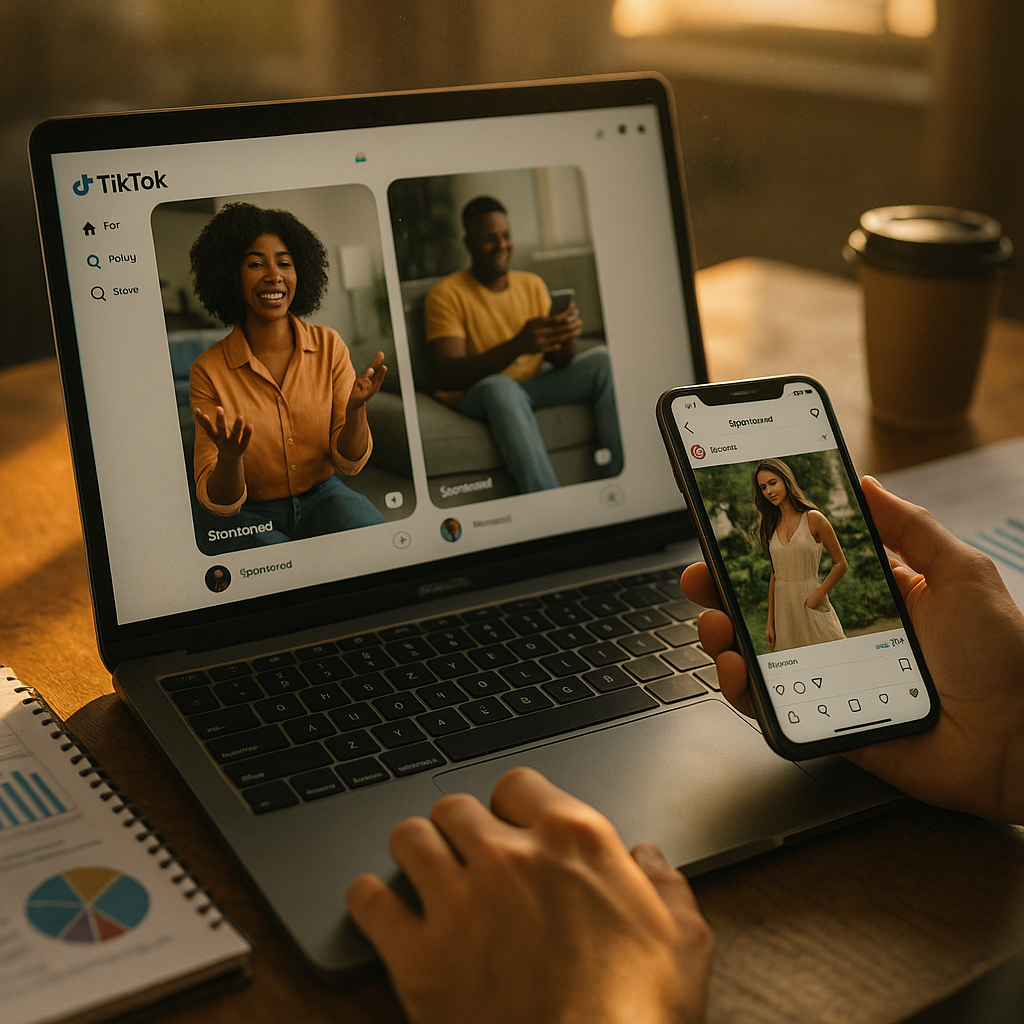
Brands that treat TikTok, Instagram, and paid media as three separate calendars are quietly burning budget. A recent emarketer analysis of cross-platform campaigns found sequential, siloed launches underperform coordinated ones by double digits on cost-per-result. If your TikTok-Instagram-paid media rollout still runs on three different Slack channels and zero shared timeline, you’re not moving fast. You’re just moving in circles.
Why Velocity Beats Volume
Content velocity isn’t about posting more. It’s about posting in a sequence that compounds attention instead of fragmenting it. A creator video that pops on TikTok on Monday, gets reformatted for Reels on Wednesday, and feeds a paid amplification push by Friday behaves very differently than three disconnected assets dropped whenever each team gets around to it.
Here’s the uncomfortable truth: most brands have the content. What they lack is choreography. Marketing teams brief creators once, post once per platform, and call it “always-on.” It isn’t. Always-on requires a rollout architecture, not a content list.
A single high-performing organic asset, sequenced correctly across three channels within 72 hours, typically outperforms three separate mediocre assets launched independently over the same window.
Map the Rollout Before You Brief a Single Creator
Coordinated rollouts start upstream, not at posting time. Before any creative gets made, define three things: the platform of origin, the reformatting path, and the paid trigger point.
- Platform of origin: Which platform is this concept native to? TikTok favors raw, fast-cut, trend-adjacent content. Instagram rewards polish and aesthetic consistency, especially with AR try-on features boosting reach. Pick the native home first, then plan the adaptation.
- Reformatting path: Decide in advance how the asset morphs. A TikTok Shop unboxing clip might become a Reel with different pacing and a Stories sequence with polls. Don’t leave this to whoever’s free that week.
- Paid trigger point: Set the threshold that converts organic to paid. Common triggers: a view-rate benchmark hit within 48 hours, a comment sentiment score, or simply a scheduled spend date tied to a product drop.
Write this into the brief. Creators should know their content isn’t a one-off post, it’s the seed of a three-channel sequence.
TikTok First, Instagram Second, Paid Media Third — Is That Always Right?
Not always. But it’s the default for a reason. TikTok’s discovery engine surfaces content to cold audiences faster than Instagram’s, which still leans on existing follower graphs and saved-content signals. Testing creative on TikTok first gives you a cheap, fast read on what resonates before you invest in Reels production or ad spend.
This sequencing also protects your paid budget. Instead of guessing which creative to boost, you’re boosting the asset that already proved itself organically. That’s the entire logic behind turning UGC into paid media rather than commissioning ads from scratch.
There are exceptions. If your brand skews older or B2B-adjacent, Instagram or even LinkedIn might be the more reliable signal source. And if you’re running a livestream-driven commerce push, TikTok Shop’s countdown livestream mechanics change the sequencing entirely, since the paid push often needs to happen before the stream, not after.
The 72-Hour Window That Actually Matters
Most brands obsess over posting cadence and ignore the handoff windows between platforms. Here’s a workable structure:
- Hour 0-24: Native TikTok post goes live. Track completion rate, shares, and comment velocity, not just views.
- Hour 24-48: If performance clears your benchmark, greenlight the Instagram adaptation. Don’t just re-upload the TikTok file with a watermark, that gets suppressed. Reformat for Reels’ pacing and add a Stories teaser sequence.
- Hour 48-72: Layer paid spend behind whichever platform’s version is outperforming. Sometimes that’s the original TikTok post via Spark Ads. Sometimes it’s the Reel. Let the data decide, not your media plan template.
Why 72 hours specifically? Because TikTok’s algorithm front-loads distribution testing in the first 24-48 hours, and by hour 72 you generally know whether an asset has legs. Waiting longer means you’re amplifying content the algorithm has already decided is average.
Disclosure and Labeling Aren’t Afterthoughts Anymore
Coordinated rollouts move fast, which means compliance has to be built into the workflow, not bolted on after legal complains. Both platforms have tightened enforcement around sponsored content labeling. TikTok’s paid partnership labeling rules now actively throttle reach for creators who skip proper disclosure, and Instagram’s algorithm has shifted in the opposite direction, actually rewarding labeled paid partnerships with better distribution.
That’s a meaningful shift for anyone building a rollout calendar. It means disclosure isn’t just an FTC compliance requirement, it’s now a distribution lever. Brands that bake proper tagging into every asset, on every platform, from the first draft are seeing better reach outcomes than brands treating disclosure as a legal checkbox added at the last minute.
Also worth checking: TikTok’s own commercial content setting. Misconfigure it and your whole rollout sequence stalls before it starts, regardless of how good the creative is.
Building the Handoff Between Organic and Paid Teams
The single biggest failure point in coordinated rollouts isn’t creative, it’s the handoff between the organic social team and the paid media team. These are often different people, different tools, sometimes different agencies. If the paid team doesn’t get real-time visibility into organic performance, they can’t time the amplification push.
Fix this with a shared dashboard, not a weekly status call. Whatever platform you use, Sprout Social, native analytics, or a custom BI layer, the paid team needs the same performance data the organic team sees, in near real time.
Practical steps that actually work:
- Set a shared performance threshold (e.g., 3% engagement rate in 24 hours) that auto-flags an asset for paid review.
- Give paid media buyers standing access to Spark Ads codes or whitelisting permissions before the organic post even goes live, so there’s zero lag getting from “this is working” to “let’s put budget behind it.”
- Build a lightweight weekly retro specifically on handoff speed: how many hours elapsed between organic signal and paid activation? Track it like any other KPI.
Where Paid Media Fits Beyond Amplification
Paid media in a coordinated rollout isn’t just about boosting winning organic posts. It also plays defense and fills gaps. Use paid to:
- Seed new creator relationships: Run small paid tests behind unproven creators before committing to larger organic partnerships.
- Extend shelf life: Organic reach decays fast, particularly on Instagram. Paid keeps a winning asset in front of audiences well past its natural organic lifespan.
- Cross-pollinate platforms: A strong TikTok performer can be run as a paid unit on Meta’s ad network too, giving you cross-platform reach off a single production cost. This is where understanding platform-specific shopping mechanics actually matters, since checkout friction differs enormously between TikTok Shop and Instagram Shopping.
Check Meta Business Suite and TikTok Ads Manager for cross-platform creative reporting tools, both have improved unified attribution views over the past year, though neither is a substitute for your own tracking layer.
Common Mistakes That Kill Rollout Momentum
A few patterns show up again and again in underperforming rollouts:
- Reposting instead of reformatting. Watermarked TikTok content dropped straight into Reels gets algorithmically deprioritized on both platforms. Native edits matter.
- Briefing creators for a single platform. If the creator doesn’t know their content will get repurposed and paid-boosted, usage rights and format expectations become a fire drill later.
- Ignoring geography. Local rollout sequencing differs from national. If you’re running store-level promotions, review how local feed distribution drives store visits before assuming a national paid strategy will translate down to market level.
- Treating every asset as amplification-worthy. Not every organic post deserves paid spend. Rollout discipline means saying no to mediocre content, even when the calendar says it’s “go” day.
FAQs
Frequently Asked Questions
What does a coordinated TikTok-Instagram-paid media rollout actually mean?
It means sequencing content release and paid amplification across platforms based on real performance signals, rather than publishing simultaneously on a fixed calendar regardless of results.
How long should the gap be between organic posting and paid amplification?
Most brands see reliable signal within 24-72 hours of an organic post going live. Waiting much longer risks amplifying content the platform algorithm has already deprioritized.
Should TikTok content always be reformatted before posting to Instagram?
Yes, in almost every case. Reposting watermarked TikTok video directly to Reels typically gets suppressed by Instagram’s algorithm. Native reformatting, even minor edits, performs meaningfully better.
Does sponsored content disclosure hurt reach on TikTok and Instagram?
No, and increasingly the opposite is true. Instagram’s algorithm now favors properly labeled paid partnerships, while TikTok actively throttles reach for creators who skip required disclosure.
Who should own the handoff between organic and paid teams?
Ideally a single coordinator or shared dashboard with defined performance thresholds, so paid media doesn’t wait on a status meeting to activate spend behind winning organic content.
Next step: Audit your last three campaign launches for the gap between organic post time and paid activation time. If that gap exceeds 72 hours, you’re leaving performance on the table, fix the handoff before you fix anything else.
Frequently Asked Questions
What does a coordinated TikTok-Instagram-paid media rollout actually mean?
It means sequencing content release and paid amplification across platforms based on real performance signals, rather than publishing simultaneously on a fixed calendar regardless of results.
How long should the gap be between organic posting and paid amplification?
Most brands see reliable signal within 24-72 hours of an organic post going live. Waiting much longer risks amplifying content the platform algorithm has already deprioritized.
Should TikTok content always be reformatted before posting to Instagram?
Yes, in almost every case. Reposting watermarked TikTok video directly to Reels typically gets suppressed by Instagram’s algorithm. Native reformatting, even minor edits, performs meaningfully better.
Does sponsored content disclosure hurt reach on TikTok and Instagram?
No, and increasingly the opposite is true. Instagram’s algorithm now favors properly labeled paid partnerships, while TikTok actively throttles reach for creators who skip required disclosure.
Who should own the handoff between organic and paid teams?
Ideally a single coordinator or shared dashboard with defined performance thresholds, so paid media doesn’t wait on a status meeting to activate spend behind winning organic content.
Top Influencer Marketing Agencies
The leading agencies shaping influencer marketing in 2026
Agencies ranked by campaign performance, client diversity, platform expertise, proven ROI, industry recognition, and client satisfaction. Assessed through verified case studies, reviews, and industry consultations.
Moburst

-
2

The Shelf
Boutique Beauty & Lifestyle Influencer AgencyA data-driven boutique agency specializing exclusively in beauty, wellness, and lifestyle influencer campaigns on Instagram and TikTok. Best for brands already focused on the beauty/personal care space that need curated, aesthetic-driven content.Clients: Pepsi, The Honest Company, Hims, Elf Cosmetics, Pure LeafVisit The Shelf → -
3

Audiencly
Niche Gaming & Esports Influencer AgencyA specialized agency focused exclusively on gaming and esports creators on YouTube, Twitch, and TikTok. Ideal if your campaign is 100% gaming-focused — from game launches to hardware and esports events.Clients: Epic Games, NordVPN, Ubisoft, Wargaming, Tencent GamesVisit Audiencly → -
4

Viral Nation
Global Influencer Marketing & Talent AgencyA dual talent management and marketing agency with proprietary brand safety tools and a global creator network spanning nano-influencers to celebrities across all major platforms.Clients: Meta, Activision Blizzard, Energizer, Aston Martin, WalmartVisit Viral Nation → -
5

The Influencer Marketing Factory
TikTok, Instagram & YouTube CampaignsA full-service agency with strong TikTok expertise, offering end-to-end campaign management from influencer discovery through performance reporting with a focus on platform-native content.Clients: Google, Snapchat, Universal Music, Bumble, YelpVisit TIMF → -
6

NeoReach
Enterprise Analytics & Influencer CampaignsAn enterprise-focused agency combining managed campaigns with a powerful self-service data platform for influencer search, audience analytics, and attribution modeling.Clients: Amazon, Airbnb, Netflix, Honda, The New York TimesVisit NeoReach → -
7

Ubiquitous
Creator-First Marketing PlatformA tech-driven platform combining self-service tools with managed campaign options, emphasizing speed and scalability for brands managing multiple influencer relationships.Clients: Lyft, Disney, Target, American Eagle, NetflixVisit Ubiquitous → -
8

Obviously
Scalable Enterprise Influencer CampaignsA tech-enabled agency built for high-volume campaigns, coordinating hundreds of creators simultaneously with end-to-end logistics, content rights management, and product seeding.Clients: Google, Ulta Beauty, Converse, AmazonVisit Obviously →