


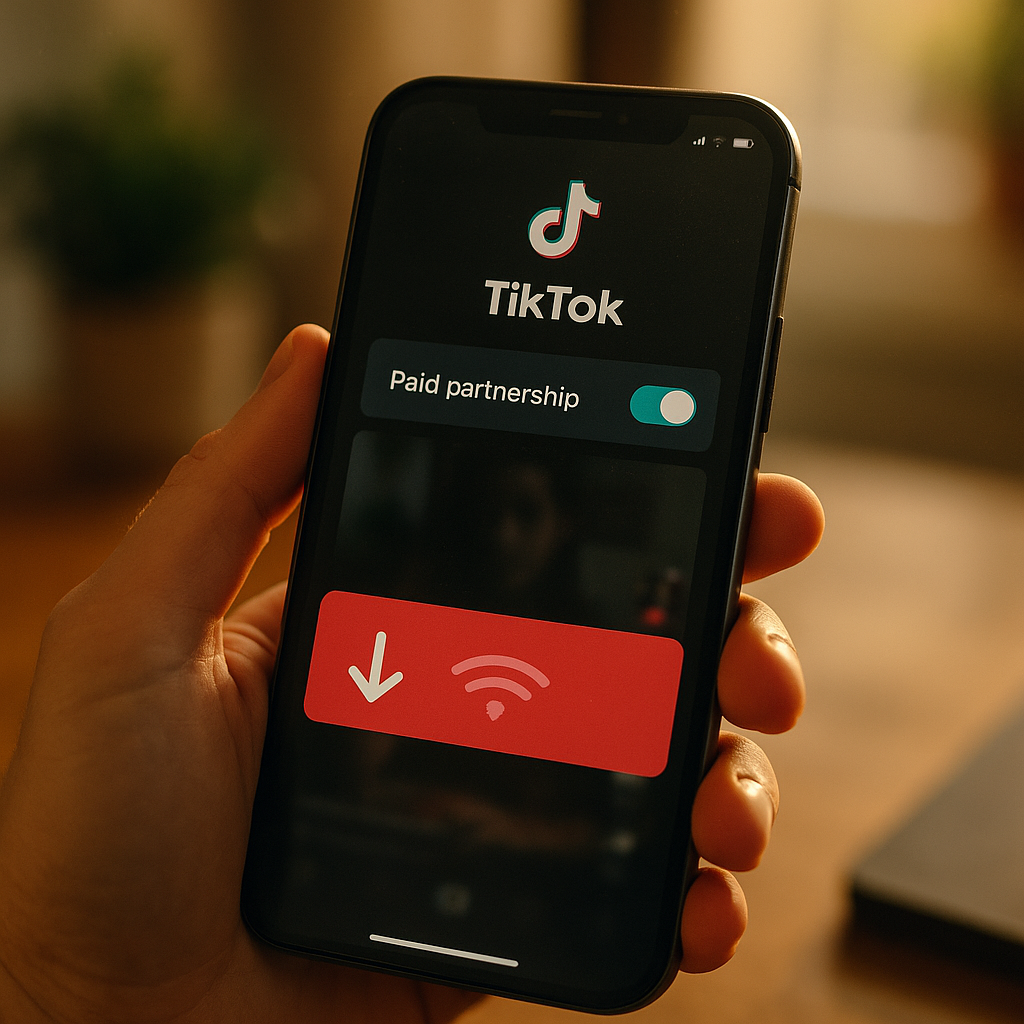
TikTok quietly started demoting posts that fail its paid partnership labeling checks, and early creator reports suggest reach drops of 30% to 60% within 48 hours of a flagged violation. That’s not a warning shot. That’s a live enforcement mechanism, and most brand marketing playbooks weren’t built for it. If your influencer program still treats disclosure as a legal afterthought handled in the contract’s fine print, TikTok’s new mandatory paid partnership labeling requirement just made that approach expensive.
Why This Isn’t Just Another Compliance Memo
Platforms have flirted with disclosure enforcement before. What’s different now is that TikTok has tied the paid partnership toggle directly to its distribution algorithm, not just to a badge that appears on the video. Miss the toggle, mislabel the content, or use a workaround hashtag instead of the native tool, and the system treats the post as a trust signal failure. That’s a meaningfully different risk profile than a possible FTC letter six months down the line.
This shift lines up with a broader pattern Influencers Time has tracked across TikTok’s ranking changes this year. The platform has been steadily moving toward trust-based distribution rather than pure engagement weighting, and disclosure compliance now sits inside that trust score. Creators who post frequently but rack up unlabeled brand deals are getting quietly deprioritized, even when their engagement numbers look healthy.
Unlabeled branded content isn’t just a legal liability anymore. On TikTok, it’s an algorithmic penalty that throttles reach before anyone files a complaint.
What the New Requirement Actually Demands
TikTok’s paid partnership tool has existed for years. What’s new is the enforcement layer and the expanded scope of what counts as a “paid partnership” under the platform’s definitions. A few specifics brand teams need on their radar:
- Native toggle required, not optional. TikTok’s Branded Content Toggle must be switched on for any post involving compensation, free product, affiliate links, or discount codes tied to a brand relationship.
- Hashtag disclosures no longer satisfy the requirement alone. #ad or #sponsored in the caption used to be treated as sufficient by many creators. TikTok now expects the native label in addition to, not instead of, any caption disclosure.
- Affiliate and TikTok Shop commissions count. If a creator earns commission through TikTok Shop’s affiliate program, that relationship now falls under the same labeling rules as a traditional paid sponsorship.
- Brand-side visibility into label status. Business accounts running Spark Ads or boosted creator content can now see whether the underlying organic post carries a proper disclosure tag before they spend media dollars amplifying it.
That last point matters more than it sounds. If your paid media team is boosting influencer content that lacks proper disclosure, you’re not just risking organic reach. You’re potentially violating the platform’s ad policies and inviting an FTC inquiry into the paid amplification itself.
The Reach Penalty Is Real, and It’s Fast
Marketing teams love to ask for proof before they change process. Fair enough. Here’s what we’re seeing across creator case studies and platform documentation.
TikTok’s enforcement isn’t a one-time strike. It’s a recurring signal that compounds. A creator who posts three unlabeled branded videos in a month doesn’t just get three individual reach penalties, they start seeing broader distribution suppression across their account, similar to how the platform already suppresses accounts with repeated community guideline violations. This mirrors the trust-weighting behavior Influencers Time covered when TikTok began ranking creator trust over post volume earlier this year.
For brands, this creates a nasty second-order problem: a creator’s account-level reach can degrade because of labeling mistakes on campaigns that have nothing to do with you. If you’re vetting creators for a Q3 campaign, their disclosure history is now a performance risk factor, not just a compliance checkbox.
Building the Labeling Requirement Into Your Brief
Most creative briefs mention FTC disclosure in a single boilerplate line near the bottom. That’s no longer adequate. Here’s what a compliant brief needs to spell out explicitly:
- Name the exact toggle. Don’t assume creators know TikTok updated its labeling flow. Screenshot the current Branded Content Toggle location and include it in the brief.
- Specify caption language alongside the toggle. Require both the native label and a caption disclosure (#ad, #sponsored, or “Paid partnership with [Brand]”). Redundancy protects you if one system fails.
- Require a screen recording or screenshot before go-live. Agencies running high-volume seeding programs should build this into their QA step, not leave it to the creator’s discretion.
- Address TikTok Shop affiliate content separately. If a creator is earning commission through Shop links, confirm they understand that arrangement also triggers labeling requirements, even without a direct payment from your brand.
Brands running commission-heavy affiliate programs should pay particular attention here. The mechanics of TikTok Shop’s commission tiers mean a lot of creators are technically in a paid relationship with your brand without ever signing a traditional contract. That’s exactly the gray zone TikTok’s new enforcement is targeting.
Where Brands Get This Wrong
A few recurring mistakes show up across brand and agency workflows right now.
First, treating disclosure as the creator’s sole responsibility. Legally, creators bear disclosure obligations under FTC guidance, but brands share liability, and platforms increasingly hold the paying party accountable for enforcement outcomes too. The FTC’s endorsement guidelines make clear that brands can be held responsible for a creator’s failure to disclose, particularly when the brand had the ability to require compliance and didn’t.
Second, assuming hashtag disclosure is enough because it always has been. It hasn’t been “enough” under FTC rules for years, and now it’s insufficient for TikTok’s algorithm too. Brands still briefing creators with just “add #ad” are setting up avoidable reach losses.
Third, ignoring the interaction between labeling and paid amplification. If your media buying team boosts a mislabeled post through Spark Ads without checking disclosure status first, you’ve compounded the risk. Build a pre-flight check into your ad ops workflow: no boost without a verified label.
Disclosure compliance used to be a legal risk you managed after the fact. It’s now a distribution input you have to manage before you ever spend a dollar on amplification.
A Practical Compliance Workflow for Brand Teams
Here’s a lightweight process that doesn’t require a legal team rebuild, just tighter operational discipline:
- Pre-campaign: Add labeling requirements as a contract line item with specific reference to TikTok’s Branded Content Toggle, not generic “FTC compliance” language.
- Pre-publish: Require a screenshot of the toggle enabled before final approval. This is a five-minute ask that eliminates most disputes later.
- Post-publish audit: Spot-check live posts within 24 hours using a business account to confirm the label is visible and the paid partnership tag appears correctly.
- Amplification gate: Before boosting any organic creator post, verify disclosure status. Treat this the same way you’d treat a rights clearance check before running paid media.
- Creator scorecard update: Add disclosure compliance history as a vetting criterion for repeat creator partnerships, alongside engagement rate and audience quality.
This last point deserves its own emphasis. Agencies running always-on creator programs should treat disclosure history the same way they treat brand safety history, as a persistent data point that follows a creator across campaigns. Tools like Sprout Social and platform-native creator marketplaces are starting to surface this kind of compliance data, though brands should verify it independently rather than assuming automated flags catch everything.
What This Means for Budget Allocation
There’s a reasonable question here: does stricter labeling reduce the appeal of TikTok influencer campaigns compared to platforms with looser enforcement? Maybe in the short term. But the platforms getting serious about disclosure now, TikTok included, are the ones investors and regulators are watching most closely, per eMarketer’s ongoing coverage of creator economy regulation. Brands that build compliant workflows now are buying insurance against a much bigger disruption later, whether that’s a regulatory crackdown or a platform-wide trust algorithm change that catches unprepared accounts off guard.
It’s also worth remembering that disclosure compliance and reach aren’t actually in tension long-term. TikTok wants its feed to feel trustworthy because that’s what keeps users watching and keeps advertisers spending. Brands whose content already meets a high disclosure bar are, in effect, aligned with where the platform’s ranking systems are heading. The same trust-signal logic is showing up across Instagram’s credibility-weighted distribution and YouTube’s creator trust ranking, so this isn’t a TikTok-only exercise. It’s a preview of how every major platform plans to treat sponsored content going forward.
Next Step
Audit your last 90 days of TikTok creator content for label compliance before you brief another campaign. A one-afternoon review now costs far less than the reach you’ll lose fixing it after enforcement flags your top creators.
FAQs
Does TikTok’s paid partnership toggle replace the need for #ad in captions?
No. TikTok’s native Branded Content Toggle and a written disclosure like #ad or #sponsored serve different purposes and should both be used. The toggle triggers the platform’s internal labeling and ad policy systems, while caption disclosure satisfies FTC transparency expectations for the viewer.
Does this labeling requirement apply to TikTok Shop affiliate content?
Yes. If a creator earns commission through TikTok Shop’s affiliate program, that relationship counts as a paid partnership under the platform’s disclosure rules, even without a direct brand payment or formal contract.
How quickly does TikTok penalize unlabeled branded content?
Creator reports and platform behavior suggest reach suppression can begin within 24 to 48 hours of a flagged post, with repeated violations compounding into broader account-level distribution penalties.
Who is legally responsible if a creator forgets to disclose a paid partnership?
Both the brand and the creator can bear liability under FTC guidelines. Brands that fail to require or verify disclosure compliance in their contracts face increased regulatory exposure alongside the creator.
Should brands avoid boosting creator content that lacks proper disclosure?
Yes. Amplifying an unlabeled branded post through paid media compounds both platform policy risk and regulatory risk. Brands should verify disclosure status before any Spark Ads or boosted post spend.
Top Influencer Marketing Agencies
The leading agencies shaping influencer marketing in 2026
Agencies ranked by campaign performance, client diversity, platform expertise, proven ROI, industry recognition, and client satisfaction. Assessed through verified case studies, reviews, and industry consultations.
Moburst

-
2

The Shelf
Boutique Beauty & Lifestyle Influencer AgencyA data-driven boutique agency specializing exclusively in beauty, wellness, and lifestyle influencer campaigns on Instagram and TikTok. Best for brands already focused on the beauty/personal care space that need curated, aesthetic-driven content.Clients: Pepsi, The Honest Company, Hims, Elf Cosmetics, Pure LeafVisit The Shelf → -
3

Audiencly
Niche Gaming & Esports Influencer AgencyA specialized agency focused exclusively on gaming and esports creators on YouTube, Twitch, and TikTok. Ideal if your campaign is 100% gaming-focused — from game launches to hardware and esports events.Clients: Epic Games, NordVPN, Ubisoft, Wargaming, Tencent GamesVisit Audiencly → -
4

Viral Nation
Global Influencer Marketing & Talent AgencyA dual talent management and marketing agency with proprietary brand safety tools and a global creator network spanning nano-influencers to celebrities across all major platforms.Clients: Meta, Activision Blizzard, Energizer, Aston Martin, WalmartVisit Viral Nation → -
5

The Influencer Marketing Factory
TikTok, Instagram & YouTube CampaignsA full-service agency with strong TikTok expertise, offering end-to-end campaign management from influencer discovery through performance reporting with a focus on platform-native content.Clients: Google, Snapchat, Universal Music, Bumble, YelpVisit TIMF → -
6

NeoReach
Enterprise Analytics & Influencer CampaignsAn enterprise-focused agency combining managed campaigns with a powerful self-service data platform for influencer search, audience analytics, and attribution modeling.Clients: Amazon, Airbnb, Netflix, Honda, The New York TimesVisit NeoReach → -
7

Ubiquitous
Creator-First Marketing PlatformA tech-driven platform combining self-service tools with managed campaign options, emphasizing speed and scalability for brands managing multiple influencer relationships.Clients: Lyft, Disney, Target, American Eagle, NetflixVisit Ubiquitous → -
8

Obviously
Scalable Enterprise Influencer CampaignsA tech-enabled agency built for high-volume campaigns, coordinating hundreds of creators simultaneously with end-to-end logistics, content rights management, and product seeding.Clients: Google, Ulta Beauty, Converse, AmazonVisit Obviously →