


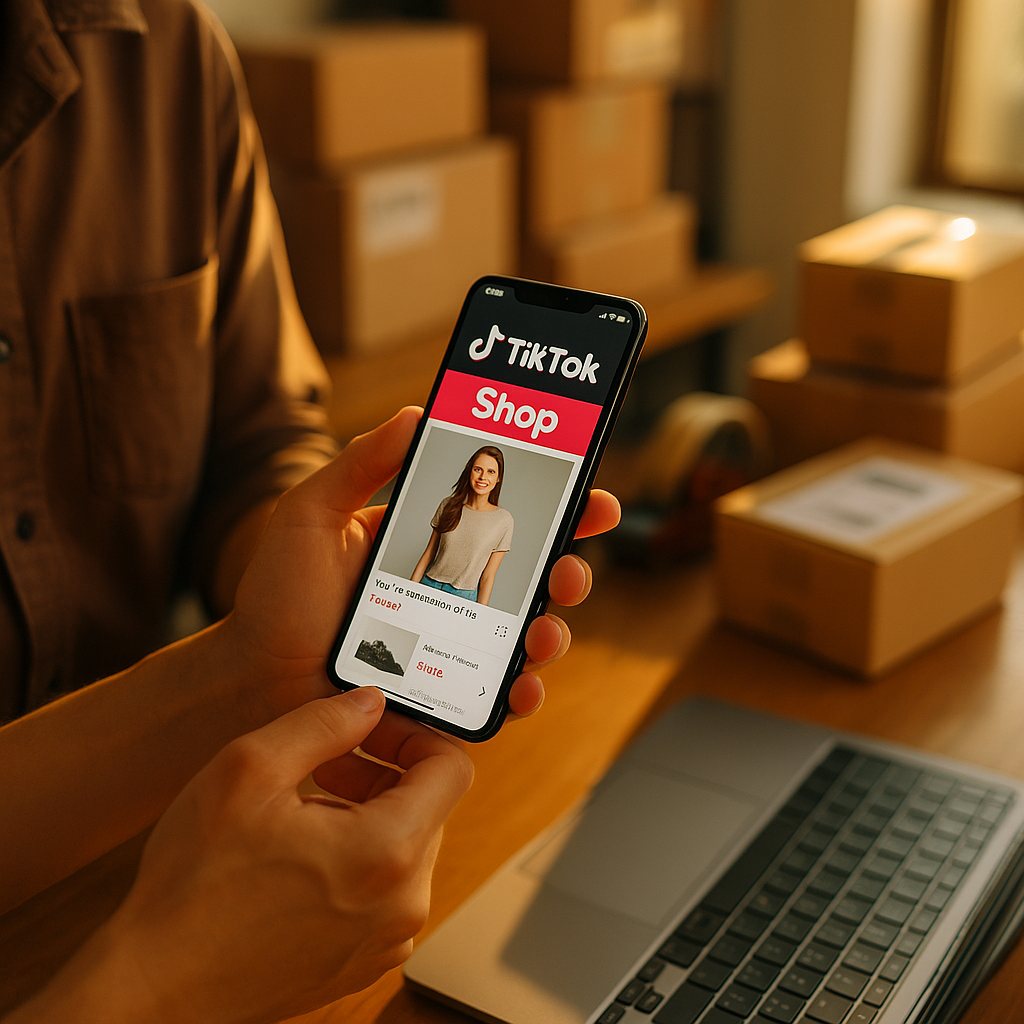
171,000. That’s how many small-business shops now operate on TikTok Shop, according to platform disclosures shared with retail media buyers this year. For enterprise brands used to negotiating exclusivity and premium placement, that number should trigger a strategic gut-check: you’re not walking into a curated storefront. You’re walking into a flea market with algorithmic superpowers.
TikTok Shop’s growth story has always been sold as an opportunity for brands of every size. But the underlying seller composition tells a more specific story — one that’s overwhelmingly small business, DTC-native, and built around scrappy, creator-led content rather than polished brand campaigns. If you’re running a nine-figure media budget, that concentration changes how you should think about entry, competition, and differentiation on the platform.
What the SMB Concentration Actually Means
Let’s be precise about what “171,000 small-business shops” implies. It means TikTok Shop’s supply side is dominated by sellers who list a handful of SKUs, rely on affiliate creators for discovery, and price aggressively because they don’t carry legacy retail overhead. These aren’t hobbyists. Many are doing real revenue — TikTok has touted GMV growth in the billions across its Shop ecosystem — but they operate with a speed and content volume that most enterprise marketing teams simply aren’t built to match.
For an enterprise brand, this creates two simultaneous realities. First, the addressable audience is enormous and highly commerce-intent; people browsing TikTok Shop are primed to buy, not just scroll. Second, the competitive set inside that feed is mostly other people’s scrappy, fast-turnaround content — not billboard ads, not fifteen-second brand films. Your polished campaign asset is competing against a 22-year-old’s iPhone video showing a $12 gadget in a messy bedroom. And often, the messy bedroom wins.
TikTok Shop’s supply side isn’t built for brand campaigns — it’s built for creator-led product discovery at volume. Enterprise brands that show up with traditional ad logic are optimizing for the wrong game.
Why Enterprise Brands Struggle to Compete on Native Terms
Enterprise marketing organizations are optimized for consistency, brand safety, and legal review cycles. TikTok Shop rewards the opposite: rapid iteration, authentic-feeling UGC, and sellers who can post ten variations of the same product video before lunch. That’s a structural mismatch, not a tactical one.
Consider what SMB sellers do that most enterprise teams can’t replicate at the same speed: they test hooks daily, they let affiliate creators keep creative control, and they treat returns and negative reviews as public content rather than PR crises to bury. A regulated CPG or financial services brand can’t move at that pace, and shouldn’t try to fake it. The compliance friction alone — legal sign-off, disclosure requirements, claims substantiation — puts big brands several steps behind by the time a trend peaks.
This is also why the platform’s trust-based algorithm forces brands to rethink reach entirely. TikTok doesn’t distribute based on follower count or ad spend alone; it distributes based on engagement signals that favor content people actually trust. SMB sellers, working through affiliate creators who look and sound like real customers, generate exactly that kind of trust signal. Enterprise brand content, even when well-produced, often reads as an ad — and TikTok’s system is increasingly good at identifying and suppressing that.
The Affiliate Layer Is Doing the Heavy Lifting
Most of those 171,000 shops aren’t running paid ads to drive their sales. They’re running affiliate programs, paying creators a commission per sale through TikTok’s Creator Marketplace and Shop affiliate tools. This is the mechanism enterprise brands underestimate most. It’s not about buying reach — it’s about recruiting a distributed sales force of micro and nano creators who each move small volume, but collectively move enormous volume.
The data backs this up. Micro and nano creators now claim half of influencer budgets across the industry, and TikTok Shop is arguably the clearest proof point for why. These creators convert better on lower-consideration purchases, they’re cheaper to activate at scale, and they don’t require the six-week approval cycle that a single macro-influencer partnership might. Enterprise brands that keep funneling budget toward a handful of big-name creators are missing the actual growth engine of the platform.
So Should Enterprise Brands Even Bother?
Yes — but not by trying to out-SMB the SMBs. That’s a losing game. Instead, enterprise brands should treat TikTok Shop as a distinct commerce channel with its own operating model, not an extension of their existing paid social playbook.
Three moves tend to work:
- Build a dedicated affiliate program inside TikTok Shop, separate from your broader influencer strategy, with commission structures competitive enough to attract the same micro-creator pool that SMB sellers rely on.
- Unbundle SKUs. Enterprise brands that succeed on TikTok Shop often carve out a smaller, Shop-specific product line — travel sizes, limited editions, bundles — rather than pushing their full retail catalog into a feed built for impulse buys.
- Let creators control the narrative. This is the hardest cultural shift for big brands, but it’s non-negotiable. Rigid brand guidelines kill the authenticity signal that makes Shop content perform.
This also means rethinking internal operations. Running a high-volume, always-on affiliate and UGC program isn’t a campaign — it’s an operations function. As UGC programs scale, brand teams become production ops, and TikTok Shop is precisely the environment where that transition becomes unavoidable. You need people whose job is managing creator pipelines, approvals, and content velocity daily, not quarterly.
Retention Matters More Than Recruitment
Here’s a stat that should worry any brand building a TikTok Shop affiliate roster: industry data shows 63% of creator deals don’t renew, largely because brands treat creator relationships as one-off transactions rather than ongoing partnerships. On TikTok Shop specifically, where SMB sellers often build long-term affiliate relationships with the same handful of creators, that churn rate is a real competitive disadvantage for enterprise brands cycling through creators campaign by campaign.
The fix isn’t complicated, even if it requires budget discipline: move toward retainer-style affiliate agreements with your best-performing TikTok Shop creators instead of one-off commission deals. Retainers fix that churn problem, and they also give creators enough runway to actually learn your product well enough to sell it convincingly — something a single-video affiliate deal rarely allows.
Risk and Compliance: The Part Nobody Wants to Talk About
Enterprise legal and compliance teams should be paying closer attention to TikTok Shop’s SMB-heavy composition, because it changes the risk profile of adjacent placement. Your brand’s sponsored content can appear in a feed environment saturated with unverified sellers, inconsistent product claims, and minimal moderation compared to traditional retail media. That’s not a reason to avoid the platform, but it is a reason to tighten creator vetting and disclosure compliance before scaling spend.
The FTC has been explicit about endorsement disclosure requirements, and platform-native commerce blurs those lines further when a creator is both reviewing and directly selling a product through the same video. Brands should revisit their creator contracts specifically for TikTok Shop affiliate terms, not just assume existing influencer agreements cover it. Review the FTC’s endorsement guidance directly if your legal team hasn’t updated its TikTok Shop clauses in the last cycle.
There’s also a sourcing risk worth flagging. As affiliate and UGC networks grow, brands increasingly rely on third-party creator agencies or parent companies to staff their programs. That’s efficient, but it introduces a layer of opacity. It’s worth understanding what brands must know before signing with any creator management firm that promises turnkey TikTok Shop affiliate rosters — vet who actually owns the creator relationships you’re paying for.
Where This Fits in the Bigger Platform Picture
It’s tempting to treat TikTok Shop as a self-contained tactic. It isn’t. The SMB concentration is really a signal about how TikTok’s entire algorithm and monetization model favors small, fast, trust-driven sellers over big, slow, brand-driven ones. That principle extends beyond commerce into organic content performance generally, which is why there is no universal algorithm brands can rely on across platforms — TikTok’s incentive structure is simply different from Instagram’s or YouTube’s, and Shop makes that difference financially explicit.
For context on scale: eMarketer’s social commerce data consistently shows TikTok Shop outpacing other platform-native commerce tools in growth rate, even as overall social commerce adoption in the U.S. remains behind markets like China. Enterprise brands weighing budget allocation should benchmark against that trajectory, not against last year’s Instagram Shopping numbers.
Consider also how this compares to livestream commerce, where live shopping converts at 30 percent versus 3 percent for standard ecommerce. TikTok Shop’s affiliate video model and its livestream features work off the same underlying principle: proximity to a trusted creator voice drives conversion far more reliably than polished brand messaging. SMB sellers intuitively understood this before most enterprise brands did. That’s the real lesson buried in the 171,000 number — it’s not about shop count, it’s about what kind of selling behavior the platform actually rewards.
A Quick Gut-Check for Budget Owners
Before allocating enterprise budget to TikTok Shop, ask three questions internally: Can our legal and compliance review cycle move fast enough to keep pace with trend-driven content? Are we willing to fund an affiliate-first model instead of a paid-media-first model? And do we have the production ops in place to support high-volume, creator-led content rather than a handful of hero assets per quarter? If the answer to any of these is no, fix that first. Spend without operational readiness on this platform tends to underperform badly, and the SMB benchmark makes underperformance obvious fast.
FAQs
Frequently Asked Questions
Why does TikTok Shop have so many small-business sellers?
TikTok Shop’s low entry barriers, built-in affiliate tools, and algorithm favoring authentic, creator-led content make it easier for small businesses to launch and scale quickly compared to traditional ecommerce or retail media channels. Enterprise brands face heavier compliance and production overhead that slows their equivalent speed to market.
Can enterprise brands actually compete with SMB sellers on TikTok Shop?
Yes, but not by mimicking SMB tactics directly. Enterprise brands perform better when they build dedicated affiliate programs, unbundle specific SKUs for Shop, and give creators real creative control instead of applying traditional brand-safety guardrails that suppress authenticity signals.
What’s the biggest operational risk for large brands on TikTok Shop?
Compliance and disclosure risk is the most overlooked issue. Affiliate creators blending product endorsement with direct selling can create FTC disclosure gaps, and enterprise legal teams often haven’t updated influencer contracts to reflect TikTok Shop’s specific affiliate structure.
How is TikTok Shop different from Instagram or Amazon-based commerce strategies?
TikTok Shop’s algorithm rewards trust and engagement signals over follower count or ad spend, and its affiliate-driven model relies heavily on micro and nano creators rather than paid placements. That makes it structurally closer to word-of-mouth commerce than traditional social or marketplace advertising.
Should enterprise brands prioritize paid ads or affiliate programs on TikTok Shop?
Affiliate programs typically outperform paid ads on TikTok Shop because the platform’s supply side and discovery mechanics are built around creator-led selling. Paid media can support visibility, but affiliate relationships drive the sustained, trust-based conversion the platform is optimized for.
The 171,000 number isn’t a warning to stay off TikTok Shop — it’s a map of how the platform actually works. Build your affiliate infrastructure like an SMB, fund it like an enterprise, and you’ll outperform both.
Top Influencer Marketing Agencies
The leading agencies shaping influencer marketing in 2026
Agencies ranked by campaign performance, client diversity, platform expertise, proven ROI, industry recognition, and client satisfaction. Assessed through verified case studies, reviews, and industry consultations.
Moburst

-
2

The Shelf
Boutique Beauty & Lifestyle Influencer AgencyA data-driven boutique agency specializing exclusively in beauty, wellness, and lifestyle influencer campaigns on Instagram and TikTok. Best for brands already focused on the beauty/personal care space that need curated, aesthetic-driven content.Clients: Pepsi, The Honest Company, Hims, Elf Cosmetics, Pure LeafVisit The Shelf → -
3

Audiencly
Niche Gaming & Esports Influencer AgencyA specialized agency focused exclusively on gaming and esports creators on YouTube, Twitch, and TikTok. Ideal if your campaign is 100% gaming-focused — from game launches to hardware and esports events.Clients: Epic Games, NordVPN, Ubisoft, Wargaming, Tencent GamesVisit Audiencly → -
4

Viral Nation
Global Influencer Marketing & Talent AgencyA dual talent management and marketing agency with proprietary brand safety tools and a global creator network spanning nano-influencers to celebrities across all major platforms.Clients: Meta, Activision Blizzard, Energizer, Aston Martin, WalmartVisit Viral Nation → -
5

The Influencer Marketing Factory
TikTok, Instagram & YouTube CampaignsA full-service agency with strong TikTok expertise, offering end-to-end campaign management from influencer discovery through performance reporting with a focus on platform-native content.Clients: Google, Snapchat, Universal Music, Bumble, YelpVisit TIMF → -
6

NeoReach
Enterprise Analytics & Influencer CampaignsAn enterprise-focused agency combining managed campaigns with a powerful self-service data platform for influencer search, audience analytics, and attribution modeling.Clients: Amazon, Airbnb, Netflix, Honda, The New York TimesVisit NeoReach → -
7

Ubiquitous
Creator-First Marketing PlatformA tech-driven platform combining self-service tools with managed campaign options, emphasizing speed and scalability for brands managing multiple influencer relationships.Clients: Lyft, Disney, Target, American Eagle, NetflixVisit Ubiquitous → -
8

Obviously
Scalable Enterprise Influencer CampaignsA tech-enabled agency built for high-volume campaigns, coordinating hundreds of creators simultaneously with end-to-end logistics, content rights management, and product seeding.Clients: Google, Ulta Beauty, Converse, AmazonVisit Obviously →