


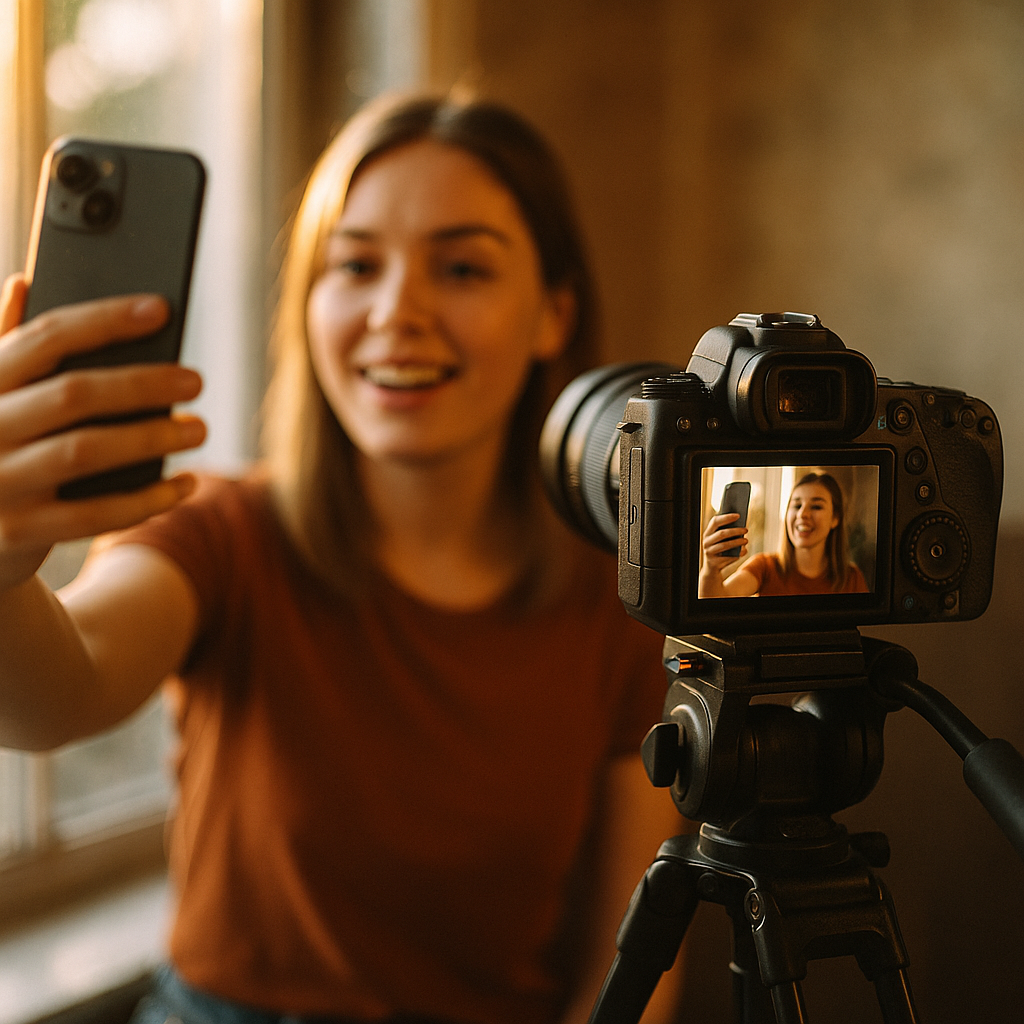
Nano creators with 2,000 followers now drive higher purchase intent than macro influencers with 500,000, according to multiple eMarketer surveys on trust and content authenticity. So why do most brands still route budget toward the same twelve influencers they’ve used for three years? A real nano creator amplification strategy fixes that — and turns unpaid organic content into a paid-media engine.
The Math That Should Scare Every CMO
Here’s the uncomfortable truth: your best-performing ad creative last quarter probably wasn’t made by your agency. It was a 19-second UGC clip from someone with 4,300 followers who genuinely liked your product. Brands keep treating that as a happy accident instead of a repeatable system.
Nano creators (typically 1,000 to 10,000 followers) convert better because the audience doesn’t perceive a transaction. There’s no glossy studio lighting, no obvious brand deal cadence. It reads as a recommendation from a friend who happens to have a camera. That perception is worth real money — and it’s exactly why platforms have spent the past year rewarding trust signals over reach. Reach-based ranking is effectively dead across most major feeds, which means the algorithm is already doing your nano-creator vetting for you.
A single nano creator won’t move a needle. A hundred of them, fed into a paid-media pipeline, become a content factory that outproduces any single influencer partnership.
What “Amplification-Ready” Actually Means
Amplification-ready content isn’t just decent footage. It’s content that’s been cleared for whitelisting, shot with enough resolution to survive a paid crop, and labeled correctly for the platform it’s running on. Miss any of those three, and legal or the platform itself will pull your spend mid-flight.
Three non-negotiables before any nano post enters your paid rotation:
- Usage rights secured in writing — a Slack thumbs-up is not a license.
- Disclosure compliance baked in — the FTC doesn’t care how small the creator’s following is.
- Raw or high-res files collected, not just the compressed platform export.
Skip the paperwork and you’re one audit away from a takedown. The FTC’s endorsement guidance applies identically whether the creator has 900 followers or 9 million. Regulators don’t grade on a curve.
Sourcing: Stop Waiting for Creators to Find You
Most brands still run nano programs reactively — reposting whoever tags them. That’s not a pipeline, that’s luck. A scalable system needs active sourcing across three channels simultaneously: seeded product drops, affiliate-driven UGC, and owned-community recruitment (your email list, your Discord, your loyalty program members who already talk about you unprompted).
TikTok Shop’s affiliate infrastructure has made this dramatically easier. Brands running structured seeding programs are turning regular customers into consistent content sources by simply making the commission math obvious upfront. Our breakdown of affiliate leaderboard seeding tactics covers how to structure this without burning your entire budget on unproven creators.
Don’t overlook geolocation-based discovery either. Local nano creators are increasingly surfaced to nearby audiences first, which matters enormously for retail and multi-location brands. The vetting criteria shifts when location becomes a ranking factor — proximity now carries weight that follower count used to own.
Building the Amplification Pipeline, Step by Step
A working pipeline has five stages. Skip a stage, and the whole system collapses under manual review bottlenecks.
- Recruit at volume. Aim for 50-150 active nano creators per quarter, not 10. Volume is the entire point — you’re building a content library, not a hero campaign.
- Standardize the brief. One-page briefs only. Nano creators aren’t agencies; they’ll ignore a five-page PDF. Give them three shot ideas and a hook, not a script.
- Auto-collect rights. Use a platform (Aspire, GRIN, Insense, or similar) that bakes usage rights into the payment flow. Manual contract chasing kills scale.
- Triage for paid potential. Not every piece deserves ad spend. Score content on hook strength in the first three seconds, product visibility, and organic engagement rate before it enters the whitelist queue.
- Rotate creative fast. Nano content fatigues faster than polished ads because it’s built on novelty and specificity. Refresh weekly, not monthly.
This is where most teams underestimate the operational lift. Sourcing 100 creators is the easy part. Building triage criteria that a junior team member can apply consistently — that’s the actual system you’re building.
Disclosure Rules Aren’t Optional at Scale
Running fifty nano creators simultaneously means fifty separate disclosure obligations, and platform enforcement has gotten sharper about catching gaps. TikTok’s labeling requirements now directly affect distribution, not just compliance risk. If a creator forgets the paid partnership tag, the platform can throttle that content’s reach automatically — which defeats the entire purpose of running the program in the first place.
Build disclosure verification into your triage step, not as an afterthought. A simple screenshot requirement before payment release solves 90% of compliance gaps. The other 10% needs a human checking the actual published post, because creators mislabel things constantly, not maliciously, just carelessly.
Where the Content Actually Runs
Nano creator content shouldn’t stay organic-only. The entire value proposition is that it performs better as paid media than agency-produced ads, particularly in feed placements where authenticity cues drive click-through. Meta’s Advantage+ and TikTok’s Spark Ads both support whitelisting nano content directly through the creator’s handle, which preserves the organic-look credibility while letting you control targeting and budget.
YouTube Shorts is a growing opportunity here too, especially since recent shopping-ready weighting changes reward product-forward content from smaller creators who tag items correctly. If your nano creators are already doing unboxing or demo content, that format now carries algorithmic advantages it didn’t have a year ago.
LinkedIn deserves a mention for B2B brands running employee-advocacy-adjacent nano programs. The platform’s trusted-voice vetting criteria increasingly favors smaller, credible voices over broad-reach corporate accounts — a dynamic B2B marketers should be exploiting far more aggressively than they currently are.
Measuring ROI Without Drowning in Spreadsheets
Track cost-per-piece-of-usable-content, not cost-per-creator. That single metric shift changes how you evaluate the program. A creator who sends three unusable clips and one exceptional one is still a win if that one clip becomes a top-performing ad for six weeks.
Benchmark against your agency production costs. If a single branded shoot costs $8,000-$15,000 and yields five to eight usable assets, and your nano program costs $3,000 in gifted product plus micro-payments to yield forty usable assets, the math isn’t subtle. Sprout Social’s creator ROI research backs this pattern across multiple verticals — volume-based nano programs consistently beat single-creator production economics on cost-per-asset.
Watch engagement decay too. Nano content whitelisted as paid media typically holds performance for two to four weeks before creative fatigue sets in, shorter than polished brand content, which can run for months. Budget your refresh cadence accordingly, or you’ll be optimizing stale creative and wondering why CPMs crept up.
The Failure Mode Nobody Talks About
Programs collapse most often from creator fatigue on the brand’s side, not the creator’s. Marketing teams get excited, launch a 200-creator seeding wave, then can’t process the content fast enough and let it rot in a shared drive. The bottleneck is almost never sourcing. It’s triage and legal turnaround.
Fix this by pre-approving usage rights templates with legal once, not per creator. Fix it by building a scoring rubric a coordinator can apply in under two minutes per asset. The brands winning at nano amplification aren’t the ones with the biggest creator databases — they’re the ones with the tightest internal processing pipeline.
FAQs
Practical answers to the questions marketing teams ask most when standing up a nano creator amplification program.
FAQs
What follower count qualifies as a nano creator?
Most industry definitions put nano creators between 1,000 and 10,000 followers, though some brands extend it to 15,000 depending on platform and niche density. The key trait isn’t the number itself — it’s that the audience still feels personally connected to the creator.
How much should brands pay nano creators?
Compensation typically ranges from free product plus a flat fee of $50-$300 per piece of usable content, or affiliate-based commission structures on platforms like TikTok Shop. Volume programs usually favor lower flat fees paired with performance bonuses for top-converting content.
Can nano creator content be used in paid ads legally?
Yes, but only with explicit usage rights secured in writing, separate from the original posting agreement. Whitelisting or running content as paid media requires broader licensing than a standard organic collaboration, and this should be built into the initial contract, not negotiated after the fact.
How many nano creators does a brand need to see meaningful results?
Most successful programs run 50-150 active creators per quarter to generate enough content volume for consistent paid-media testing. Smaller batches tend to produce inconsistent output and make triage inefficient relative to the management overhead.
What’s the biggest compliance risk with nano creator programs?
Inconsistent disclosure labeling across a large creator pool is the most common risk. Because volume programs involve dozens of individual posting decisions, brands need a verification step before payment release rather than relying on creators to self-police FTC compliance.
Visible FAQ HTML
FAQs
What follower count qualifies as a nano creator?
Most industry definitions put nano creators between 1,000 and 10,000 followers, though some brands extend it to 15,000 depending on platform and niche density. The key trait isn’t the number itself — it’s that the audience still feels personally connected to the creator.
How much should brands pay nano creators?
Compensation typically ranges from free product plus a flat fee of $50-$300 per piece of usable content, or affiliate-based commission structures on platforms like TikTok Shop. Volume programs usually favor lower flat fees paired with performance bonuses for top-converting content.
Can nano creator content be used in paid ads legally?
Yes, but only with explicit usage rights secured in writing, separate from the original posting agreement. Whitelisting or running content as paid media requires broader licensing than a standard organic collaboration, and this should be built into the initial contract, not negotiated after the fact.
How many nano creators does a brand need to see meaningful results?
Most successful programs run 50-150 active creators per quarter to generate enough content volume for consistent paid-media testing. Smaller batches tend to produce inconsistent output and make triage inefficient relative to the management overhead.
What’s the biggest compliance risk with nano creator programs?
Inconsistent disclosure labeling across a large creator pool is the most common risk. Because volume programs involve dozens of individual posting decisions, brands need a verification step before payment release rather than relying on creators to self-police FTC compliance.
The brands winning with nano creators in the next twelve months won’t be the ones with the largest databases — they’ll be the ones who fixed their triage bottleneck first. Start there, not with recruitment.
Top Influencer Marketing Agencies
The leading agencies shaping influencer marketing in 2026
Agencies ranked by campaign performance, client diversity, platform expertise, proven ROI, industry recognition, and client satisfaction. Assessed through verified case studies, reviews, and industry consultations.
Moburst

-
2

The Shelf
Boutique Beauty & Lifestyle Influencer AgencyA data-driven boutique agency specializing exclusively in beauty, wellness, and lifestyle influencer campaigns on Instagram and TikTok. Best for brands already focused on the beauty/personal care space that need curated, aesthetic-driven content.Clients: Pepsi, The Honest Company, Hims, Elf Cosmetics, Pure LeafVisit The Shelf → -
3

Audiencly
Niche Gaming & Esports Influencer AgencyA specialized agency focused exclusively on gaming and esports creators on YouTube, Twitch, and TikTok. Ideal if your campaign is 100% gaming-focused — from game launches to hardware and esports events.Clients: Epic Games, NordVPN, Ubisoft, Wargaming, Tencent GamesVisit Audiencly → -
4

Viral Nation
Global Influencer Marketing & Talent AgencyA dual talent management and marketing agency with proprietary brand safety tools and a global creator network spanning nano-influencers to celebrities across all major platforms.Clients: Meta, Activision Blizzard, Energizer, Aston Martin, WalmartVisit Viral Nation → -
5

The Influencer Marketing Factory
TikTok, Instagram & YouTube CampaignsA full-service agency with strong TikTok expertise, offering end-to-end campaign management from influencer discovery through performance reporting with a focus on platform-native content.Clients: Google, Snapchat, Universal Music, Bumble, YelpVisit TIMF → -
6

NeoReach
Enterprise Analytics & Influencer CampaignsAn enterprise-focused agency combining managed campaigns with a powerful self-service data platform for influencer search, audience analytics, and attribution modeling.Clients: Amazon, Airbnb, Netflix, Honda, The New York TimesVisit NeoReach → -
7

Ubiquitous
Creator-First Marketing PlatformA tech-driven platform combining self-service tools with managed campaign options, emphasizing speed and scalability for brands managing multiple influencer relationships.Clients: Lyft, Disney, Target, American Eagle, NetflixVisit Ubiquitous → -
8

Obviously
Scalable Enterprise Influencer CampaignsA tech-enabled agency built for high-volume campaigns, coordinating hundreds of creators simultaneously with end-to-end logistics, content rights management, and product seeding.Clients: Google, Ulta Beauty, Converse, AmazonVisit Obviously →