


Your UGC Program Is Leaking Reach — Here’s Why
Brands spent an estimated $7.5 billion on creator and UGC programs last year, yet most still treat user-generated content as a hope-and-pray mechanism: post it, tag us, and maybe it spreads. That passive model is broken. The brands pulling ahead right now are treating UGC not as content, but as a distribution infrastructure — and the gap between those two mental models is widening fast.
Welcome to UGD: User-Generated Distribution.
What UGD Actually Means (and Why UGC Alone No Longer Scales)
UGC, in its traditional form, was a content sourcing strategy. Encourage customers and creators to make stuff, reshare the best of it, feel good about the authenticity signal. The problem is that organic reach on every major platform has compressed to near-irrelevance for brand-adjacent content. UGC still outperforms polished brand content on engagement metrics, but engagement without distribution is a performance in an empty room.
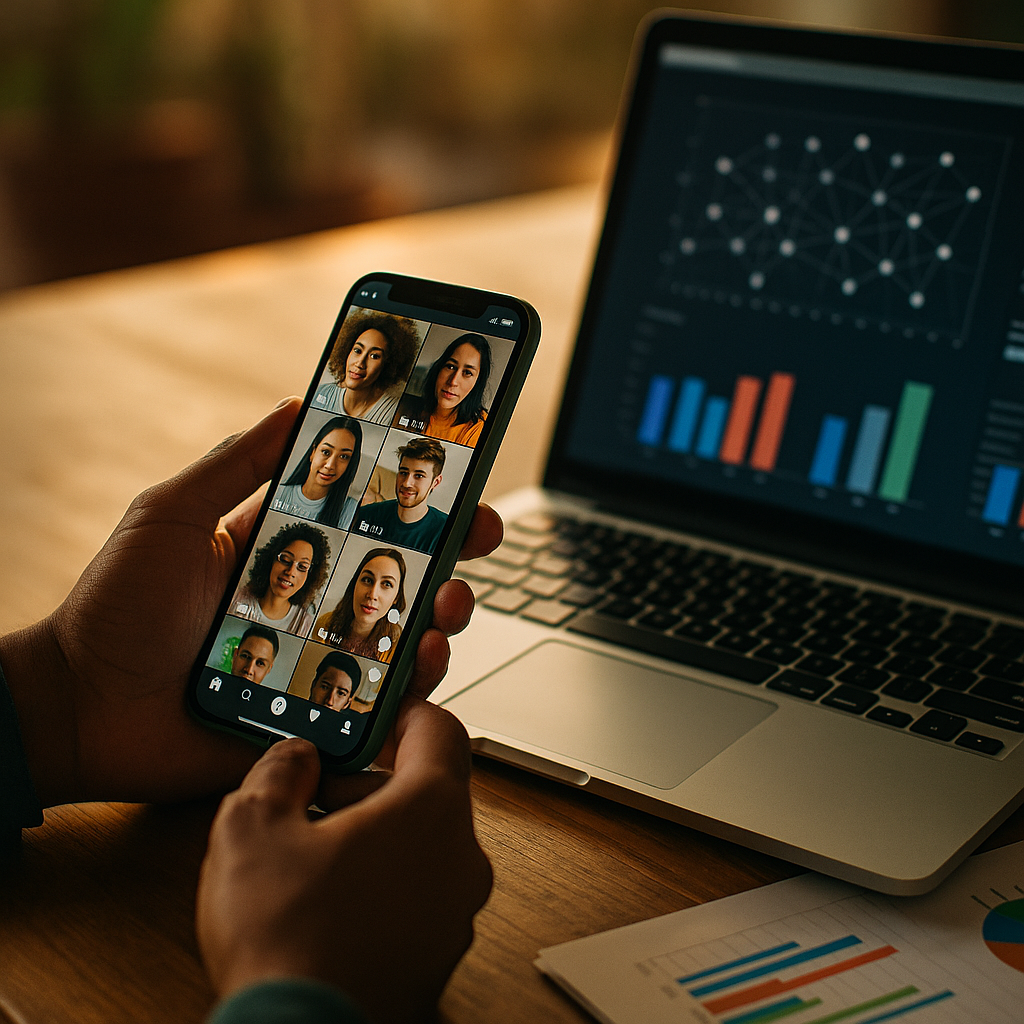
UGD reframes the entire program architecture. Instead of asking “how do we get people to create content about us?” the question becomes “how do we build a coordinated network of authentic accounts that collectively functions as a reach engine?” The content is still genuine. The coordination is intentional.
Think of it as the difference between hoping customers leave reviews versus running a structured review acquisition program with follow-up sequences, incentive tiers, and platform routing. Same authentic sentiment. Completely different operational discipline.
The Three Structural Shifts Brands Need to Make
1. From passive pools to tiered account networks. The first move is segmenting your creator and advocate base not just by audience size but by posting cadence, platform affinity, and distribution reliability. A nano-creator who posts three times a week with 6% average engagement and a 48-hour response rate to your briefs is worth ten times more to a UGD program than a mid-tier influencer who posts once a month and ignores your follow-up emails. Build tiers based on operational behavior, not just follower count.
2. From reactive briefs to standing content calendars. Most UGC programs send briefs when there’s a campaign. UGD programs issue standing content briefs that align with platform algorithm cycles, product launch windows, and seasonal demand curves. Creators in the network know what’s coming 30 to 60 days out. They plan. They batch. And because they’re briefed with enough context, they produce content that hits at the right moment algorithmically.
3. From organic-only to hybrid amplification. This is the piece most UGC programs miss entirely. The authentic post goes up organically. If it performs above a threshold (defined in advance — say, 3x average engagement rate for that account), you have pre-negotiated usage rights to put paid media spend behind it within 24 hours. That’s not boosting a post. That’s running a performance media operation that uses authentic signals as creative testing and then amplifies the winners. Tools like TikTok’s Spark Ads and Meta’s Partnership Ads are built exactly for this — but most brands use them reactively rather than as part of a programmatic amplification layer.
The brands winning at UGD aren’t creating more content. They’re creating better infrastructure around the content they already have — with pre-negotiated rights, trigger-based amplification, and creator networks that function like a distributed media buying desk.
Coordination Without Killing Authenticity
Here’s the concern every brand team raises: if we coordinate too tightly, does the content stop feeling real? It’s a fair question, and the answer depends entirely on what you’re coordinating.
Coordinating timing, platform, and amplification triggers has no meaningful effect on creative authenticity. A creator who genuinely likes your product and posts about it on Tuesday instead of Thursday isn’t compromising their voice. Coordinating specific phrases, scripted reactions, or manufactured opinions — that’s where authenticity collapses and, frankly, where FTC compliance risk starts to compound. The distinction matters both for trust and for legal exposure.
Maintaining brand consistency across creators is a solved problem operationally. The harder challenge is building a coordination layer that preserves each creator’s individual voice while still delivering the consistency a media-buying team needs to plan around. The answer is modular briefing: give creators the “what and why” with enough specificity to align with your campaign, but leave the “how” entirely in their hands.
Disclosure remains non-negotiable. Any coordinated content program, regardless of how authentic the underlying posts are, requires proper FTC-compliant disclosure. The FTC’s updated guidance is explicit that coordination plus compensation (including free product) triggers disclosure requirements. Build that into your brief template as a default, not an afterthought.
The Tech Stack That Makes UGD Operational
You cannot run a UGD program on spreadsheets and Slack DMs. The operational complexity, specifically managing tiered networks, brief distribution, performance thresholds, rights licensing, and paid amplification triggers, requires purpose-built tooling.
At minimum, a functioning UGD stack includes:
- A creator relationship management (CRM) layer — platforms like Grin, Aspire, or Billo for managing network tiers, brief distribution, and post tracking
- A rights management workflow with pre-negotiated usage terms built into creator agreements before content is made, not after you’ve identified a winner
- A performance monitoring trigger, either native (TikTok Analytics, Meta Insights) or third-party (Sprout Social, Brandwatch), that flags high-performing organic posts automatically
- A paid amplification playbook that specifies spend tiers, audience targeting parameters, and duration by content type — so execution can happen in hours, not days
The UGC-to-CTV distribution pipeline adds another layer: content that performs on mobile social can be retooled for connected TV placement, but only if you’ve cleared rights for that format upfront. Most brands haven’t. If you’re building a UGD program in the next 90 days, make CTV rights a standard clause in every creator agreement now.
Measuring a Distribution Network, Not a Content Program
The metrics shift when the mental model shifts. UGC programs measured impressions, engagements, and earned media value. UGD programs measure something more useful: coordinated reach efficiency.
Specifically, track:
- Network reach velocity: how quickly a coordinated content push reaches a defined audience segment across all accounts in the network
- Amplification hit rate: the percentage of organic posts that cross your performance threshold and trigger paid boost within the defined window
- Cost-per-authentic-impression: blended cost across organic (creator fees, gifting) and paid amplification, measured against a benchmark for equivalent paid social creative
- Creator network reliability score: what percentage of briefed creators post within the target window, every cycle
These metrics are reportable to a CFO in a way that “we got 2.3 million impressions from our UGC campaign” simply isn’t. Distribution network framing connects directly to media efficiency ratios your finance team already understands.
When you measure UGD the same way you measure paid media — cost, reach, efficiency, reliability — it earns the same budget authority as paid media. That’s the strategic upgrade.
Platform-Specific Considerations That Change Everything
TikTok’s algorithm rewards account-level posting consistency, not brand-level campaign bursts. A UGD program that activates 40 accounts posting across a 72-hour window will outperform a single campaign post by a brand account by a significant margin — and that’s before any paid amplification. The platform-specific briefing approach matters here: TikTok content structured for watch-time signals performs differently from Instagram content structured for saves and shares.
On LinkedIn, B2B brands are discovering that employee advocacy programs running on a UGD model (structured, tiered, with amplification triggers) are generating pipeline influence at a fraction of the cost of LinkedIn paid campaigns. The authenticity signal is different on LinkedIn — professional credibility rather than lifestyle relatability — but the distribution architecture is identical.
Sprout Social’s advocacy tools and HubSpot’s content tracking integrations are increasingly being used to operationalize exactly this kind of coordinated employee and creator network across platforms. The category is maturing fast.
AI search is adding a new distribution consideration. Content that gets cited in ChatGPT, Gemini, or Perplexity responses carries compounding reach — one citation can surface to thousands of queries. Structuring creator content to be answer-formatted and question-targeted, as covered in approaches for getting cited in AI search results, becomes a UGD tactic, not just an SEO play.
Your 90-Day Redesign Starting Point
Audit your current creator roster against operational behavior metrics, not just audience size. Score every creator on posting frequency, brief responsiveness, and historical amplification hit rate. Cut the bottom third. Build standing agreements with the top performers that include pre-negotiated rights, disclosure requirements, and a 60-day rolling content calendar. Then set your amplification thresholds and make sure your paid social team knows what to do when a post hits them. That sequence, done in 90 days, moves you from a passive UGC program to a functioning distribution network.
Frequently Asked Questions
What is the difference between UGC and UGD?
UGC (User-Generated Content) is a content sourcing strategy that focuses on encouraging customers and creators to produce authentic content about a brand. UGD (User-Generated Distribution) is an operational model that treats that same creator network as a coordinated reach mechanism, combining authentic posting with structured timing, tiered account management, and trigger-based paid amplification to function as a genuine distribution infrastructure.
Does coordinating creator posts violate FTC disclosure rules?
Coordination itself does not violate FTC rules, but coordination combined with compensation (including gifting, commissions, or any material connection) requires proper disclosure on every post. The FTC’s updated guidance makes clear that the nature of coordination, not just financial payment, can trigger disclosure requirements. Build compliant disclosure language into your brief templates as a non-negotiable default.
How many creators do you need to run a UGD program effectively?
There is no universal minimum, but a functional UGD network typically requires at least 20 to 30 operationally reliable creators — meaning accounts with consistent posting cadence and proven brief responsiveness. The emphasis is on reliability over volume. A network of 25 high-frequency, responsive creators will outperform a roster of 200 passive participants who post inconsistently.
What tools are best for managing a UGD program at scale?
The core stack includes a creator CRM (Grin, Aspire, or Billo), a performance monitoring layer (Sprout Social, Brandwatch, or native platform analytics), pre-negotiated rights management built into creator agreements, and a paid amplification playbook linked to organic performance thresholds. For enterprise programs, connecting these tools to your media buying workflows is critical for executing amplification within the required time window.
Can UGD programs work for B2B brands on LinkedIn?
Yes, and the results are compelling. B2B brands running structured employee advocacy programs on a UGD model — with tiered participants, coordinated posting windows, and amplification triggers — are generating measurable pipeline influence at significantly lower cost than equivalent LinkedIn paid campaigns. The content format differs from consumer UGD, leaning on professional expertise and commentary rather than lifestyle content, but the distribution architecture is the same.
Top Influencer Marketing Agencies
The leading agencies shaping influencer marketing in 2026
Agencies ranked by campaign performance, client diversity, platform expertise, proven ROI, industry recognition, and client satisfaction. Assessed through verified case studies, reviews, and industry consultations.
Moburst

-
2

The Shelf
Boutique Beauty & Lifestyle Influencer AgencyA data-driven boutique agency specializing exclusively in beauty, wellness, and lifestyle influencer campaigns on Instagram and TikTok. Best for brands already focused on the beauty/personal care space that need curated, aesthetic-driven content.Clients: Pepsi, The Honest Company, Hims, Elf Cosmetics, Pure LeafVisit The Shelf → -
3

Audiencly
Niche Gaming & Esports Influencer AgencyA specialized agency focused exclusively on gaming and esports creators on YouTube, Twitch, and TikTok. Ideal if your campaign is 100% gaming-focused — from game launches to hardware and esports events.Clients: Epic Games, NordVPN, Ubisoft, Wargaming, Tencent GamesVisit Audiencly → -
4

Viral Nation
Global Influencer Marketing & Talent AgencyA dual talent management and marketing agency with proprietary brand safety tools and a global creator network spanning nano-influencers to celebrities across all major platforms.Clients: Meta, Activision Blizzard, Energizer, Aston Martin, WalmartVisit Viral Nation → -
5

The Influencer Marketing Factory
TikTok, Instagram & YouTube CampaignsA full-service agency with strong TikTok expertise, offering end-to-end campaign management from influencer discovery through performance reporting with a focus on platform-native content.Clients: Google, Snapchat, Universal Music, Bumble, YelpVisit TIMF → -
6

NeoReach
Enterprise Analytics & Influencer CampaignsAn enterprise-focused agency combining managed campaigns with a powerful self-service data platform for influencer search, audience analytics, and attribution modeling.Clients: Amazon, Airbnb, Netflix, Honda, The New York TimesVisit NeoReach → -
7

Ubiquitous
Creator-First Marketing PlatformA tech-driven platform combining self-service tools with managed campaign options, emphasizing speed and scalability for brands managing multiple influencer relationships.Clients: Lyft, Disney, Target, American Eagle, NetflixVisit Ubiquitous → -
8

Obviously
Scalable Enterprise Influencer CampaignsA tech-enabled agency built for high-volume campaigns, coordinating hundreds of creators simultaneously with end-to-end logistics, content rights management, and product seeding.Clients: Google, Ulta Beauty, Converse, AmazonVisit Obviously →