


Most Multi-Platform Creator Programs Are One Audit Away From a Compliance Crisis
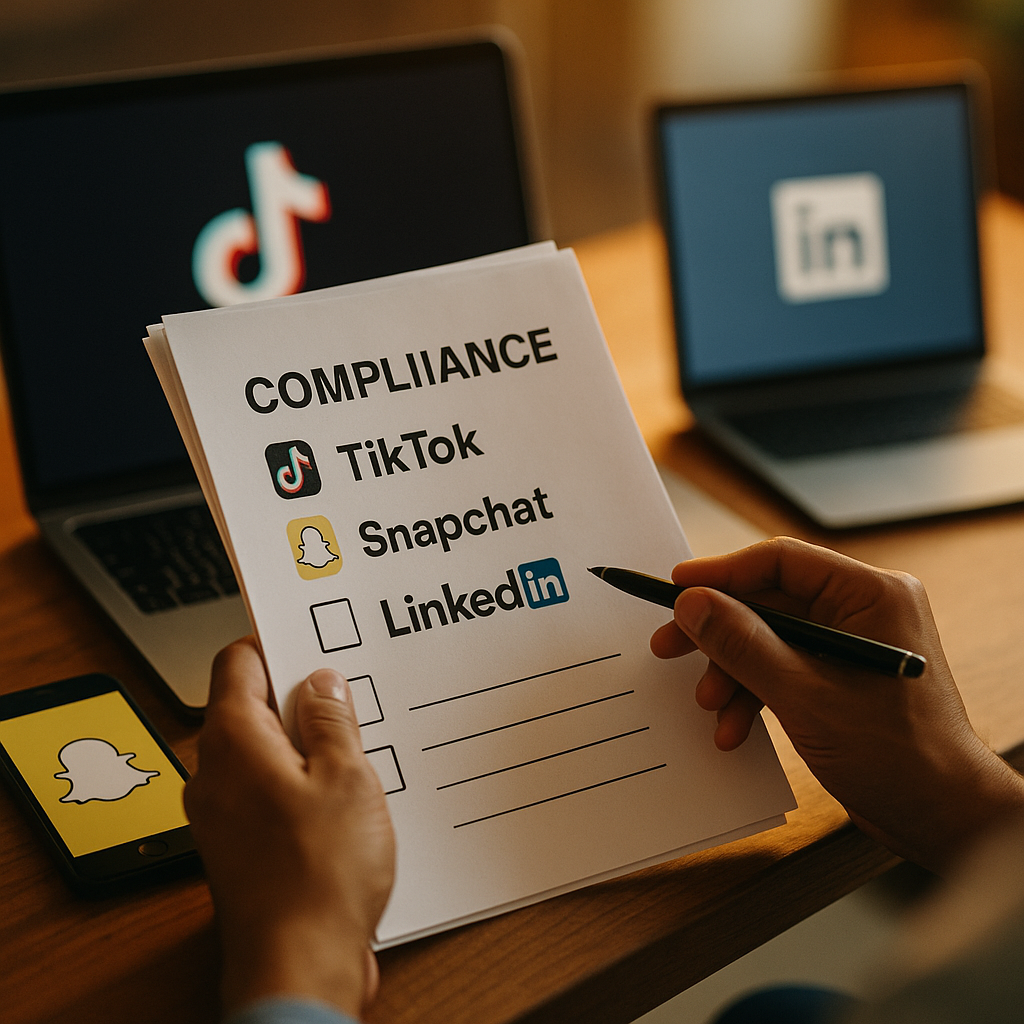
Brands running creator programs across TikTok, Snap, and LinkedIn simultaneously face a governance problem most influencer marketing playbooks ignore entirely. Each platform operates under a distinct regulatory environment, disclosure mechanic, and attribution logic. Cross-platform creator network governance is not about applying one rulebook three times. It is about designing a system flexible enough to satisfy three different sets of regulators while remaining operationally coherent for your team.
Why Three Platforms Means Three Distinct Compliance Realities
Start with the regulatory baseline. TikTok operates under FTC oversight in the US, GDPR scrutiny in Europe, and its own branded content policy tools. The FTC’s latest guidance on endorsements makes clear that disclosures must be prominent, unambiguous, and not buried in a sea of hashtags. TikTok GDPR compliance failures have already cost brands reputationally, and enforcement momentum is not slowing.
Snap sits in a different regulatory posture. Its primary audience skews younger, which triggers stricter obligations under COPPA in the US and the UK’s Age Appropriate Design Code. Any brand running creator campaigns on Snap targeting or potentially reaching under-18s must layer youth safety compliance into every brief. If your creator base touches lifestyle, beauty, or gaming content, assume Snap’s audience includes minors. Design accordingly.
LinkedIn is the outlier most brand teams underestimate. The platform’s creator community operates under FTC disclosure rules identically to consumer platforms, but the enforcement culture feels different because the content feels “professional.” That reasoning does not hold legally. A sponsored LinkedIn post from an industry influencer praising your SaaS product carries the same disclosure requirement as a TikTok dance. The ASA in the UK has been explicit about this.
Running a creator program on LinkedIn without disclosure guardrails is not a lower-risk decision just because the audience is B2B. The FTC does not grade on a professional curve.
Building a Unified Brief Template That Bends Without Breaking
The operational challenge is not writing three separate briefs. That just creates three separate failure modes. The solution is a modular brief architecture: a universal compliance core with platform-specific appendices.
The universal core should include: brand safety parameters, prohibited claims, required disclosures (in plain language, not legalese), content exclusivity windows, approval workflows, and attribution tracking requirements. Every creator, regardless of platform, signs off on this section before receiving the platform appendix.
The platform appendices handle the specifics. For TikTok, this means confirming use of the native Branded Content Toggle, specifying hashtag disclosure placement (above the fold in caption, not buried after five lines of copy), and addressing AI-generated content labeling if your campaign uses synthetic elements. For Snap, the appendix addresses Snap’s own Commercial Content Policy, age-gating obligations, and lens/filter sponsorship mechanics. For LinkedIn, it covers the platform’s paid partnership label, content authenticity expectations, and the particular sensitivity around false professional credibility claims.
This structure gives your legal team a single document to review and sign off on, while giving creators clear platform-native instructions. Reviewing brief standards for disclosure before finalizing your template will help you avoid the most common structural gaps.
Disclosure Architecture: The Layer Model
Think of disclosure as a stack, not a checkbox. There are three layers every multi-platform program needs to manage simultaneously.
Layer 1: Regulatory minimum. What the FTC, ASA, or relevant national authority requires. This is non-negotiable and must be documented in your brief as a hard requirement, not a best practice.
Layer 2: Platform native mechanism. TikTok’s Branded Content Toggle. LinkedIn’s paid partnership label. Snap’s Paid Partnership label in Stories. These are separate from Layer 1 and must be activated independently. Turning on the platform label does not automatically satisfy FTC requirements, and vice versa. Both must be used.
Layer 3: Brand-level transparency. Some brands now go further, adding disclosure language in creator bios, pinned comments, or post-campaign transparency reports. This is voluntary but increasingly valuable as regulatory scrutiny intensifies. The NAD referral to FTC cases have made clear that brands, not just creators, face liability when disclosure architecture fails.
Your compliance team should audit each layer independently, per platform, per campaign. Do not assume that because a creator “knows the rules” they will execute all three layers correctly without a verification workflow built into your approval process.
Attribution Standards That Actually Work Across Platforms
Attribution is where multi-platform governance gets technically complicated. TikTok’s pixel, Snap’s Conversions API, and LinkedIn’s Insight Tag each measure differently, report on different latency windows, and attribute credit using different models. Running a campaign across all three without a unified attribution framework guarantees you will double-count conversions and misallocate budget.
The most operationally sound approach is a three-layer attribution stack: creator-specific UTM parameters at the link level, platform-native conversion tracking for in-platform events, and a third-party measurement layer (tools like Northbeam, Triple Whale, or Rockerbox) to deduplicate across channels. The creator UTM layer is the one most brands skip on LinkedIn, because the audience tends to click through to external sites and marketers assume standard web analytics cover it. They do not, not consistently.
For campaigns where direct click attribution is limited (Snap Stories with swipe-up friction, TikTok dark posts), incrementality testing becomes essential. Geo-holdout testing or matched market tests allow you to measure true lift without relying on last-click logic that TikTok’s algorithm will always favor over LinkedIn’s longer consideration cycles.
For B2B programs specifically, the attribution window must account for the sales cycle. A LinkedIn creator who influences a procurement decision in week one may not show a conversion signal for 90 days. Build that into your reporting contracts with creators and your internal benchmarks. Multi-touch attribution thinking from destination marketing offers a useful model here, since the consideration-to-conversion lag is structurally similar.
Governance Infrastructure: Who Actually Owns This
The single biggest operational risk in multi-platform creator governance is unclear ownership. When TikTok compliance lives with the social team, LinkedIn oversight sits with the B2B marketing team, and Snap is managed by a junior influencer coordinator, you do not have a governance program. You have three separate programs with a shared budget line.
Assign a single governance owner, whether internal or at the agency level, with cross-platform authority. This person’s mandate includes: maintaining the master brief template, running pre-launch compliance checks, managing creator disclosure verification, and owning the attribution reporting framework. They report into a decision-maker who can escalate issues without navigating three separate team hierarchies.
Support that owner with the right tooling. Platforms like Grin, Creator.co, and Aspire offer multi-platform campaign management with disclosure tracking features. Pair these with a structured risk audit framework reviewed quarterly, especially as platform policies update (which they do, frequently and without much warning).
Governance without a single accountable owner is just documentation. Someone has to be responsible for making sure the system actually runs.
One more consideration: LinkedIn creator compliance specifically has become more complex as the platform rolls out its own creator monetization features. What constitutes a “paid partnership” is evolving, and your governance owner needs to stay current on LinkedIn’s business policies independently of what your legal team understood six months ago.
Youth safety deserves a separate flag for any brand with Snap in the mix. The regulatory environment around minor-targeted content continues to harden globally. Review EU and UK youth safety rules as a baseline, and layer Snap-specific COPPA compliance on top. Getting this wrong on Snap is not a PR problem. It is a legal one.
Finally, do not ignore Snap’s own platform ad policies (and TikTok’s equivalent) for branded content distinctions between paid ads and organic creator posts. The line matters for both disclosure requirements and for how platform algorithms treat the content, which directly affects your attribution signals.
Conduct a full cross-platform compliance audit against your existing creator contracts before your next campaign launches. Update the universal brief core first, then build the platform appendices. That sequence matters because the core drives legal sign-off, and the appendices drive creator behavior.
FAQs
Do FTC disclosure rules apply equally to LinkedIn creator content?
Yes. The FTC’s endorsement guidelines apply to any commercial relationship where a creator receives compensation or material benefit in exchange for content, regardless of the platform. LinkedIn’s professional context does not create a regulatory exemption. Brands and creators must use both the platform’s native paid partnership label and explicit verbal or written disclosure in the post itself.
What is the biggest compliance risk when running creator campaigns on Snap?
The highest risk is audience age composition. Snap’s user base includes a significant proportion of under-18s, which triggers COPPA obligations in the US and the UK’s Age Appropriate Design Code. Any brand running creator campaigns on Snap must assess whether their product category or content could reach minors and build age-appropriate safeguards into the brief and disclosure architecture accordingly.
Can a single brief template work across TikTok, Snap, and LinkedIn?
A fully standardized single brief is not advisable, but a modular architecture works well. A universal compliance core covering brand safety, disclosures, approval workflows, and attribution requirements can apply to all platforms. Platform-specific appendices then address native disclosure mechanisms, audience constraints, content format rules, and tracking requirements unique to each platform.
How should brands handle attribution when creators post on multiple platforms simultaneously?
Use a three-layer stack: creator-specific UTM parameters for link-level tracking, platform-native conversion tools (TikTok pixel, Snap Conversions API, LinkedIn Insight Tag) for in-platform events, and a third-party multi-touch measurement tool such as Northbeam or Triple Whale to deduplicate conversions across channels. For upper-funnel campaigns with limited direct click data, incrementality testing through geo-holdout or matched market tests provides a more reliable lift measurement.
Who should own cross-platform creator governance within a brand organization?
A single designated governance owner with cross-platform authority is the most effective structure. This role should maintain the master brief template, run pre-launch compliance checks, verify creator disclosures, and own the attribution reporting framework. Without a single accountable owner, multi-platform governance tends to fragment into platform-specific silos that create inconsistent compliance exposure and attribution gaps.
Top Influencer Marketing Agencies
The leading agencies shaping influencer marketing in 2026
Agencies ranked by campaign performance, client diversity, platform expertise, proven ROI, industry recognition, and client satisfaction. Assessed through verified case studies, reviews, and industry consultations.
Moburst

-
2

The Shelf
Boutique Beauty & Lifestyle Influencer AgencyA data-driven boutique agency specializing exclusively in beauty, wellness, and lifestyle influencer campaigns on Instagram and TikTok. Best for brands already focused on the beauty/personal care space that need curated, aesthetic-driven content.Clients: Pepsi, The Honest Company, Hims, Elf Cosmetics, Pure LeafVisit The Shelf → -
3

Audiencly
Niche Gaming & Esports Influencer AgencyA specialized agency focused exclusively on gaming and esports creators on YouTube, Twitch, and TikTok. Ideal if your campaign is 100% gaming-focused — from game launches to hardware and esports events.Clients: Epic Games, NordVPN, Ubisoft, Wargaming, Tencent GamesVisit Audiencly → -
4

Viral Nation
Global Influencer Marketing & Talent AgencyA dual talent management and marketing agency with proprietary brand safety tools and a global creator network spanning nano-influencers to celebrities across all major platforms.Clients: Meta, Activision Blizzard, Energizer, Aston Martin, WalmartVisit Viral Nation → -
5

The Influencer Marketing Factory
TikTok, Instagram & YouTube CampaignsA full-service agency with strong TikTok expertise, offering end-to-end campaign management from influencer discovery through performance reporting with a focus on platform-native content.Clients: Google, Snapchat, Universal Music, Bumble, YelpVisit TIMF → -
6

NeoReach
Enterprise Analytics & Influencer CampaignsAn enterprise-focused agency combining managed campaigns with a powerful self-service data platform for influencer search, audience analytics, and attribution modeling.Clients: Amazon, Airbnb, Netflix, Honda, The New York TimesVisit NeoReach → -
7

Ubiquitous
Creator-First Marketing PlatformA tech-driven platform combining self-service tools with managed campaign options, emphasizing speed and scalability for brands managing multiple influencer relationships.Clients: Lyft, Disney, Target, American Eagle, NetflixVisit Ubiquitous → -
8

Obviously
Scalable Enterprise Influencer CampaignsA tech-enabled agency built for high-volume campaigns, coordinating hundreds of creators simultaneously with end-to-end logistics, content rights management, and product seeding.Clients: Google, Ulta Beauty, Converse, AmazonVisit Obviously →