


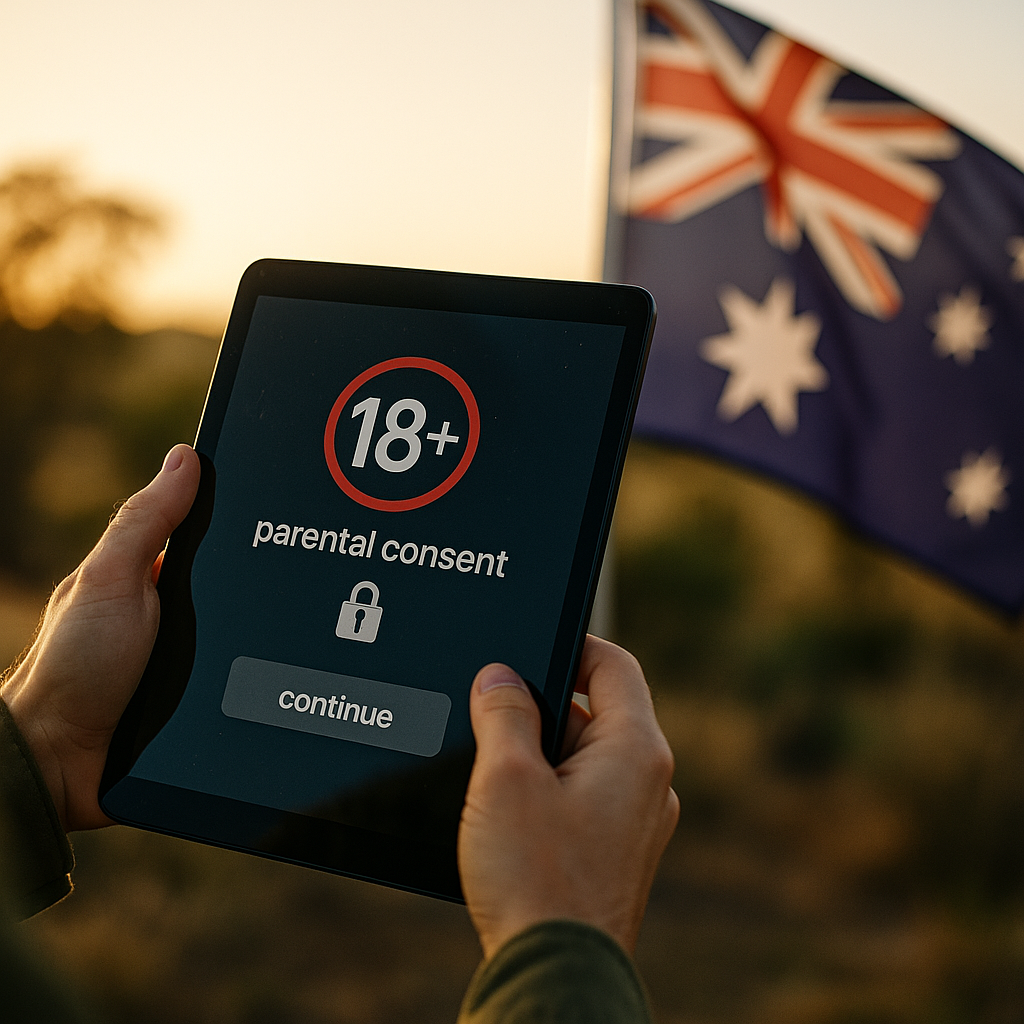
Australia’s Online Safety Amendment (Social Media Minimum Age) Act doesn’t just restrict under-16s from social platforms. It creates an evidence trail obligation that runs straight back to every brand running influencer campaigns in the APAC region. If your compliance documentation isn’t built to survive regulatory scrutiny, you’re already behind.
What the eSafety Commissioner Can Now Actually Do
The escalation is real and the timeline is aggressive. Under the amended legislation, the eSafety Commissioner holds compulsion powers to demand platform-level evidence that age-blocking mechanisms are actively functioning. That means Meta, TikTok, Snapchat, and YouTube must produce technical documentation showing their age-verification and content-access controls are working as legislated — not just promised in a terms-of-service update.
Platforms that fail to produce adequate evidence face civil penalties that scale per day of non-compliance. The Commissioner can also require third-party audits. That’s a structural shift from the previous “publish a policy and move on” era of self-regulation.
For brands, the indirect exposure is this: if a platform is found to have inadequate age-blocking, any campaign content served to that platform’s Australian user base becomes a compliance liability. Especially content designed to appeal to youth demographics.
Platform non-compliance with age-blocking mandates doesn’t insulate the brand. If your campaign brief targeted 13-17 year olds on a platform that failed its own verification controls, your brand’s documentation trail becomes evidence in a regulatory investigation.
Why APAC Brand Teams Underestimate This Risk
Most mid-to-large brands running APAC influencer programs have localised their compliance frameworks around FTC disclosure rules and GDPR-adjacent privacy laws. Australia’s approach is structurally different. It places the obligation upstream at the platform level but creates downstream accountability for advertisers whose campaigns reach, or are designed to reach, underage audiences.
The gap shows up in briefing documents. A brief that targets “18-24” in a media plan but uses creative assets (meme formats, trending audio, gaming aesthetics) that are functionally designed to appeal to under-16s is a documentation problem. The eSafety Commissioner’s enforcement posture, based on public guidance, looks at intent and design, not just stated targeting parameters.
Brands running tourism and lifestyle campaigns in Australia face particular exposure. Tourism influencer attribution programs routinely feature content with youth-aspiration angles — beach culture, adventure formats, music-festival adjacency. These creative directions attract under-16 engagement even when they’re not targeting it, and that passive reach now carries compliance weight.
The EU and UK have already moved in this direction, and brands with cross-regional programs should be stress-testing their APAC documentation against the same standards they apply in London and Brussels. See EU and UK youth safety rules for the comparative framework.
The Documentation Stack Your Legal Team Will Ask For
When a regulator compels evidence, they’re not looking for your brand’s good intentions. They want a paper trail. Here’s what a defensible compliance documentation stack looks like for Australian influencer campaigns:
- Platform age-gating confirmation: Written confirmation from each platform (Meta, TikTok, Snap, YouTube) that age-verification controls were active for the campaign flight period. Screenshot evidence is insufficient; you need timestamped API-level or account-level records.
- Audience targeting parameters: Exported audience setup documentation from campaign manager tools showing minimum age gates were set and enforced. Not just the initial setup — the configuration at every campaign edit point.
- Creator brief documentation: The original brief, including creative direction, must demonstrate that content was not designed to appeal disproportionately to under-16 audiences. Review creator brief standards to understand what regulators consider a “designed-for-youth” creative signal.
- Creator contract clauses: Contracts with influencers operating in Australia should now include explicit representations that content will not be designed to circumvent platform age controls. Rewriting creator studio contracts to include age-compliance representations is no longer optional.
- Engagement audit records: Post-campaign analytics showing audience age breakdown across platforms. Where platforms provide demographic data, brands should be archiving this systematically, not just reviewing it for performance optimisation.
Platform-Specific Compliance Gaps to Close Now
TikTok and Snapchat carry the highest risk profile in Australia’s enforcement context. Both platforms have significant under-16 user bases, documented in eSafety Commissioner research, and both have faced scrutiny over the effectiveness of their age-verification mechanisms globally. Brands running creator programs across these platforms should audit their TikTok, Snap, and LinkedIn compliance posture specifically against Australian age-blocking requirements.
Meta’s situation is more complex. The EU DSA probe into Meta has already raised questions about algorithmic amplification to minors. Australia’s eSafety Commissioner has publicly referenced Meta’s algorithmic behaviour in the context of enforcement rationale. If Meta’s age-blocking evidence is compelled and found inadequate, every brand running Australian Instagram or Facebook influencer content during that period faces retroactive campaign-level review.
YouTube has stronger age-verification infrastructure relative to TikTok and Snap, but it’s not immune. Brands using YouTube Shorts for influencer campaigns in Australia should document their content-restriction settings separately from standard YouTube targeting, as Shorts surfaces differently in algorithmic feeds and the age-control architecture differs from long-form content.
According to the Australian Competition and Consumer Commission, digital platforms operating in Australia face an increasingly coordinated enforcement environment across the eSafety Commissioner, the ACCC, and the OAIC. Brand compliance programs that treat these as separate silos are underestimating aggregate regulatory exposure.
Contracts, Creators, and the Evidence Chain
The evidence chain doesn’t stop at the platform level. When a regulator investigates, creator contracts become discoverable. If your current influencer agreements don’t include representations about audience targeting, age-appropriate content creation, and platform compliance obligations, you have a gap that no retroactive brief addendum will close.
For brands using UGC and creator content in paid media amplification, the exposure doubles. UGC that was created organically and then licensed for paid distribution reaches audiences beyond the creator’s original follower base, including algorithmically surfaced audiences that age-blocking may not fully capture. Review your UGC partnership agreements to ensure paid media rights clauses include age-compliance conditions for every market where the content is distributed.
This is especially relevant for brands that repurpose Australian creator content across other APAC markets where youth safety frameworks are developing rapidly. Singapore, New Zealand, and South Korea are all in active legislative review on social media age restrictions. Building Australia-grade compliance into your creator contracts now creates a portable framework, not just a local fix.
Operational Efficiency: Building the Compliance Workflow
The practical challenge for brand teams is workflow, not intent. Most compliance failures in influencer marketing aren’t malicious; they’re structural. A compliance documentation checklist that lives in a shared drive and gets reviewed quarterly is not a compliance program. It’s a liability waiting to surface.
Integrate age-compliance verification into campaign launch gates. Before any Australian influencer campaign goes live, the compliance checkpoint should include: platform age-gating confirmation received, creator brief reviewed for youth-appeal signals, creator contract executed with age-compliance representation, and initial audience targeting configuration exported and archived.
For brands managing APAC programs at scale, a creator program risk audit framework that includes Australia-specific regulatory triggers is the operational foundation. Pair that with legal counsel familiar with the Online Safety Act amendments and you have a defensible position, not just a policy document.
The eSafety Commissioner’s compulsion powers are not theoretical. Enforcement action has already moved from guidance to penalty notices. Brand teams that treat this as a platform problem, rather than a shared compliance obligation, will find themselves explaining their documentation stack to regulators rather than choosing not to.
Audit your Australian influencer campaign documentation against the checklist above before your next campaign flight. If any item is missing, close that gap before launch — not after the first enforcement notice lands.
Frequently Asked Questions
What are the eSafety Commissioner’s new compulsion powers under the Social Media Minimum Age Act?
The eSafety Commissioner can now formally compel social media platforms to produce evidence that their age-blocking mechanisms are functioning as required by law. This includes technical documentation, audit records, and verification system evidence. Platforms that fail to produce adequate evidence face escalating civil penalties, and the Commissioner can mandate third-party technical audits of platform age-verification systems.
Does Australia’s under-16 social media ban directly affect brand advertisers?
Yes. While the ban targets platforms, brand advertisers face indirect compliance exposure. If a campaign was designed to appeal to under-16 audiences, or if a platform’s age-blocking failed during a campaign flight period, the brand’s documentation trail can become part of a regulatory investigation. Brands cannot rely solely on platform compliance as a shield.
What documentation should brands maintain for Australian influencer campaigns?
Brands should maintain: written confirmation of platform age-gating controls during the campaign period, exported audience targeting configurations showing minimum age parameters, creator brief documentation demonstrating content was not designed to attract under-16 audiences, creator contracts with explicit age-compliance representations, and post-campaign demographic analytics archived for audit purposes.
Which platforms carry the highest compliance risk under Australia’s age-blocking enforcement?
TikTok and Snapchat carry the highest risk profile given their documented under-16 user bases and global scrutiny of their age-verification mechanisms. Meta (Instagram and Facebook) faces additional risk given algorithmic amplification concerns raised by EU regulators. YouTube has stronger verification infrastructure but requires separate compliance documentation for Shorts content.
How should brands update creator contracts to address Australian youth safety compliance?
Creator contracts for Australian campaigns should include explicit representations that content will not be designed to appeal disproportionately to under-16 audiences, that creators will comply with platform age-control requirements, and that any UGC licensed for paid media distribution includes age-compliance conditions. These clauses should be market-specific and not treated as generic global boilerplate.
Does Australian compliance need to extend to other APAC markets?
Prudent brands should treat Australian compliance standards as a baseline for broader APAC programs. Singapore, New Zealand, and South Korea are all in active legislative development on social media age restrictions. Creator contracts and documentation frameworks built to Australian standards are more likely to satisfy emerging APAC requirements than frameworks built to older FTC or GDPR-adjacent models.
Top Influencer Marketing Agencies
The leading agencies shaping influencer marketing in 2026
Agencies ranked by campaign performance, client diversity, platform expertise, proven ROI, industry recognition, and client satisfaction. Assessed through verified case studies, reviews, and industry consultations.
Moburst

-
2

The Shelf
Boutique Beauty & Lifestyle Influencer AgencyA data-driven boutique agency specializing exclusively in beauty, wellness, and lifestyle influencer campaigns on Instagram and TikTok. Best for brands already focused on the beauty/personal care space that need curated, aesthetic-driven content.Clients: Pepsi, The Honest Company, Hims, Elf Cosmetics, Pure LeafVisit The Shelf → -
3

Audiencly
Niche Gaming & Esports Influencer AgencyA specialized agency focused exclusively on gaming and esports creators on YouTube, Twitch, and TikTok. Ideal if your campaign is 100% gaming-focused — from game launches to hardware and esports events.Clients: Epic Games, NordVPN, Ubisoft, Wargaming, Tencent GamesVisit Audiencly → -
4

Viral Nation
Global Influencer Marketing & Talent AgencyA dual talent management and marketing agency with proprietary brand safety tools and a global creator network spanning nano-influencers to celebrities across all major platforms.Clients: Meta, Activision Blizzard, Energizer, Aston Martin, WalmartVisit Viral Nation → -
5

The Influencer Marketing Factory
TikTok, Instagram & YouTube CampaignsA full-service agency with strong TikTok expertise, offering end-to-end campaign management from influencer discovery through performance reporting with a focus on platform-native content.Clients: Google, Snapchat, Universal Music, Bumble, YelpVisit TIMF → -
6

NeoReach
Enterprise Analytics & Influencer CampaignsAn enterprise-focused agency combining managed campaigns with a powerful self-service data platform for influencer search, audience analytics, and attribution modeling.Clients: Amazon, Airbnb, Netflix, Honda, The New York TimesVisit NeoReach → -
7

Ubiquitous
Creator-First Marketing PlatformA tech-driven platform combining self-service tools with managed campaign options, emphasizing speed and scalability for brands managing multiple influencer relationships.Clients: Lyft, Disney, Target, American Eagle, NetflixVisit Ubiquitous → -
8

Obviously
Scalable Enterprise Influencer CampaignsA tech-enabled agency built for high-volume campaigns, coordinating hundreds of creators simultaneously with end-to-end logistics, content rights management, and product seeding.Clients: Google, Ulta Beauty, Converse, AmazonVisit Obviously →